If you're looking for a straight answer, the best EPDM roof coating for most Chicago properties is a high-solids silicone. It’s the undisputed champion for handling the ponding water that comes from our heavy snowmelt and intense downpours.
But it’s not always that simple. For a roof that sees a lot of foot traffic or has to endure extreme temperature swings, a more flexible polyurethane or an advanced acrylic coating could be a smarter investment for long-term durability. Ultimately, the right choice comes down to your building's specific situation.
Protecting Your Chicago Property With EPDM Roof Coatings
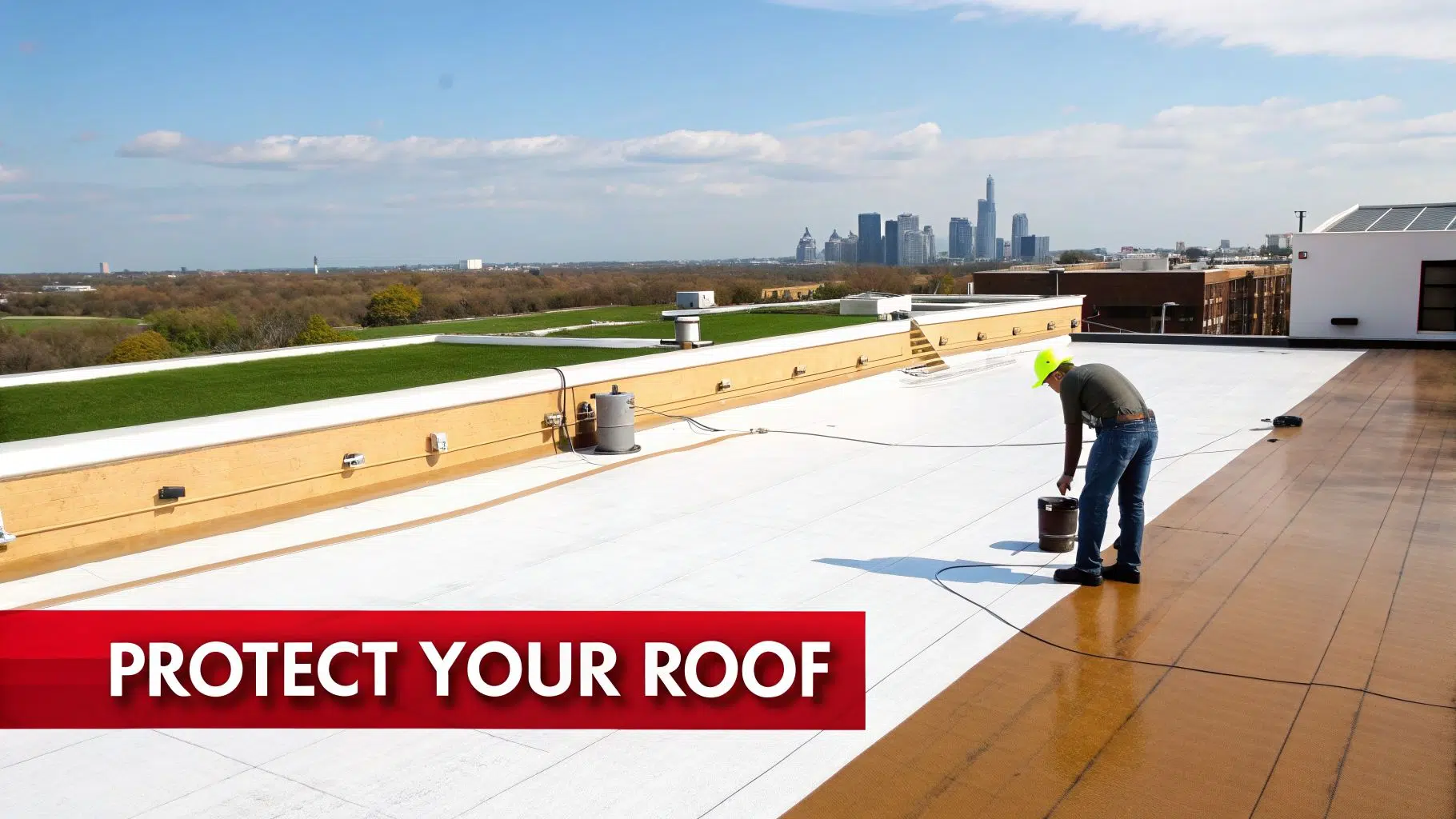
Anyone with a flat roof in Chicago knows the weather is a constant battle. An EPDM rubber membrane is a great starting point, but without a protective coating, it’s fighting a losing war against the elements. Its real-world lifespan depends entirely on adding a high-quality restorative layer. A generic, one-size-fits-all coating just won't cut it against our city’s brutal freeze-thaw cycles and punishing summer sun.
This guide will walk you through how the top EPDM-compatible coating systems actually perform in the wild. We'll help you figure out which one is truly the best EPDM roof coating in Chicago for your specific building.
Comparing Coating Systems for Chicago Conditions
We’re going to look at how the right material can add years to your roof's life, stop leaks before they start, and even make a noticeable dent in your energy bills. The "best" coating isn't about a brand name; it's the one that matches your building's unique challenges, your budget, and what you want to achieve long-term.
| Feature | Silicone | Acrylic/Elastomeric | Polyurethane |
|---|---|---|---|
| Ponding Water | Excellent; inorganic, so it won't break down in standing water. | Good; can soften or lose adhesion with prolonged exposure. | Excellent; creates a highly water-resistant, seamless barrier. |
| Flexibility | Good; stays flexible in cold weather. | Excellent; superior elasticity for managing building shifts. | Very Good; a strong balance of flexibility and toughness. |
| Durability | Moderate; can be slippery and susceptible to tears from dropped tools. | Good; handles light to moderate foot traffic well. | Excellent; the go-to for abrasion and chemical resistance. |
| UV Resistance | Excellent; reflects sunlight effectively without chalking over time. | Good; white formulas are reflective but can chalk and thin out. | Very Good; holds its color and reflectivity for years. |
| Best For | Roofs with known drainage issues and chronic ponding water. | Buildings with significant thermal movement; budget-driven projects. | High-traffic areas, roofs with chemical exposure (e.g., grease vents). |
Think of it this way: Silicone is your best defense against water. Polyurethane is the tough-as-nails guard against physical damage. Acrylics offer a cost-effective, flexible shield against the sun and temperature shifts.
Grasping these differences is everything. A warehouse in an industrial park with constant HVAC maintenance traffic has completely different needs from a low-rise apartment building with poor drainage. The goal here is to give you the clarity to make a confident decision, ensuring your investment pays off and your building stays dry.
Why Your Chicago EPDM Roof Needs a High-Performance Coating
Your EPDM roof is a tough, reliable rubber membrane, which is why it’s so common on commercial buildings. But leaving it uncoated in Chicago is a serious gamble against the weather. Our city's punishing climate will slowly but surely tear it apart, turning a durable asset into a recurring, expensive headache.
The biggest culprit is our infamous freeze-thaw cycle. Water creeps into tiny openings in the EPDM, freezes solid, and expands, forcing the material apart from the inside. When it thaws, the membrane contracts. This constant tug-of-war eventually leads to membrane shrinkage, pulling the roof away from walls and curbs and creating obvious entry points for water.
The Attack From Above and Below
Then comes the one-two punch of heavy snow and brutal summer sun. Chicago winters can dump feet of snow on your roof, and as it melts, that weight turns into ponding water that can sit for days or weeks. Standing water is the enemy of any roof, but it’s especially hard on EPDM seams, accelerating their breakdown and acting like a magnifying glass for the sun’s rays.
In the summer, intense UV radiation attacks the black membrane, causing it to "chalk" or shed its protective outer layer. You might even see a powdery residue. This process makes the EPDM brittle and thin, far more likely to be punctured or torn by foot traffic or falling debris. Without protection, your once-sturdy roof becomes a ticking time bomb.
A restorative coating isn't just paint—it's an engineered shield. It creates a seamless, flexible, and fully-adhered barrier that stops Chicago’s weather in its tracks, from ponding water to UV degradation.
Think of it as essential asset protection. Applying one of the best EPDM roof coatings in Chicago isn’t an optional upgrade; it’s a critical investment. It’s the difference between managing a predictable asset and reacting to an emergency. You can discover the resilience of EPDM roofs for Chicagoland industrial buildings to better understand their inherent strengths when properly maintained.
The Business Case for Coating Your Roof
If you let these environmental attacks continue, the outcome is predictable: failing seams, deteriorating flashing, and eventually, major leaks. These problems can flood your facility, ruin inventory, and damage sensitive equipment, easily leading to six-figure repair bills and operational downtime. A full roof replacement is an even bigger financial hit.
A high-performance coating essentially hits the reset button on your roof's aging process. The market for roofing membranes like EPDM is projected to hit $19.21 billion by 2030, a clear sign that property owners are investing in technologies that protect these assets. On-the-ground data shows a quality coating can extend your roof's life by 10-20 years.
This approach can also reduce the eventual cost of a replacement by up to 40% because the underlying structure remains in good shape. The smart money isn’t on waiting for a catastrophic failure. It’s on applying a restorative coating that prevents leaks, boosts durability, and puts off that massive capital expense for a decade or more. It’s a calculated, common-sense move to protect your property.
Comparing the Top EPDM Roof Coating Systems for Chicago
When you're looking to restore an EPDM roof in Chicago, there’s no single "best" coating. The real goal is to match the right chemistry to your specific building and the unique beating it takes from our weather. The three main players in the game are silicone, acrylic/elastomeric, and polyurethane, and each comes with its own set of pros and cons.
Frankly, what works for a sprawling warehouse down in Joliet could be a complete disaster for a multi-unit condo in Lincoln Park. So, let’s dig into the details that actually matter here: how each system handles ponding water, survives our brutal freeze-thaw cycles, stands up to foot traffic, and helps cut down those summer energy bills.
This decision tree gives you a visual shortcut for thinking through Chicago's specific roof threats and how they point toward one coating type over another.
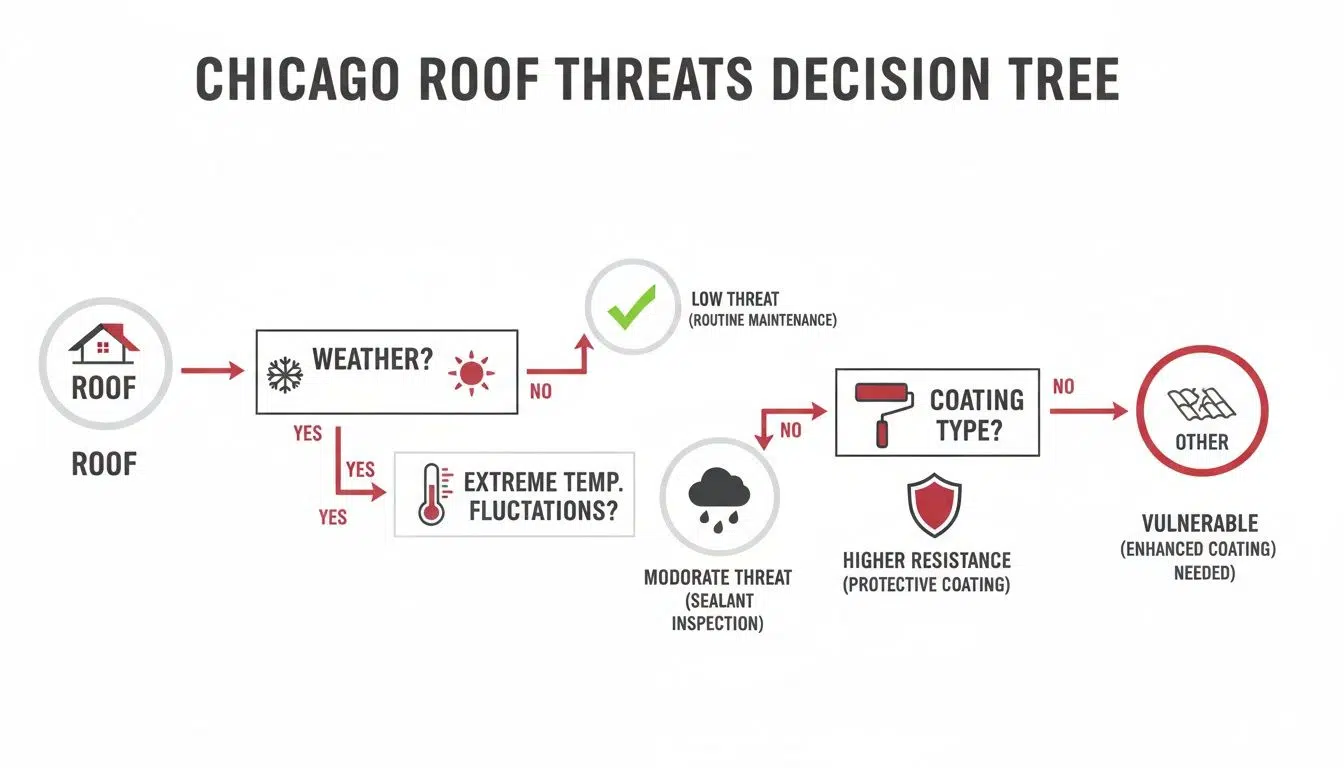
As you can see, a roof plagued by standing water from snowmelt needs a different solution than one primarily battling intense summer UV rays.
Silicone Coatings: The Ponding Water Champion
For countless flat roofs across Chicago, especially older ones where drainage isn't perfect, ponding water is public enemy number one. After a heavy snowmelt or a summer deluge, that standing water just sits there, relentlessly attacking seams and aging the membrane. This is exactly the scenario where silicone coatings prove their worth.
Silicone is an inorganic, moisture-cured material. That’s a technical way of saying it’s fundamentally different from water-based acrylics—it doesn't absorb water or break down, even when it's submerged for days. It forms a seamless, non-porous raincoat over your entire roof.
- Key Advantage: It offers truly unmatched performance in standing water. A silicone coating won't soften or peel, making it the go-to solution for roofs with chronic drainage problems.
- UV Resistance: Silicone is also incredibly resistant to UV degradation. It doesn't get chalky or brittle, so it keeps its bright white, reflective surface for years. That means a cooler roof and lower A/C costs in July and August.
But it’s not perfect. Silicone gets notoriously slick when it’s wet, which is a real safety issue for maintenance crews. It also tends to pick up dirt more than other coatings, which can slightly reduce its reflectivity over time if it isn't cleaned periodically.
From the Field: "While silicone is our top choice for pure waterproofing, its tensile strength isn't the highest. A dropped tool or a sharp piece of equipment can puncture it. We generally steer clients away from it for roofs that see a lot of foot traffic or constant HVAC servicing."
Acrylic Coatings: The Flexible and Economic Option
Acrylics, often called "elastomeric" coatings, are water-based systems that are incredibly popular for two big reasons: their outstanding flexibility and their attractive price point. For buildings that expand and contract with Chicago’s wild temperature swings from -20°F to 100°F, that elasticity is a huge asset.
An acrylic coating can literally stretch and move with the building, which prevents the tiny stress cracks that eventually lead to leaks. The newest generation of high-solids acrylics has come a long way, offering much better durability and water resistance than the formulas of a decade ago.
Where Acrylics Make Sense:
- Budget-Conscious Projects: They are typically the most economical option upfront, giving you solid protection without the higher material costs of silicone or polyurethane.
- Roofs with Good Drainage: If your roof has a proper slope and doesn't have major ponding water issues, a quality acrylic system performs beautifully.
- High-Movement Structures: On buildings where you know thermal movement is a factor, the superior elongation of an acrylic is a key advantage.
The main weakness of acrylics remains their performance in ponding water. If water sits on an acrylic surface for more than 48 hours, the coating can begin to soften and potentially lose its bond to the roof. They are best reserved for roofs that drain efficiently.
Polyurethane Coatings: The Heavy-Duty Protector
When your number one priority is toughness, polyurethane coatings are the clear winner. These are two-part systems, usually an aromatic base coat topped with a UV-stable aliphatic top coat. The combination creates an incredibly durable, abrasion-resistant finish that can handle some serious abuse.
Think about a warehouse roof crowded with HVAC units that need constant servicing, a restaurant roof battling grease vent residue, or any area with heavy and frequent foot traffic. In those high-stress environments, the superior tensile strength of polyurethane makes it the only logical choice.
- Exceptional Durability: It provides the best resistance to punctures, chemicals, and abrasion. It’s the standard for industrial facilities, hospitals, and busy commercial rooftops.
- Balanced Performance: You get a great mix of toughness, flexibility, and waterproofing. The aliphatic topcoat also ensures excellent UV stability and color retention over the long haul.
The trade-off for all that muscle is cost and complexity. Polyurethane systems are usually the most expensive, and they require a skilled contractor who knows how to properly mix and apply the two-part chemistry. For the right building, however, that initial investment pays off in long-term, worry-free performance.
Chicago Performance Comparison: EPDM Coating Systems
To help you see the trade-offs more clearly, this table lays out how each system stacks up against the specific challenges we face here in Chicago.
| Coating Type | Ponding Water Resistance | Flexibility in Freeze-Thaw | UV Reflectivity (Cool Roof) | Durability & Abrasion Resistance | Best Chicago Use Case |
|---|---|---|---|---|---|
| High-Solids Silicone | Excellent | Very Good | Excellent | Moderate | Flat roofs on apartments, retail centers, or offices with known drainage problems and low foot traffic. |
| Premium Acrylic | Good | Excellent | Very Good | Good | Cost-sensitive projects on sloped roofs, or on buildings with significant structural movement. |
| Polyurethane | Very Good | Very Good | Very Good | Excellent | Industrial warehouses, manufacturing plants, and hospital roofs with heavy equipment and high maintenance traffic. |
In the end, choosing the right EPDM roof coating comes down to a professional look at your roof's current state, its drainage patterns, and its daily use. A low-slope roof with poor drainage is screaming for silicone's waterproofing, while a roof that’s a constant work platform needs the armor-like shield of a polyurethane system.
Calculating the ROI of Your Roof Coating Investment
Thinking about an EPDM roof coating as just a repair is missing the bigger picture. It's not an expense; it's a capital investment. A properly applied coating system in Chicago is a smart financial move that pays for itself by slashing energy costs, pushing back a full roof replacement, and ultimately boosting your property's value.
The most immediate payback you'll see is from the "cool roof" effect. On a hot Chicago summer day, a black EPDM roof can get scorching hot. A reflective white coating can knock that surface temperature down by 50°F or more. That's not a small difference—it completely changes how your building handles heat. Your HVAC system doesn't have to battle a giant rooftop radiator all summer, which means it runs less and you spend less.
Quantifying Your Energy Savings
For anyone managing a property in the Chicago area, these savings are real and measurable. It's no surprise the U.S. Roof Coating Market is projected to grow at a 4.3% CAGR through 2030, with energy efficiency being a massive driver. You can dig into more of this data from industry analysts at Fortune Business Insights.
Here in Chicago, we've seen cool roofs cut air conditioning energy use by up to 50% during peak season. In dollars and cents, that typically works out to $0.50 to $1.00 per square foot in annual savings.
Let’s run the numbers on a common Chicago commercial building:
- Building Size: 10,000 sq. ft. commercial space
- Annual Cooling Savings: $0.75 per sq. ft. (a realistic middle-ground figure)
- Total Annual Savings: $7,500
Over a standard 15-year warranty, you're looking at $112,500 in energy savings. That alone often pays for the coating installation several times over, and this doesn't even factor in future energy price hikes, which would only sweeten the deal.
A restorative coating transforms your roof from a passive liability into an active, energy-saving asset. It’s one of the few building improvements that actively pays you back month after month.
The Long-Term Financial Case
Energy savings are great, but the biggest financial win comes from putting off a full roof replacement. A complete tear-off is one of the most disruptive and expensive projects a building owner faces, easily running into the six figures. Applying a restorative coating at the right time can kick that can down the road by 10 to 20 years.
Let's look at the two paths for a 20,000 sq. ft. roof:
| Financial Scenario | Upfront Cost (20,000 sq. ft. roof) | Long-Term Outcome (15 Years) |
|---|---|---|
| Roof Replacement | $160,000 – $240,000 | A new roof, but a massive hit to your capital budget right now. |
| Roof Coating | $40,000 – $100,000 | Extends roof life by 15+ years, defers the huge replacement cost, and pays you back in energy savings. |
When you see the numbers side-by-side, the math speaks for itself. By investing a fraction of the cost in a high-performance coating today, you protect your existing roof and push that enormous replacement expense far into the future. This keeps capital free for other priorities, all while making your building more efficient and secure.
Selecting the Right Contractor for Your EPDM Coating Project
You can pick the perfect coating system for your building, but that’s only half the job. Honestly, the contractor you hire to put it on is even more critical than the product itself. A top-of-the-line EPDM roof coating will fail—and fail quickly—if it’s not applied with skill and precision. Your contractor's workmanship is what ultimately determines whether you get the performance and long life you’re paying for.
Putting on a high-performance coating isn't just about rolling on some paint. The real work starts long before a can is even opened. A true professional will insist on getting up on your roof for a thorough inspection to find any hidden problems. Then comes the prep work, and I don't mean a quick rinse with a power washer. We're talking about a deep, rigorous cleaning to strip away every bit of dirt, grime, and chalky EPDM residue.
Once the roof is spotless, every inch needs a close look. All seams, flashings, and penetrations around vents and HVAC units are the usual suspects for leaks. These areas have to be meticulously inspected and reinforced. This step is what creates a truly seamless, monolithic membrane before the final coating ever goes on.
Vetting a Chicago Roofing Professional
Finding a contractor who takes this kind of methodical approach means you have to do your homework. Don't let the lowest bid fool you; look for a partner who is committed to doing the job right. A reputable Chicago roofer will be transparent about their process and provide all the documentation you need to feel confident.
Use this checklist to qualify your potential contractors:
- Illinois Licensing and Insurance: First things first, verify they hold a current Illinois roofing license. You also need to see proof of general liability insurance and worker's compensation. This is non-negotiable; it protects you from any liability if an accident happens on your property.
- Manufacturer Certifications: The best contractors are certified by the manufacturers of the coatings they install. This isn’t just a nice-to-have—it’s often required to get the full 10-20 year system warranty you're investing in.
- Local EPDM Coating Portfolio: Ask to see their work. A roofer with deep experience in Chicagoland will have a portfolio of recent EPDM coating projects right here in the area and should be able to provide references you can actually call.
- Detailed, Itemized Quotes: A vague, one-line quote is a huge red flag. A professional proposal breaks down the entire job, detailing the surface preparation, the specific primer being used, how seams will be reinforced, and the final mil thickness for each coat.
A contractor who skimps on preparation isn't saving you money—they are guaranteeing a future failure. The single most important factor in a coating's success is how well it sticks to the EPDM, and that's impossible without a perfectly clean and primed surface.
Red Flags to Watch For
Knowing what to look for is just as important as knowing what to avoid. Be wary of anyone using high-pressure sales tactics or demanding a large chunk of the payment in cash upfront. If a contractor gives you a quote over the phone without ever setting foot on your roof, walk away.
Likewise, be suspicious of any roofer who is quick to dismiss the need for a specific primer or says extensive seam work isn't necessary. They're almost certainly cutting corners to get their price down. Quality materials and skilled labor come at a fair price, and a bid that seems too good to be true usually is. Taking the time to find a true professional ensures your roof isn't just getting coated, but properly restored for the long haul.
If you are exploring commercial roofing options, you may be interested in our guide on commercial EPDM roofing services and what to expect.
The Coating Process and Long-Term Maintenance Plan
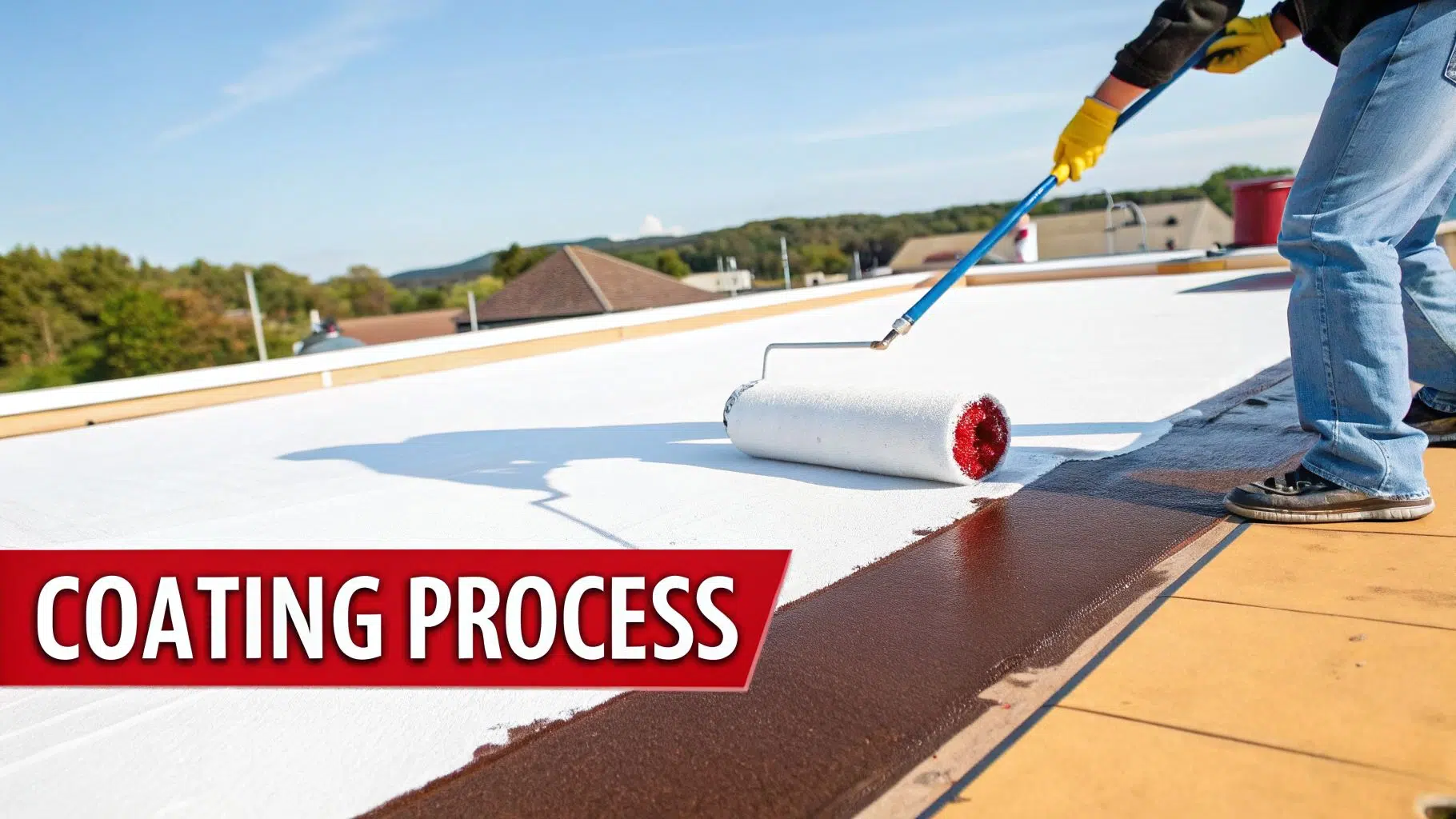
Choosing the best EPDM roof coating in Chicago is only half the battle. The real key to a long-lasting, leak-free roof is in the application. This isn’t a simple paint job; it's a systematic restoration that demands professional expertise to create a seamless membrane that will hold up for years.
It all starts with an intensive cleaning and preparation phase. We’re talking about a serious power washing to blast away every bit of dirt, chalky residue, and grime. After the roof is perfectly clean and dry, our technicians get to work inspecting every square inch, paying special attention to the usual suspects: seams, flashing, and anywhere pipes or vents penetrate the roof. We reinforce these weak points with specialized tapes and sealants, building a rock-solid foundation before a single drop of coating is applied.
Application and Curing
Next up is the primer. Applying an EPDM-specific primer is absolutely non-negotiable. This step is what creates the chemical bond between the new coating and the old rubber membrane. If you skip it or use the wrong kind, the coating is guaranteed to peel and fail—it's just a matter of time.
Once the primer has cured, we apply the top coat. Our crews are trained to apply the coating to the correct mil thickness, which is the specific dry film thickness required by the manufacturer. Hitting this target is critical for both waterproofing and keeping the warranty valid. Depending on the system, this might be one or two coats, followed by a curing period that can vary based on Chicago's fickle temperature and humidity.
In a city where an estimated 60% of commercial buildings have flat roofs, these EPDM coating systems are a game-changer. Their incredible elasticity—stretching up to 300% without a problem—is perfect for our brutal temperature swings. A quality coating, when installed right, can add 15-25 years to a roof's life, reflect 70-85% of the sun's rays, and make a real dent in your energy bills. This trend is a major reason for the growth and impact of the roof coating market.
A Simple Long-Term Maintenance Plan
After our work is done, your job of protecting this investment begins. The good news is, a proactive maintenance plan is surprisingly simple. It’s all about spotting small issues before they snowball into costly repairs.
A newly coated roof is a low-maintenance system, not a no-maintenance one. A few simple checks each year ensure it delivers decades of protection and energy savings, protecting your initial investment.
Here’s all it really takes:
- Semi-Annual Inspections: Take a walk on the roof every spring and fall. The post-winter inspection is the most important one. You're looking for any blistering, peeling, or damage from fallen debris.
- Keep it Clean: A white roof's superpower is its reflectivity, and that only works if it’s clean. A simple rinse-down now and then will wash away the grime that builds up and keep your energy savings high.
- Address Minor Damage Promptly: If a dropped tool or sharp piece of wind-blown debris causes a small puncture, get it fixed right away. A quick, inexpensive patch today prevents a massive headache and an interior leak tomorrow.
Sticking to these simple steps will keep your new roof system performing at its peak. For a deeper dive, check out our comprehensive guide to flat roof maintenance for Chicago properties.
Your EPDM Roof Coating Questions, Answered
When you're looking to protect your EPDM roof here in Chicago, a few key questions always come up. Here are the straight answers based on our years of experience working on commercial and industrial buildings across the area.
How Much Does an EPDM Roof Coating Cost in Chicago?
For a professional job in the Chicagoland area, you should plan on a budget of $2.00 to $5.00 per square foot. That range is pretty wide because the final number really depends on the coating system you choose, how much repair your existing roof needs, and the prep work involved.
- Higher End ($4-$5/sq. ft.): This is where you'll find premium systems like silicone and polyurethane. The materials themselves cost more, and the application requires a bit more technical skill, which is reflected in the price.
- Budget-Friendly ($2-$4/sq. ft.): Top-tier acrylic coatings often land in this bracket. They provide excellent value, especially for roofs that already have decent slope and drainage.
The only way to get a firm number is to have a professional get up on your roof for a detailed inspection. Anything else is just a guess.
How Long Does a Roof Coating Last on an EPDM Roof?
A well-applied EPDM roof coating will add another 10 to 20 years of life to your existing roof. The exact lifespan hinges on a few things: the type of coating used, how thick it was applied, and—this is crucial—whether you stick to a simple maintenance schedule.
One of the biggest advantages is that these systems are often renewable. When the coating reaches the end of its service life, we can typically clean the surface and apply a fresh top coat. This can add another 10+ years of protection, pushing a full, expensive roof replacement much further down the road.
Can You Coat an EPDM Roof in Any Weather?
Absolutely not. Applying a roof coating is a science, and weather is the most important variable. For the coating to bond correctly and cure into a seamless, waterproof layer, the conditions have to be just right.
Most professional-grade systems demand a completely dry roof surface and an ambient temperature that stays above 50°F. This isn't just during the application itself, but for the entire curing period that follows. A seasoned Chicago contractor knows this and will schedule your project within a reliable weather window to ensure the final product performs as promised for years to come.
Ready to protect your property with a system built for Chicago's weather? Contact Expert Super Seal Roofing & Tuckpointing for a free, no-obligation estimate and find the perfect coating solution for your building. Learn more at https://www.supersealroofing.com.