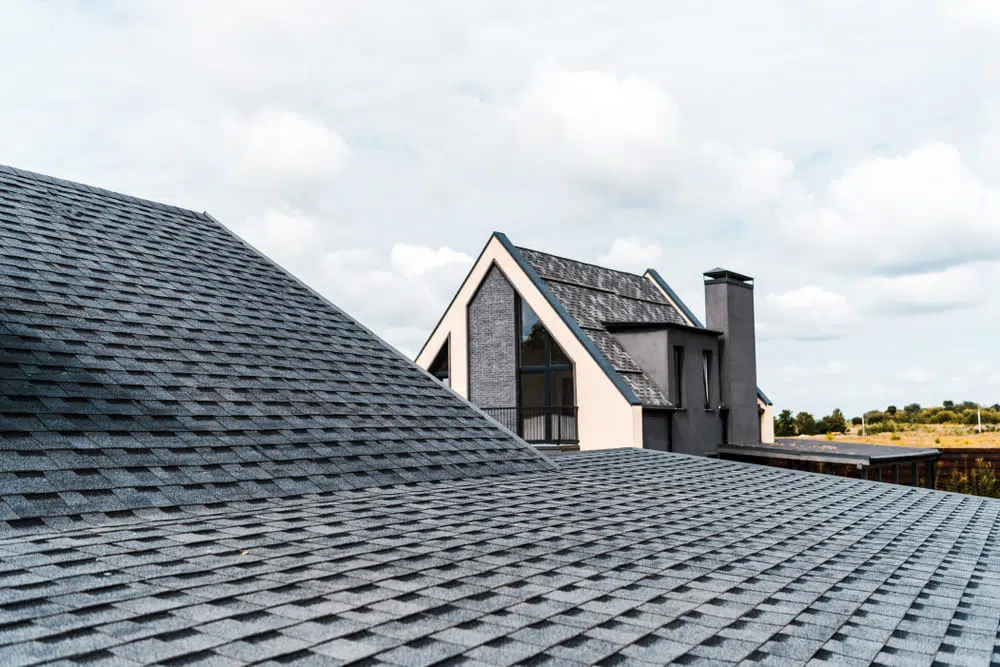
Low slope roofs have a clean, modern look, but they also need the right kind of protection.
Since water drains much more slowly on these roofs compared to steep ones, choosing the wrong material can lead to leaks, pooling water, and expensive repairs down the line.
The good news is that homeowners have plenty of solid options to choose from.
Some are better for hot climates, while others are built to handle heavy rain or extreme weather conditions.
In this guide, we’ll break down seven of the best roofing options for low slope roofs, along with the materials you should avoid and what to keep in mind before making a decision.
#1 EPDM Rubber Roofing
EPDM roofing is the best option for low slope roofs.
It’s basically a giant rubber membrane stretched across the roof surface. It’s super popular because it’s simple, durable, and relatively affordable.
One of the biggest advantages of EPDM is its ability to handle extreme weather. It does well in both hot and cold climates, and it can last for decades when installed properly.
Plus, repairs are also pretty straightforward since damaged sections can often be patched instead of fully replaced.
Most EPDM roofs are black, though lighter colors are available too. The black surface absorbs heat, which can actually help in colder climates, but in hotter areas it may make the building warmer.
If you want something practical without spending a fortune, EPDM is usually high on the list.
Also Read: Do I Need A Permit To Replace My Roof Myself?
#2 TPO Roofing
TPO roofing has become incredibly popular over the last several years, especially for commercial buildings and newer homes with modern designs.
It’s a single-ply roofing membrane known for its bright white surface that reflects sunlight instead of absorbing it. That reflective quality can help reduce cooling costs during hot weather, which is a huge bonus in sunny climates.
Another reason people like TPO is its clean appearance. It gives low slope roofs a more polished and updated look compared to older roofing systems.
The seams are heat-welded together, creating strong waterproof joints that hold up well against rain.
TPO sits in a nice middle ground when it comes to pricing. It’s not the cheapest option out there, but it’s also not outrageously expensive.
#3 PVC Roofing
PVC roofing looks somewhat similar to TPO at first glance, but it’s generally considered tougher and more resistant to chemicals, grease, and standing water.
That’s one reason restaurants and commercial kitchens often use PVC roofing systems.
The material handles harsh conditions better than many alternatives.
For homeowners, PVC can be a great premium option for low slope roofs that experience heavy rain or frequent moisture buildup. The welded seams are extremely strong, and the material tends to last a long time with proper maintenance.
The downside is cost. PVC roofing is usually more expensive than EPDM or TPO, so it may not fit every budget.
Still, people willing to spend more upfront often appreciate the long-term durability.
Also Read: Does Aluminum Roof Coating Stop Leaks?
#4 Modified Bitumen Roofing
Modified bitumen roofing has been around for quite a while, and there’s a reason contractors still recommend it today.
It’s reliable, tough, and designed specifically for low slope applications.
This material is asphalt-based and comes in rolled sheets.
Those sheets are installed in layers to create a waterproof surface capable of handling slow drainage and ponding water much better than traditional shingles.
Modified bitumen roofs tend to perform really well on residential properties, especially over porches, garages, and extensions. They also hold up nicely against foot traffic, which matters if maintenance workers occasionally need roof access.
One thing people sometimes dislike is the appearance. It’s more functional than stylish. But if reliability matters more than looks, modified bitumen is a solid choice.
#5 Built-Up Roofing (BUR)
Built-up roofing, often called BUR, is one of the oldest low slope roofing systems still in use.
Some people know it as the classic “tar and gravel” roof.
BUR systems are made by layering asphalt and reinforcing fabrics together multiple times. The top layer is usually finished with gravel or another protective coating.
The biggest advantage here is durability. Since the roof contains multiple waterproof layers, it offers strong protection against leaks and weather damage.
It’s also good for roofs that experience frequent foot traffic.
At the same time, BUR roofs are heavy. Older buildings may need structural evaluation before installation.
Plus, the installation process can also be messy and time-consuming compared to newer membrane systems.
Even so, BUR remains a dependable option for many commercial properties.
Also Read: Will Insurance Cover A 25-Year-Old Roof?
#6 Standing Seam Metal Roofing
A lot of people assume metal roofing only works on steep roofs, but certain standing seam systems can actually perform very well on low slope designs too.
Standing seam metal roofing has a very modern appearance, which makes it popular for contemporary homes. It’s also incredibly durable.
Some metal roofs last 40 to 70 years with good maintenance!
Another nice bonus is energy efficiency. Metal reflects sunlight well and can help reduce heat buildup during warmer months.
The biggest drawback is price. Standing seam systems usually cost significantly more than rubber or asphalt-based options. Still, for homeowners planning to stay long term, the lifespan alone can make the investment worthwhile.
#7 Spray Polyurethane Foam (SPF) Roofing
SPF roofing is a little different from the other systems on this list because it’s sprayed directly onto the roof as a liquid foam that expands and hardens into a seamless surface.
That seamless design is one of its biggest strengths.
Since there are no seams, there are fewer opportunities for leaks to develop.
SPF roofing also provides excellent insulation, which can improve energy efficiency throughout the building. It’s often used to restore older low slope roofs without fully tearing off the existing material.
The catch is maintenance. SPF roofs need protective coatings reapplied over time to stay in good condition.
Still, for energy savings and waterproofing performance, SPF can be really impressive.
Roofing Materials To Avoid On Low Slope Roofs
Not every roofing material works well on a low slope roof, and this is where some homeowners accidentally create expensive problems.
Traditional asphalt shingles are the biggest example.
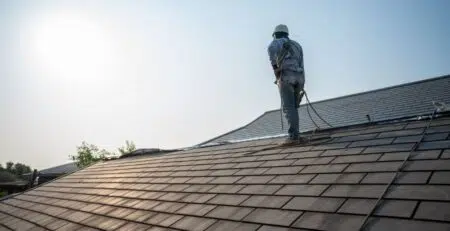
Shingles are designed for roofs that shed water quickly. On low slopes, water moves too slowly, which increases the chance of leaks forming underneath the shingles.
Materials with lots of exposed fasteners can also become risky because standing water eventually finds weak points. Even tiny installation mistakes become more noticeable on flatter roofs.
Here are a few materials that are usually not ideal for low slope roofs:
- Standard asphalt shingles
- Wood shakes
- Basic exposed-fastener metal panels
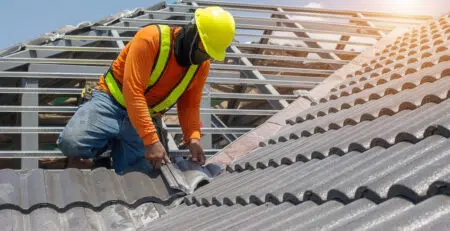
- Clay tiles on very low pitches
In most cases, membrane roofing systems are simply safer and more reliable.
Bottom Line
The best roofing option for low slope roofs are EPDM and modified bitumen. They are reliable and cheap.
TPO and PVC offer strong waterproofing with better energy efficiency, while standing seam metal gives a premium modern look with an incredibly long lifespan.
SPF roofing stands out for insulation and seamless protection.
Low slope roofs need materials designed to handle slow drainage, standing water, and long-term moisture exposure. That’s why choosing the right roofing system matters so much.