In Illinois, an EPDM roof is commonly expected to last 20 to 30 years, and many Illinois roofing sources frame it as a 25-to-30-year system when it's installed and maintained properly. That's the baseline, not the decision. In Chicago, the critical question isn't just how old the roof is. It's how it has handled freeze-thaw cycles, snow, ponding water, seam stress, and years of foot traffic.
If you're looking at a flat roof that's getting older, you've probably already seen the conflicting answers. One contractor says replacement is due based on age alone. Another says the membrane still has life left. Both can be right, because EPDM doesn't age like a calendar on the wall. It ages like a winter coat. The material might still be strong after many seasons, but the seams, edges, flashings, and drainage points tell you whether it's still doing the job.
That matters for owners in Chicago. A flat roof can be serviceable after years of hard weather if the system details are still intact. It can also become a money pit earlier than expected if water sits, seams open, or perimeter attachment starts to fail. Smart planning comes from inspection findings, not from a generic lifespan chart.
What Is the Real Lifespan of an EPDM Roof in Illinois
For Illinois buildings, EPDM is commonly presented as a 25-to-30-year roofing system, especially on flat and low-slope roofs, and that range is often used because the material stays flexible in cold weather and stands up well to snow, rain, and wind in the Midwest, as noted in this Illinois roofing longevity guide.
A lot of owners stop there. They hear "25 to 30 years" and turn it into a fixed expiration date. That isn't how these roofs behave in the field. Two buildings can have the same membrane age and completely different replacement timelines.
Age matters less than condition
A Chicago warehouse with clean drainage, tight seams, and very little rooftop traffic can keep performing well long after owners start worrying about the birth date of the membrane. Another roof of the same age can be in trouble if water ponds near drains, flashing corners are stressed, and repeated service calls have left patchwork in the traffic lanes.
Practical rule: Calendar age starts the conversation. Condition decides the budget.
That distinction is where owners save money or lose it. Replacing too early wastes a roof that may still be serviceable. Waiting too long on a failing system often turns a roofing problem into an insulation, decking, interior leak, or masonry problem.
Why Illinois changes the answer
Illinois isn't gentle on flat roofs. Winter brings freeze-thaw movement. Snow sits. Drains back up. Spring exposes what winter worked loose. Summer heat then stresses the same seams and flashings that just came through months of contraction and expansion.
That is why generic roofing articles often miss the point for Chicago-area properties. You don't just want to know the standard lifespan. You want to know whether your building is still a maintenance candidate or whether it's crossing into replacement territory. If you're comparing materials for a future project, this guide to flat roof material options helps frame where EPDM fits.
A useful way to think about EPDM in Illinois is this: the membrane may have a typical service range, but the system lives or dies at the seams, penetrations, edges, and drainage paths.
Seven Factors That Dictate Your EPDM Roof's Lifespan
Most EPDM roofs don't fail because "rubber got old" in some abstract way. They fail because one or two weak points kept taking abuse year after year until the roof system couldn't compensate anymore.
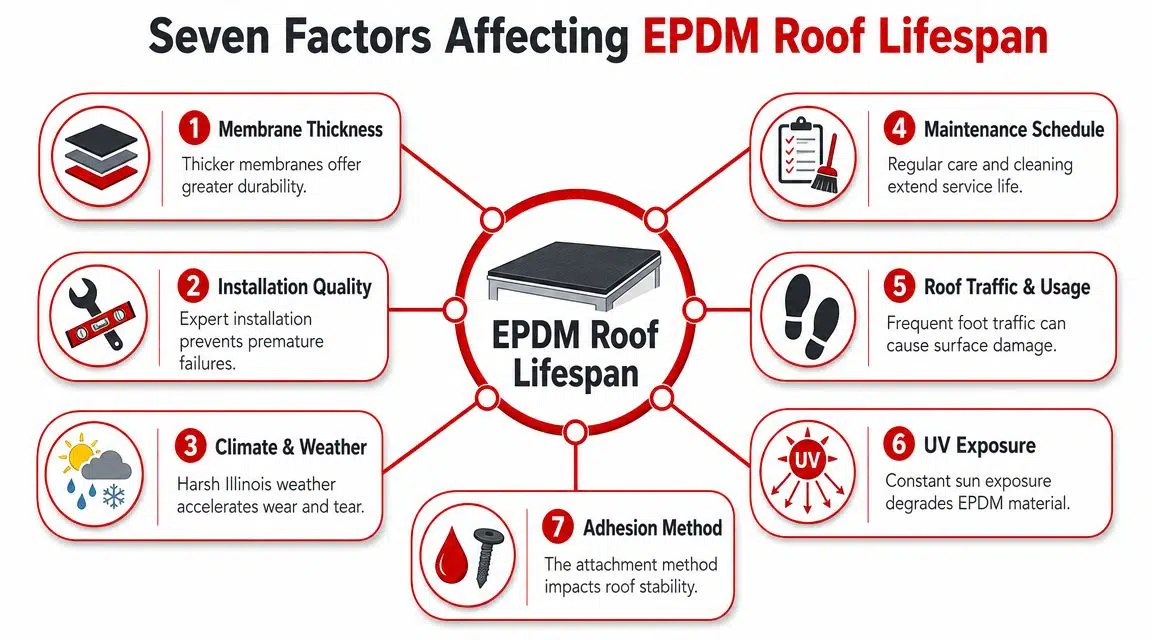
Membrane thickness
Thickness changes the roof's margin for error. A thicker sheet is like a heavier work glove. It doesn't make the roof invincible, but it gives you more material to absorb wear, puncture risk, and long-term exposure before problems show up.
This is one reason owners with busy rooftops, mechanical units, or recurring service access often lean toward heavier assemblies. Thin material can still work, but it leaves less room for abuse.
Installation quality
A mediocre EPDM installation can age fast even when the membrane itself is solid. Bad seam work, rushed flashing details, weak edge securement, and sloppy transitions around pipes or curbs usually show up before the field membrane does.
If I had to pick one thing owners underestimate, it's this. Many "old roof" problems are really "detail work" problems that started on day one.
A roof doesn't need to leak everywhere to be failing. One loose perimeter, one stressed curb, or one seam that never bonded right can start the chain.
Climate and weather
EPDM earns its place in Illinois because the membrane stays flexible through temperature swings. That flexibility helps it handle Chicagoland freeze-thaw cycles and winter cold without cracking as easily as more brittle systems, according to this overview of EPDM roof life expectancy in changing temperatures.
That said, flexibility isn't immunity. Chicago weather keeps cycling the roof through movement. Snow load, driven rain, ice around drains, and repeated thermal expansion all test the same connection points.
Maintenance schedule
A neglected EPDM roof ages faster because small issues stay small only when someone finds them. Basic maintenance means clearing debris, checking seams, watching drainage, and repairing punctures or flashing issues before they spread.
Owners often think maintenance means a major annual event. Most of the time it means disciplined observation and quick response.
- After winter: look for shifted flashing, open lap areas, and blocked drains.
- During summer: watch seams and surface contamination near rooftop units.
- Before fall ends: clear leaves and debris so drainage doesn't become a winter problem.
Roof traffic and usage
Service techs, satellite work, HVAC maintenance crews, and other foot traffic can shorten roof life. EPDM doesn't like repeated scuffing in the same paths, especially near equipment.
On buildings with regular access, walk pads and designated routes matter. Without them, traffic turns a durable roof into a patch map.
UV exposure
Sun exposure slowly works on every roofing system. On EPDM, long-term UV and heat load can dry out vulnerable details before owners notice visual failure from ground level.
That doesn't mean EPDM is a bad choice. It means sunlight is one more reason to inspect field conditions and edge conditions differently. The wide-open membrane may look fine while the trouble starts at corners, terminations, and penetrations.
Adhesion method
How the roof is attached affects how it performs over time. Fully adhered, mechanically attached, and other system choices handle movement and uplift differently. The right choice depends on the deck, the building height, the use of the roof, and local exposure.
This matters outside roofing too. If you want a simple way to understand why attachment and material behavior matter, this overview of elastomer for automotive applications is useful because it shows how elastomeric materials are selected for stress, movement, and durability in another demanding environment.
EPDM Thickness Explained Cost vs Longevity
When owners ask about EPDM thickness, they're usually asking a budget question in disguise. They want to know if spending more now actually changes how long the roof lasts and how much punishment it can take.
It often does. Thickness affects puncture tolerance, wear resistance, and the roof's ability to keep performing after years of weather and maintenance traffic. The big mistake is choosing thickness like you're buying paper towels. The cheapest roll isn't always the cheapest decision.
What the common thickness options mean
A 45-mil membrane can be a practical fit on smaller or lower-stress roofs when the installation is controlled and rooftop traffic is limited. A 60-mil membrane is often the middle ground because it adds durability without pushing cost as high as the thickest assemblies. A 90-mil membrane is the heavy-duty choice when long hold periods, harsh exposure, and durability matter more than the lowest upfront number.
The strongest longevity fact available is on the thick end. The EPDM Roofing Association has reported field evidence indicating that properly maintained 90-mil EPDM may last greater than 50 years, which makes thickness a real service-life factor rather than just a specification detail, as stated in this EPDM long-term service life document.
EPDM Membrane Thickness Comparison
| Membrane Thickness | Typical Lifespan (Years) | Relative Cost | Best For |
|---|---|---|---|
| 45-mil | Qualitatively shorter end of the usual range | Lower | Light-traffic roofs with tighter budgets |
| 60-mil | Often selected for balanced longevity | Moderate | Many commercial and multifamily roofs |
| 90-mil | Greater than 50 years when properly maintained | Higher | Long-term ownership, high exposure, demanding roofs |
A table like this isn't a price sheet. It's a risk sheet. If the roof is hard to access, protects expensive interiors, or sees regular service traffic, paying for more material can make sense. If you expect to hold the property for a long time, thicker EPDM deserves a serious look.
The cheaper membrane can cost more if it reaches repair fatigue early.
If you're weighing EPDM against other flat-roof systems before committing to a thickness, this comparison of EPDM versus TPO roofing helps clarify the trade-offs.
A Proactive Maintenance Plan for Your Chicago Roof
Good EPDM maintenance in Chicago isn't complicated. It just has to be seasonal and consistent. The goal is simple: catch detail failures before water gets underneath the membrane or into the building.
Spring checks after thaw
Spring is when winter reveals what it damaged. Walk the roof and look for lifted seams, stressed flashing at penetrations, edge movement, and debris that settled into low spots. Drains and scuppers need special attention because a roof that didn't drain properly in late winter often tells on itself in early spring.
This is also the time to look for signs that water sat in the same place too long. Staining, dirt rings, and membrane stress in low areas can point to drainage problems that need correction.
Summer attention on seams and rooftop equipment
Heat won't usually create a problem out of nowhere, but it can expose one that was already forming. Summer is a good time to inspect around HVAC curbs, pipe boots, satellite supports, and service paths. These areas take movement, vibration, and foot traffic.
A lot of owners also use summer to evaluate coating or repair options on aging roofs that are still serviceable. If that's under consideration, this overview of EPDM roof coating options in Chicago can help frame the conversation. Expert Super Seal Roofing & Tuckpointing is one local contractor that handles inspections, repairs, and EPDM roof work, which is useful when a roof is in the gray area between routine maintenance and larger corrective work.
Fall preparation before drainage gets buried
Fall maintenance is about staying ahead of winter.
- Clear drains and scuppers: Leaves and rooftop debris turn ordinary rain into ponding.
- Check sealant condition: Cold weather will exploit brittle or failing sealant lines.
- Inspect wall intersections: Parapets and termination bars often show early movement.
Winter caution
Snow and ice don't always mean emergency action, but they do mean the roof is under stress. The biggest mistakes are heavy foot traffic during icy conditions and improvised snow removal that cuts or scrapes the membrane.
If snow or ice starts backing up water around drains, treat it as a drainage problem, not just a weather event. That's often where a manageable issue turns into an interior leak.
Owners get the most life out of EPDM when they treat inspections as part of ownership, not as a reaction to dripping ceilings.
Warning Signs Your EPDM Roof Needs Replacement
Some EPDM roofs ask for repair. Others are telling you they're done. The trick is knowing the difference before you pour repair money into a system that's already failing in several places.
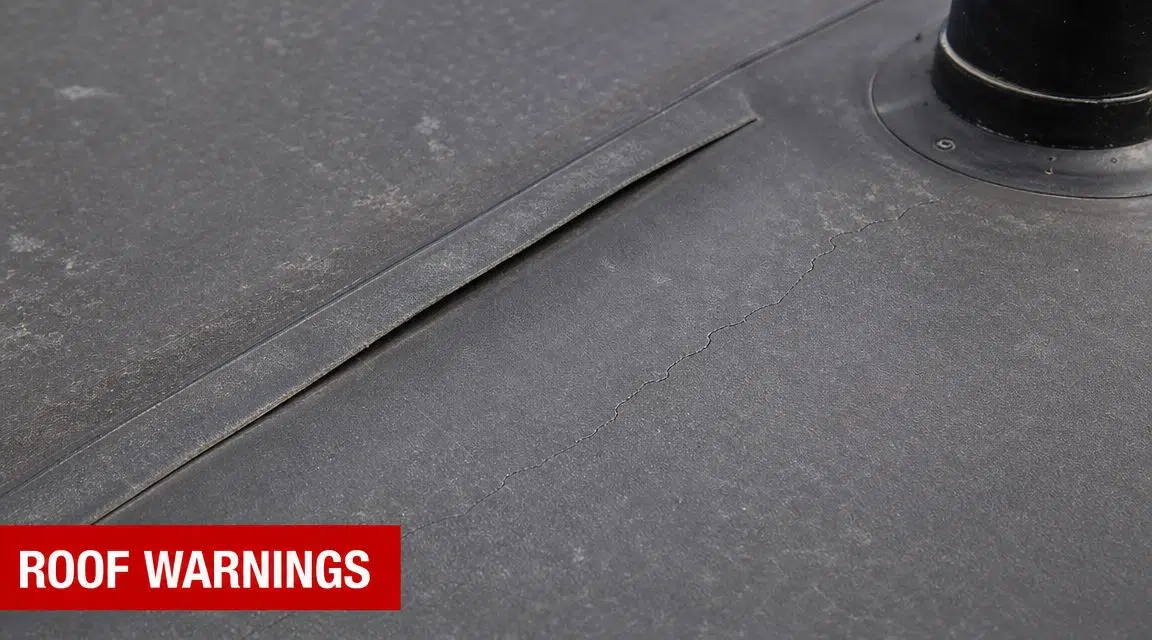
What failure looks like in the field
A repairable roof usually has isolated trouble. One puncture. One seam issue. One flashing detail that needs correction.
A replacement roof looks different. Seams start to resemble dried, split skin. Flashings pull and shrink at corners. Patch after patch shows up in old problem areas. Water keeps finding new entry points even after repairs because the system is losing integrity in multiple locations.
Signs that move the roof into replacement territory
- Widespread seam failure: If seams are opening in several areas, the issue is systemic.
- Membrane shrinkage: When the sheet pulls hard at penetrations or perimeter details, repairs become less reliable.
- Persistent ponding with visible stress: Standing water combined with recurring trouble usually means the roof assembly needs more than spot fixes.
- Repeated leaks in different locations: That often signals a roof that's aged out of simple repair strategy.
- Cracking around flashings and penetrations: These are high-movement areas, so repeated failure there matters.
One of the hidden costs of waiting too long is interior damage. A roof leak doesn't stay a roof leak. It can lead to wet insulation, stained finishes, and in some cases mold concerns inside walls or ceilings. If moisture has already reached interior drywall, this practical guide to VerticalRent's mold removal advice is a helpful starting point for understanding cleanup on the inside while the roofing issue gets addressed.
If repairs are chasing leaks instead of controlling them, replacement is usually the more honest budget conversation.
The age trap
Owners sometimes keep repairing a roof because the membrane "doesn't look that bad" from a distance. That's risky with EPDM. The field sheet can appear acceptable while the system is failing at the places where water gets in. Age alone doesn't condemn a roof, but visible stress across multiple details should get your attention fast.
Understanding Your Warranty vs Real-World Service Life
A warranty is not the same thing as roof life. Owners mix these up all the time, and it leads to bad decisions.
What the paperwork covers
A manufacturer's warranty usually addresses the roofing material under defined conditions. A workmanship warranty addresses the installer's labor and installation quality for whatever period is stated in the contract. Those are different promises, from different parties, with different exclusions.
That means a roof can still be inside a warranty period and still need major corrective work. It can also outlast its warranty if the system was installed well and maintained properly.
Why service life matters more
Real-world service life is the outcome you care about. That's the years you get before leaks, chronic repairs, or system-wide deterioration make replacement the better financial move.
Owners should read warranty language with three questions in mind:
- What maintenance is required: If the owner skips inspections or repairs, coverage may be affected.
- What ponding or drainage limits apply: Water that sits too long often creates disputes.
- Who is responsible for edge details and penetrations: Many failures start there, not in the field membrane.
The best way to use a warranty is as backup. The best way to get long service life is installation discipline, seasonal maintenance, and honest inspections.
Frequently Asked Questions About EPDM Roofing
Can an EPDM roof be repaired, or do you always have to replace it
EPDM can often be repaired when the problem is isolated. A puncture, a limited seam issue, or a flashing defect may be a repair job if the rest of the roof is still sound. Replacement makes more sense when the roof has multiple recurring leaks, widespread seam fatigue, or shrinkage that keeps stressing details across the system.
A good inspection should answer one question clearly: are repairs solving the problem, or are they buying a little time on a roof that's broadly worn out?
Black vs white EPDM for Chicago
Color choice should follow building use and seasonal priorities. Black EPDM absorbs more heat, which some owners like in a colder climate. White EPDM reflects more sunlight, which can matter on buildings with high summer cooling demand or top-floor heat complaints.
There isn't one universal answer for Chicago. A warehouse, condo building, and restaurant won't weigh that choice the same way. Roof design, insulation, occupancy, and equipment load all matter.
Is EPDM a good choice for residential flat roofs in Illinois
Yes, especially on low-slope sections where owners want a well-established membrane with straightforward repairability and good cold-weather flexibility. It's commonly used on garages, additions, porches, multifamily buildings, and mixed-use properties with flat roof sections.
The bigger question isn't whether EPDM works on residential projects. It does. The better question is whether the roof has the right drainage, edge detailing, penetration flashing, and maintenance plan to let the material perform the way it should.
If you're trying to decide whether your EPDM roof still has useful life left or it's time to replace it, Expert Super Seal Roofing & Tuckpointing can inspect the roof, document the condition of the membrane, seams, flashings, and drainage points, and help you weigh repair versus replacement based on what the roof is doing in Chicago weather.