
A lot of Chicago homeowners first notice roof trouble after a weather swing. One week, the roof looks fine from the driveway. Then a hard freeze, a thaw, wet snow, and a windy spring rain expose a ceiling stain, a damp attic corner, or a patch of shingles that no longer lies flat.
That pattern is common here because Chicago weather works roofs hard in every season. Snow load, ice dams along the eaves, repeated freeze-thaw movement, summer attic heat, and wind-driven rain all wear down the same materials. A roof can look mostly intact and still be close to a much bigger problem.
Age matters, but age alone does not make the decision. What matters is the type of warning you are seeing, where it is showing up, and whether the problem is cosmetic, repairable, or already letting water into the house. Homeowners who stay ahead of basic roof installation and maintenance issues usually have more repair options and fewer surprise costs.
The useful way to read this guide is by priority. Some conditions deserve monitoring. A small patch of moss on a shaded slope or a light amount of granules in the gutter may call for closer watch, not a full replacement. Other conditions need a roofer involved quickly. Active leaks, sagging roof lines, widespread shingle breakdown, and flashing that has pulled apart can turn into interior damage fast, especially after another Chicago storm cycle.
The sections below explain the signs in that order. You’ll see what you can check safely from the ground or in the attic, what each sign usually means in real-world terms, and when calling a local contractor such as Expert Super Seal Roofing & Tuckpointing is the right next step.
1. Missing, Cracked, or Curling Shingles
A roof usually starts telling on itself from the outside.
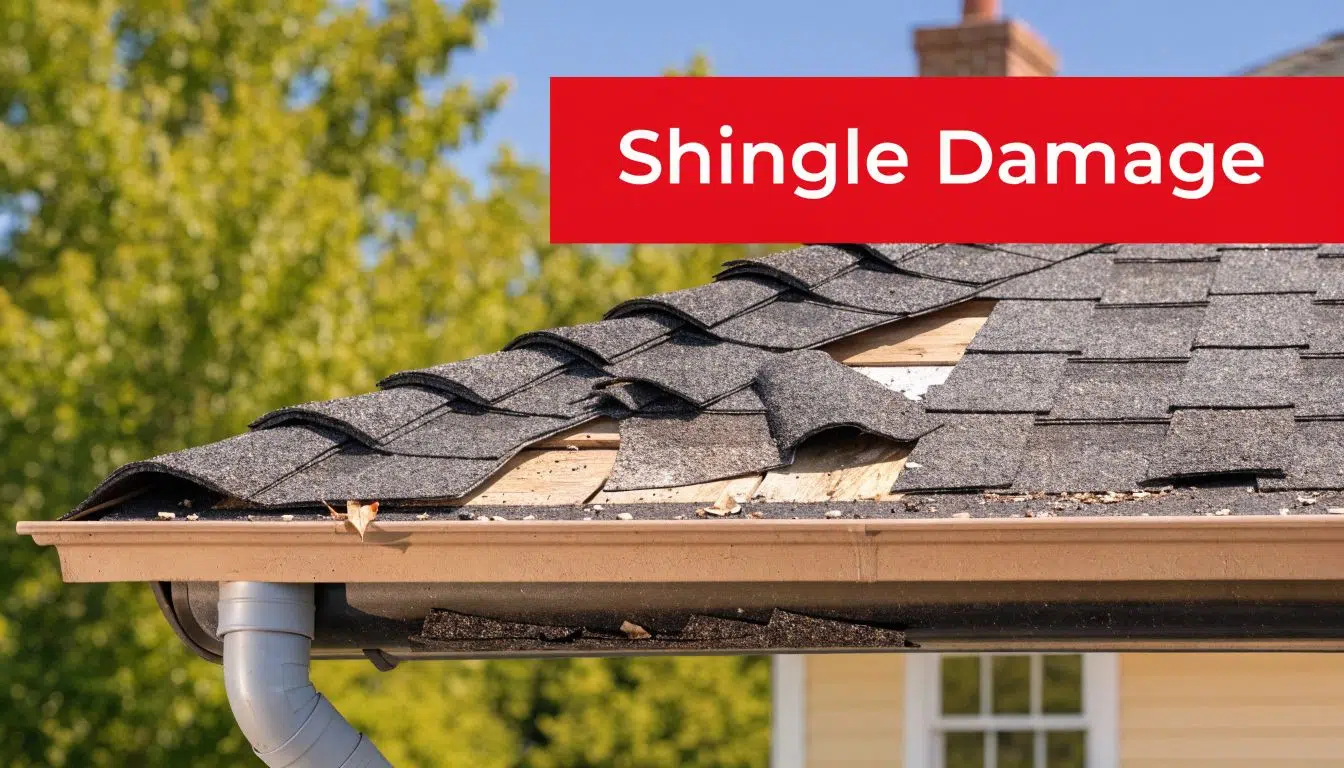
If you can see missing tabs, cracked shingles, or edges curling upward, the roof system has already started losing its weather barrier. Once shingles stop lying flat, wind can catch them more easily, water can track underneath, and the exposed roof deck becomes vulnerable.
In Chicago, this gets worse after winter. Freeze-thaw cycles work the edges of aging shingles over and over. Then spring wind and rain test every weak spot.
What this usually means
Sometimes the issue is isolated storm damage. A handful of missing shingles after a wind event can often be repaired if the surrounding roof is still in decent shape.
But curling is different. Curling and cupping often point to age, heat stress, ventilation problems, or installation issues. Proper attic ventilation matters more than many owners realize. Nationally, asphalt shingles make up 75% of new residential installations, and poor ventilation is one of the technical causes behind curled or cupped shingles.
That’s why a good roofer shouldn’t just replace visible shingles and leave. They should also ask why the shingles failed.
Practical rule: If damage is limited to one small area and the roof is otherwise sound, repair may buy time. If you see the same problem on multiple slopes, start planning for replacement.
A common Chicago scenario is the older bungalow or two-flat where the south-facing slope looks cooked while the north side still looks acceptable from the street. The roof may not fail evenly. One side often starts the conversation.
What you can check from the ground
Don’t climb onto the roof unless you’re trained and equipped for it. Most homeowners can spot enough from below.
- Look for empty patches: Areas where the roof color changes sharply may mean shingles blew off.
- Check the shingle edges: If the tabs lift, curl, or look wavy, they’re no longer sealing as they should.
- Scan after storms: Wind exposes weak areas quickly, especially near ridges and eaves.
- Take photos: A simple phone zoom or binocular check gives you a timeline if the damage spreads.
If you’re comparing repair versus replacement, this guide on roof care, installation, and maintenance is useful background before you schedule an inspection.
Call immediately if shingles are missing in several areas, if underlayment or wood is visible, or if the damage appears right before a stretch of snow or freezing rain. Watch-and-wait only makes sense when the damage is small, isolated, and professionally confirmed as repairable.
2. Leaks and Water Stains in Attic or Ceilings
You notice a brown ring on the upstairs ceiling after a February warm-up, then it seems to dry out on its own. In Chicago, that often means meltwater got in during an ice dam event or wind-driven rain found a weak spot the last storm exposed. A dry stain does not mean a solved problem.
Interior water marks matter because they usually show up late. By the time you see discoloration on drywall or smell damp insulation in the attic, water has already moved through part of the roof assembly. It may be coming in at a chimney flashing joint, a vent boot, a valley, or along the eaves where freeze-thaw cycles force water back under the shingles.
Why this sign deserves faster action
Leaks rarely stay confined to one spot. Water follows rafters, runs along fasteners, soaks insulation, and stains the room below somewhere else. That is why the ceiling mark is often not directly under the entry point.
Chicago weather makes this trickier. Heavy snow load, ice at the gutters, and repeated thaw-refreeze cycles can open paths that only leak under specific conditions. I see this a lot on older bungalows and two-flats. The roof may only leak when snow is melting on a sunny afternoon or when rain hits from one direction with enough wind behind it.
Treat a new stain as a priority issue. The main question is whether you are looking at a watch-and-wait situation or a call-immediately problem.
Watch and wait vs. call immediately
Watch and schedule an inspection soon if:
- The stain is old and dry: No active drip, no damp insulation, no spreading edges.
- It appeared once after a severe storm: Then did not return, but the roof still needs checking.
- The area is small and isolated: Especially near a single roof penetration that may be repairable.
Call immediately if:
- Water is actively dripping or insulation is wet
- You see multiple stains in different rooms or on different floors
- The leak showed up after snow buildup or ice damming at the eaves
- Paint is bubbling, drywall is soft, or attic wood looks dark and damp
- The roof is already older and has other visible wear from the ground
Once moisture gets into insulation and decking, repair decisions get more expensive. A small flashing failure can still be a repair. Repeated interior leaks across more than one area often mean the roof system is losing reliability, not just one detail.
What you can check safely
Start indoors. That gives you better clues than staring up from the driveway.
- Photograph the stain: Take one close shot and one wider room shot so you can track whether it grows.
- Check the attic with a flashlight: Look for wet insulation, dark sheathing, rusty nail tips, or shiny water trails on wood.
- Smell the space: A musty attic after rain or thaw often points to ongoing moisture, even when surfaces look dry.
- Mark the stain edge lightly with pencil: If it expands after the next storm, you know the leak is active.
- Use a bucket or plastic if water is dripping: Protect finishes, then make the service call.
Do not go onto the roof to chase the source. Wet shingles, frost, and icy eaves are where homeowners get hurt.
In condos, brick two-flats, and older Chicago homes with chimneys and dormers, leak tracing can get deceptive fast. A stain near an exterior wall may start several feet uphill at flashing or at a roof-to-wall transition. If the leak followed a snow event or keeps returning after patch work, professional diagnosis is required. A local contractor such as Expert Super Seal can usually tell the difference between an isolated repair and a roof that is starting to fail in multiple places.
Minor leaks can sometimes be fixed and monitored. Repeated leaks, spreading stains, and attic moisture during Chicago’s winter-to-spring swing usually push the decision closer to replacement.
3. Sagging or Uneven Roof Surface
A Chicago homeowner often spots this after a hard winter. The roofline that looked straight in the fall now has a dip over one room, or a low spot that holds water after a thaw. That change deserves fast attention because sagging points to stress in the roof system itself, not just worn shingles on top.
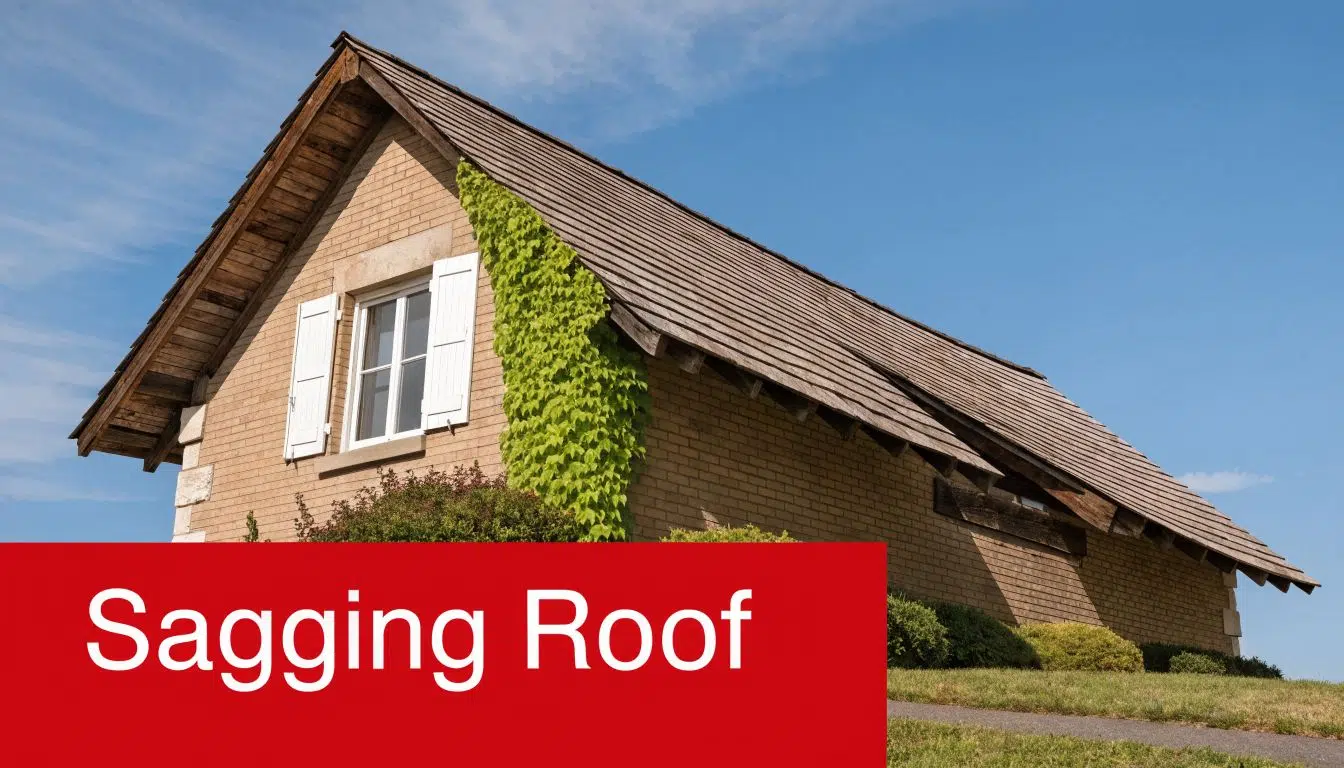
I see this in the Chicago area after repeated freeze-thaw cycles, heavy snow loads, ice dam backup, and years of slow moisture intrusion. On flat and low-slope roofs, the warning sign is often a depressed area where water keeps ponding. On pitched asphalt roofs, it may show up as a ridge that no longer runs straight, a roof plane with a visible belly, or a section that looks lower than the rest from the street.
Why this sign moves to the top of the list
Sagging changes the category of the problem. A few damaged shingles can be repaired. A roof surface that has dropped or gone uneven can mean weakened decking, compromised rafters, failing trusses, or long-term rot around a trouble spot.
In older bungalows, two-flats, and homes with multiple additions, homeowners sometimes assume the house has "settled." Sometimes the framing below has moved. Often, though, the roof deck or support members have taken on moisture for years and finally started to deform. Chicago weather speeds that process. Snow adds weight. Ice dams trap water at the eaves. Summer heat then bakes the assembly and worsens movement in already weakened materials.
This falls into the call-immediately category.
What you can check safely from the ground or attic
Start with a visual check, not a climb onto the roof. A sagging section can be weaker than it looks.
- Stand back at the curb and sight the ridge line: A healthy ridge should look straight and consistent.
- Look across the roof in early morning or late-day light: Side light makes dips and humps easier to spot.
- Check for ponding on low-slope sections after rain: Water that sits in the same place over and over usually means the surface has dropped.
- In the attic, look for bowed rafters, dark stained decking, or wood that looks soft or delaminated: Bring a flashlight and stay on secure framing, not insulation.
- Watch for indoor clues: Ceiling cracks, fasteners popping through drywall, or doors that suddenly stick near the affected area can support what you are seeing above.
Do not test a soft spot with your foot. Do not stack storage near the low area in the attic. Extra weight matters when framing may already be stressed.
Repair or replacement depends on what moved
There is a real trade-off here. If the sag is small and tied to one limited area, such as damaged decking around an old leak, a targeted structural repair and partial reroof may solve it. If the uneven section reflects broader moisture damage, repeated ponding, or framing distortion across a larger plane, replacement is usually the safer and more cost-effective path.
That distinction cannot be made from a driveway estimate alone. The roof covering may be the least important part of the problem.
A common Chicago example is an older home with a shallow dip over a front bedroom or porch tie-in. From the street, it looks minor. In the attic, the decking is stained, the rafters have deflected, and the area has likely been taking on water through winters and spring thaws for years. At that point, a local roofer needs to determine whether the issue stops at the deck or extends into the structure. A contractor such as Expert Super Seal can inspect the affected section and tell you whether this is a localized rebuild or a sign the roof system is nearing the end of the line.
If the roof surface is visibly sagging, do not watch and wait. Get it inspected promptly.
4. Granule Loss and Bald Spots on Shingles
You clean the gutters after a Chicago winter and find a layer of coarse, dark grit sitting in the troughs and downspout elbows. That debris is often the first clear sign that the shingles are wearing out faster than they should.
Granules are the outer protective surface on asphalt shingles. They take the abuse from sun, hail, wind, and temperature swings so the asphalt underneath does not. Once that surface starts thinning out, shingles dry out, heat up, and become more brittle. In Chicago, freeze-thaw cycles and summer heat speed that process up.
What to watch for
A small amount of granule shedding on a newer roof can be normal, especially after installation. The concern is repeated loss, exposed asphalt, and uneven wear across a slope.
From the ground, look for:
- Bald spots or shiny patches: These areas have lost the protective surface.
- Dark, exposed asphalt: The shingle is wearing past the outer layer.
- Heavy granules in gutters or at downspout exits: A one-time buildup is less concerning than the same gritty residue season after season.
- One slope aging faster than the others: South- and west-facing roof planes in the Chicago area usually take more sun and weather stress.
Pattern matters more than one isolated spot. If one small area is worn, a localized repair may still make sense. If multiple sections look patchy and thin, the roof system is aging as a whole.
I see this a lot on homes where the owner says the roof is "just looking old" but there is no leak yet. Then you get up close and the granules are gone on the sun-beaten slopes, the tabs are drying out, and the shingles have started losing flexibility. At that stage, the roof may still be keeping water out today, but it has much less margin for the next hard storm or ice cycle.
Watch-and-wait, or call now?
Granule loss is usually a watch-and-plan issue. It becomes a call-now issue when the loss is widespread or shows up with other failure signs such as cracking, curling, exposed fiberglass mat, or active leaks inside the home.
Use this simple check before you decide what to do next:
- Watch and plan: Light but noticeable granule buildup, no leaks, no widespread bald areas, and the shingles still lie flat.
- Schedule an inspection soon: Patchy wear on one or more slopes, repeated gutter sediment, or visible bare areas from the ground.
- Call promptly: Large sections look bald, shingles are getting brittle, or granule loss is showing up alongside other aging symptoms.
Do the inspection from the ground with binoculars. Check the gutters when you clean them. Do not climb onto a roof with worn shingles, especially after cold weather, because brittle tabs can break under foot traffic.
The trade-off is straightforward. Limited granule loss on an otherwise sound roof may give you time to budget and monitor. Widespread bald spots usually mean repairs will buy only a short extension, and replacement becomes the better financial call. A local contractor such as Expert Super Seal can tell the difference between a roof that needs monitoring and one that is running out of dependable service life.
5. Flashing Deterioration and Separation
A Chicago homeowner often notices this problem after a hard weather swing. Snow sits on the roof for days, a brief thaw sends water toward a chimney or wall line, then the next overnight freeze opens the gap a little more. The shingles may still look decent from the yard. The leak starts at the metal detail.
Flashing protects the joints shingles cannot seal on their own. That includes chimneys, vent pipes, skylights, sidewalls, valleys, and roof edges. When flashing rusts, pulls loose, cracks, or separates from the surface it is supposed to protect, water gets a direct entry point.
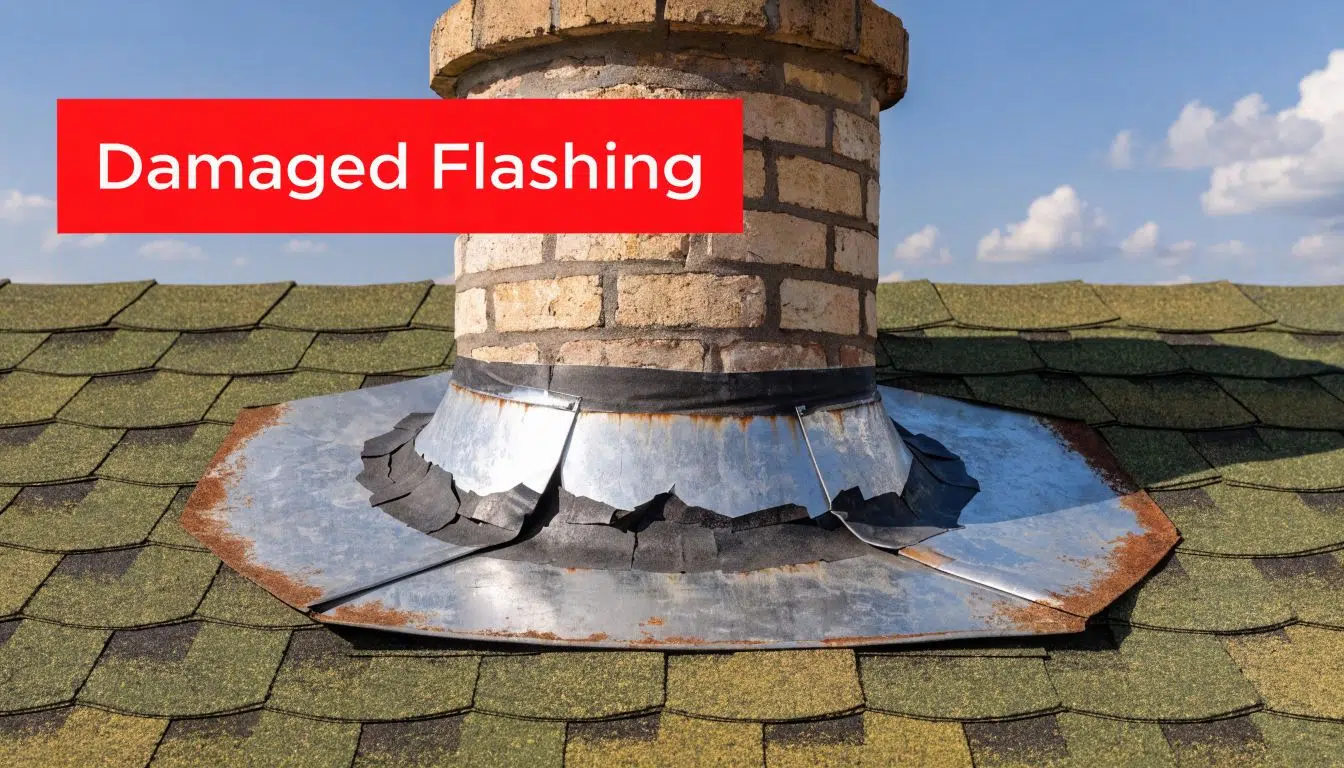
This is one of the most common weak spots I see on older Chicago-area roofs. Freeze-thaw cycles stress fasteners and joints. Ice dams back water up at eaves and around penetrations. Summer heat dries out sealants, especially on south- and west-facing slopes that bake for hours. A roof can hide flashing failure long before the field shingles look obviously worn.
What to check from the ground and inside the house
Start with the places where one material meets another. Those transitions fail first.
Look for:
- Chimney flashing: Rust, open gaps, loose counterflashing, or metal pulling away from brick.
- Vent pipe boots: Split rubber collars, cracked neoprene, or exposed fasteners.
- Wall intersections: Step flashing that has slipped, lifted siding, or staining where the roof meets the wall.
- Skylight edges: Separation at corners, loose metal trim, or staining on the ceiling below.
- Eaves and rake edges: Bent drip edge, exposed underlayment, or signs that ice has forced metal out of place.
Inside, check the attic and the ceilings below these areas. Water marks near a chimney chase, around a bathroom fan vent, or beside a skylight usually point to flashing before they point to shingles.
Repairable issue or sign the roof is near the end
An isolated flashing problem on a newer roof is often a repair job. Replacing a pipe boot or reworking chimney flashing can make sense if the surrounding shingles are still pliable and the roof has solid life left.
The trade-off changes on an older roof. If several flashing points are failing at once, patching each one can turn into repeat labor on a system that is already wearing out. In that case, replacement is often the more practical use of money, especially in Chicago where the next ice cycle will test every weak seam again.
Poor installation also shows up here fast. I have seen roofs with decent-looking shingles and sloppy step flashing tucked where no homeowner could spot it from the driveway. The result is a leak that keeps coming back because the true problem was never the shingle field.
Do not judge a roof only by the shingles you can see. Many serious leaks start at a chimney, vent, skylight, or wall line.
A common local example is the brick bungalow with a stain near the fireplace after every winter thaw. The owner gets a shingle repair once or twice, but the issue is chimney flashing that has rusted, separated, or been smeared over with caulk instead of rebuilt properly.
Use this priority check:
- Watch and schedule: One suspect detail, no interior leaking, and the roof is otherwise in good shape.
- Schedule an inspection soon: Visible rust or separation at a chimney, wall, or skylight, even if the leak is not active yet.
- Call promptly: Water stains inside, loose metal after a wind event, or repeated leaking at the same transition point.
Ground-level checks are fine. Walking a roof to inspect flashing is not a good DIY project, especially after snow, frost, or a cold snap. If you are seeing failure at more than one transition, a local contractor such as Expert Super Seal can tell you whether the fix is a targeted flashing repair or a sign the roof system as a whole is running out of dependable service life.
6. Moss, Algae, and Lichen Growth
A dark roof streak or a patch of moss in a shaded corner doesn’t always mean the roof is finished. But it should make you ask why that area stays wet.
Moss, algae, and lichen grow where moisture lingers. On roofs, that often means shade, clogged drainage, poor airflow, or a surface that stays damp too long after rain or snowmelt. Chicago homes with mature trees are especially prone to this on north-facing slopes.
When it’s cosmetic and when it isn’t
Algae staining is often more cosmetic than structural at first. Moss is more concerning because it holds moisture against the surface and can work its way under shingle edges. Lichen can bond tightly enough that removal damages already weak shingles.
Persistence is the issue. If growth keeps returning in the same area, the roof is telling you moisture isn’t leaving the way it should.
A common example is the Naperville or Northwest Side home with tree cover over one rear slope. The roof may look only mildly stained from the yard, but up close the shingle edges stay damp, debris packs into valleys, and granule wear accelerates in those sections.
What actually helps
Pressure washing does more harm than good on asphalt shingles. It strips granules and shortens roof life.
Safer steps include:
- Trim overhanging branches: More sunlight and airflow help the roof dry.
- Keep gutters clear: Backed-up water worsens moisture retention at the eaves.
- Remove debris gently: Leaves and twigs trap moisture in valleys and behind chimneys.
- Have growth assessed professionally: A roofer can tell the difference between surface cleaning and deeper deterioration.
Minor moss on one shaded area may be a maintenance problem. Widespread growth on an older roof often means the roof has been staying wet too long for too many seasons.
This is usually watch-and-correct early. If the shingles underneath are still intact, cleaning and drainage improvements may buy time. If the growth comes with lifted tabs, soft decking, leaks, or obvious age-related wear, it’s no longer just a cleaning issue.
For homeowners trying to sort repairs from replacement, moisture-related growth matters most when it appears alongside other signs. On its own, it might be manageable. Combined with granule loss or attic moisture, it often points to a roof that’s nearing the end.
7. Improper Ventilation and Excessive Attic Heat or Moisture
A Chicago attic can tell you the roof is in trouble before the shingles do.
I see this in late winter and mid-summer all the time. A homeowner goes up for storage, finds frost on the nail tips in January or heavy heat trapped under the roof in July, and assumes it is just part of living here. It is not. Poor attic airflow and moisture control wear out a roof from the inside by keeping the deck too damp in winter and too hot in summer.
Chicago weather is hard on any weak point in the system. Warm indoor air leaking into the attic can melt snow unevenly, then that water refreezes at the colder eaves and starts building ice dams. In hot weather, excessive attic heat bakes shingles from below and pushes aging faster. The roof may still look acceptable from the yard while the structure underneath is steadily taking on stress.
What to check before you call
Start in the attic on a dry day with a flashlight.
- Look at the underside of the roof deck: Dark staining, damp sheathing, or rusty nail heads point to moisture staying trapped too long.
- Check for frost in cold weather: Frost on nails or decking means warm, moist indoor air is reaching the attic and not clearing out properly.
- Look at the soffit area: Insulation stuffed tight against intake vents can choke off airflow.
- Pay attention to temperature: If the attic feels brutally hot compared with the outdoor air, heat is building up where it should be escaping.
- Watch the roof after snowfall: Uneven melt patterns can signal heat loss and ventilation problems, especially near the ridge and eaves.
Some ventilation problems are watch-and-correct issues. A blocked soffit vent, a bathroom fan dumping into the attic, or localized insulation baffles out of place can often be fixed before they do major damage.
Other situations move into call-soon territory. Wet insulation, recurring condensation, visible mold growth, rotted decking, or repeated ice damming mean the attic environment is already hurting the roof system. At that point, patching shingles on top will not solve the cause.
Ventilation also changes the repair-versus-replacement decision. If an older roof is curling, losing granules, or leaking and the attic has been running hot or damp for years, replacement often makes more sense than piecemeal repairs. If you are weighing those options, this guide on whether you need a new roof or roof repair helps frame the next step.
For Chicago-area homes, this is one of the easiest signs to underestimate because the problem hides indoors. If you catch it early, you may be able to correct airflow and moisture issues and buy the roof more time. If the decking is soft, the attic is consistently wet, or ice dam problems keep returning, get a local roofer involved. A proper roof replacement should include fixing the ventilation design at the same time, or the new roof will age the same way as the old one.
8. Age and End of Expected Lifespan
A lot of Chicago roof replacements start the same way. The homeowner is not dealing with a dramatic blow-off or a ceiling leak. The roof is old, and small problems are starting to stack up.
Age matters because roofing materials do not wear out all at once. On an asphalt shingle roof, the protective oils dry out over time, sealant strips weaken, and repeated freeze-thaw cycles make shingles more brittle. Add Chicago snow loads, ice, spring storms, and hot summer sun, and an older roof usually has less reserve left than it appears from the ground.
The age benchmark that matters
For many homes in the Chicago area, asphalt shingle roofs often enter replacement territory around the 20 to 25 year mark. Some last longer with good installation, proper attic conditions, and consistent maintenance. Some are ready sooner because of storm damage, poor flashing work, low-quality past repairs, or years of weather exposure on south- and west-facing slopes.
Flat roofs need the same age-based review. TPO and EPDM systems can serve a building for decades, but age changes how you read defects. A seam issue or drainage problem on a newer membrane may be a repair. The same issue on an older flat roof often points to broader wear across the system.
If you do not know the roof age, start there. Check permit records, closing documents, insurance paperwork, or past contractor invoices. If the paper trail is thin, a local roofer can usually estimate age and condition from the shingle wear pattern, flashing details, and past installation methods common in Chicago neighborhoods.
Why age changes the repair decision
A repair makes the most sense when the roof still has meaningful service life left. Once a roof is near the end of that window, each repair buys less time and matching materials get harder to find. I see this often on older roofs where one pipe boot, one valley, or one section of shingles gets patched, then another weak point shows up the next season.
That does not mean every older roof needs immediate replacement. A few isolated issues on a roof that is aging evenly may fall into the watch-and-plan category, especially if the attic is dry and the decking is still sound. Active leaking, widespread shingle fatigue, repeated repair history, or soft decking move it into call-soon territory.
For homeowners trying to sort that out, this guide on deciding whether roof repair or a new roof makes more sense can help frame the next step.
On low-slope roofs, standing water deserves extra attention as the roof gets older. Owens Corning notes that ponding water is a major contributor to flat roof failure, which is why recurring puddles on an aging membrane should not be treated as a minor maintenance item.
If your roof is near the end of its expected lifespan and you are also seeing other warning signs from this list, plan action by priority. Monitor minor cosmetic wear and set a replacement budget. Call a local roofer promptly for recurring leaks, widespread deterioration, or signs the roof system is no longer holding together as a whole.
8-Point Comparison: Signs You Need a New Roof
| Item | Implementation complexity | Resource requirements | Expected outcomes | Ideal use cases | Key advantages |
|---|---|---|---|---|---|
| Missing, Cracked, or Curling Shingles | Low–Medium: spot repairs simple; extensive damage needs replacement | Replacement shingles, ladder access, small crew; possible matching issues | Immediate protection of exposed deck; can delay full replacement if limited | Post-storm visible shingle loss or isolated aging shingles | Easy to detect; cost-effective spot repairs; prevents interior damage if caught early |
| Leaks and Water Stains in Attic or Ceilings | High: requires leak source diagnosis and multi-trade remediation | Roofers, interior repair (drywall/insulation), possible mold remediation, emergency tarping | Stops active water intrusion; prevents mold and structural rot; may require replacement | Active leaks, interior stains, or dripping during/after rain, urgent action | Clear sign of urgent failure; supports insurance claims; prevents secondary damage |
| Sagging or Uneven Roof Surface | Very high: structural evaluation and reinforcement, likely full replacement | Structural engineer, framing crews, extensive materials, possible temporary relocation | Restores structural integrity and safety; typically full roof replacement | Visible sagging or bowed roofline indicating imminent failure | Signals structural compromise; prioritizes emergency structural response |
| Granule Loss and Bald Spots on Shingles | Low–Medium: inspection and planned replacement; limited spot fixes | Gutter cleaning, shingle inspection, scheduled replacement materials | Reveals remaining lifespan; enables planned replacement within 1–3 years | Aging roofs with granules in gutters but no active leaks | Easily detected; allows planned maintenance and avoids emergency failure |
| Flashing Deterioration and Separation | Medium: targeted flashing repair/replacement requiring skill | Skilled installers, metal flashing, sealants, removal around penetrations | Can stop entry points for leaks if repaired early; may avoid full replacement | Leaks near chimneys, vents, skylights, or visible flashing gaps | Often repairable and cost-effective; clear inspection access |
| Moss, Algae, and Lichen Growth | Low–Medium: cleaning and moisture-control measures; avoid pressure washing | Professional low-pressure cleaning, zinc/copper strips, tree trimming | Reduces moisture retention and slows deterioration; may not reverse existing wear | Shaded roofs with organic debris and visible biological growth | Treatable without replacement; improves drainage and longevity when addressed |
| Improper Ventilation and Excessive Attic Heat/Moisture | Medium–High: ventilation retrofit and insulation coordination | Vent components, insulation/sealing contractors, attic inspection | Extends roof life, reduces ice dams and mold, improves energy efficiency | Premature shingle failure, high attic temps, recurring ice dams | Prevents accelerated aging; yields long-term energy and lifespan benefits |
| Age and End of Expected Lifespan | Low for assessment; High for full replacement planning and execution | Inspection, budgeting, full replacement materials and crew; upgrade options | Planned replacement avoids emergencies; opportunity to upgrade materials | Roofs at/near manufacturer lifespan (e.g., asphalt ≈15–20 yrs) | Objective indicator for planned action; allows material upgrades and budgeting |
Repair or Replace? Your Next Step for a Secure Roof
A lot of Chicago homeowners call after the same sequence. A small ceiling stain shows up after a thaw, a few shingles look rough from the yard, and the big question is whether they are looking at a repair or the start of a full replacement.
The answer depends on pattern, age, and timing.
A younger roof with one damaged area often makes sense to repair. That could be a small section of wind damage, a flashing failure around a vent, or a limited leak on a roof that is otherwise holding up well. If the surrounding shingles still have flexibility, the decking is sound, and the problem is isolated, a repair can buy meaningful service life.
An older roof changes the math. If you are seeing multiple issues at once, such as curling shingles, repeated granule loss, recurring leaks, or attic moisture, the roof is usually wearing out as a system. In Chicago, freeze-thaw cycles speed that process up. Water gets into small openings, temperatures drop, the moisture expands, and the weak spots get worse with each weather swing.
Use a simple priority framework.
Call immediately for active leaks, sagging sections, exposed roof deck, widespread missing shingles, or water getting in around chimneys, skylights, and roof penetrations. Those are not watch-and-wait problems, especially if snow, ice, or another hard rain is coming. Delay can turn a roofing repair into damaged insulation, stained drywall, rotten wood, or mold cleanup.
Call soon if the roof is near the end of its expected life and showing repeat symptoms. That includes stains that keep coming back, shingle wear across more than one slope, chronic attic humidity, or ice dam trouble every winter. These issues may not require same-day emergency work, but they do require a professional inspection before the next season adds more stress.
Watch and plan only if the defect is minor, limited to one area, and confirmed as repairable. Homeowners can do a basic ground-level check with binoculars, look in the attic for fresh staining or damp insulation, and note whether the problem is getting larger after storms. Do not climb an icy or steep roof to answer that question.
What matters most is whether the problem is isolated or connected to broader failure. I have seen plenty of roofs where one visible leak was only the symptom. By the time water showed up indoors, the decking underneath had already been wet for months.
For Chicago-area homes, condos, and commercial buildings, a local inspection is the right next step. The roofer needs to understand snow load, ice dams, older framing, masonry interfaces, and how summer heat bakes aging shingles after a hard winter. Expert Super Seal Roofing & Tuckpointing is one local option. The company is family-owned, based in Chicago, and has served the area since 1972.
If your roof is showing wear after another Chicago winter, Expert Super Seal Roofing & Tuckpointing can inspect the problem, explain whether repair or replacement makes more sense, and provide a free estimate for residential, commercial, or industrial roofing work across Chicagoland.