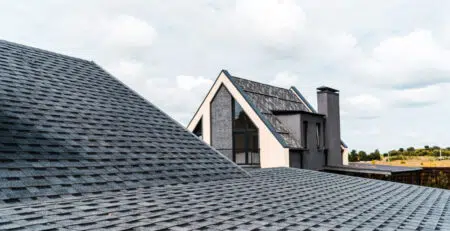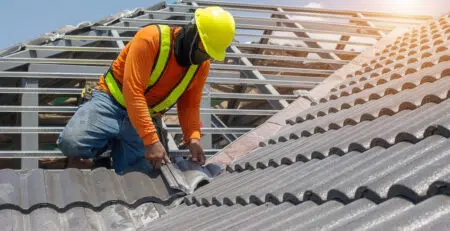
A lot of Chicago owners reach the same point the same way. You spot dark streaks from the alley, find granules in the downspout, or notice a few tabs lifting after a winter storm. Then the estimates start coming in, and suddenly the choice turns into a bigger question than expected: architectural shingles vs composite shingles.
That decision matters more here than it does in a mild climate. A roof in Chicagoland deals with freeze-thaw swings, wind off the lake, heavy snow loads, summer heat, and the occasional hail event that exposes every weak detail in the system. A shingle that looks fine on paper can behave very differently on a two-flat in Jefferson Park, a condo building in Lincoln Park, or a single-family home in Naperville.
Most owners start with price. That's understandable, but it’s not enough. The better question is what the roof will cost you to own, maintain, and replace over time, and how well it will handle the specific abuse Chicago weather delivers.
Choosing Your Next Roof in Chicago
A roof replacement usually doesn’t start as a planned upgrade. It starts with a leak stain on the top-floor ceiling, a home inspection report, or a contractor pointing out that the shingle edges are curling and the flashing is at the end of its run.
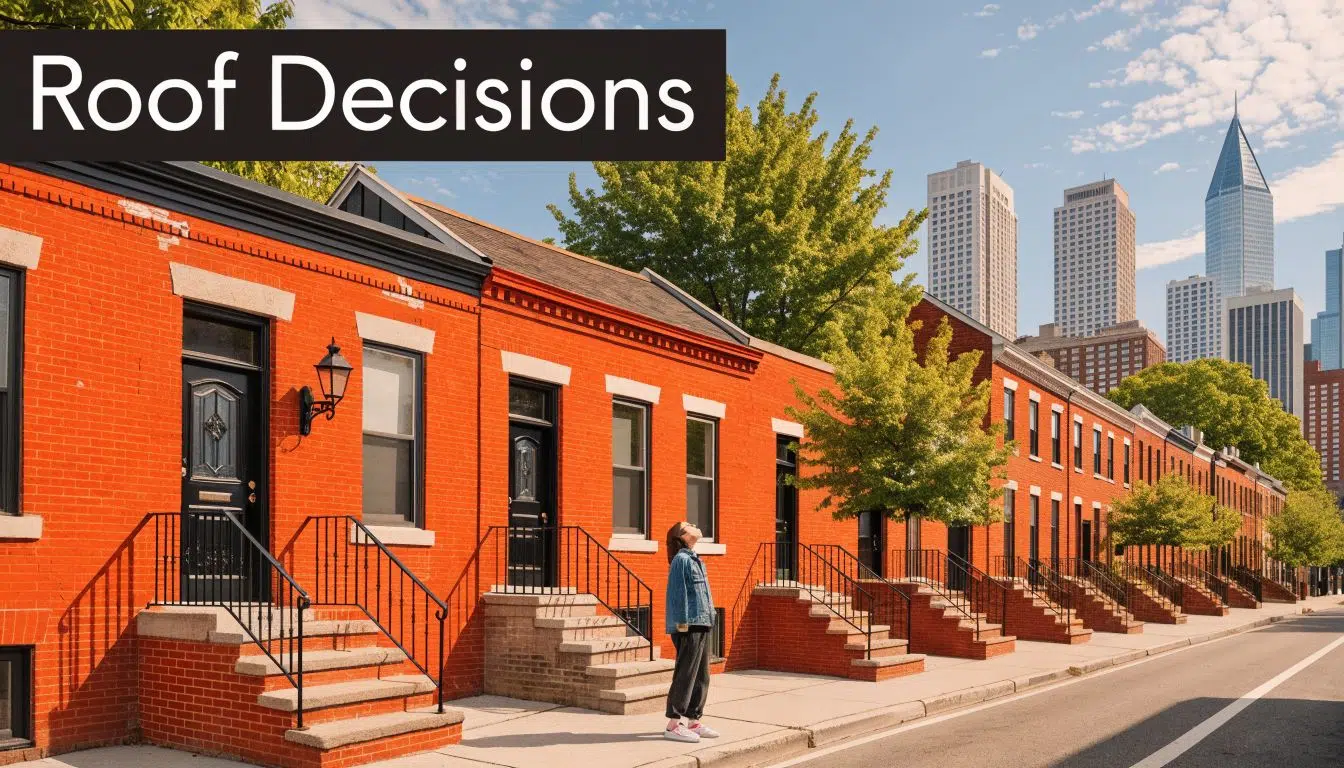
In Chicago, that moment hits different depending on the building. If you own a bungalow, you’re usually weighing budget against long-term reliability. If you manage a multi-unit property, you’re looking at disruption, warranty risk, and whether the next hailstorm will put you back into claims and patchwork repairs. If you oversee an older mixed-use building, structural load and detailing at transitions matter just as much as shingle choice.
Two strong options, different priorities
For most sloped-roof replacements today, the practical conversation narrows quickly to two categories:
- Architectural shingles for lower upfront cost and broad contractor familiarity
- Composite shingles for stronger weather performance and longer service life
Neither is automatically right for every property.
Practical rule: The cheapest installed roof often stops being the cheapest once Chicago weather starts working on it.
The right call depends on how long you’ll hold the property, how exposed the roof is, what condition the structure is in, and how much risk you’re willing to carry between now and the next full replacement.
What owners usually get wrong
The common mistake is comparing only the material price. That misses what drives trouble later:
- Exposure matters: Open lots, corner buildings, and lake-influenced gusts punish roofs harder.
- Building age matters: Older framing can limit heavier material options or trigger structural review.
- Ownership horizon matters: A landlord holding for years should evaluate the roof differently than someone preparing to sell.
That’s where the true architectural shingles vs composite shingles conversation starts. Not in the showroom. On your building, in this climate, with your budget and timeline.
Understanding the Core Materials
A Chicago owner usually sees the difference after a few winters, not on day one. Two roofs can look similar from the street and carry very different repair patterns, aging curves, and replacement timelines because the base materials are doing different work.
How architectural shingles are built
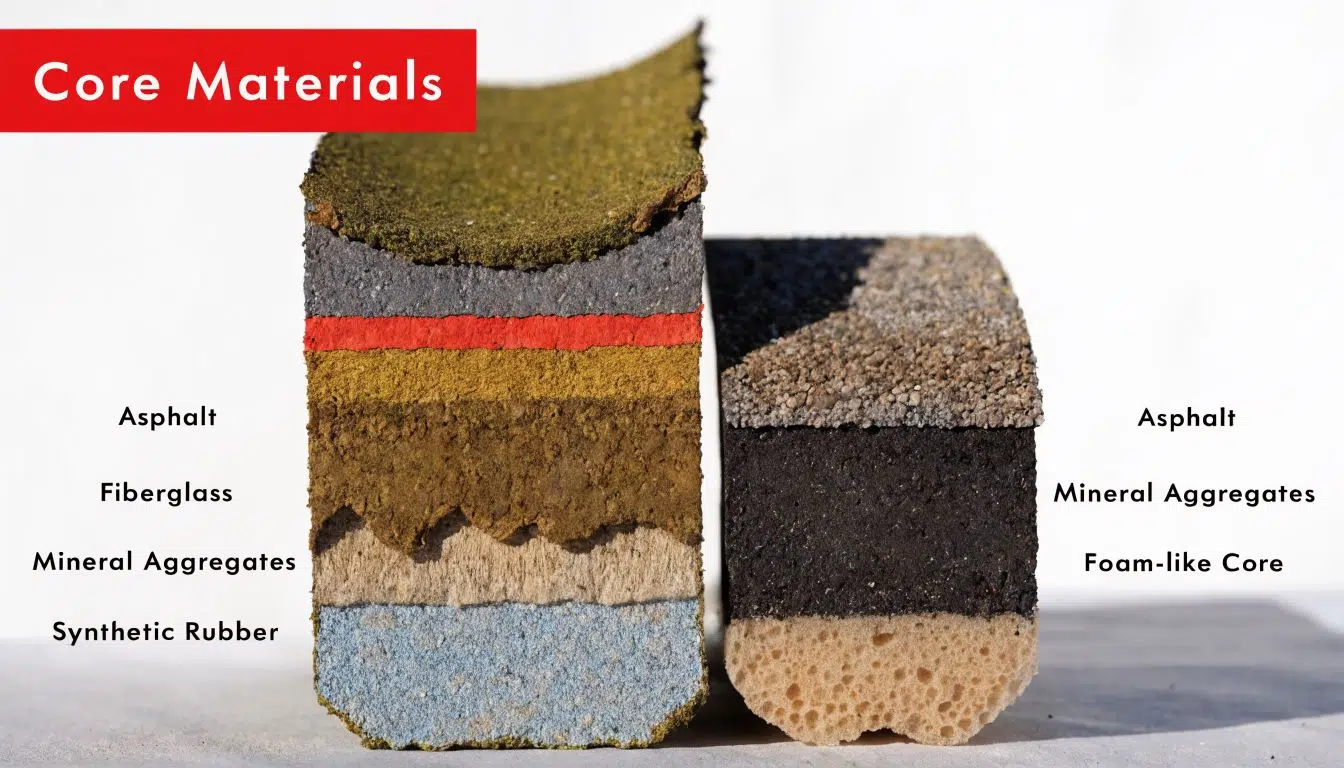
Architectural shingles use a fiberglass mat coated with asphalt and finished with ceramic granules. The laminated design gives them more thickness and definition than older three-tab products, but the system still depends on asphalt staying stable through heat, cold, and repeated seasonal movement.
That construction explains why architectural shingles remain common on Chicago homes and smaller multifamily buildings. Crews know the system well, materials are easy to source, and repairs are usually straightforward when a section gets damaged.
The trade-off is aging behavior. As the roof cycles through summer heat, winter cold, ice, and wind, the asphalt and granule surface take the wear. For a property owner comparing replacement timing and long-term upkeep, our guide to how long a roof should last in Chicago gives helpful context on what that looks like in local conditions.
How composite shingles are built
Composite shingles are made from engineered materials such as synthetic polymers and recycled content rather than a traditional asphalt-heavy blend. According to Arizona Roofers’ breakdown of architectural and composite shingles, architectural shingles typically last about 25 to 30 years, while advanced composite shingles can reach 40 to 50+ years.
That longer service life starts with the material itself. Composite shingles are built to resist moisture absorption, hold up better through temperature swings, and flex under impact instead of relying on asphalt to carry most of the load. On exposed roofs, that difference can mean fewer cracked tabs, less surface loss, and fewer nuisance repairs after storms.
Why the material difference matters in practice
Material choice affects total cost of ownership more than many owners expect.
On a simple ranch house in a protected neighborhood, architectural shingles often make financial sense because the roof is easy to access, repairs stay manageable, and the lower upfront cost matters. On a taller home, a corner lot, a lake-exposed property, or a mixed-use building with more wind exposure and detail work, composite can justify its price faster because service calls and earlier replacement carry real cost.
I also look at the building itself. Older homes with straightforward roof lines can do well with architectural shingles if the owner understands the maintenance cycle. Steeper roofs, complex valleys, dormers, and transitions put more stress on every roofing component, so a tougher shingle system starts to matter more.
A practical way to separate the two:
- Architectural shingles fit owners who want lower initial cost, wide product availability, and a proven system that many contractors can install and repair.
- Composite shingles fit owners who plan to hold the property longer, want better resistance to climate stress, and are trying to reduce disruption over time.
- Appearance is only part of the decision. In Chicago, the better question is how the material handles freeze-thaw movement, wind pressure, impact, and years of patching around penetrations and flashing details.
Performance Comparison for Chicago Weather
Chicago weather exposes weak roofing fast. The roof has to handle wind, hail, deep seasonal temperature changes, and the repeated freeze-thaw movement that works on edges, seals, flashing lines, and surface integrity.
Here’s the quick comparison first.
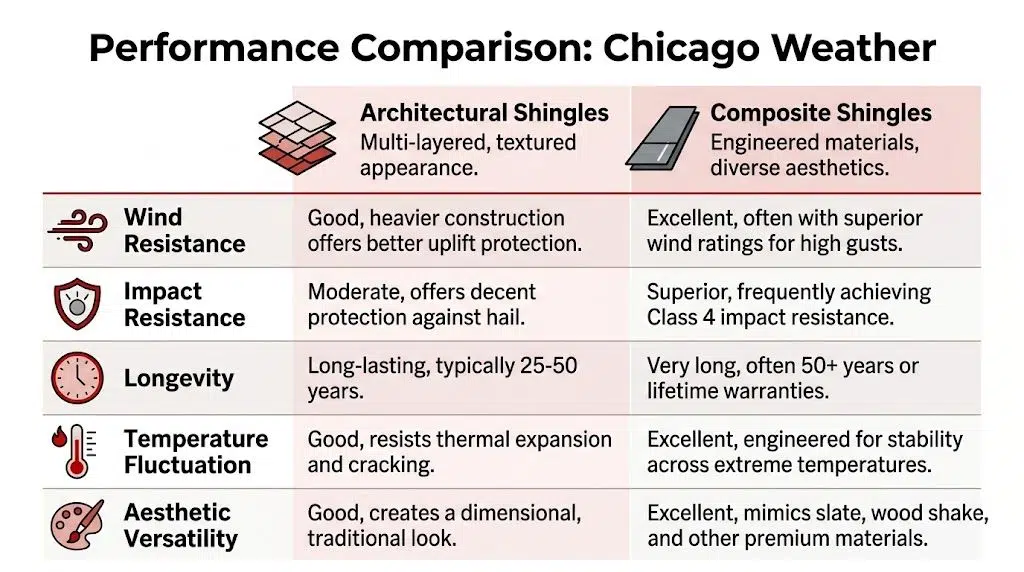
| Feature | Architectural Shingles | Composite Shingles |
|---|---|---|
| Lifespan | 25 to 30 years | 40 to 50+ years |
| Wind resistance | Around 90 mph failure threshold in the cited comparison | Up to 190 mph |
| Impact rating | Often Class 3 | Nearly all products achieve Class 4 in the cited comparison set |
| Hail performance | More prone to cracking | Better at absorbing impact through flexible polymer construction |
| Weight | 200 to 350 lbs per square | 300 to 600 lbs per square |
| Cost | $1 to $4 per square foot | $4 to $12 per square foot |
| Install pace | Often simpler and faster | Often slower due to weight and system demands |
Wind and hail
Severe storms separate these two products quickly. According to Peak and Valley Roofing’s composite vs asphalt comparison, composite shingles can withstand gusts up to 190 mph, while architectural asphalt reaches a failure threshold around 90 mph. The same source states that composites with a Class 4 impact rating can handle 2-inch hail at 89 mph without cracking, while architectural shingles often achieve only Class 3 and may crack under similar impact.
For Chicago owners, that matters less as a sales talking point and more as a damage-control issue. Wind doesn’t need to tear off an entire slope to create a problem. It just needs to break the seal, crease edges, or expose vulnerable areas around penetrations and ridges. Hail works the same way. The obvious hit isn’t always the expensive part. The hidden bruise or crack that starts leaking later is often worse.
If your building sits in an exposed corridor or takes repeated storm hits, composite earns its keep in performance alone.
Freeze-thaw performance
Chicago’s freeze-thaw cycles are hard on asphalt-based roofs because the roof isn’t just dealing with low temperatures. It’s dealing with repeated expansion and contraction, trapped moisture at vulnerable transitions, and surface wear that accumulates season after season.
Architectural shingles can perform well here, especially when the system is detailed correctly with sound underlayment, flashing, ventilation, and ice-management planning. But in practical terms, asphalt products are more susceptible to gradual brittleness, granule loss, and cracking after years of repeated thermal cycling.
Composite shingles have an edge because the polymer-based construction is more flexible. That flexibility helps absorb movement and impact instead of transferring all that stress into a brittle surface layer.
For owners comparing expected service life in this region, it helps to read local context on how long a roof should last in Chicago, because weather exposure and installation quality matter almost as much as the label on the bundle.
Weight and structural load
Some owners might find this surprising. Composite shingles can be substantially heavier.
That’s not automatically a deal breaker, but on older Chicago buildings it can become a design issue. A vintage home, older two-flat, or mixed-use structure with prior modifications may need a closer look before a heavy synthetic system goes on the roof.
A practical breakdown:
- Architectural shingles typically weigh 200 to 350 lbs per square
- Composite shingles typically weigh 300 to 600 lbs per square
That added weight can affect more than framing. It can influence staging, installation logistics, and transitions where the roof system changes direction or ties into another assembly.
Which one wins on performance
For pure weather performance, composite usually wins.
For practical, budget-conscious protection, architectural shingles still make sense on a lot of Chicago properties. They’re not a bad roof. They’re just a roof with clearer limits when storms, impact, and long ownership timelines are part of the equation.
Architectural shingles are the practical standard. Composite shingles are the stronger defensive option.
Analyzing the True Cost of Your New Roof
Most owners ask the wrong first question. They ask, “What’s the price per square foot?” The better question is, “What will this roof cost me over the time I own the property?”

Upfront cost is only the first line item
The material cost difference is real. According to Mighty Dog Roofing’s guide to composite vs asphalt shingles, architectural shingles typically run $1 to $4 per square foot, while composites run $4 to $12 per square foot. That same source states that composites’ longer lifespan and durability can produce a 20 to 40% lower Total Cost of Ownership over 40 years, factoring in insurance savings and fewer re-roofs.
That’s the central issue in architectural shingles vs composite shingles. Asphalt is cheaper to buy. Composite can be cheaper to own.
What goes into total cost of ownership
On a real Chicago job, the full cost picture includes more than shingle price:
- Tear-off and disposal: Multiple old layers, limited alley access, and cleanup logistics affect the final bill.
- Deck and substrate repairs: Rotten sheathing, soft spots, and moisture damage are common once the old roof comes off.
- Flashing work: Chimneys, parapet transitions, vents, valleys, and wall tie-ins often separate a durable roof from a problem roof.
- Structural review: Heavier composite systems may require closer evaluation on older buildings.
- Future disruption: A cheaper roof that needs earlier replacement creates another round of labor, disposal, tenant coordination, and risk.
For owners budgeting a replacement, local pricing context helps. A Chicago-specific cost discussion on how much a new roof costs in Chicago gives a better frame than a generic national estimate.
When architectural makes better financial sense
Architectural shingles usually make sense if your ownership horizon is shorter, your capital budget is tight, or the building does not justify a premium roof system.
That often fits:
- a house going to market soon
- a rental where near-term cash preservation matters most
- a roof geometry where future repairs are straightforward
- a property where structural load is already a concern
In those cases, trying to force composite onto the project can overcomplicate a job that really needs reliable, cost-controlled execution.
When composite makes better financial sense
Composite tends to pencil out better for owners planning to hold the property. The longer you own the roof, the more the replacement cycle, storm resilience, and reduced repair burden start to matter.
This is especially true for:
| Ownership situation | More practical fit |
|---|---|
| Shorter hold period | Architectural shingles |
| Long-term hold | Composite shingles |
| Storm-exposed property | Composite shingles |
| Strict capital budget today | Architectural shingles |
| HOA or multi-family planning for fewer future disruptions | Composite shingles |
The material choice isn’t just about what you can afford this year. It’s about whether you want to buy one roof decision or buy the same decision twice.
Installation and Maintenance Realities
A lot of roofing problems get blamed on the shingle when the underlying issue was installation. That’s especially true when owners compare two products without asking how the crew handles them in the field.
Installation is not equally forgiving
Architectural shingles are familiar territory for most roofing crews. They’re lighter, easier to handle, and generally faster to install. That matters on occupied properties, especially where access is tight and the schedule needs to stay controlled.
Composite shingles demand more discipline. They’re heavier, details matter more, and the crew has to follow the manufacturer’s system without improvising. On some buildings, that extra complexity shows up at ridges, valleys, wall transitions, and penetrations where a rushed installer can create expensive problems.
A good maintenance and installation baseline starts with the same fundamentals covered in these roof care and maintenance tips. The material changes some details, but the principle doesn’t. A roof only performs as well as the system beneath and around it.
Good shingles can’t rescue sloppy flashing, bad fastening, or ignored ventilation.
What to watch after installation
Owners don’t need to inspect a roof like a contractor, but they should know what signs matter.
For architectural shingles, pay close attention to visible wear patterns:
- Granule loss: Check gutters and downspouts for excessive buildup.
- Edge damage: Look for lifted corners, creasing, or tabs that no longer sit flat.
- Aging around details: Valleys, pipe boots, and chimney areas often show trouble first.
Composite roofs need a different eye:
- Interlock and alignment: Misalignment stands out more and can signal installation issues.
- Accessory details: Fasteners, trim pieces, and transition points need to stay tight.
- Impact review after storms: Even durable materials should be checked after major weather events.
Maintenance expectations by owner type
A single-family homeowner usually wants straightforward annual checks and quick storm follow-up. A landlord or HOA should be more systematic. Keep records, photograph problem areas, and make sure any repair work matches the original system.
That’s one place architectural shingles have a practical advantage. Most contractors know them well, and repairs are usually simpler to source and complete. Composite can reduce repair frequency, but when repair is needed, product matching and installer experience matter more.
Warranty, Insurance, and Environmental Factors
Warranty language matters most after something goes wrong. That’s why owners should read beyond the bold print on the brochure and ask what can void coverage in practical scenarios.
Warranty and claim reality
According to Home Genius Exteriors’ analysis of composite shingles vs asphalt shingles, Class 4 composites reduced hail claims by 40% in recent Midwest seasons, but field reports also showed 15% higher denial rates for synthetics due to installation errors. The same source notes that architectural shingles benefit from wider contractor familiarity, which can reduce the kinds of mistakes that trigger warranty problems.
That’s the part many owners miss. A stronger product does not automatically mean a smoother claim.
The best warranty is the one attached to a roof installed correctly the first time.
If you’re considering composite, ask who has installed that exact product before, how they handle flashing details, and whether the manufacturer has specific installation requirements for your roof design.
Insurance and sustainability
Insurance carriers may view impact-resistant roofing more favorably, especially where hail exposure is a concern. You should still verify everything directly with your carrier, because policy treatment varies and documentation matters.
Environmental considerations are more nuanced than they used to be. Composite products often appeal to owners who want recycled-content materials and a longer service life. Asphalt still carries an advantage in familiarity and repair simplicity, and asphalt recycling has expanded in major markets. For many owners, the practical environmental question comes down to this: do you want a roof that may be replaced sooner, or a roof that may require more upfront material and planning but fewer replacement cycles?
Making the Right Choice for Your Property
If you strip away the marketing, the decision usually comes down to ownership horizon, weather exposure, and tolerance for future disruption.
Choose architectural shingles if
- You need to control upfront cost. They remain the practical choice when capital is tight.
- Your ownership horizon is shorter. If you’re not planning to hold the property for the long haul, lower initial spend can be the smarter move.
- You want simpler contractor sourcing. Most crews are comfortable with architectural systems, which can make repairs and future service easier.
- Your building may not be ideal for a heavier roof. Older framing or uncertain structural conditions can steer the project toward a lighter option.
Choose composite shingles if
- You’re planning long-term. That’s where durability and lower ownership cost have room to matter.
- Your property takes weather abuse. Wind-exposed lots and storm-prone conditions favor stronger impact and wind performance.
- You want fewer replacement cycles. Less frequent full replacement can matter a lot for HOAs, landlords, and occupied buildings.
- Appearance matters, but so does resilience. Composite can deliver a premium look without moving into natural slate or wood maintenance territory.
Questions to ask any roofer before you sign
Don’t just ask for a price. Ask these:
- Which of these two systems fits my building best, and why?
- Have you installed this exact product type on Chicago-area buildings like mine?
- What details on my roof are most likely to fail first if they’re handled poorly?
- Do I need a structural review before choosing a heavier shingle?
- How do you document installation so warranty issues are easier to defend later?
A roof replacement is expensive. A wrong roof replacement is worse. In most cases, architectural shingles are the sensible short-to-mid-range answer, and composite shingles are the stronger long-range answer. The key is matching the material to the building instead of chasing the cheapest bid or the flashiest brochure.
If you want a Chicago-based opinion grounded in real building conditions, Expert Super Seal Roofing & Tuckpointing can evaluate your roof, explain whether architectural or composite shingles make more sense for your structure, and give you a clear estimate without the usual runaround.