When you're budgeting for a new commercial roof in Chicago, you need a straight answer on costs. Let's get right to it: for a professionally installed TPO roofing system in 2026, you can expect to invest somewhere between $6.50 and $11.50 per square foot.
This all-in price covers the essential materials, the specialized labor, insulation, and all the necessary components for a complete, watertight system. Of course, the final number will shift based on your building's specific size, the complexity of the roof, and the exact materials you choose.
Your 2026 Chicago TPO Roofing Cost Breakdown
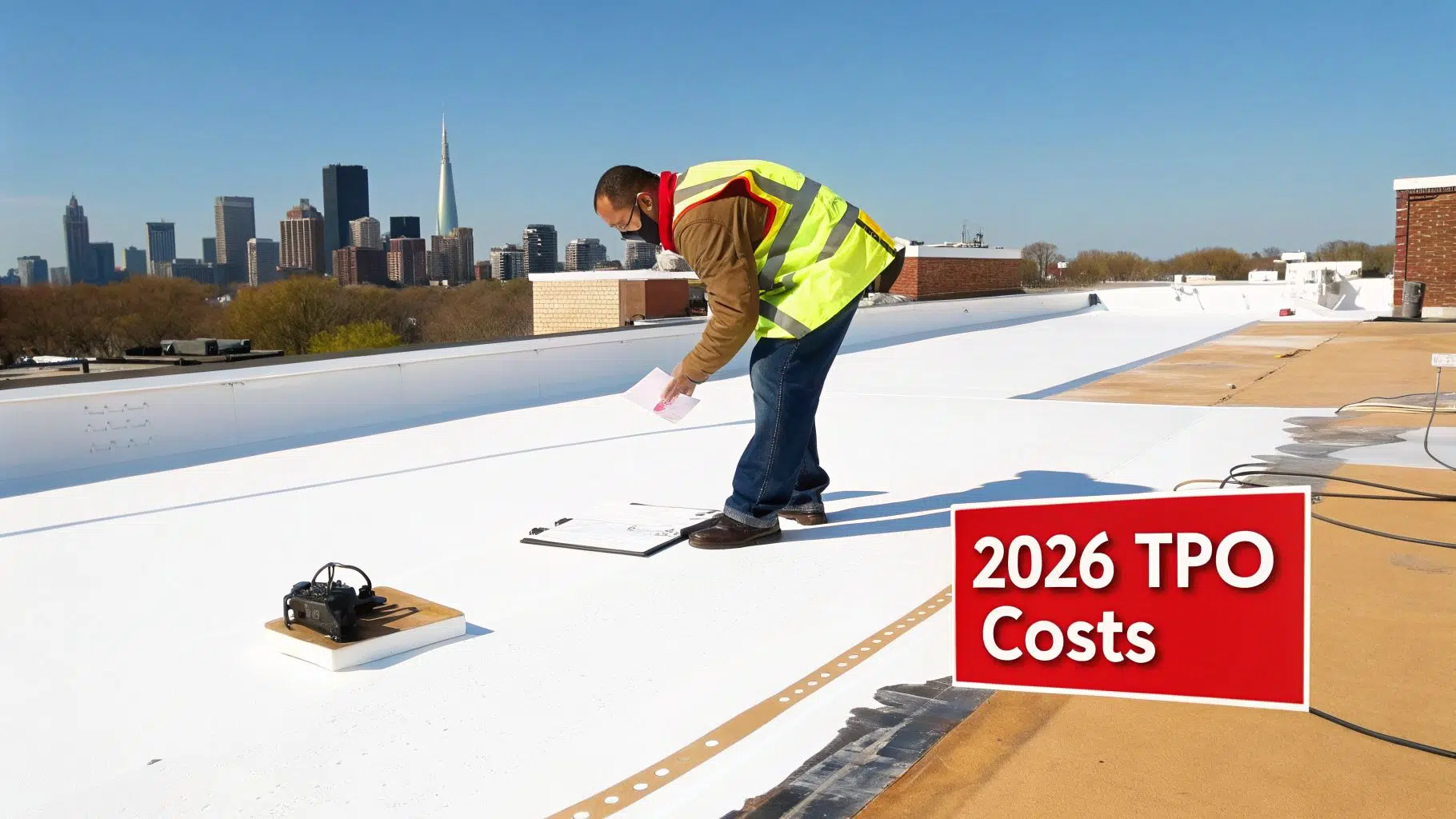
A new roof is a major capital investment, and you need a realistic budget, not a vague guess pulled from thin air. Understanding the commercial TPO roof cost in Chicago isn't about a single number; it’s about knowing the specific factors that drive prices right here in our market.
Think of a TPO system as high-performance armor for your property. It's an asset engineered to protect your building from brutal Chicago winters and humid, sweltering summers. This guide breaks down the 2026 pricing so you can plan your project with confidence and see why this modern, energy-saving material is the top choice for so many warehouses, retail centers, and condo buildings across Chicagoland.
To give you a clearer picture, here's a quick look at how these per-square-foot costs translate into total project estimates for typical commercial building sizes.
Chicago TPO Roofing Cost At-A-Glance (2026 Estimates)
| Building Size (sq ft) | Avg. Cost Per Square Foot | Estimated Total Project Cost |
|---|---|---|
| 10,000 | $7.50 – $11.50 | $75,000 – $115,000 |
| 25,000 | $7.00 – $10.50 | $175,000 – $262,500 |
| 50,000 | $6.75 – $9.75 | $337,500 – $487,500 |
| 100,000+ | $6.50 – $9.00 | $650,000 – $900,000+ |
As you can see, larger projects often benefit from economies of scale, bringing the per-square-foot cost down. Now, let's dive into the specific factors that make up these numbers.
Chicago-Specific Pricing Factors
While national averages are a decent starting point, they don't capture the full story of our local market. The $6.50 to $11.50 per square foot range for a fully installed system here is very Chicago-specific.
So, what makes up that cost? On a typical project, the TPO membrane itself (from standard 45-mil to heavy-duty 80-mil) runs about $1.75 to $3.75 per square foot. Labor adds another $3.25 to $5.50, and the crucial polyiso insulation and flashing work will contribute $1.50 to $2.50. You can see how these costs compare with national trends in this helpful TPO roofing cost guide.
Here are the key elements that set Chicago's pricing apart:
- Skilled Union Labor: Labor rates in the city are often 10-15% higher than in many other parts of the country. This premium ensures you have highly trained, certified installers who know how to handle the unique demands of commercial projects in an urban environment.
- Job Site Logistics: Working in Chicago presents unique challenges. Tight downtown sites, navigating traffic, and craning materials onto tall buildings all add complexity, time, and cost to a project compared to a wide-open suburban site.
- Strict Building Codes: Chicago has some of the most stringent energy codes in the nation. This often means we're required to install a thicker, higher R-value insulation board. While this adds to the upfront material cost, it pays you back year after year with significant savings on your heating and cooling bills.
By understanding these local factors, you can more accurately evaluate contractor bids and appreciate where your money is going. You’re not just buying a roof; you’re investing in a durable, compliant, and highly energy-efficient asset for your building.
Why TPO Is a Smart Investment for Chicago Buildings
When you're looking at roofing quotes, it's easy to get fixated on the initial cost. But with a TPO roof, that's only part of the story. To really understand its value, you need to think of it less as an expense and more as a long-term investment in your building's performance and financial health.
I like to compare it to buying a high-performance technical jacket. Sure, an old cotton coat might keep you dry for a bit, but it gets heavy and waterlogged fast. A modern jacket, on the other hand, is lightweight, has completely sealed seams, and is built to handle whatever the weather throws at it.
A TPO roof works the same way for your building. Its smart design isn't just about covering the property; it's about delivering real-world results like lower energy bills, fewer headaches, and a building that holds its value longer.
Thriving in Chicago's Extreme Weather
Let's be honest, Chicago weather is brutal on buildings. We all know the cycle: the constant freezing and thawing from fall through spring attacks traditional roofing materials like tar and gravel. Water gets into tiny cracks, freezes, expands, and turns small problems into big, expensive ones.
This is where TPO really shines. The material is engineered to be flexible, so it can expand and contract with our wild temperature swings without cracking or becoming brittle. For a building owner, that means far fewer frantic calls for emergency repairs after a blizzard and a roof that can reliably protect your property for up to 20-30 years.
And it's not just the material itself. A TPO roof’s seams aren't held together with glues or sealants that break down over time. We use a hot-air welder to literally melt the panels together, creating a single, solid sheet of membrane across your entire roof. That heat-welded bond is actually stronger than the TPO material itself, making leaks at the seams virtually a thing of the past. To see more on how this works, check out our guide on the benefits of TPO roofing for Chicago flat roofs.
Slashing Summer Energy Bills
Beyond its toughness, the biggest financial win with a white TPO roof comes from its incredible energy efficiency. Think about a typical black roof on a hot July day in Chicago. It's absorbing the sun's heat all day long, with surface temperatures soaring to 170°F or even higher. All that heat radiates straight down into your building, forcing your AC to run constantly just to keep up.
A reflective white TPO membrane flips that script. It’s what we call a "cool roof" because it reflects the majority of the sun's harsh UV rays instead of absorbing them. This one feature can drop the roof's surface temperature by a staggering 50-60°F. This isn't just a neat trick; it translates directly into savings.
- Lower Utility Costs: Building owners often report a 10-15% reduction in their peak air conditioning costs, which adds up fast during a hot summer.
- Reduced HVAC Strain: When your cooling equipment isn't fighting a super-heated roof, it runs less and more efficiently. This extends the lifespan of your expensive HVAC units.
- Improved Occupant Comfort: A naturally cooler building means happier and more productive employees, tenants, or customers.
When you weigh the resilience against Chicago's weather with the very real energy savings, the upfront TPO roof cost stops looking like an expense and starts looking like one of the smartest investments you can make for your property.
Breaking Down Your TPO Roofing Quote
Getting a commercial roofing quote can be overwhelming. You’re handed a document packed with industry jargon, measurements, and a final price that leaves you wondering where the money is actually going. Let's pull back the curtain and decode that proposal, line by line, so you know exactly what you’re paying for.
When you can read a quote with confidence, you shift the conversation from "which one is cheapest?" to "which one offers the best long-term value?" A low bid isn't a good deal if it means cutting corners on the very things that make a roof last.
Material Costs: The TPO Membrane Itself
The first major line item you’ll see is the TPO membrane. The key detail here is its thickness, which is measured in "mils" (one-thousandth of an inch). The common options you’ll encounter are 45, 60, and 80 mil.
A good way to think about this is like the tread on a car tire. A 45-mil membrane is the entry-level option. It meets code and works for roofs with very little foot traffic, but it has a thinner protective layer to wear away over time.
- 60 Mil: This is the workhorse of the industry and by far the most popular choice for Chicago commercial buildings. It hits the sweet spot between durability and price, offering a much tougher wear layer that stands up better to foot traffic, hail, and general weathering.
- 80 Mil: If your roof has a lot of heavy HVAC units that require frequent servicing, or if your priority is maximizing the roof's lifespan, the 80-mil membrane is the top-tier choice. It costs more upfront, but for high-stress environments, its superior toughness often translates to the best long-term investment.
The Unsung Hero: Insulation and R-Value
Right underneath the TPO membrane is another critical, and significant, cost: the insulation. In Chicago, this isn’t just a nice-to-have; our building codes mandate it. Your quote will specify the type—almost always polyisocyanurate (polyiso) rigid foam board—and, most importantly, its thickness.
That thickness directly translates to the roof's R-value, which is simply a measure of how well it resists heat flow. The higher the R-value, the better it keeps your expensive heated air inside during our brutal winters and keeps the sun's heat out during the summer. This has a direct, measurable impact on your monthly energy bills.
It’s easy to be tempted by a quote that uses thinner, less expensive insulation. But a properly insulated roof is an investment that pays you back every single month in lower energy costs for the next 20 to 30 years. Skimping here is a classic example of being penny-wise and pound-foolish.
The benefits of the entire TPO system—from its reflective surface to its welded seams—are what make it such a smart choice for local properties.
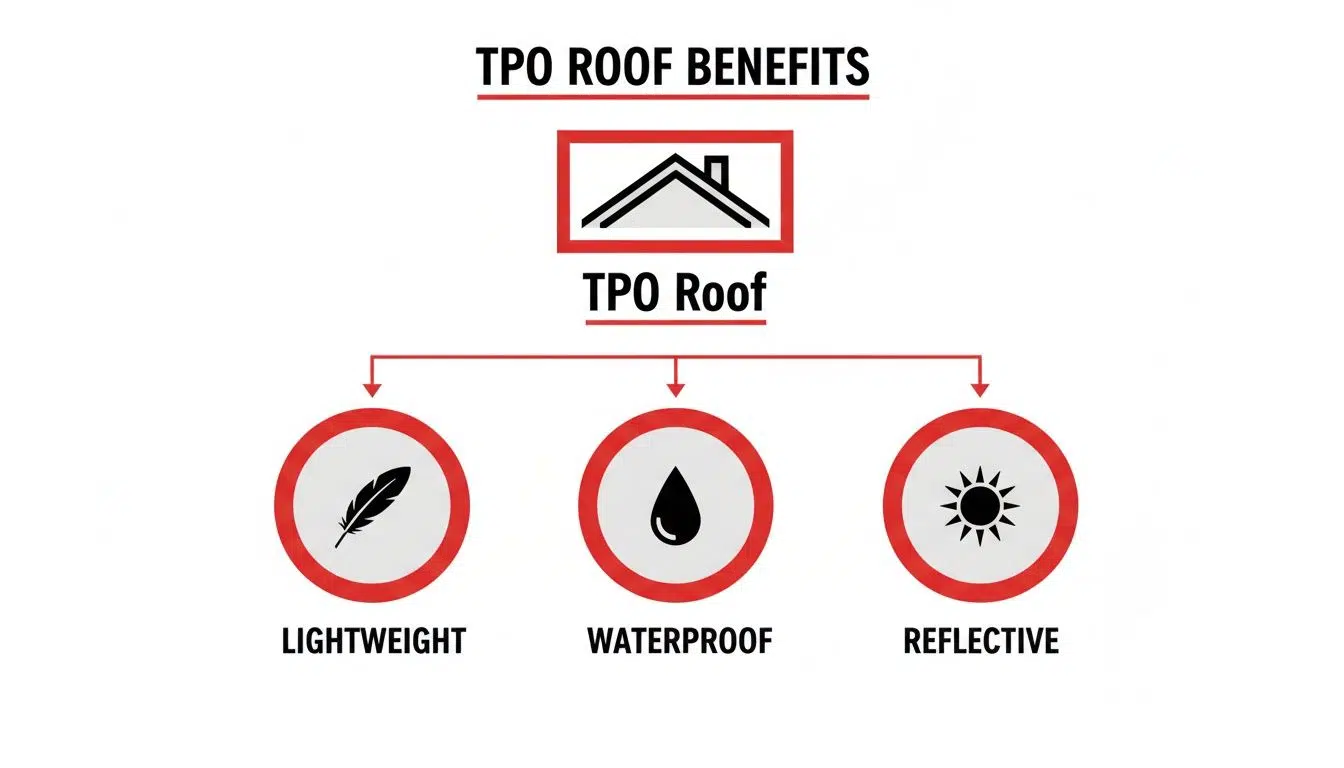
As you can see, the system is designed to be lightweight (reducing stress on your building's structure), completely waterproof, and highly reflective to save on cooling costs.
Labor Costs: Where Craftsmanship Matters Most
Materials are only half the story. The labor portion of your quote is often the largest and reflects the skill and time required for a proper installation—something just as vital as the materials themselves.
Full Tear-Off and Disposal
Any experienced roofer will tell you that covering an old, worn-out roof is just asking for trouble. That's why a full tear-off is standard practice. This line item covers the intensive labor needed to remove every layer of the old system down to the structural deck and the fees for hauling it all away to a proper disposal facility. It’s a messy, tough job, but it’s absolutely essential for a reliable, warrantied roof.
The Details: Vents, Drains, and Penetrations
This is where true roofing craftsmanship is on full display. Your roof isn't just a big, flat surface; it's dotted with HVAC curbs, plumbing vents, drains, skylights, and exhaust fans. Every single one of these "penetrations" is a potential leak point. Sealing them correctly requires meticulous, time-consuming detail work to flash and weld the membrane perfectly. A suspiciously low bid often means the contractor is underestimating—or planning to rush—this critical work.
Based on 2026 figures from local projects, a base TPO installation in Chicago generally runs between $6 and $12 per square foot, including insulation. For smaller buildings, this might mean a total cost of $20,000 to $35,000 for a 3,000 sq. ft. roof. On a larger 10,000 sq. ft. commercial property, the budget can easily be $60,000 to $120,000 or more, depending on the complexity.
Understanding these individual cost drivers is key to comparing quotes effectively. And while this guide is focused on full replacements, these same factors also influence repair jobs. For more on that, check out our guide on the factors influencing commercial flat roof repair costs.
TPO Roofing Cost Scenarios for Chicago Properties
It’s one thing to see a list of cost factors, but it’s another to see how they all add up on a real project. To give you a practical sense of the commercial TPO roof cost in Chicago, let's walk through three realistic scenarios for common building types you'd find around the city and suburbs.
These examples really highlight how the final price tag is shaped by the size of your roof, its complexity, and your specific goals as a building owner. Seeing these breakdowns will give you a solid benchmark for evaluating the quotes you get for your own property.
Scenario 1: The Aurora Retail Space
First up, let’s look at a 3,000-square-foot, single-story retail building in a typical Aurora strip mall. The owner's main concern is replacing a tired, leaking roof with something reliable and up to code, but without any costly extras. This is all about getting the job done right and on budget.
The roof itself is fairly simple—just a few plumbing vents and two small HVAC units. With easy ground access and a low building height, the labor costs stay very manageable. The owner goes with a standard, high-quality 60-mil TPO membrane, which offers a great mix of durability and value.
- Roof Size: 3,000 sq. ft.
- System: Standard 60-mil TPO, fully adhered, with R-30 polyiso insulation.
- Complexity: Low. Minimal penetrations and straightforward access.
- Estimated Cost Per Sq. Ft: $8.25
- Estimated Total Project Cost: Approximately $24,750
Here, the cost is almost entirely driven by the standard materials and the labor for a routine tear-off and installation. The project's simplicity is what keeps the price on the lower end of the spectrum for the Chicago area.
Scenario 2: The Lincoln Park Condo Building
Now for something completely different: a four-story, 15,000-square-foot condo building in Lincoln Park. The property manager here is juggling a roof crowded with HVAC units, numerous kitchen and bathroom exhaust vents, skylights, and even a rooftop deck.
This is a far more complex job. Every one of the 30+ penetrations needs meticulous, time-consuming detail work to create a perfect, watertight seal. The building's height and tight urban location also mean all materials have to be craned up, which adds another layer of cost and logistics.
On a roof this complicated, the labor portion of the bid can easily eclipse the material costs. A good contractor’s quote reflects the sheer amount of skilled time needed to flash every curb, pipe, and drain flawlessly. It’s that detail work that prevents future leaks and protects the condos below.
- Roof Size: 15,000 sq. ft.
- System: 60-mil TPO, mechanically attached, with R-30 insulation.
- Complexity: High, with over 30 penetrations, a rooftop deck, and challenging site access.
- Estimated Cost Per Sq. Ft: $10.50
- Estimated Total Project Cost: Approximately $157,500
That higher price per square foot is a direct result of the immense labor involved in the detail work and the logistical hurdles of operating on a mid-rise building in a dense neighborhood.
Scenario 3: The Joliet Warehouse
Our final example is a massive 50,000-square-foot distribution warehouse in Joliet. For the facility director, the number one priority is slashing the building’s huge heating and cooling bills by maximizing energy efficiency. The roof itself is a giant, wide-open canvas with very few obstacles.
The focus here shifts to the insulation package. Instead of the standard R-30, the director opts for a thicker, high-performance R-38 polyiso insulation board. While this move increases the upfront material cost, the long-term energy savings create a clear return on investment.
Because the roof is so large and open, the installation crew can work incredibly efficiently, which helps bring the labor costs down and offset some of the added material expense. This is a perfect example of economies of scale in action.
- Roof Size: 50,000 sq. ft.
- System: 60-mil TPO with a premium R-38 insulation package for maximum energy efficiency.
- Complexity: Low, thanks to a wide-open roof and excellent access.
- Estimated Cost Per Sq. Ft: $8.75
- Estimated Total Project Cost: Approximately $437,500
Even with the upgraded insulation, the cost per square foot remains reasonable due to the project's sheer size and simplicity. As you can see, the final commercial TPO roof cost in Chicago isn't a fixed number—it’s a direct reflection of your unique building and your specific goals.
How to Get an Accurate TPO Roofing Bid in Chicago
You’ve probably heard the old advice: "get three estimates." When it comes to a major investment like a commercial roof in Chicago, that advice is flat-out wrong. Simply collecting a few numbers won't help you find the best value; it just helps you find the cheapest price, and those two things are rarely the same.
Finding the right partner for your project means demanding more than a single, lump-sum number scribbled on a one-page quote. That kind of bid is a huge red flag. A true professional will provide a transparent, itemized proposal that lets you compare apples to apples, so you know exactly where every dollar is going.
Your Contractor Vetting Checklist
Before you even glance at the price, you need to vet the company behind the bid. This is your first line of defense against unqualified crews, surprise costs, and major headaches down the road.
- License and Insurance: Don’t just take their word for it. Ask to see a current copy of their Illinois State Roofing License. You also need a certificate of insurance showing they have both general liability and, crucially, worker’s compensation coverage specifically for roofing work.
- Manufacturer Certifications: The best contractors are certified by the manufacturers whose products they install (think GAF, Carlisle, or Firestone). This isn't just a fancy badge; it's often a requirement to get the strongest manufacturer warranties on the materials themselves.
- Local Experience and References: A roofer with deep roots in Chicago gets it. They understand our city's specific building codes, the wild swings in our climate, and the unique logistical challenges of working on urban properties. Ask for a list of local projects similar to yours.
A detailed bid isn’t just good practice; it's a window into the contractor's process. It shows they have thoroughly inspected your roof and are planning a complete, code-compliant system, not just slapping down a new membrane.
Demanding a Truly Itemized Quote
Once you’ve narrowed your list to a few qualified contractors, it's time to insist on a proposal that breaks everything down. This is what empowers you to spot where one company might be cutting corners while another is building a roof designed to last.
Your quote should spell out these details in plain English:
- Full Scope of Work: Look for a clear, step-by-step plan. This must include a full tear-off of the old roof system right down to the structural deck.
- TPO Membrane Specifications: It should name the brand, the exact thickness (a 60-mil membrane is the industry standard for durability), the color, and how it will be attached (fully adhered or mechanically attached).
- Insulation Details: The proposal needs to specify the type of insulation (like polyiso), its thickness, and the final R-value the system will achieve.
- Warranties: Make sure you see two separate warranties detailed: the manufacturer's material warranty and the contractor's workmanship warranty. The workmanship warranty is your direct protection against installation mistakes.
For Chicago building owners and property managers, getting the insulation right is critical. In fact, data from 2026 shows that 60% of local businesses choose TPO systems precisely because they are an effective way to meet the city's strict R-30 insulation requirement and avoid potential fines or insurance issues.
By following this game plan, you can move past the price-shopping phase and confidently evaluate what you’re actually getting for your money. You’ll be able to choose a skilled partner who will deliver a tough, high-performing roof that protects your asset for decades. To see how we build our proposals and what a truly transparent bid looks like, take a look at our commercial TPO roofing services.
Protecting Your TPO Roof Investment
Getting that new TPO roof on your building is a huge step. But the job isn't done just because the crew has packed up. Now it's all about making that investment last as long as possible and squeezing every ounce of value from it. To do that, you need to know what’s protecting you—and I’m not just talking about the white membrane over your head.
Most building owners are surprised to learn they actually hold two different warranties. It helps to think of them as two separate layers of protection for your building.
Understanding Your Warranty Coverage
First, you have the manufacturer’s warranty. This comes from the company that produced the TPO material, like GAF or Carlisle. It’s pretty straightforward: if the membrane itself has a defect and fails before it should, this warranty is your safety net for getting the material replaced.
The second warranty, and the one that really matters for your day-to-day peace of mind, is the contractor’s workmanship warranty. This is your roofer’s promise, and it protects you from problems caused by the installation itself. The long-term success of a TPO system depends almost entirely on the skill of the installers—getting those seams, drains, and vents sealed perfectly is what makes or breaks a roof.
A rock-solid workmanship warranty from a trusted, established Chicago roofer is your single best line of defense against leaks. It’s the contractor’s personal guarantee that if their work causes a problem, they'll be back to make it right.
This is exactly why choosing a local company with a long track record is so critical. After all, a warranty is only as good as the company standing behind it.
A Simple Plan to Extend Your Roof’s Life
But even the best warranties are a fallback plan. The most powerful tool for protecting your roof is simple, proactive maintenance. Think of it like changing the oil in your car—a little bit of consistent care can add years to its life, often pushing it far beyond the official warranty period. A well-cared-for TPO roof can easily last 20 to 30 years, even with Chicago's brutal weather.
Here’s a practical plan for keeping your roof in prime condition:
Semi-Annual Inspections: Have a professional roofer walk your roof every spring and fall. They know what to look for: clogged drains, piled-up leaves and debris, and any punctures or damage to the membrane that can happen from foot traffic or flying debris.
Keep Drains and Gutters Clear: A clogged drain is a flat roof’s number one enemy. When water has nowhere to go, it creates "ponding," which adds a tremendous amount of weight and dramatically speeds up how quickly the roofing materials break down.
Control Rooftop Access: Be strict about who goes on your roof and why. When HVAC crews or other technicians need access, make sure they stick to designated walkway pads. It’s all too easy for a dropped tool or a misplaced step to create a tiny puncture that becomes a big leak.
In the end, the real commercial TPO roof cost in Chicago isn’t just the number on your initial invoice. It’s the total cost of ownership over two or three decades. By understanding your warranties and sticking to a simple maintenance schedule, you turn a major expense into a reliable, long-term asset that protects your entire building.
Frequently Asked Questions About TPO Roofing in Chicago
When you're looking at a big project like a new roof, the questions start piling up. That's a good thing. To help you get the clarity you need, we've answered some of the questions we hear most often from fellow Chicago property owners about TPO systems.
How Long Does a TPO Roof Last in Chicago?
A properly installed TPO roof is a workhorse, designed to handle the brutal weather swings we get here. You can realistically expect a quality system to last anywhere from 20 to 30 years. It holds up remarkably well against our freeze-thaw cycles, summer UV rays, and driving rains.
But here’s the thing: the material is only half the battle. A roof's real lifespan comes down to the quality of the installation and a commitment to upkeep. When a certified crew installs your roof and you have it checked out twice a year, you’re not just hoping it lasts—you’re ensuring it protects your investment for decades.
Can You Install a TPO Roof in a Chicago Winter?
We get this question all the time, especially when a roof fails unexpectedly in January. The short answer is yes, but it’s tricky. The real magic of a TPO system happens when we heat-weld the seams, creating a single, waterproof sheet. For that weld to set perfectly, the air temperature really needs to be above 40°F.
An experienced Chicago crew knows how to navigate this. We become obsessive weather-watchers, looking for those brief windows of mild temperatures. While a winter installation is definitely possible, it requires a lot more planning and patience than a job done in the spring or fall.
The Bottom Line: While we can technically install TPO in the winter, it’s not the ideal scenario. If you can, scheduling your replacement for spring, summer, or fall will almost always lead to the best results and a smoother project.
Are There Tax Credits for an Energy Efficient TPO Roof?
Absolutely, and they can make a real difference to your bottom line. Federal programs are often available that offer tax credits for installing energy-efficient building components. A reflective white TPO roof, especially when installed over new, high-R-value insulation, is exactly the kind of upgrade these incentives are designed for.
These programs and their requirements can change from year to year, so it's always best to talk to a tax professional. We can work with you and your accountant to make sure the specific TPO system you're considering meets the current federal standards, adding a nice financial perk to your investment.
What Is the Difference Between Adhered vs. Mechanically Fastened?
This all comes down to how we attach the TPO membrane to the building. Think of it as choosing between glue and screws—each has a specific purpose and benefit.
- Fully Adhered System: Here, we use a powerful bonding adhesive to glue the TPO membrane directly to the insulation underneath. This method gives you a sleek, smooth finish and incredible resistance to wind uplift, making it a top choice for buildings in high-wind areas or where aesthetics are a priority.
- Mechanically Fastened System: With this approach, we use special plates and long screws to anchor the membrane through the insulation and into the roof deck. It’s typically faster and a bit more budget-friendly, making it a very common and effective choice for large, wide-open roofs like warehouses and distribution centers.
Picking the right attachment method is a critical decision that directly impacts the commercial TPO roof cost in Chicago and how it performs over time. A good contractor won't just pick one; they'll recommend the right system based on your building's height, structure, and how you use it.
Ready to get a clear, transparent quote for your Chicago commercial property? The team at Expert Super Seal Roofing & Tuckpointing has been delivering reliable roofing and masonry solutions since 1972. We provide free, no-obligation estimates to help you plan your next project with confidence. Contact us today to get started.