If you own or manage a property in Chicago, you know the roof takes a serious beating. Between the lake-effect snow, brutal freeze-thaw cycles, and blistering summer sun, it's no wonder property managers are constantly looking for durable, cost-effective solutions.
When it comes to roof coating repairs, the good news is you have a smart alternative to a full, disruptive replacement. For most commercial projects in the city, you can expect to budget between $4 and $9 per square foot.
A Quick Guide To Chicago Roof Coating Repair Costs
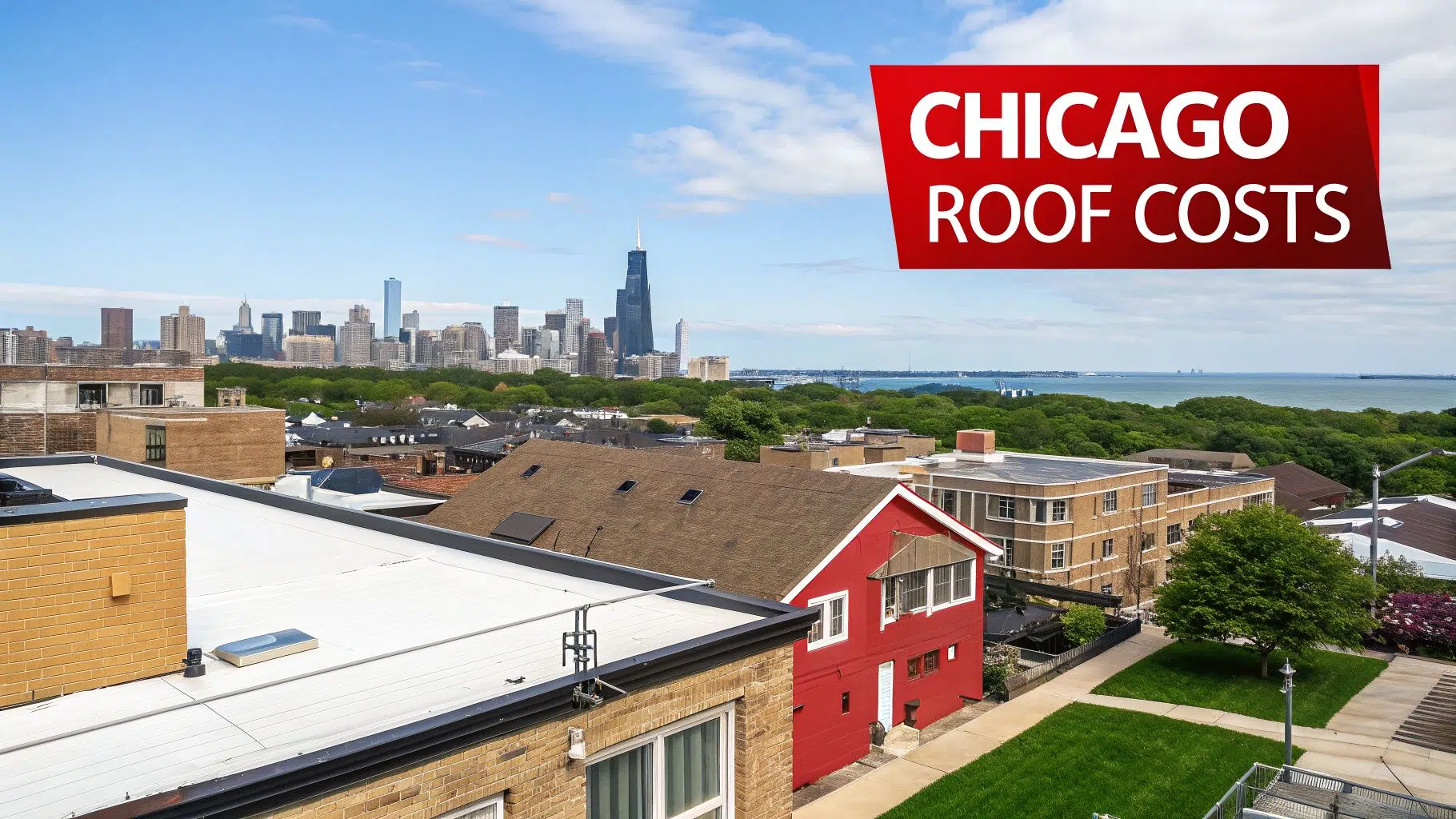
Think of a professional roof coating as a seamless, liquid-applied membrane that acts like a high-performance jacket for your building. It’s specifically engineered to protect your property from everything our climate throws at it—without the staggering cost and headache of a complete tear-off.
Let's get straight to the numbers. Based on real-world 2026 data from projects across Chicagoland, that $4 to $9 per square foot range holds true for most common commercial repairs. For perspective, recoating a 1,000-square-foot flat roof on a typical condo building in Lincoln Park or Lakeview would likely land somewhere between $4,000 and $9,000.
These figures represent a significant saving when you see how they stack up against more traditional roof work. For a broader comparison, you can explore the data on various Chicago roof repairs over at Angi.com.
A professional roof coating isn't just a patch. It's a strategic investment that seals leaks, extends the life of your existing roof by 10-20 years, and can even lower your building's energy bills during our hot, humid summers.
Costs at a Glance: A Look at Common Chicago Properties
To give you a better feel for what to expect, we’ve put together a quick look at typical roof coating repair costs for different property types you see all over Chicago. These are ballpark figures, of course—only a professional inspection can lock in a precise quote for your specific roof.
This table breaks down how the job cost scales with the size of the building, from a classic Chicago bungalow to a larger industrial space.
2026 Estimated Roof Coating Repair Costs in Chicago at a Glance
| Property Type | Typical Size (sq ft) | Estimated Cost per Sq Ft | Total Estimated Job Cost |
|---|---|---|---|
| Chicago Bungalow (Flat Roof Portion) | 800 sq ft | $4.00 – $7.00 | $3,200 – $5,600 |
| Three-Flat Condo Building | 1,500 sq ft | $4.50 – $8.00 | $6,750 – $12,000 |
| Small Commercial Retail Space | 2,500 sq ft | $5.00 – $9.00 | $12,500 – $22,500 |
| Medium Industrial Warehouse | 10,000 sq ft | $5.50 – $9.50 | $55,000 – $95,000 |
As you can see, the per-square-foot cost can shift based on the project's scale and complexity, which is something we'll dive into next.
What Drives Your Final Roof Coating Cost
Ever get two quotes for what seems like the same roofing job and wonder why the numbers are worlds apart? It’s a common question. The truth is, a roof coating estimate is a cocktail of different factors, and understanding what goes into that mix is your best tool for evaluating any proposal you get.
Think of it like commissioning a custom piece of furniture. The price isn't just the wood. It's the type and quality of that wood, the detailed work needed to shape it, and the skill of the artisan putting it all together. It’s the same story with your roof coating repair costs here in Chicago—there’s a lot more to it than just the square footage.
The Condition and Complexity of Your Roof
More than anything else, the current state of your roof will dictate the cost. If your roof is clean and in great shape, it’s basically a primed canvas, ready to go. But let’s be real—most roofs needing a new coating have taken a beating from Chicago weather and need some serious prep work first.
- Extensive Cleaning: We’re not talking about a simple sweep. Years of caked-on grime, algae, moss, and other debris have to be completely blasted away. This almost always means industrial-grade power washing, which adds time, labor, and equipment costs right off the bat.
- Essential Repairs: A coating is a shield, not a structural cure-all. Before we can apply a single drop, we have to fix any open seams, cracks, punctures, or waterlogged insulation. The more of these issues we find, the more work is needed upfront.
- Ponding Water Issues: Flat roofs in Chicago are notorious for "ponding"—those stubborn puddles that form in low spots after a rain. These areas are weak points and demand special treatment, often with specific primers and thicker layers of a tough, water-resistant coating like silicone. This directly bumps up material and labor costs.
The Type and Quality of the Coating Material
Just like there are different tiers of house paint, roof coatings come in a wide range of formulas with different price tags and capabilities. The material you choose is a huge piece of the cost puzzle. For instance, a high-end silicone coating made to withstand ponding water on a flat roof is going to cost more per gallon than a standard acrylic you might use on a sloped roof.
This is where you have to think long-term. A cheaper material might save you money today, but it probably won’t have the muscle to handle Chicago's brutal freeze-thaw cycles or humid summers. A good contractor won’t just point you to the cheapest option; they’ll recommend the right material for your roof's unique challenges.
Choosing the right coating is an investment in your building's future. A high-quality, professionally applied coating can extend your roof's life by 10 to 20 years, effectively postponing a full replacement that could cost tens of thousands more.
Roof Size and Accessibility
This one might seem obvious, but it’s worth breaking down. Yes, a larger roof requires more material and more hours to complete. But just as important is how hard it is to actually get to and work on that roof.
A single-story building with a wide-open roof is a completely different ballgame than a multi-story condo in a packed neighborhood like Wrigleyville. Several things can drive up labor costs:
- Height: The taller the building, the more time and equipment are needed for safety setup.
- Obstructions: A roof cluttered with HVAC units, vents, pipes, and skylights is far more complex. Every single one of those penetrations needs to be painstakingly detailed and sealed.
- Logistics: In dense urban areas, we might need to rent a crane or secure special permits just to get materials onto the roof. These logistical hurdles add real costs to the bottom line.
Local Labor Rates and Contractor Expertise
Finally, you’re paying for the skill of the crew doing the work. In the Chicago area, experienced, licensed, and insured roofing pros command a higher rate than a general handyman—and for good reason. You’re buying their expertise, their commitment to safety, and the guarantee that the job will be done right the first time.
A professional team understands the subtleties of applying coatings in our unique climate, ensuring everything cures and adheres properly for a finish that lasts. That know-how is priceless. When you invest in a project like this, you aren't just buying gallons of coating; you're buying the peace of mind that comes with true craftsmanship.
Picking the right roof coating is far more than a cosmetic choice; it's a strategic decision that has a massive impact on your building's health and your long-term maintenance budget. The "best" material isn't a one-size-fits-all answer. It comes down to your specific roof, its current state, and the unique punishment Chicago's weather is going to throw at it.
You wouldn’t put the same tires on a race car as you would on a heavy-duty truck. In the same way, the coating needed for a sloped residential roof is completely different from what a large, flat commercial roof requires to handle heavy snow loads and standing water. The key to a long-lasting, effective repair is matching the coating's strengths directly to your roof's biggest vulnerabilities.
This flowchart gives you a bird's-eye view of how different factors come together to shape your final project cost.
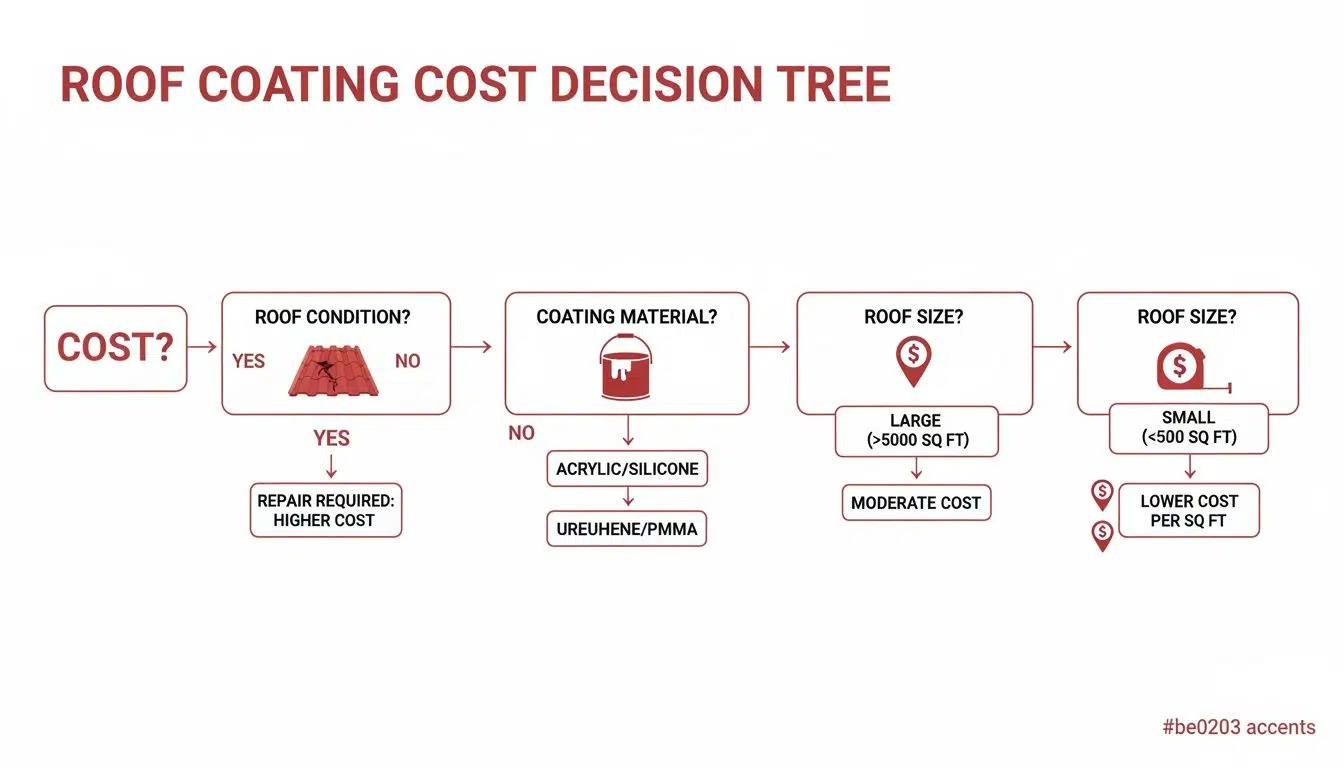
As you can see, the starting point—your roof's current condition—heavily influences the prep work needed, which can drive up costs before a single drop of coating is applied. From there, the material you choose becomes one of the biggest variables in your budget.
Comparing Roof Coating Materials for Chicago Properties
To help you navigate this decision, let's break down the most common coating types we use on Chicago properties. Each has its place, and understanding their pros and cons is the first step toward making a smart investment.
| Coating Type | Best For | Pros | Cons | Avg. Material Cost / Sq Ft |
|---|---|---|---|---|
| Silicone | Flat or low-slope roofs prone to ponding water. | Absolutely waterproof, resists ponding, excellent UV protection, flexible in temperature swings. | Higher initial cost, can be slippery, requires a specialized contractor for proper application. | $2.50 – $4.00 |
| Acrylic | Sloped roofs with good drainage. | Cost-effective, highly reflective (cool roof), environmentally friendly (low VOCs), good UV resistance. | Breaks down under standing water, loses flexibility in extreme cold, not ideal for flat roofs. | $1.00 – $2.50 |
| Polyurethane | Roofs with high foot traffic or chemical exposure. | Extremely durable and impact-resistant, good flexibility, better water resistance than acrylic. | More expensive than acrylic, can be complex to apply (often multi-coat systems). | $2.00 – $3.50 |
This table is a great starting point, but the real expertise lies in knowing exactly which material is right for your building's unique situation. Let's dive a little deeper into each one.
Silicone: The Ultimate Defense for Flat Roofs
When it comes to Chicago's thousands of flat-roofed buildings, silicone is our go-to solution for a reason. Its greatest strength is that it's completely inorganic and 100% waterproof. This means it won't erode or break down, even when it's sitting under a puddle of water for days on end.
Think about the roof on a classic three-flat in Lakeview or a massive warehouse out by O'Hare. After a heavy downpour or a big snowmelt, those roofs are going to have "ponding water." Where other materials would eventually give up, silicone forms a seamless, monolithic membrane that shrugs it off. It's the ultimate problem-solver for the most common cause of flat roof failure.
Acrylics: The Smart, Reflective Choice for Sloped Roofs
Acrylic coatings are water-based formulas that offer a fantastic mix of performance and value, but they have one non-negotiable requirement: the roof must have good drainage. They are the perfect fit for the sloped roofs you see on bungalows and traditional homes all over the city and suburbs.
Because water runs right off, you don't have to worry about the ponding issues that acrylics can't handle. Instead, you get to take advantage of their major benefits:
- Cool Roof Technology: Their bright white finish is highly reflective, bouncing harsh sunlight away from your building. This simple feature can lower rooftop temperatures by up to 30%, which takes a serious load off your AC unit during our sweltering summer months.
- Budget-Friendly Durability: In the right application, acrylics offer excellent protection from UV damage and seal up minor cracks for a fraction of the cost of silicone.
- A Greener Option: As water-based products, they have very low volatile organic compounds (VOCs), making them a more environmentally conscious choice.
Just remember, an acrylic coating on a flat roof is a recipe for failure. Once water sits on it for too long, it can soften and peel away.
Polyurethane: The Tough, High-Traffic Solution
Polyurethane coatings sit in a sweet spot between acrylics and silicone. Their defining characteristic is toughness. With incredible tensile strength and resistance to abrasion, they are built to handle foot traffic from HVAC technicians or other maintenance crews.
While they have better water resistance than acrylics, we still recommend premium silicone for any roof with significant, long-term ponding issues. Polyurethanes are often applied as a two-part system: an "aromatic" base coat for durability, topped with a UV-stable "aliphatic" top coat to prevent sun damage.
This makes them a versatile workhorse for many commercial applications. If you have a rubber roof and need more specific guidance, our article on finding the best EPDM roof coating in Chicago is a great resource.
The Financial Benefits Of Roof Coating Repairs
When you get a quote for a roof coating, it’s easy to focus only on the number at the bottom of the page. But that’s only half the picture. Experienced property owners know that a professional coating isn't just another repair bill—it's one of the smartest investments you can make, shifting your strategy from constantly reacting to problems to proactively managing your building’s health.
The most obvious win is putting off a full roof replacement, which is easily one of the biggest expenses a property owner will ever face. A professionally applied coating can extend your current roof's life by another 10 to 20 years. That gives you a decade or more to budget and plan for that massive project down the road, instead of being caught off guard.
Avoiding Emergencies and Extending Your Roof’s Life
A roof coating is like body armor for your building, sealing up the tiny weak spots before they can turn into catastrophic failures. Think of it like getting a small chip in your car’s windshield fixed. You take care of it right away for a small fee, or you ignore it and watch a spiderweb of cracks spread until you have to replace the entire windshield.
It’s the exact same principle for your roof. By creating a seamless, waterproof membrane, a coating stops water from sneaking in through failing seams, hairline cracks, or around pipes and vents. This head-on approach helps you completely sidestep the sky-high costs of emergency leak repairs, interior water damage, and the business interruptions that come with them.
A roof coating is an offensive strategy against the elements. Instead of waiting for damage to occur, you are actively protecting your investment, preserving its structural integrity, and saving thousands on future emergency repairs.
With material and labor costs always on the rise, making a proactive choice is smarter than ever. For the many flat-roofed commercial and industrial buildings across Chicago, applying a coating is a fantastic, budget-friendly move. For example, a 2,000 sq. ft. building might see coating costs between $18,000 and $32,000, which represents a 50-70% savings compared to a full tear-off and replacement.
Slashing Energy Bills with Cool Roof Technology
Beyond just protecting your roof, some coatings come with a massive financial perk: serious energy savings. This is especially true with reflective "cool roof" coatings, which are typically white or other light colors. During a brutal Chicago summer, a traditional dark-colored roof can absorb an incredible amount of heat, with surface temperatures easily soaring to 150°F or higher.
All that heat radiates down into your building, forcing your HVAC system to work overtime just to keep the space comfortable. A reflective cool roof coating completely flips the script by bouncing a huge percentage of the sun's rays back into the atmosphere.
The results are immediate and impressive:
- Lower Rooftop Temperatures: Cool coatings can drop your roof's surface temperature by up to 30%.
- Reduced HVAC Strain: With a cooler building, your air conditioning units don't have to run as hard or as often.
- Direct Cost Savings: This translates directly into lower electricity bills month after month during the cooling season.
By cutting down the heat stress on your building and dramatically extending its lifespan, a roof coating pays for itself over time. It turns a simple maintenance item into a powerful tool for financial efficiency. Keeping up with routine care is key, and our comprehensive guide to flat roof maintenance for Chicago properties has even more expert tips.
Why A Local Chicago Roofing Pro Matters
Once you’ve got a handle on the costs and long-term value of a roof coating, your single most important decision is picking the right crew for the job. It can be tempting to go with a low-ball offer from a general handyman, but let's be clear: applying a roof coating is a specialized skill. When you’re talking about protecting a huge asset like your Chicago property, hiring a true local professional isn’t just a good idea—it's essential.
A local pro is more than just another contractor; they're your neighbor. They have a real, physical office in the area, a reputation to protect, and a deep, firsthand knowledge of what Chicago's brutal weather does to a roof. They’ve seen it all, from the lake-effect snow piling up on flat roofs in Lincoln Park to the intense summer sun that bakes shingles in Naperville.
This kind of street-level experience is priceless. They know from years on the job which coatings will crack and fail during our brutal freeze-thaw cycles and which ones will actually hold up to ponding water, season after season. That’s not something you learn from a manual; it’s earned right here in your backyard.
The Must-Haves for Any Qualified Contractor
Vetting a roofing company is about much more than just comparing their price per square foot. You're handing them the keys to the primary shield that protects your entire home or building. Before you even think about signing a contract, make sure they have three non-negotiable credentials.
- Licensed: A valid Illinois roofing license is the bare minimum. It proves the contractor has met state requirements for knowledge and competency, showing they’re a legitimate business.
- Bonded: A surety bond is your financial safety net. If a contractor flakes on the job or fails to pay their suppliers, the bond ensures you aren't the one left with the bill.
- Insured: This is absolutely critical. Proper insurance, which includes both general liability and worker's compensation, protects you from being held liable if an accident or property damage happens on your watch.
Your first move should always be to ask for proof of all three. Any reputable roofer will have these documents ready and will be happy to share them.
Hiring an unlicensed or uninsured contractor to save a few bucks is a massive gamble. One accident or a botched job could end up costing you exponentially more than you "saved," dragging you into a legal and financial nightmare.
They Know Chicago's Architectural DNA
A seasoned Chicago roofer just gets it. They understand the city's unique architectural landscape, from historic greystones to modern commercial buildings. They know that working on a classic brick three-flat presents totally different challenges than sealing a massive industrial roof.
This familiarity means they know what to look for. They can anticipate problems before they start, like how to properly flash around a parapet wall or how to seal the dozens of pipes and vents that clutter a typical commercial rooftop. This expertise leads directly to a higher-quality, longer-lasting job.
What a Professional Estimate Should Look Like
A professional's quote is more than a number—it's a project roadmap. It should be detailed, transparent, and written in plain English so you know exactly what you’re getting.
Here’s what a solid estimate should always include:
- A clear list of all prep work, from power washing to specific repairs.
- The exact brand and type of coating being used.
- The number of coats to be applied and the total square footage.
- Warranty information covering both the manufacturer's material and the contractor's workmanship.
A vague or confusing estimate is a huge red flag. A true pro wants you to feel confident and informed, not pressured. Their goal is to build a long-term relationship, not just make a quick sale. By understanding the quirks of different roof systems, from common residential setups to large-scale commercial installations, they deliver solutions you can count on. You can learn more about these options in our guide to residential roofing services available across the Chicagoland area.
Ultimately, choosing a local, reputable, and fully insured contractor like Expert Super Seal Roofing means you're investing in peace of mind. You're not just buying a roof coating; you're buying the assurance that the job will be done right the first time by a team that stands behind their work. That long-term reliability is the true value, and it’s worth far more than any initial savings you might get from a risky alternative.
Frequently Asked Questions About Roof Coating Costs
Making a big investment in your building always brings up questions. It's not just normal—it's smart. When it comes to something like a roof coating project, getting the details sorted out beforehand is the key to moving forward with confidence. We've heard just about every question from Chicago property owners over the years, so we’ve put the most common ones right here with clear, straight-up answers.
Think of this as the inside scoop you need to make a solid decision. We'll get into how long your coating will really hold up in our wild weather, if it’s even the right solution for your leak, and what kind of guarantees you should expect. By the time you're done, you'll be able to look at your options like a seasoned pro.
How Long Does a Roof Coating Last in Chicago?
This is always a top question because it gets right to the heart of value. A high-quality roof coating, applied correctly, should give you 10 to 20 years of solid performance. But that number isn’t automatic; it really hinges on a few factors, especially here in Chicago.
The single biggest factor is the quality of the prep work and application. A coating is only as strong as the surface it’s bonded to and the skill of the team putting it down. If the roof isn't cleaned and repaired meticulously, or if the material is spread too thin, you can slash that lifespan in half.
A roof coating’s longevity is a partnership between top-tier materials and expert installation. Cutting corners on either one is the fastest way to turn a 15-year solution into a 5-year problem.
On top of that, you have to account for Chicago's brutal freeze-thaw cycles. Water melts, finds its way into tiny imperfections, then freezes and expands overnight. This relentless process puts incredible stress on any roofing system. That's why a flexible, high-solids coating like silicone is built to handle that movement far better than a more rigid material. Of course, regular upkeep like annual inspections helps you get every last year out of it, too.
When Is the Best Time of Year to Coat My Roof?
With roof coatings, timing is everything. For the material to cure properly and create that seamless, waterproof membrane, you need a specific window of good weather. That makes spring and fall the undisputed champions for roof coating season in the Chicago area.
Nearly every professional coating system has a few non-negotiable weather requirements:
- Consistent Temperatures: You need the temperature to stay above 50°F during the entire application and for the 24-48 hours it takes to cure.
- A Bone-Dry Surface: The roof has to be completely dry. If you coat over even a slightly damp surface, you trap moisture, which leads to bubbles, blisters, and total failure down the road.
- Low Humidity and No Rain: Thick, humid air slows down the curing time, and a surprise rainstorm on a fresh coat is a recipe for disaster.
This is why winter is a non-starter for roof coating in Chicago—the cold temperatures simply won't let the materials cure. And while summer might seem fine, the risk of sudden thunderstorms and high humidity can make it tricky. A true professional always has one eye on the roof and the other on the forecast.
Is Roof Coating a Good Fix for My Leaking Flat Roof?
The honest answer here is: it depends entirely on the type of leak. A roof coating is a fantastic tool for sealing up a roof with widespread, minor issues. It's perfect for covering aged surfaces, reinforcing seams that are starting to look tired, and sealing the tiny pinholes and cracks that older flat roofs tend to get. For those kinds of small, nagging leaks, it’s an excellent, proactive fix.
However, a coating is not a miracle cure for major structural failures. It’s like putting a fresh coat of paint on a piece of rotting wood; it might look good for a minute, but the underlying problem is still there. A roof coating can’t fix things like:
- Saturated Insulation: If water has already gotten through the membrane and soaked the insulation below, a coating will just trap it in. This leads to rot, mold, and even more damage.
- Major Structural Damage: Large tears, gaping holes, or issues with the roof deck itself are far beyond what a coating can handle.
- Severe Ponding Water: While silicone coatings are great for handling standing water, if your roof has deep "ponds," the real problem is poor drainage. That structural issue has to be fixed first.
This is exactly why a thorough, professional inspection is the mandatory first step. A good contractor will diagnose the root cause of the leak to see if a coating is the right move or if you need to tackle a bigger repair first.
Does Roof Coating Come with a Warranty?
Absolutely. Any professional roof coating job should be backed by solid warranties, but it's critical to know that there are two separate kinds you need to look for.
- Manufacturer's Warranty: This comes straight from the company that makes the material (like GAF or Mule-Hide). It's their promise that the product is free of defects and will last for its advertised lifespan, which is often 10, 15, or even 20 years.
- Workmanship Warranty: This is the guarantee from your roofing contractor. It covers the installation itself—protecting you from issues like peeling, blistering, or bad seam work caused by improper application. A contractor’s workmanship warranty usually lasts for 1 to 5 years.
Here's the catch: to get that valuable manufacturer's warranty, you almost always have to use a certified installer. These are contractors who have been specifically trained by the manufacturer to apply their products to their exact standards. Hiring a roofer who isn't certified can void that material warranty from day one, leaving you high and dry if the product fails. A reputable company will always provide clear, written documentation for both warranties, giving you real peace of mind.
When you're ready to protect your Chicago property with a solution built to last, you need a partner with deep local roots and a proven track record. For a free, no-obligation estimate from a team that gets the job done right, contact Expert Super Seal Roofing & Tuckpointing today and learn more at https://www.supersealroofing.com.