Torch down roofing is a seriously tough, waterproof system made for flat or low-slope roofs. It involves rolling out sheets of modified bitumen—a special kind of asphalt beefed up with polymers—and using a powerful torch to heat-fuse them together. This process essentially welds the layers into a single, seamless membrane, creating an incredibly resilient surface.
Answering What Is Torch Down Roofing
Think of it like laminating your entire roof with a thick, waterproof shield. That’s really the best way to picture what torch down roofing does. It's a multi-layer system built specifically to handle the challenges of flat and low-slope roofs, which are notorious for leaks and collecting water.
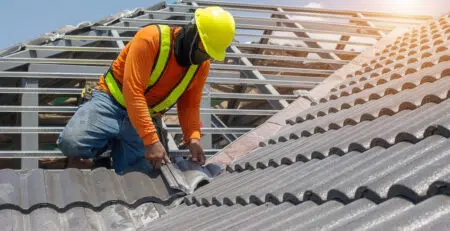
The "torch down" name is a literal description of how it’s installed. A roofer uses a high-powered propane torch to heat the bottom of the roofing rolls. As the modified asphalt melts, it fuses directly to the roof deck below and to the overlapping sheets next to it.
It's a lot like welding pieces of metal into one solid sheet. But instead of metal, we're welding layers of roofing material together. The end result is a monolithic surface with no seams for water to sneak through.
The Power of Modified Bitumen
The secret sauce in this system is a material called modified bitumen. This isn’t the same as standard asphalt. It’s been engineered with polymers to give it far superior qualities. For a demanding climate like Chicago's, the go-to choice is SBS (Styrene-Butadiene-Styrene).
Adding SBS polymers gives the asphalt a rubber-like elasticity. This is absolutely critical for surviving Chicago’s dramatic temperature swings, from sub-zero winters to blazing hot summers. The roof can expand and contract without turning brittle and cracking, which is a common failure point for lesser flat roof materials. That flexibility is what keeps the roof intact year after year.
Here is a quick overview of what defines this roofing system.
Torch Down Roofing at a Glance
| Characteristic | Description |
|---|---|
| Material | Modified Bitumen (Asphalt with SBS polymers) |
| Installation | Layers are heat-fused together with a propane torch |
| Best For | Flat or low-slope roofs |
| Key Feature | Creates a seamless, monolithic waterproof membrane |
| Primary Benefit | Excellent durability and resistance to water intrusion |
Ultimately, the combination of these features results in a roofing system you can count on.
Proven Performance for Chicago Buildings
Torch down has a long, proven track record here in the Chicagoland area. It’s a solution we trust and install on a huge range of properties, including:
- Residential Three-Flats: It's practically the standard for the classic Chicago multi-unit building.
- Commercial Storefronts: Provides reliable, long-term protection for all kinds of retail and business properties.
- Large Industrial Facilities: Perfect for roofs that need to withstand heavy foot traffic and equipment.
This method delivers a robust, water-tight barrier that has stood up to decades of our harsh weather. By forming a continuous, sealed surface, it gives homeowners and property managers real peace of mind, knowing their asset is protected by a solid and dependable roofing system.
The Science Behind a Torch Down Roof System
So, what exactly is a torch-down roof? It’s not just a single sheet of material. The best way to think about it is like a protective, multi-layered waterproof sandwich built right on top of your building, where every single layer has a critical job to do.
This technology has been battle-tested for decades. What we call torch-down roofing is a type of modified bitumen (MB) system, which first showed up in Europe back in the 1960s. The original idea was to take asphalt sheets, enhance them with polymers, and then use heat to fuse them together into a seamless membrane. By the 1970s, it had become a trusted solution worldwide, especially for buildings that needed to withstand tough weather. You can actually trace the full history of bitumen roofing to see how the technology has improved over time.
The Anatomy of a Multi-Ply System
A modern torch-down roof is all about building up a formidable barrier. The system is made of two to three distinct sheets, with each one heat-welded to the one below it. It's this layering that creates its strength.
- The Base Sheet: This is your foundation. It's the very first layer that gets fastened to the roof deck, creating the initial waterproof barrier and giving the other layers a solid anchor point.
- The Mid-Ply Sheet(s): If you have a three-ply system, this is where you build up the real muscle. These extra layers add thickness and redundancy, which dramatically boosts puncture resistance. If one layer somehow gets compromised, there’s another waterproof shield right underneath.
- The Cap Sheet: This is the top layer you see from the outside, but it does more than just look good. The cap sheet is your roof's first line of defense, designed to take the brunt of sun, rain, and snow.
This infographic gives a great visual of how these layers come together with heat to form a single, monolithic membrane.
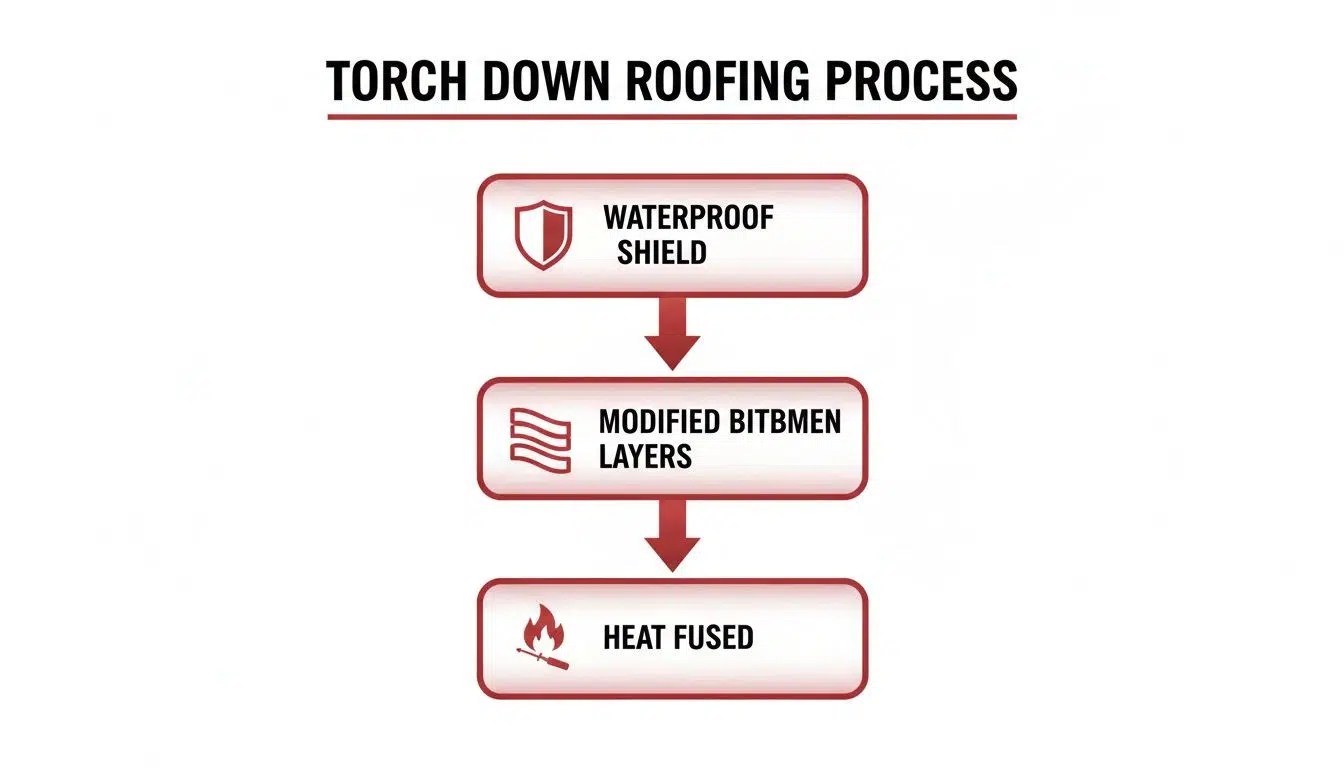
As you can see, the process relies on fusing multiple layers of modified bitumen with a torch, creating that powerful, waterproof bond that defines the system.
Understanding the Materials
The "modified" in modified bitumen is the secret sauce. Raw asphalt can be brittle, so we blend it with specific polymers to give it the performance characteristics we need for a long-lasting roof.
The two main modifiers are SBS and APP. For a climate like Chicago's, choosing the right one isn't just a detail—it's essential for the roof's survival.
SBS (Styrene-Butadiene-Styrene) is basically a synthetic rubber. When you mix it into asphalt, you get a membrane that’s incredibly flexible and elastic. This is exactly what you need to handle Chicago’s wild temperature swings. The roof can expand and contract through our brutal freeze-thaw cycles without cracking. Its ability to stay flexible in extreme cold makes it the perfect fit for our winters.
APP (Atactic Polypropylene), on the other hand, is a plastic polymer. An APP-modified sheet has a higher melting point and creates a tougher, more rigid surface. This gives it fantastic resistance to foot traffic and intense UV rays.
While APP has its uses, SBS-modified bitumen is the clear winner for performance in the Chicagoland area. Its unmatched flexibility in the cold is what keeps the seams sealed and the membrane intact. This material science is the reason a properly installed torch-down roof can protect your property for decades, no matter what the weather throws at it.
Weighing the Pros and Cons of Torch Down Roofing
No roofing system is perfect for every situation. They all come with their own set of trade-offs, and torch-down roofing is no different. It's a fantastic solution for many flat and low-slope roofs, but you have to look at the whole picture—the good and the bad—to know if it’s the right call for your building.
And it's an incredibly popular choice. Torch-applied modified bitumen accounts for a staggering 60-70% of all low-slope roof installations across major markets like Europe and North America. With over 1.5 billion square meters produced every year, it’s clear this isn't just a niche product. If you're curious, you can explore the full scope of the global bitumen roofing industry to see just how dominant this material is.
The Advantages of a Torch Down System
So, what makes torch down so popular? The benefits really come from its tough, multi-layered design and the way it’s fused together into a single, seamless surface. For property owners, this adds up to serious durability and long-term peace of mind.
- Exceptional Durability and Leak Resistance: By welding the seams with a torch, you create a waterproof, monolithic membrane. There are no gaps, no glued seams—just one continuous sheet. This drastically reduces the weak points where water usually finds its way in.
- Superior Performance Against Ponding Water: Flat roofs and pooling water go hand-in-hand. The seamless, tough nature of a torch-down system makes it one of the absolute best options for resisting the damage that standing water can cause.
- High Puncture and Foot Traffic Resistance: The multiple layers give this system serious backbone. It’s built to withstand abuse, making it perfect for roofs that need to support heavy HVAC units or regular foot traffic for maintenance.
- Long Lifespan: When it's installed by a pro, a torch-down roof can easily last 20 years or more. A little bit of proper maintenance can push that lifespan even further, giving you a great return on your investment.
- UV and Weather Resistance: The top layer, a granular cap sheet, acts like armor against the sun’s damaging UV rays. At the same time, the flexible, rubber-like quality of the SBS-modified asphalt allows the roof to expand and contract through Chicago's freeze-thaw cycles without cracking.
The real power of torch down lies in its seamless, welded construction. Think of it as a single, unified shield protecting your building, rather than a collection of parts that could fail over time.
The Drawbacks and Considerations
Now for the other side of the coin. For all its strengths, torch down has some potential downsides you need to be aware of. The biggest concerns aren't about the material itself, but how it's installed.
The number one issue is installation safety. We’re talking about an open-flame torch putting out intense heat. This is absolutely not a job for a weekend warrior or a cut-rate crew. It requires a skilled, certified, and fully insured professional who follows strict safety protocols, including using heat shields and having a dedicated fire watch.
A few other points to keep in mind:
- Repair Complexity: While it's tough, if the roof does get punctured, fixing it is a bit more involved than with a single-ply system. A specialist needs to come out and properly heat-weld a patch to create a permanent, watertight seal.
- Heat Absorption: Traditional black or dark-colored torch-down roofs can get very hot, which might drive up your summer cooling bills. The easy fix here is to opt for a modern "cool roof" cap sheet with reflective white granules, which bounces sunlight and keeps the roof—and your building—much cooler.
- Fumes and Odor During Installation: Heating asphalt creates a strong, distinct smell. The odor goes away once the job is done, but for occupied buildings, it's a temporary nuisance you and your tenants should be prepared for.
When you weigh it all out, the advantages of torch down roofing are hard to ignore, especially for a tough climate like Chicago's. But here’s the bottom line: every potential drawback gets ten times worse if the installation is botched. Your choice of contractor is the single most important decision you'll make to ensure you get a safe, durable roof that lasts.
How Torch Down Compares to TPO and EPDM
Choosing the right flat roofing system can feel like wading through a sea of acronyms. While torch-down is a time-tested champion, two other major players often come up in conversation: TPO (Thermoplastic Olefin) and EPDM (Ethylene Propylene Diene Monomer). Understanding how torch-down stacks up against these modern single-ply systems is the key to picking the right long-term solution for your Chicago property.
At a glance, TPO is a single-ply white plastic membrane, and EPDM is a single-ply black rubber sheet. The most important difference is right there: torch-down is a multi-ply system, whereas TPO and EPDM are made of just one layer of material. This fundamental contrast has huge implications for durability, installation, and real-world performance.
Durability and Puncture Resistance
When it comes to sheer toughness and resisting damage, torch-down's multi-ply construction gives it a clear edge. Think of it like this: it's much easier to poke a hole through a single piece of paper than it is to puncture a thick, laminated card. Those extra, fused layers in a torch-down roof provide built-in redundancy and far superior resistance to impacts.
This makes it the perfect choice for roofs that see a lot of foot traffic—like those with HVAC units that need regular service visits. It's also much better equipped to handle falling branches or a dropped tool without springing a leak.
- Torch-Down: Multiple layers create a thick, robust barrier that is highly resistant to punctures, foot traffic, and impacts.
- TPO & EPDM: As single-ply membranes, they are simply more vulnerable to being punctured by sharp objects or heavy traffic.
While TPO and EPDM are certainly strong, they just don't have the built-in backup layers that make a modified bitumen system so resilient.
Installation and Seam Integrity
How a roof is put together is just as important as what it's made of, and the seams are almost always the first point of failure. Here, the heat-welded seams of both torch-down and TPO create an incredibly strong, permanent bond that far outperforms other methods.
A welded seam essentially melts two overlapping pieces of material into one, creating a monolithic, continuous membrane. This is far stronger and more reliable than a seam that is simply glued together with adhesives.
EPDM systems, on the other hand, typically rely on specialized seam tapes and adhesives. While modern adhesives are very good, they can still become a weak point over time, especially when you factor in Chicago’s brutal freeze-thaw cycles. The heat-welding process used for torch-down creates an exceptionally robust, fused seam that has proven its reliability on Chicago roofs for decades.
A Head-to-Head Comparison
To make the choice clearer, it helps to see these systems side-by-side. Each has its place, but their strengths and weaknesses become obvious when you compare them directly. Here’s a quick breakdown of how these three popular flat roofing systems compare on the features that matter most to property owners.
Torch Down vs. TPO vs. EPDM Comparison
| Feature | Torch Down Roofing | TPO Roofing | EPDM Roofing |
|---|---|---|---|
| Structure | Multi-ply (typically 2-3 layers) | Single-ply | Single-ply |
| Durability | Excellent. Highly resistant to punctures, tears, and foot traffic. | Good. Strong, but more susceptible to punctures than multi-ply systems. | Fair to Good. Flexible and durable, but vulnerable to sharp objects. |
| Seams | Heat-welded. Creates a monolithic, extremely strong bond. | Heat-welded. Very strong and reliable seams. | Glued/Taped. Relies on adhesives, which can degrade over time. |
| Chicago Climate | Excellent. Proven track record in freeze-thaw cycles; remains flexible in cold. | Good. White surface reflects heat in summer, but some formulations can become brittle in extreme cold. | Good. Very stable in cold, but black color absorbs heat; seams can be a weak point in freeze-thaw. |
| Upfront Cost | Mid-Range. | High-Range. | Low-Range. |
| Lifespan | 20-30 years. | 15-25 years. | 20-30 years. |
| Best For | High-traffic areas, maximum durability, and proven long-term performance in harsh climates. | Energy efficiency in sunny climates, new construction, and roofs with low foot traffic. | Budget-conscious projects, large simple roof layouts, and areas with minimal foot traffic. |
Ultimately, the right choice depends on your priorities. If you are looking for the toughest, most puncture-resistant system with a long history of success in our specific climate, torch-down is hard to beat.
Cost and Chicago Climate Performance
When you're budgeting for a roof, you have to look beyond the initial price tag and consider long-term value. Torch-down roofing often sits in a comfortable middle ground, offering a fantastic balance of cost and performance. While it might have a higher upfront cost than a basic EPDM roof, it delivers exceptional value through its sheer durability and longevity.
More importantly for anyone owning property in this city, torch-down has an unmatched track record in our climate. Its ability to stay flexible in sub-zero temperatures prevents the cracking and splitting that can plague other systems. This proven performance in our punishing freeze-thaw conditions gives it a powerful reliability advantage, making it a go-to choice for those who want long-term, worry-free protection from Chicago weather.
Understanding Torch Down Roofing Costs and Lifespan
Let's get right to the two questions every property owner asks: "What will it cost?" and "How long will it last?" When it comes to torch down roofing, the answers are why it's such a popular choice. This isn't just an expense; it’s a smart investment in protecting your building for the long haul.
When you get a quote, you're not just paying for a roll of roofing material. You're getting an all-in price that covers the entire job from start to finish, so there are no hidden fees or surprises later.
Breaking Down the Cost
A professional roofer’s quote for a torch down system typically bundles everything into a single price per square foot. Here’s what’s usually included:
- Materials: This covers all the layers—the base sheets, any mid-ply sheets, and the tough granular cap sheet that forms the visible surface.
- Professional Labor: You’re paying for a certified, insured crew with the specialized training needed to safely handle the torch-application process.
- Old Roof Removal: The work involved in tearing off the old, failing roof to get down to a solid substrate.
- Disposal Fees: The cost of legally and responsibly getting rid of all the old roofing and job site debris.
One of the biggest draws of torch down roofing is its cost-effectiveness. In 2026 U.S. markets, a full installation typically runs between $4.50 and $8.00 per square foot. That's often 20-30% less expensive than a premium TPO system, yet it outlasts many other flat roofing options. For property owners in Chicago, this makes it a fantastic middle-ground solution that fits neatly into most project budgets. You can learn more about the value of torch down systems and their place in the market.
Of course, your final price can shift based on a few key factors. The total square footage is the biggest driver, but things like how easy it is for crews to get on your roof, the condition of the existing structure, and the type of insulation you need will also play a role.
Maximizing Your Return on Investment
A new roof’s real value isn’t just what you pay for it—it’s how many years you get out of it. A torch down roof has a standard lifespan of 15 to 20 years, but think of that as the starting point, not the finish line.
With quality installation and some basic, routine maintenance, it's very realistic to see a torch down roof perform perfectly for 25 years or even longer. This incredible durability is where you see the real return on your investment.
When you spread the initial cost over two-plus decades of service, the value proposition becomes undeniable. For a reasonable upfront cost, you get decades of seamless, waterproof protection that can stand up to anything Chicago’s weather throws at it. It turns a necessary repair into a long-term strategy for safeguarding your property.
Why Professional Installation Is Non-Negotiable
Let's be crystal clear about something: when it comes to torch-down roofing, this is not a DIY project. The success, safety, and lifespan of your roof depend entirely on the skill of the person holding the torch. We're talking about wielding a high-intensity, open-flame torch on top of a building—a task that demands a level of discipline and experience you simply can't get from watching a video.
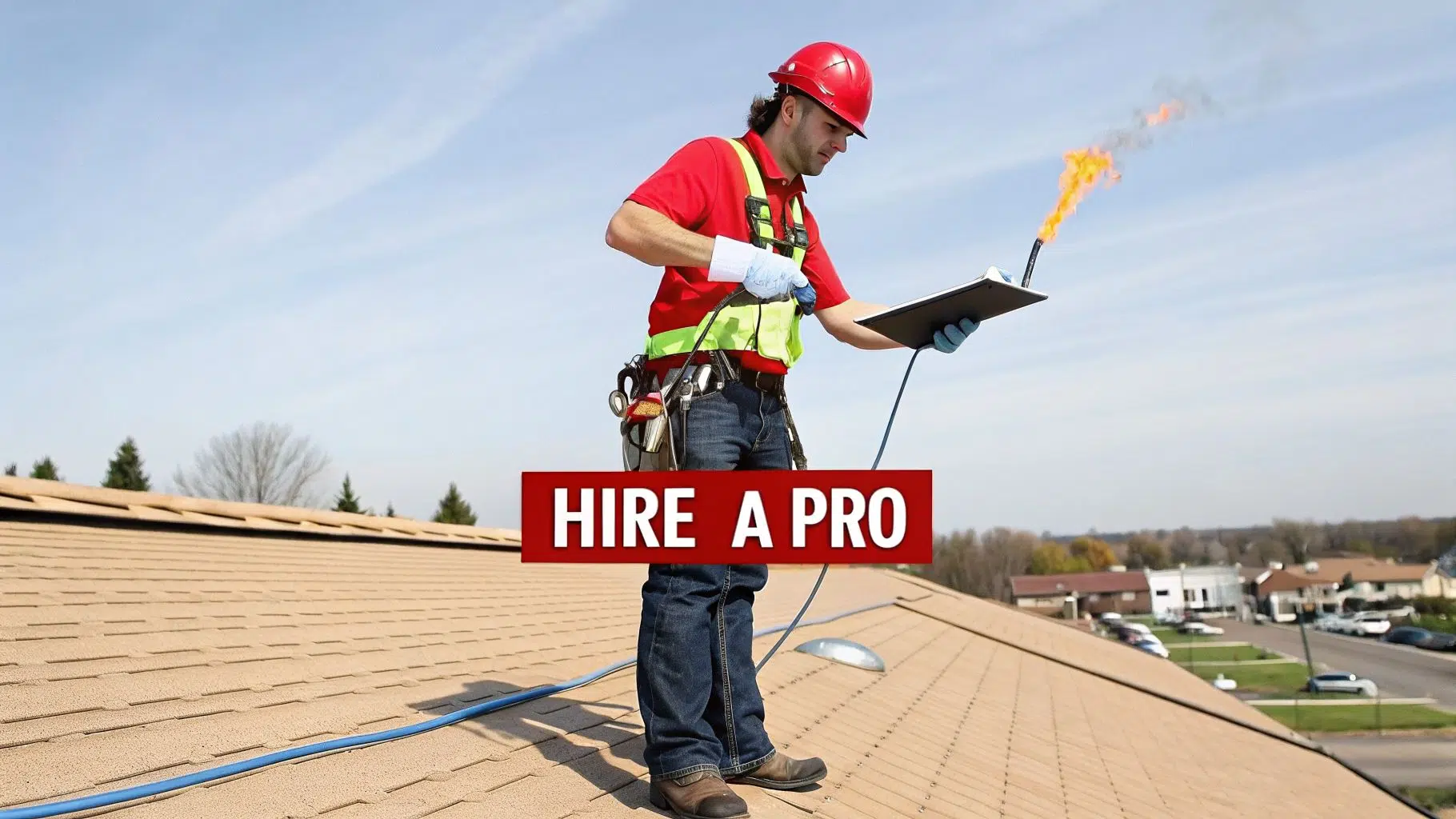
Trying to install a torch-down roof without proper training isn't just risky; it's reckless. The potential for a catastrophic fire is the most glaring danger. An amateur can easily overheat the roofing material or fail to properly shield vulnerable spots like walls, vents, and skylights. One wrong move can lead to disaster.
Even if you avoid a fire, an improper installation is a ticking time bomb for leaks. If the seams between the membrane sheets aren't perfectly fused, water will find its way in. Underheat a seam, and you get a weak bond that will pop open. Overheat it, and you can scorch the membrane, destroying its integrity and setting the stage for premature failure and expensive water damage.
The Risks of Hiring an Unqualified Crew
Going with an unqualified or underinsured contractor to save a few bucks is one of the biggest gambles a property owner can make. The fallout from a botched job is severe and can include:
- Catastrophic Fire Hazards: That open flame is no joke. A professional crew is trained to manage the heat, keep fire extinguishers at the ready, and always has a dedicated "fire watch" team member whose only job is to spot and prevent accidents.
- Guaranteed Leaks: Improperly sealed seams aren't a question of if they will leak, but when. This completely defeats the purpose of getting a new roof in the first place.
- Voided Material Warranties: Roofing manufacturers will not honor a warranty for materials installed incorrectly or by an uncertified roofer. Your entire investment will have zero protection.
Frankly, you aren't just buying rolls of roofing material. You are investing in a safe, guaranteed installation that only a true expert can deliver.
The Hallmarks of a True Professional
A contractor who is genuinely qualified to install torch-down roofing will have a very specific set of credentials. These are the non-negotiables you should absolutely require before you even think about signing a contract.
A reputable contractor is an open book. They will proudly provide proof of their insurance, certifications, and local experience because it sets them apart from the unqualified competition and protects you, their client.
When you're vetting potential roofers, insist on seeing this documentation:
- Proof of CERTA Certification: The National Roofing Contractors Association (NRCA) runs a crucial training program called CERTA (Certified Roofing Torch Applicator). This certification is proof that the crew has been rigorously trained in the safe application of torch-applied systems.
- Current Liability Insurance Certificate: Don't just take their word for it. Ask to see the physical certificate for a substantial policy that specifically covers torch-applied roofing. Call the insurance company to verify it's active.
- Specific Torch-Down Experience: A general roofer is not a torch-down specialist. Ask to see a portfolio and talk to local references for torch-down projects they've completed that are similar to yours.
Hiring a proven, certified expert is what transforms a high-risk job into a high-performance roof. By demanding these qualifications, you ensure the project is done safely and correctly, giving you the durable, waterproof protection you need for years to come.
Frequently Asked Questions About Torch Down Roofing
Thinking about torch-down roofing for your property? You probably have some questions. We get it. Here are the straight-up answers to the things Chicago property owners and managers ask us most.
Is Torch Down Roofing Safe for My Home?
This is the first question on everyone's mind, and for good reason—the installation involves an open flame. The short answer is yes, it's completely safe, but only if installed by a properly certified crew.
This isn't a job for amateurs. True professionals are trained to manage every aspect of the process. They follow rigorous safety protocols, many of which are outlined by programs like CERTA (Certified Roofing Torch Applicator). This means using heat shields to protect siding, meticulously clearing the work area, and having a dedicated fire watch on standby at all times. In the hands of a qualified and insured team, the process is controlled from start to finish, making it a perfectly safe and reliable choice for your flat roof.
How Does Torch Down Handle Chicago Snow and Ice?
It’s built for it. In fact, its performance in our harsh winters is one of the main reasons it’s so popular in Chicago. The layers are heat-fused together, which creates a single, seamless waterproof barrier. This design is incredibly effective at stopping leaks from melting snow and preventing the damage caused by ice dams.
The real advantage comes from the material itself. The flexible, rubber-like nature of SBS-modified bitumen allows it to expand and contract with extreme temperature swings. This prevents the cracks that can form on more rigid roofs during our brutal freeze-thaw cycles, making it one of the most reliable systems for preventing winter water damage.
Can You Install Torch Down Over an Existing Roof?
Sometimes, but it’s not a simple yes-or-no answer. A professional inspection is absolutely essential before making that call. The decision really hinges on two things: Chicago's building codes, which can limit the number of roofing layers allowed, and the actual condition of your current roof.
A "roof-over" might save you some money upfront by skipping a full tear-off, but it can be a terrible idea in the long run. If the structure underneath is hiding moisture, rot, or instability, simply covering it up will trap those problems. This will cause your brand-new roof to fail much sooner than it should. An honest roofer will evaluate the substrate and tell you if a tear-off is needed to protect your investment.
What Maintenance Does a Torch Down Roof Need?
One of the best things about torch-down roofing is how little maintenance it requires. That tough, multi-ply surface is designed to take a beating from the weather without needing constant upkeep. Still, a little bit of proactive care makes a huge difference.
We always recommend an annual inspection, preferably in the fall before the snow starts flying. During a typical check-up, a roofer will:
- Clear away leaves, branches, and any other debris from the roof surface and drains to keep water flowing freely.
- Look for any gouges or damage from hail, heavy foot traffic, or dropped tools.
- Inspect all the flashings around vents, chimneys, and parapet walls to make sure those critical seals are still watertight.
Taking care of these small things is the key to stretching a roof's lifespan from 20 years to 25 years or more. It’s the smartest way to protect your property and get the most out of your investment.
For decades, Expert Super Seal Roofing & Tuckpointing has been the trusted choice for Chicago-area property owners who demand a job done right the first time. If you're ready for a roofing solution that offers proven durability and peace of mind, contact our certified team today for a free, no-obligation estimate at https://www.supersealroofing.com.