
So, what's the bottom line? If you're looking to hire a pro for chimney tuckpointing in Chicago, you should generally plan to budget between $500 and $2,500 for a typical project. That price range reflects the high-stakes, detailed work needed to keep your chimney standing strong against our harsh weather.
The Real Tuckpointing Chimney Cost in Chicago
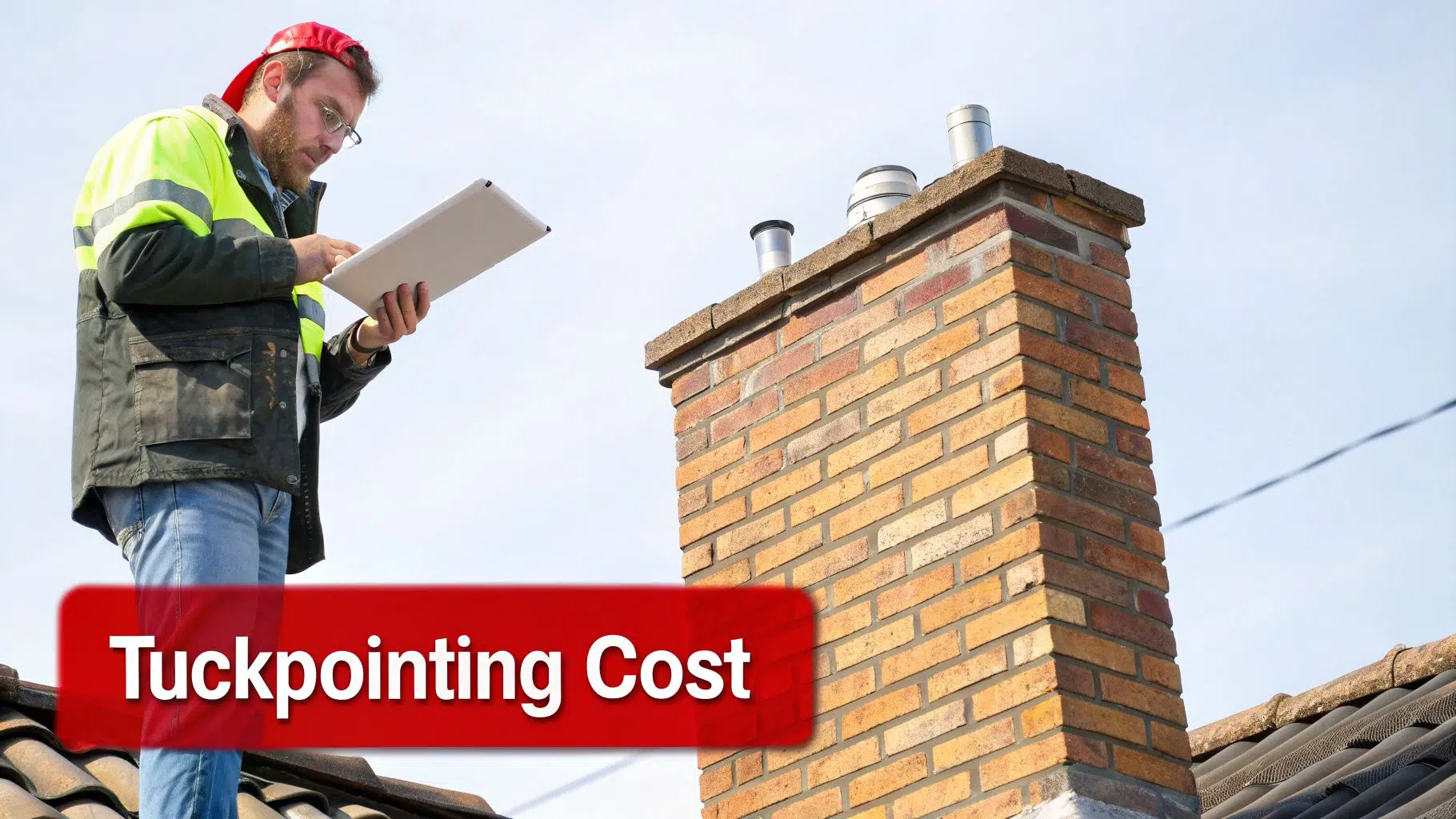
When you're figuring out your budget for chimney work, it’s important to know what drives the cost. Here in Chicago, tuckpointing prices often run higher than the national average. Why? Our brutal freeze-thaw cycles are incredibly tough on masonry, which means repairs demand a higher level of skill and durability.
It helps to think of tuckpointing less like simple patching and more like structural surgery for your chimney. A true professional doesn't just smear new mortar over the old, cracked joints. They have to meticulously grind out the failing mortar first, then carefully pack in a new, properly mixed mortar that bonds seamlessly with your existing bricks.
Breaking Down the Per-Square-Foot Rate
This painstaking labor is exactly why you'll often see quotes priced by the square foot. While you might see national averages as low as $5 per square foot, the demanding work here in Chicago pushes the local rate closer to $9 to $25 per square foot.
For an average chimney, that translates to a total cost between $500 and $2,500. It's a labor-intensive job, with nearly 80% of the total bill going toward the mason's skilled workmanship. You can find more expert insights on what influences these figures and how they're calculated.
Of course, the final price tag really depends on your chimney's specific condition and how hard it is to access. A few spot repairs on a single-story home will naturally be on the lower end, while a major restoration on a tall, hard-to-reach chimney on an older building will cost significantly more.
A proactive tuckpointing job today is one of the smartest investments a homeowner can make. Addressing minor mortar decay for around $1,500 can prevent a catastrophic failure that leads to a $15,000+ full chimney rebuild—a common scenario for neglected properties.
To give you a clearer idea of what to expect, we've put together a quick-reference table. It outlines some common tuckpointing scenarios and their estimated costs right here in the Chicago area. If you want a more in-depth look at how these prices are determined, check out our comprehensive guide on tuckpointing prices.
Chicago Chimney Tuckpointing Cost at a Glance (2026 Estimates)
This table provides estimated cost ranges for common chimney tuckpointing scenarios in the Chicago area, helping you quickly gauge potential expenses.
| Project Type | Typical Size | Estimated Cost Range |
|---|---|---|
| Minor Spot Repairs | A few specific areas | $500 – $900 |
| Standard Chimney (1-story) | Approx. 100 sq. ft. | $900 – $2,200 |
| Tall Chimney (2-3 stories) | 120-150 sq. ft. | $1,800 – $3,500+ |
| Full Chimney Restoration | Varies | $2,500 – $7,000+ |
These estimates should give you a solid starting point for planning your project. Remember, the best way to get an accurate number is to have a qualified professional inspect your chimney in person.
What Is Tuckpointing and Why Your Chimney Needs It
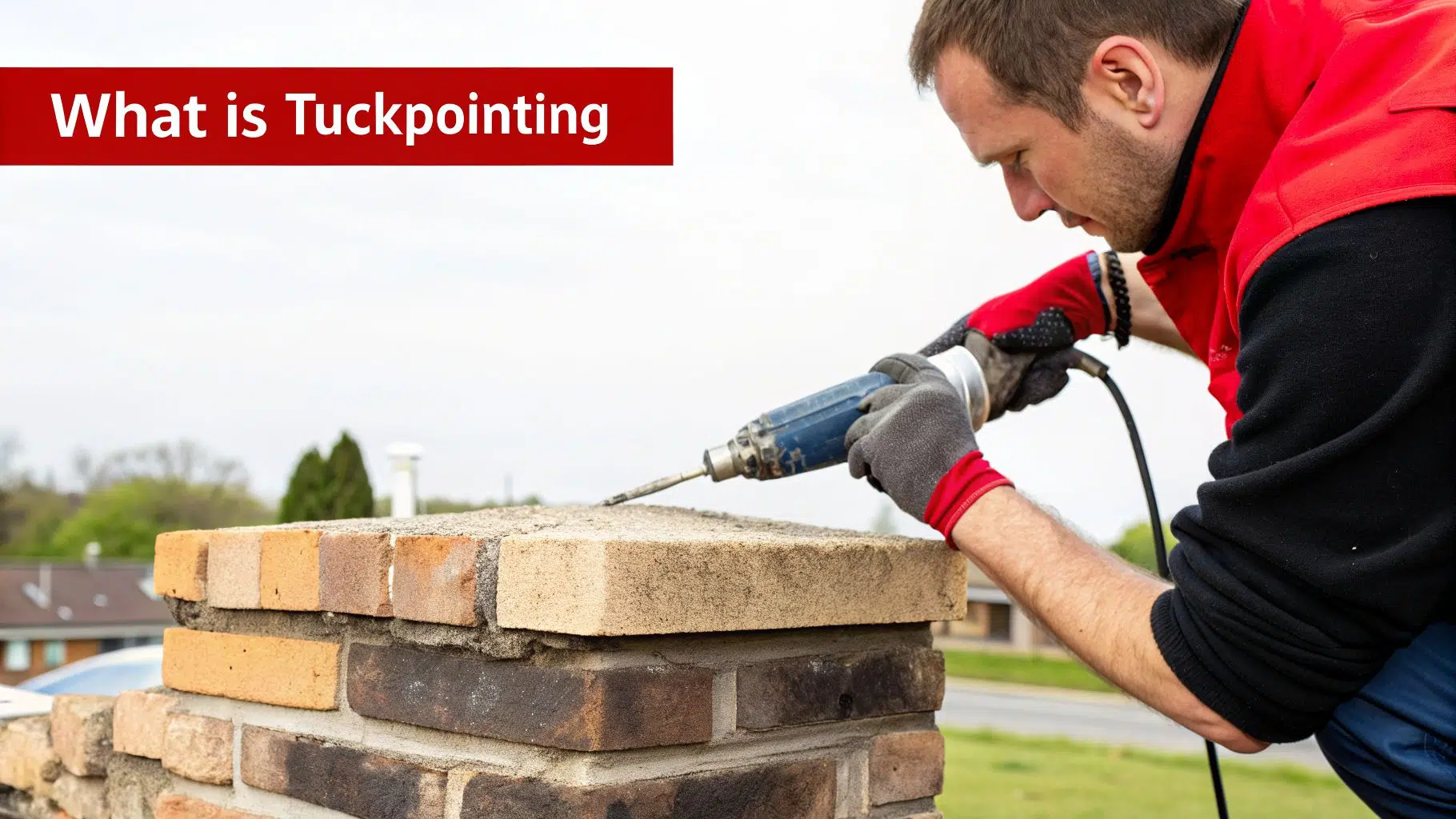
Most people see tuckpointing as just smearing some new mortar over old, cracked joints. But that’s not what real tuckpointing is, and it’s a big reason why homeowners are often surprised by the tuckpointing chimney cost. It’s a meticulous restoration process that’s absolutely vital for your chimney’s health.
I like to compare it to a dentist fixing a cavity. They don’t just slap a filling on top of the decay. First, they have to carefully grind out all the compromised material. Only then can they apply a new filling that bonds to a solid, healthy surface.
Tuckpointing is the exact same idea. A good mason will use grinders to remove the failing, water-damaged mortar from between the bricks. Once all the bad stuff is gone, they skillfully apply fresh mortar, tooling it to create a strong, seamless seal that keeps water out.
Spotting the Red Flags on Your Chimney
So, how can you tell if your chimney needs attention? The signs are usually easy to spot if you know what you’re looking for. Catching them early can save you from a much bigger, more expensive headache down the road.
You should get a professional inspection if you see any of these warning signs:
- Crumbling Mortar Joints: If you see gaps, cracks, or a sandy powder collecting on your roof or the chimney shoulder, the mortar is actively deteriorating.
- Loose Bricks: Can you wiggle a brick with your hand? This is a serious red flag. It means the mortar has completely failed, and the chimney's structural integrity is at risk.
- White Powdery Substance: That chalky white stain on the brick face is called efflorescence. It's a classic sign that water is getting inside the masonry, dissolving natural salts, and pushing them to the surface as it evaporates.
- Interior Water Damage: Water stains on the ceiling or walls around your fireplace are often a direct result of a leaky chimney. Bad mortar joints are one of the most common entry points for water.
Putting off these repairs is like hitting snooze on a fire alarm—the problem isn't going away. Taking care of it proactively is always the smarter, cheaper path. To learn more about why this work is so critical, check out the benefits of professional roofing and tuckpointing in Chicago.
Chicago Weather: The Primary Culprit
Here in Chicago, your chimney has one main enemy: our brutal freeze-thaw cycle. All it takes is a little moisture seeping into a hairline crack in the mortar. When the temperature plummets, that water freezes, expands with incredible force, and pries the joint open just a little bit wider.
This cycle repeats itself dozens of times each year. A microscopic crack can grow into a significant gap in just a single season, allowing even more water to enter and cause accelerating damage.
That’s why you should think of tuckpointing as essential maintenance, not just a cosmetic fix. It stops that destructive freeze-thaw cycle cold, sealing off water entry points and ensuring your chimney remains structurally sound for years. By restoring the mortar, you're reinforcing your home's first line of defense against Chicago's toughest weather.
Key Factors That Influence Your Tuckpointing Bill
Ever wonder why your neighbor’s tuckpointing job cost $700 while a quote for your own chimney came in closer to $3,000? That number on your estimate isn't pulled out of thin air. It’s a detailed calculation based on the unique challenges your chimney presents.
Getting to the bottom of these costs helps you understand exactly what you're paying for. Think of it less like buying a product off the shelf and more like commissioning a custom repair. The final price is tied directly to the specifics of the job, from the sheer height of the chimney to the type of mortar needed to get it right.
Chimney Size and Accessibility
The most obvious starting point is the size of your chimney. More surface area simply means more work and more materials. But that's just the beginning—accessibility is where the price can really start to move.
A mason working on a single-story ranch with a gently sloped roof has a pretty straightforward day ahead. Contrast that with a crew tackling a chimney on a historic three-story Greystone with a steep, treacherous roof pitch. The second scenario is a whole different ballgame.
- Easy Access: A short, wide chimney on a one-story home might only need basic ladders. This keeps the setup simple and the labor costs down.
- Difficult Access: A tall chimney on a multi-story building requires complex scaffolding, fall-protection harnesses, and extra hands. All that setup, safety gear, and teardown time adds a necessary premium to the project.
Essentially, the more difficult and dangerous it is for the crew to reach the chimney, the more you can expect the labor portion of your bill to increase.
The Extent of the Damage
Next up is the condition of your existing brickwork. A thorough inspection will reveal just how much work is needed, and this is another major factor in the final cost.
If you just have a few hairline cracks in some of the mortar joints, a mason can grind out and refill those specific spots relatively quickly. This is what we call "spot pointing." But if the mortar is soft and crumbling to the touch, bricks are shifting, or water has seeped in and caused damage, the job expands dramatically. This could mean replacing individual bricks (spalling repair) or even rebuilding the top few courses of the chimney before any tuckpointing can even start.
The big takeaway here is that catching problems early saves you a fortune. Addressing minor mortar decay now prevents it from becoming a massive structural failure later—which is exponentially more expensive to fix.
Matching Mortar and Materials
This one is crucial. Not all mortar is the same, and using the wrong kind can literally destroy your bricks over time. Modern homes are typically built with a standard Portland cement-based mortar, which is strong, widely available, and cost-effective.
Historic homes, particularly those built before the 1930s, are a different story. They were constructed with a much softer, more flexible lime-based mortar. Sourcing and mixing this historic mortar is both a science and an art, requiring specialized knowledge that adds to the cost. In the harsh Chicago climate, tuckpointing chimney costs average $9-$25 per square foot, and this wide range is heavily influenced by the mortar match. You can discover more insights about how materials and accessibility affect pricing from local experts who deal with this daily.
Applying hard, modern mortar to soft, old bricks is a recipe for disaster. The new mortar is too rigid and traps moisture inside the brick. When that moisture freezes and expands, it can blow the face right off the brick. A true professional will always prioritize a perfect mortar match, even if it adds to the upfront cost, because they know it’s the only way to protect your chimney for the long haul.
When you see crumbling mortar on your chimney, you're at a crossroads. Is this a simple patch job, or is something more serious going on? The answer often boils down to choosing between a targeted repair like tuckpointing and a full-blown chimney rebuild.
Making the right call isn't just about the upfront cost. It’s about protecting your home's long-term value and, more importantly, its structural safety. Think of it this way: you can patch a leaky tire, but if the axle is cracked, a patch won't do you any good. One is a specific fix, the other a major overhaul needed to prevent a catastrophic failure.
Repointing, Tuckpointing, and Rebuilding Explained
Before we get into the numbers, let's clear up some common confusion. People often throw around the terms "repointing" and "tuckpointing" as if they're the same thing. They're related, but not identical, and both are far less involved than a complete rebuild.
- Repointing: This is the most basic fix. A mason will grind or scrape out the old, failing mortar from the joints and fill them with new mortar. It’s a purely functional repair designed to stop water from getting in and hold the bricks together.
- Tuckpointing: This is repointing with an artist's touch. It’s a two-step process where we first repoint the joints, and then apply a thin, clean line of a contrasting color of mortar down the center. This creates that sharp, clean-edged look you see on well-maintained brickwork, restoring both strength and curb appeal.
- Full Rebuild: This is the last resort. If the chimney is leaning, the bricks are severely flaking (spalling), or the whole structure is unstable, it has to come down. A rebuild means dismantling the chimney to the roofline (or even the foundation) and building it back up from scratch.
As you move down that list, the labor and cost increase significantly. The factors driving that cost are pretty consistent, whether it's for a small repair or a major project.
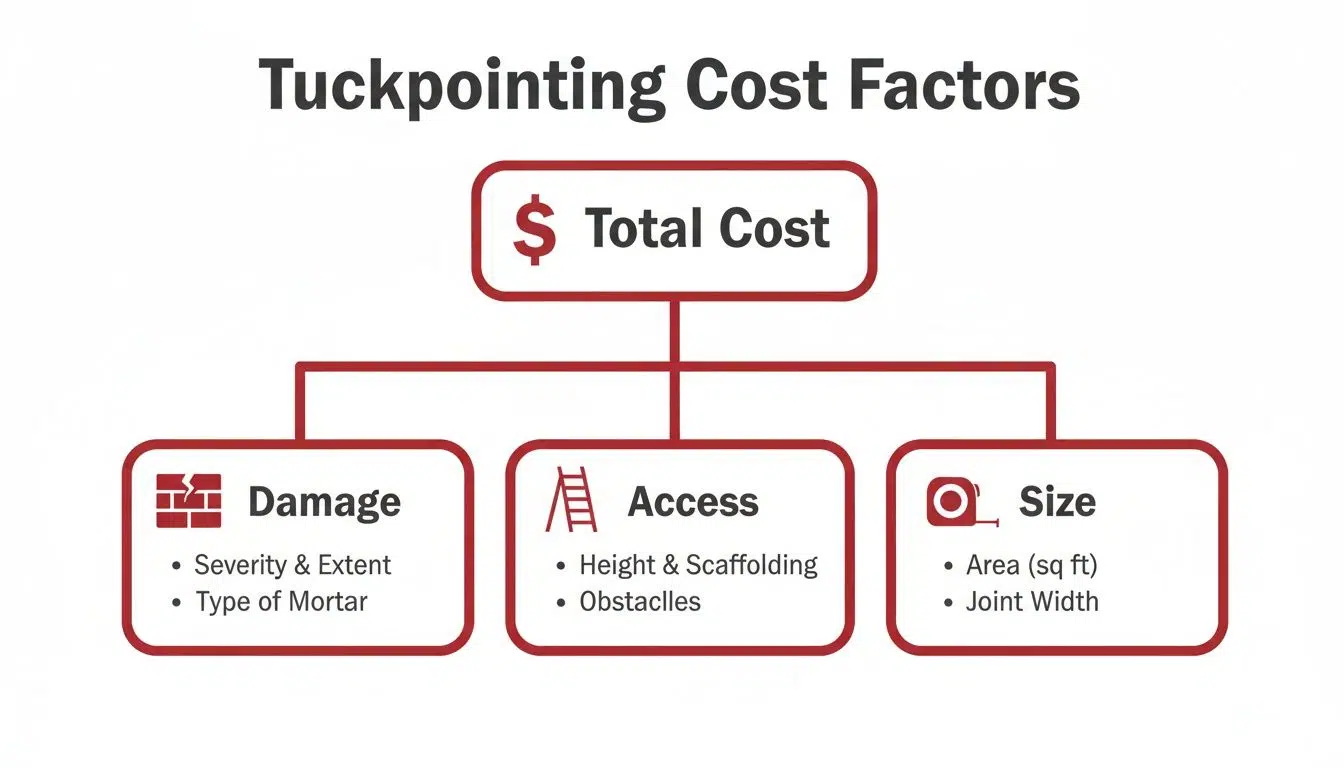
As you can see, the final price tag is always a mix of how bad the damage is, how big the chimney is, and how hard it is for the crew to get to it.
Comparing Costs and Scenarios
The price difference between these options is huge. A quick repointing job might only set you back a few hundred dollars, but a complete rebuild can easily climb into the five-figure range. The real skill is matching the right solution to the actual problem.
Based on 2026 data, a basic repointing job in Chicago runs from $700 to $2,200 for a typical chimney. Tuckpointing adds a bit more for the detailed cosmetic work, while a full rebuild can cost 5 to 10 times more, often landing somewhere between $4,000 and $15,000. The meticulous labor—which is what prevents a chimney from collapsing—accounts for around 80% of the total project cost. You can dive deeper into these figures and see a full pricing analysis from HomeGuide.
To help you visualize the choice, here’s a straightforward comparison of the three primary options for chimney repair.
Chimney Repair Options Compared: Tuckpointing vs. Repointing vs. Rebuild
This table breaks down the three main repair paths, helping you understand where your money goes and what you get for it.
| Repair Option | Typical Cost Range (Chicago) | Best For | Key Outcome |
|---|---|---|---|
| Repointing | $700 – $2,200 | Minor, shallow mortar erosion with no structural issues. | Fills gaps and stops immediate water entry. |
| Tuckpointing | $900 – $3,500 | Widespread mortar decay but structurally sound bricks. | Restores structural integrity and visual appeal. |
| Rebuild | $4,000 – $15,000+ | Severely leaning, spalling, or structurally failed chimneys. | A brand new, safe, and code-compliant chimney. |
Looking at these numbers makes it clear that being proactive is the smartest financial move you can make.
The best return on investment always comes from regular maintenance. A $2,000 tuckpointing job today can save you from a $15,000+ chimney rebuild disaster a few years from now. For anyone owning one of Chicago's classic brick homes, that’s not a guess—it's a scenario we see play out all the time.
Ultimately, the only way to know for sure is to get a professional mason on your roof. A trained eye can assess how deep the mortar damage goes, check for spalling bricks, and determine if the chimney's core structure is still sound. That expert opinion ensures you’re not overpaying for a fix you don’t need or, worse, under-spending on a problem that requires a much bigger solution.
How to Get a Reliable Tuckpointing Quote in Chicago
Getting a quote for chimney tuckpointing isn't like buying a product with a fixed price tag. It’s a custom job, and the final cost hinges entirely on your chimney’s unique condition. A trustworthy quote is always detailed, transparent, and comes only after a thorough, hands-on inspection.
Trying to figure all this out can feel a bit overwhelming, but a little bit of know-how goes a long way. When you know what to look for and what questions to ask, you’re in the driver's seat. You can feel confident you’re hiring the right pro to protect your home for years to come.
Your Step-by-Step Guide to Vetting Contractors
The secret to a great result is a solid process. Don't just jump on the first offer you get. Instead, think of it as an interview process—you’re looking for a skilled partner you can trust with a critical part of your home.
Get Multiple In-Person Estimates: This is a big one. Never, ever accept a quote over the phone. A contractor who hasn't laid eyes on your chimney simply can't know the real extent of the damage, the specific brick type, or any access issues. Make it a rule to get at least three written estimates from different, well-regarded companies.
Ask the Right Questions: A true professional will be happy to answer your questions. Their responses (or lack thereof) will tell you everything you need to know about their expertise and commitment to quality.
Verify Their Credentials: This step is non-negotiable. Before you let anyone on your roof, confirm they are fully licensed, bonded, and insured to work in Chicago. This is your shield against liability if an accident were to happen on your property.
Following these steps helps you weed out the unqualified operators and focus only on the real professionals.
Critical Questions Every Homeowner Should Ask
When a mason is on-site inspecting your chimney, it’s your time to shine. Have these questions ready, because the quality of their answers is just as telling as the price they quote.
- How will you match my existing mortar? This is crucial. Using the wrong mortar can literally destroy your old bricks over time. A pro should be able to explain their method for analyzing and matching the color, texture, and—most importantly—the compressive strength of your current mortar.
- What's your process for preparing the joints? The right answer involves grinding or cutting out the crumbling mortar to a specific, uniform depth. If they just say they'll "scrape it out," that's a red flag for a superficial job that won't last.
- What will you do to protect my roof and property? A professional crew plans ahead. They should mention using tarps and other protective measures for your shingles, landscaping, and windows to shield them from dust and debris.
- What, exactly, is included in your written estimate? A vague quote is a warning sign. A proper estimate will break down the costs for labor, materials, any scaffolding or special equipment, and a final cleanup.
A suspiciously low price is often the biggest red flag. It can signal the use of inferior materials, unskilled labor, a lack of proper insurance, or a plan to cut critical corners like proper joint preparation.
Understanding the Quote and Warranty
Once you have a few estimates in hand, it's time to compare. Remember, the lowest bid is rarely the best value. You're looking for a comprehensive written document that clearly lays out the full scope of work, detailing exactly which areas will be tuckpointed and the specific materials they plan to use.
Finally, always bring up the warranty. A reputable company will stand by its craftsmanship with a guarantee that covers both materials and labor for a set period. This warranty is your peace of mind, ensuring that the tuckpointing chimney cost is a lasting investment in your home's safety and integrity. You can learn more about what to expect when hiring for professional tuckpointing services to get a better feel for the complete process.
Smart Ways to Manage Your Chimney Repair Costs
Controlling the cost of a chimney tuckpointing job is about more than just shopping for the lowest bid. It’s about being smart with your investment. If you learn to think like a contractor, you can find real ways to save money without ever compromising on the quality of the work.
One of the biggest levers you can pull is to bundle your masonry projects. From a contractor's point of view, a lot of the cost is baked in before the first brick is even touched. Setting up scaffolding, getting the crew to your home, and hauling materials all have fixed costs, whether they’re there to fix a small patch or the whole wall.
The Power of Bundling Services
This is where you can find some serious efficiency. If you know your chimney needs work, take a good look around the rest of your property. Is the mortar on your parapet wall starting to crumble? Are the steel lintels over your windows showing signs of rust, causing the surrounding bricks to crack?
Combining all these fixes into one project just makes sense. The contractor is already there, and the setup is done.
- Spreads Out Fixed Costs: That big scaffolding expense gets divided across multiple repair areas, which brings down the per-job cost significantly.
- Reduces Mobilization Fees: You’re only paying for the crew to come out once, not two or three separate times for two or three separate jobs.
- Locks in Labor Rates: You get everything repaired at today's prices, protecting you from the inevitable cost increases down the line.
When you get quotes, ask for an itemized breakdown for each repair and then a single price for doing it all at once. The bundled price is almost always going to be a better deal than adding up the individual jobs later.
Proactive Maintenance Is Your Best Investment
Honestly, the costliest mistake a homeowner can make is letting a small problem fester. A few hairline cracks in the mortar might not look like much, but they're an open door for water. Here in Chicago, that water gets in, freezes, and expands, prying those small cracks into major structural headaches.
Addressing minor mortar decay with a $1,500 tuckpointing job today can prevent the catastrophic chimney failure that leads to a $15,000+ rebuild down the road. This isn't just a possibility; it's a common and costly reality for many property owners.
This is where annual inspections become your best friend. A quick, professional look-over spots trouble when it's small and cheap to fix, letting you plan a minor repair instead of reacting to a full-blown emergency.
Finally, think about timing. Masons are swamped in the late spring and summer. If your repairs aren't an emergency, ask about scheduling the work during the shoulder seasons—think early spring or late fall. Some companies will offer a small discount to keep their crews busy during these slower months, giving you one more way to manage your costs.
Frequently Asked Questions About Chimney Tuckpointing
Even with the numbers laid out, you probably still have a few questions. That’s completely normal. Let's tackle some of the most common ones we hear from homeowners so you can feel confident about your next steps.
How Long Does Chimney Tuckpointing Last in Chicago?
When a true professional does the job with the right materials, you can expect tuckpointing to last anywhere from 20 to 30 years. The key to that longevity, especially here in Chicago, is using a mortar mix specifically designed for our brutal freeze-thaw cycles.
Think of it this way: good workmanship is all about creating a watertight seal. It’s what stops moisture from getting in and wreaking havoc on the mortar and bricks. Done right, it's a long-term investment in your home's health.
Can I DIY My Chimney Tuckpointing to Save Money?
I understand the temptation to tackle this yourself to reduce the tuckpointing chimney cost. However, I have to strongly advise against it—DIY tuckpointing is incredibly risky.
The potential for costly, sometimes irreversible, mistakes far outweighs any savings. Using the wrong mortar can permanently damage the bricks, grinding too deep can threaten the chimney's stability, and frankly, working on a roof is dangerous. A botched DIY job often ends up costing far more to fix than hiring a pro from the start.
What Is the Best Time of Year for Chimney Tuckpointing?
For the best results, we need dry, mild weather. Here in the Chicago area, that sweet spot is usually late spring, summer, or early fall.
Fresh mortar needs to cure properly, and that requires temperatures to stay consistently above 40°F. Trying to get the work done in the dead of winter or during a summer heatwave can lead to a weak bond that fails prematurely. You can get an inspection done anytime, but it’s always best to schedule the actual work for those ideal seasons.
If you’ve noticed any of these warning signs on your chimney, don’t wait for the problem to get worse. The team at Expert Super Seal Roofing & Tuckpointing has been protecting Chicago-area homes since 1972. Get your free, no-obligation estimate today and ensure your chimney is safe and structurally sound.