So, you're looking at that old roof coating and know it's time for a change. Before you can even think about a new, pristine layer of protection, the old one has to go. In Chicago, you can generally expect the roof coating removal cost to be somewhere between $0.50 and $2.00 per square foot.
It’s important to remember that this price is just for the removal itself—the labor, equipment, and disposal needed to strip the failing material. The cost of applying your new coating is a separate conversation entirely.
Your 2026 Guide to Chicago Roof Coating Removal Costs
When a roof coating starts to crack, peel, or blister, it's no longer doing its job. Instead of protecting your building, it's actively working against it by trapping moisture. This can lead to some serious headaches, like rust on a metal roof or rot in the underlying structure.
Simply slapping a new coat on top is a classic mistake. It's like painting over rust; you might cover the problem for a short time, but you’re guaranteeing a much bigger, more expensive failure down the road. Proper removal isn't just a suggestion—it's the only way to ensure your new roof system lasts.
Understanding the Initial Investment
Think of it this way: you're preparing a clean canvas. Without a properly stripped and prepped surface, the new coating won't adhere correctly, and you'll be dealing with leaks and peeling all over again.
Labor is the biggest piece of this puzzle. For perspective, a typical 2,000-square-foot residential roof in a Chicago neighborhood could cost anywhere from $1,000 to $4,000 just for the removal. These numbers show why getting a detailed, on-site quote is so crucial. You can explore more detailed cost breakdowns to see how different factors can influence your final price.
To help you budget, we've put together some ballpark estimates for common property types you see around Chicago.
Key Takeaway: The removal phase is foundational. Skipping it or trying to cut corners directly jeopardizes the performance and lifespan of the new coating you're about to invest in. A clean, stable surface is everything.
Estimated Roof Coating Removal Costs in Chicago (2026)
This table provides a summary of typical removal costs for different property types in the Chicago area. Keep in mind, these estimates don't include the application of a new coating.
| Property Type | Typical Roof Size (Sq. Ft.) | Estimated Removal Cost per Sq. Ft. | Estimated Total Removal Cost |
|---|---|---|---|
| Chicago Bungalow | 1,500 sq. ft. | $0.75 – $1.75 | $1,125 – $2,625 |
| Two-Flat / Greystone | 2,500 sq. ft. | $0.60 – $2.00 | $1,500 – $5,000 |
| Small Commercial Building | 10,000 sq. ft. | $0.50 – $1.50 | $5,000 – $15,000 |
| Large Industrial Warehouse | 50,000 sq. ft. | $0.50 – $1.25 | $25,000 – $62,500 |
As you can see, the numbers can vary quite a bit. This is where professional experience really counts. With over 50 years in the business, Expert Super Seal Roofing & Tuckpointing provides the transparent quotes and honest assessments you need to manage this project without any surprises.
Ever wonder why one quote for removing an old roof coating is double the price of another? It’s a common question, and the answer goes far beyond the simple square footage of your roof. Several key variables are at play, and understanding them is the first step to confidently evaluating any contractor’s proposal.
Think of it like taking your car to the shop. The final bill isn't just about the make and model; it’s about what’s happening under the hood, the specific parts needed, and how many hours it takes to do the job right. Two roofs of the exact same size can have wildly different removal costs based on what's actually up there and what it takes to get it off.
This map helps visualize how those different cost factors all connect to shape your final bill.
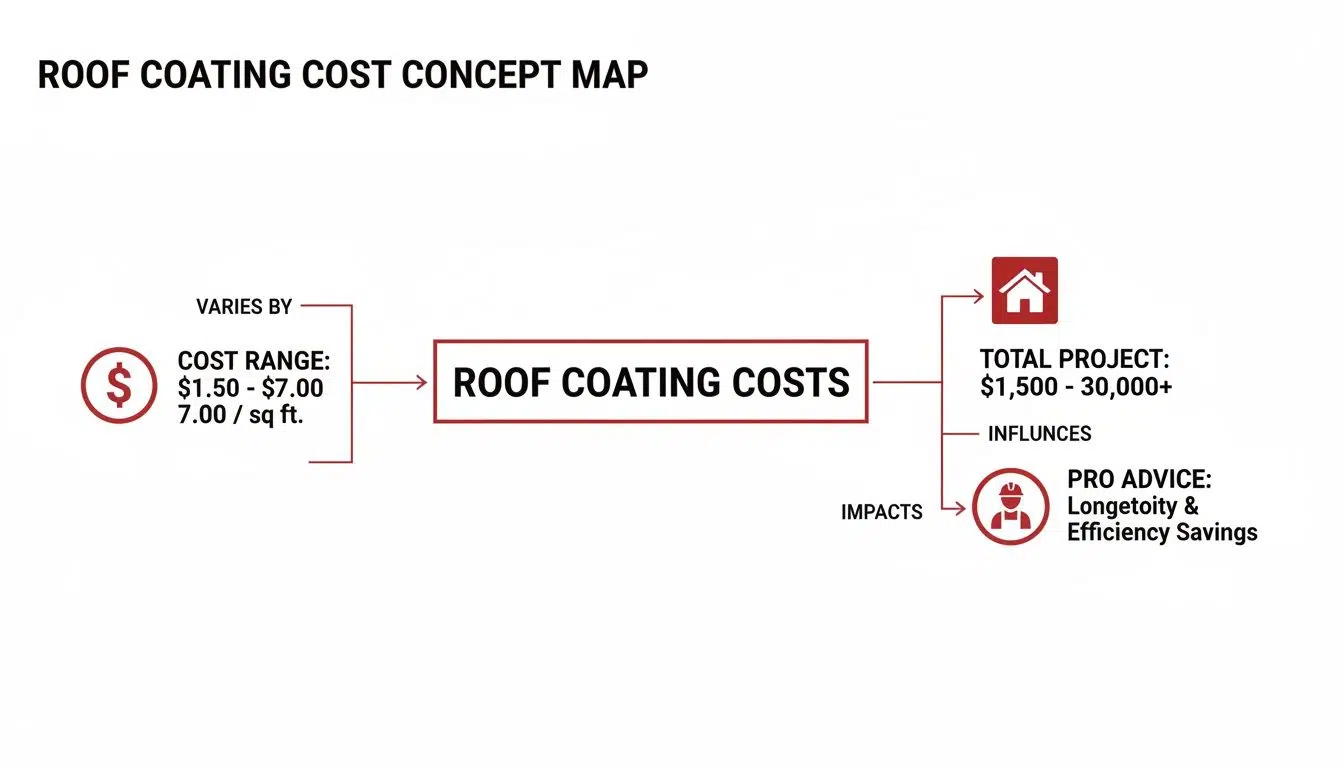
Let's dig into what each of these factors really means for your budget.
Coating Type And Thickness
The type of material being stripped off your roof is, without a doubt, the biggest driver of your final cost. Some coatings peel away with relative ease, while others put up a serious fight.
- Acrylic Coatings: These are usually the most straightforward and affordable to remove. In many cases, a combination of high-pressure water and some scraping is all it takes, which keeps labor hours in check.
- Silicone Coatings: Now we're talking tough. Silicone is notoriously stubborn, sticking to the roof surface with incredible tenacity. Getting it off often means bringing in specialized grinding equipment or aggressive chemical strippers, which pushes up both labor and material costs significantly.
- Polyurethane Coatings: These land somewhere in the middle. Their difficulty really depends on how long they've been on the roof. An older, fully cured polyurethane coating can become incredibly hard and tough to separate from the substrate.
And don't forget thickness. A single, thin layer is one thing. A roof that’s been recoated two or three times over the years? That’s a thick, multi-layered headache that takes much more time and effort to remove.
Roof Size And Complexity
Of course, size matters. A bigger roof means more surface area to strip, so it will naturally cost more than a smaller one. But complexity can be just as important as sheer size.
A wide-open, simple flat roof on a warehouse is the best-case scenario. The costs start climbing as soon as you introduce obstacles that force the crew to slow down and work by hand.
It’s All in the Details: A roof's complexity is really about its "penetrations." Every vent pipe, skylight, HVAC unit, and drain is a spot that requires careful, manual work. You can't just run a big machine over those areas; it takes a skilled hand, and that takes time. More obstacles mean more hours, and more hours mean higher costs.
Accessibility And Building Height
How easy is it for a crew to actually get on your roof and move around? This is a logistical question that many building owners don't think about, but it has a direct impact on the price.
A one-story building with plenty of parking space for trucks and a dumpster is the ideal setup. Contrast that with a taller building packed into a dense Chicago neighborhood.
- Height: For multi-story buildings, just getting the equipment onto the roof can require a crane or a lift. That can add thousands to the project cost before a single foot of coating is even touched.
- Access: If the only way up is a small service elevator or a tight stairwell, the whole process of moving tools and debris slows to a crawl.
- Staging Area: No room on the ground for a dumpster or material storage? That creates a logistical puzzle for debris management, adding more labor and complexity.
These access challenges are a big reason why commercial projects can vary so much in price. Based on 2026 data for the Chicago market, commercial roof coating removal can run from $4 to $9 per square foot. For a 15,000-square-foot commercial roof, a complete removal and replacement project could land anywhere between $60,000 and $135,000, with the removal process accounting for a major portion of that budget. You can get more details on these figures in this guide to commercial roofing expenses in Chicago at supersealroofing.com.
Labor Rates And Disposal Fees
Finally, you have to account for local economic factors. A significant part of any contractor's quote is dedicated to covering the cost of their skilled, insured labor, and rates in the Chicago metro area reflect that.
Disposal fees are another line item you can't ignore. The old coating material is construction debris, and it has to be hauled away and disposed of according to local regulations. The total weight and volume of that material directly determine the disposal cost, which is then passed on to you.
How Residential and Commercial Removal Costs Differ
Think of it like this: stripping a roof coating on a Chicago bungalow is like getting a car detailed. Stripping a coating off a massive warehouse roof? That’s more like overhauling the engine on a freight train. Both jobs involve getting something clean and working right, but the scale, tools, and expertise are in completely different leagues.
That’s why the roof coating removal cost in Chicago varies so dramatically between a home in Oak Park and a manufacturing plant in Joliet.
A homeowner's project is typically self-contained. The main headaches are protecting the garden, keeping debris out of the neighbor’s yard, and working around the home’s specific architecture. A small, skilled crew can usually tackle it.
Commercial projects, on the other hand, are all about logistics and scale. The sheer size of a flat roof—we're talking tens of thousands of square feet—means you need a bigger team and much more powerful equipment. The real challenge, though, is often pulling off the job without shutting down the business operating below.
The Residential Project Scope
When we look at residential properties like a classic Chicago two-flat or bungalow, the scope is usually pretty straightforward. The roof is smaller, and you're often dealing with simpler materials like old acrylic coatings that have worn out.
But don't be fooled—homes have their own cost-driving curveballs:
- Steeper Pitches: Many residential roofs are sloped, which means the crew needs a full safety setup with harnesses, roof jacks, and sometimes scaffolding. This adds a lot of labor time compared to a walk-on flat roof.
- Complex Geometry: Homes are full of angles, dormers, valleys, and chimneys. Every one of these interruptions requires careful hand-work to strip the coating without damaging flashing or siding.
- Close Quarters: Working in tight city neighborhoods means crews have to be incredibly careful. Noise, dust, and debris management become top priorities, which can slow the whole process down.
The Commercial Project Scope
On the commercial and industrial side of things, the entire game changes. Here, success is measured by scale and the ability to work without disrupting business operations. The roofs might be vast, flat, and open, but they come with their own set of serious obstacles.
These projects often involve stripping away heavy-duty systems like thick silicone or multi-layered modified bitumen, which are notoriously tough to remove.
A huge factor we often run into is discovering "roof-over-roof" systems. It was common practice for decades to just layer a new roof on top of an old one. Removing these built-up layers is less of a stripping job and more of a demolition project, which can dramatically increase the cost and timeline.
The stakes are just higher with commercial jobs. For a business, a badly managed removal project can lead to leaks, operational shutdowns, and lost revenue. This is why careful planning is non-negotiable. To dig deeper into what drives costs on these larger buildings, our guide to the commercial flat roof repair cost is a great resource.
Comparing Residential and Commercial Coating Removal in Chicago
To really see how these differences play out in your final quote, it helps to put them side-by-side. The table below breaks down the key factors for a typical residential versus a commercial roof coating removal project right here in Chicago.
| Factor | Residential Projects (e.g., Bungalow, 2-Flat) | Commercial/Industrial Projects (e.g., Warehouse, Condo Building) |
|---|---|---|
| Typical Scale | Smaller square footage (1,500-3,000 sq. ft.). Manageable for smaller crews. | Vast square footage (10,000-100,000+ sq. ft.), requiring large teams and heavy machinery. |
| Common Challenges | Steep pitches, complex angles, protecting landscaping, and navigating close proximity to neighbors. | Business continuity, heavy-duty coating systems, managing huge volumes of debris, and complex roof penetrations like large HVAC units. |
| Equipment Needs | Primarily hand tools, pressure washers, and smaller lifts. | Industrial grinders, large cranes for equipment access, and multiple large dumpsters for waste. |
| Safety and Insurance | Standard residential insurance and safety protocols. | Higher liability insurance limits, complex OSHA compliance, and traffic/pedestrian management plans. |
| Material Disposal | A single dumpster is usually sufficient. Disposal fees are moderate. | Requires multiple large dumpsters and extensive logistical planning for removal, leading to significant disposal costs. |
Ultimately, whether you own a home or manage a commercial property, understanding these core differences is the first step in budgeting accurately and hiring the right team for the job. The equipment, manpower, and planning required are worlds apart, and so is the final price tag.
Budgeting for the Full Roofing Project
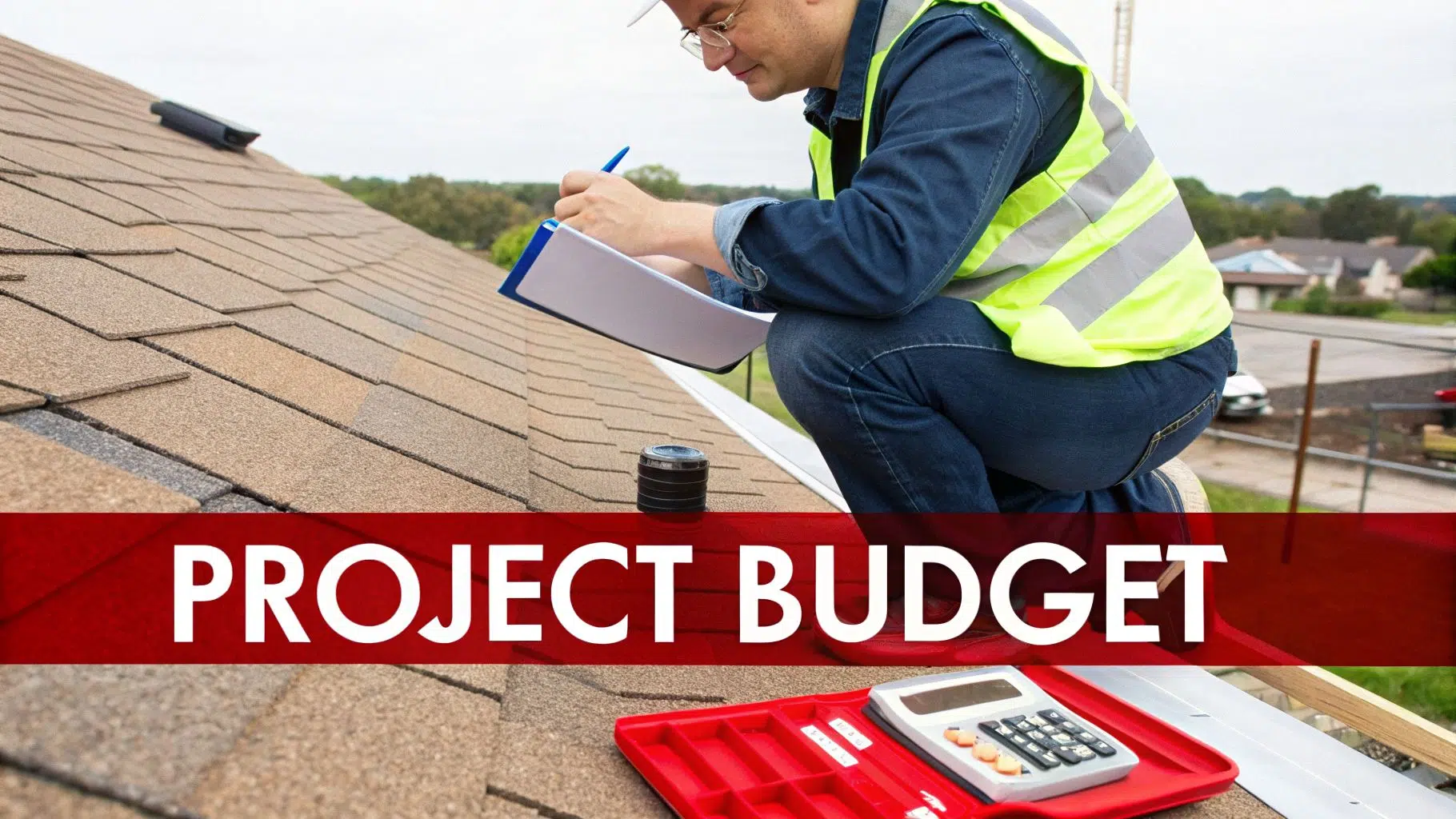
One of the biggest mistakes property owners make is focusing only on the roof coating removal cost in Chicago. I've seen it happen time and again: a budget that looks great on paper completely falls apart because it only accounts for the first step of a multi-stage project.
Thinking about removal alone is like budgeting for a demolition but forgetting you have to build something new in its place. To get a real handle on your total investment, you have to look at the entire job, from tear-off to final walkthrough.
What Lies Beneath The Old Coating
Once that failing coating is finally scraped away, you get the first honest look at your roof's true condition. This is often where the real costs—and the biggest surprises—are hiding. A thorough, professional inspection at this stage isn't just a good idea; it's non-negotiable.
Here’s what we often find:
- Substrate Damage: The old coating could have been masking serious issues. We're talking about rotted wood decking, rusted metal panels, or waterlogged membrane that you simply couldn't see before. These problems must be fixed.
- Seam and Flashing Failures: On flat roofs, compromised seams are a common culprit for leaks. The same goes for flashing around pipes, vents, and walls. These weak points have to be properly repaired and sealed before anything new goes on top.
- Saturated Insulation: If moisture found its way under the old coating and got trapped, the insulation below can be a soggy, useless mess. It loses all its R-value and has to be torn out and replaced, which can be a significant added expense.
Think of it like this: you can't just slap a new bandage on an infected wound. You have to clean and treat the underlying problem first. If you don’t, you're just guaranteeing the new coating will fail, and you’ll be doing this all over again in a few years.
Planning for the New Application
After all the repair and prep work is done, you're ready for the main event: applying the new roof coating. With Chicago’s brutal winters and sweltering summers, this is no place to skimp on quality. Investing in a high-performance system is an investment in your building's long-term health.
The cost for this phase will hinge on the system you choose. Are you going with a reflective silicone to lower energy bills, a tough acrylic, or a specialized coating for your specific roof type? A quality application is just as important as the material itself, ensuring a seamless, watertight barrier that will last.
A Note on Budgeting: Don't think of your project as a list of separate expenses. See it as a single, all-inclusive investment. The total cost is the removal, the essential repairs, the new coating system, and all the associated paperwork. That's the only way to get a predictable number and a roof you can rely on.
Don't Forget the Administrative Costs
The "soft costs" of a roofing project can add up quickly, and they're easy to overlook when you're focused on materials and labor. Any legitimate project in the Chicagoland area will have these administrative expenses baked in.
- City Permits: The City of Chicago and the surrounding suburbs have permitting requirements for most major roofing work. These fees can run from a few hundred to several thousand dollars.
- Inspection Fees: Once the job is done, you’ll likely need a city inspector to sign off on the work to ensure it complies with local building codes.
- Seasonal Pricing Adjustments: The demand for good roofers in Chicago spikes in the late summer and fall. Labor costs can jump 15-25% during this peak season. Timing your project for the slower spring or early summer months can often save you a considerable amount.
By factoring in potential repairs, the new application, and these administrative items, your removal estimate evolves into a realistic project budget. If you want to dig deeper into the specifics of repairs, check out our guide on roof coating repair costs in Chicago.
Deciding Between Recoating or Full Removal
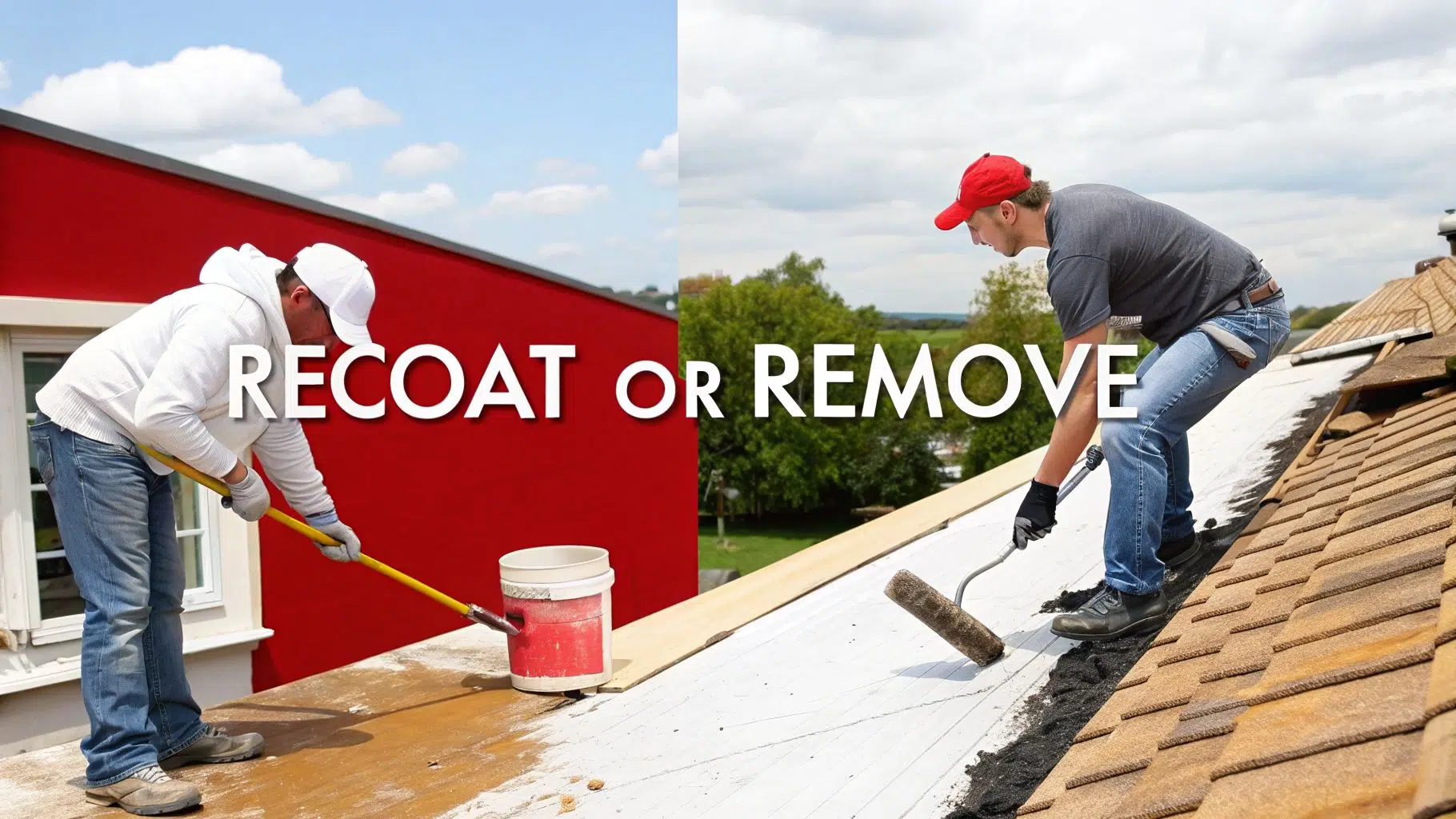
So, your roof coating is showing its age. The big question is: do you really need a complete, and often expensive, tear-off? It’s a crucial decision that hits your wallet and affects the long-term health of your entire roof.
The good news? You don't always have to go nuclear. In many situations, a simple "recoat"—just cleaning the existing surface and applying a new layer right on top—is a solid, budget-friendly option. This move alone can save you thousands on the roof coating removal cost in Chicago.
But there's a catch. This approach only works if the existing coating is a sound foundation. Think of it like painting a room. You can easily roll a new coat over old paint that’s clean and intact. If that old paint is flaking and bubbling, though, you have no choice but to strip it all off first. Your roof is no different.
When a Recoat Is a Smart Move
A recoat is your best bet when the current coating is still in decent shape overall. It might be getting old and showing some wear, but the key is that it's still fundamentally doing its job.
A good roofing contractor will give you the green light for a recoat if your roof checks these boxes:
- Good Adhesion: The old coating is still stuck tight to the roof. You won't see any major peeling, bubbling, or areas where it's lifting off the substrate.
- Minor Surface Wear: The problems are mostly cosmetic. This includes things like chalking (a fine powder on the surface), minor fading, or a bit of granule loss.
- Compatible Materials: The new coating you want to use will play nice with the old one. Putting a fresh coat of acrylic over an older, but solid, acrylic base is a common and straightforward job.
Red Flags That Demand Full Removal
On the flip side, some warning signs are absolute dealbreakers for a recoat. Trying to put a new coating over a failing one is like building a house on a foundation of sand—it’s just a matter of time before it all comes crashing down. If your contractor spots these issues, a full removal is the only real option.
This is where a professional roof inspection pays for itself. An experienced eye can spot trapped moisture or adhesion problems that are invisible to most people, saving you from a mistake that will cost you big time down the road. Cutting this corner now almost guarantees you'll be paying for a much bigger job in just a few years.
Here are the key indicators that mean it's time to strip everything off:
- Widespread Blistering or Bubbling: This is a dead giveaway that moisture is trapped between the coating and the roof deck. Covering it up will only trap more moisture, leading to rust and rot.
- Extensive Cracking and Peeling: If the coating has deep "alligator" cracks or is flaking off in sheets, its integrity is shot. A new coat won't stick and will just peel right off with the old, unstable layer.
- Incompatible or Multiple Old Layers: Some materials just don't mix. Trying to put a new silicone coating over an old acrylic one without the right primer is a recipe for disaster. Likewise, if the roof already has several layers of old coatings, the built-up weight and thickness can demand a full reset.
If you are considering an EPDM system for your property, understanding the specific requirements is crucial. You can learn more by checking out our guide on the best EPDM roof coating in Chicago.
Questions to Ask Your Chicago Roofing Contractor
It's tempting to jump on the lowest bid for a big job like roof coating removal. We all want a good deal. But when it comes to your roof coating removal cost in Chicago, that low number can be a huge gamble. The price on the estimate is just a figure; what really counts is the skill, safety, and reliability you're getting for your money.
Think of it less like shopping and more like conducting a job interview. You're entrusting a critical, valuable asset—your property—to this team. A true professional will appreciate your diligence and answer your questions with confidence. If a contractor gets cagey or can’t give you a straight answer, that’s a big warning sign.
These questions will help you look past the price tag and find a partner you can actually trust to do the job right.
Verifying Their Credentials and Stability
First things first: is this company a legitimate, stable business? This is your best defense against the "fly-by-night" crews who quote a cheap price, do a shoddy job, and are impossible to find when leaks start appearing a few months later. Any reputable Chicago roofer will have this information ready to go.
Here’s where you start:
- Are you licensed, bonded, and insured specifically for roofing in Chicago and my suburb? Don't just take their word for it—ask to see the actual certificates. A state license means they meet Illinois' requirements, a bond protects your investment if they flake, and proper insurance covers you if an accident happens on your property.
- How long has your company been in business under its current name? A company with a long track record, like the decades of local work done by Expert Super Seal Roofing & Tuckpointing, points to stability and a deep understanding of Chicago's unique building challenges.
- Can you give me a few references for recent coating removal projects like mine? Ask for jobs they've completed in the last year or so. This proves they’re actively doing this kind of work and that their skills are sharp.
Understanding Their Process and Safety Protocols
Once you’ve confirmed they’re a solid company, it’s time to dig into the nitty-gritty of the actual work. How they plan to tackle your project reveals a lot about their professionalism. You want a team with a clear, safe game plan, not one that seems to be making it up as they go along.
Expert Insight: How a contractor talks about potential problems is incredibly telling. A roofer who gives you a detailed plan for protecting your property and handling debris shows a level of foresight that sets the real pros apart from the rest.
Probe their methods with these questions:
- What specific removal method do you plan to use for my type of coating? They should be able to clearly explain why they're choosing pressure washing, grinding, or a chemical stripper and why it's the best and safest option for your specific roof.
- How will you protect my building, landscaping, and the neighbors' property from debris? A good answer will include specifics, like using heavy-duty tarps, covering sensitive HVAC units, and having a daily cleanup routine.
- What’s your process for disposing of all the old material? A professional will have a defined, responsible plan for getting all the waste off your property and disposing of it legally.
Frequently Asked Questions About Roof Coating Removal
Even with all the numbers laid out, you're probably still wondering about a few practical details. That's completely normal. Let's tackle some of the most common questions we get from Chicago property owners who are in your exact position.
How Long Does Roof Coating Removal Take?
The timeline, just like the price, can be all over the map. It really boils down to the same factors that influence your final bill.
For a smaller residential job, like stripping an acrylic coating off a classic Chicago bungalow, a good crew can often wrap it up in 1 to 3 days. But if that same roof is covered in a stubborn silicone coating, you could be looking at a full week of work.
Commercial roofs are a different beast entirely. A straightforward 10,000-square-foot flat roof might take 3 to 5 days. Throw in multiple old layers, a maze of pipes and vents, or tricky building access, and the project could easily stretch into several weeks. And, of course, Chicago weather is always the ultimate wild card—rain, wind, or a sudden cold snap can put any job on pause.
Can I Do The Removal Myself To Save Money?
We get it. The temptation to save a few thousand dollars by going the DIY route is strong. But when it comes to stripping a roof, this is one project we absolutely advise against tackling yourself.
First and foremost is the safety risk. A fall from any roof, even one with a low slope, can be devastating. Beyond that, there's a very real danger of causing thousands of dollars in damage to your property. Using the wrong equipment or a heavy-handed technique can easily tear the underlying roof membrane or gouge the substrate, creating brand new leaks. Professionals carry the right insurance for these "what if" scenarios; your homeowner's policy does not.
Crucial Reality Check: We've seen it time and again: a DIY removal attempt that goes wrong ends up costing the owner far more in professional repairs than the original project would have. The potential savings simply aren't worth the immense risk to your safety and your building.
Does My Property Insurance Cover This Cost?
This is a big one, and the answer is almost always no. Property insurance carriers see roof coating removal as routine maintenance, which falls under the owner's responsibility.
The only real exception is when the removal is a necessary part of a larger, covered insurance claim. For instance, if a nasty hailstorm totals your roof, the cost to strip the old, damaged coating would likely be rolled into the overall roof replacement claim. But if you're removing a coating simply because it's old and failing, you should plan on it being an out-of-pocket expense.
Navigating the world of roof coatings and their removal takes experience you can count on. Expert Super Seal Roofing & Tuckpointing has been giving Chicago property owners straight answers and reliable work since 1972. To get a free, transparent estimate and ensure your project is done right the first time, visit us at https://www.supersealroofing.com.