
A lot of Chicago property owners end up in the same spot. The roof was “fine” in the fall. Then winter piled on snow, a thaw hit, water sat on the roof near the drain, and now there’s a brown ceiling stain in a top-floor unit or a wet spot over a warehouse aisle.
By July, the problem changes shape. The leak might dry up, but the building gets hotter, rooftop seams look tired, and the cooling bill starts reminding you that flat roofs take a beating from more than one direction. That’s when people start asking the right question: what’s the best roof coating for flat roof systems in a climate like Chicago?
The short answer is that there isn’t one magic bucket for every roof. The right coating depends on what membrane you already have, how much ponding water shows up, how much foot traffic the roof sees, and whether the roof is still a good candidate for restoration. But there are clear winners and clear losers once you factor in Chicago weather instead of pretending every flat roof lives in Arizona.
Your Flat Roof and the Battle Against Chicago Weather
A flat roof in Chicago rarely fails all at once. It usually starts with small warnings.
A drain slows down. Snow melts and leaves shallow standing water. Flashings around a vent start to separate. Someone notices the top-floor hallway smells damp after a freeze and thaw. Then spring arrives and the roof looks rougher than it did a few months earlier.
That pattern matters because Chicago flat roofs don’t just deal with rain and sun. They deal with snow load, meltwater, trapped moisture, rooftop movement, and constant expansion and contraction. A coating isn’t just “paint for the roof.” When it’s chosen correctly, it becomes a restoration system that shields the existing membrane and buys service life.
For owners trying to avoid a premature tear-off, that’s the appeal. A coating can often restore an aging roof at a much lower cost than replacement, if the underlying system is still sound. If you’re trying to sort out whether your roof is at that stage, a solid starting point is this guide to flat roof maintenance for Chicago properties.
Practical rule: If leaks show up after snowmelt, don’t assume the problem is only at the visible stain. Water on a flat roof often travels before it shows itself indoors.
The main mistake I see in generic advice is simple. It treats all flat roof coatings as roughly interchangeable. They aren’t. Some coatings handle ponding water well. Some don’t. Some stay flexible through rough temperature swings. Some age faster when water sits on them. In Chicago, those trade-offs aren’t academic. They decide whether a roof stays dry or turns into a recurring repair job.
Choosing Your Armor A Comparison of Flat Roof Coatings
Not all coatings solve the same problem. Some are built for reflectivity. Some are built for waterproofing. Some are built to take abuse from foot traffic and service crews. If you want the best roof coating for flat roof performance, you have to match the coating to the roof’s real-world conditions.
Here’s the quick side-by-side view first.
Flat Roof Coating Comparison
| Coating Type | Typical Lifespan | Avg. Cost/Sq. Ft. | Ponding Water Resistance | UV Resistance |
|---|---|---|---|---|
| Silicone | 15-20 years | Qualitatively higher than basic coatings | Excellent | Excellent |
| Urethane | Qualitatively durable | Qualitatively moderate to higher | Good, but system-dependent | Good |
| Acrylic | Qualitatively shorter in harsh wet conditions | Qualitatively budget-friendly | Weak on chronic ponding | Strong |
| Bituminous coatings | Qualitatively shorter-term | Qualitatively economical upfront | Fair to poor over time | Fair |
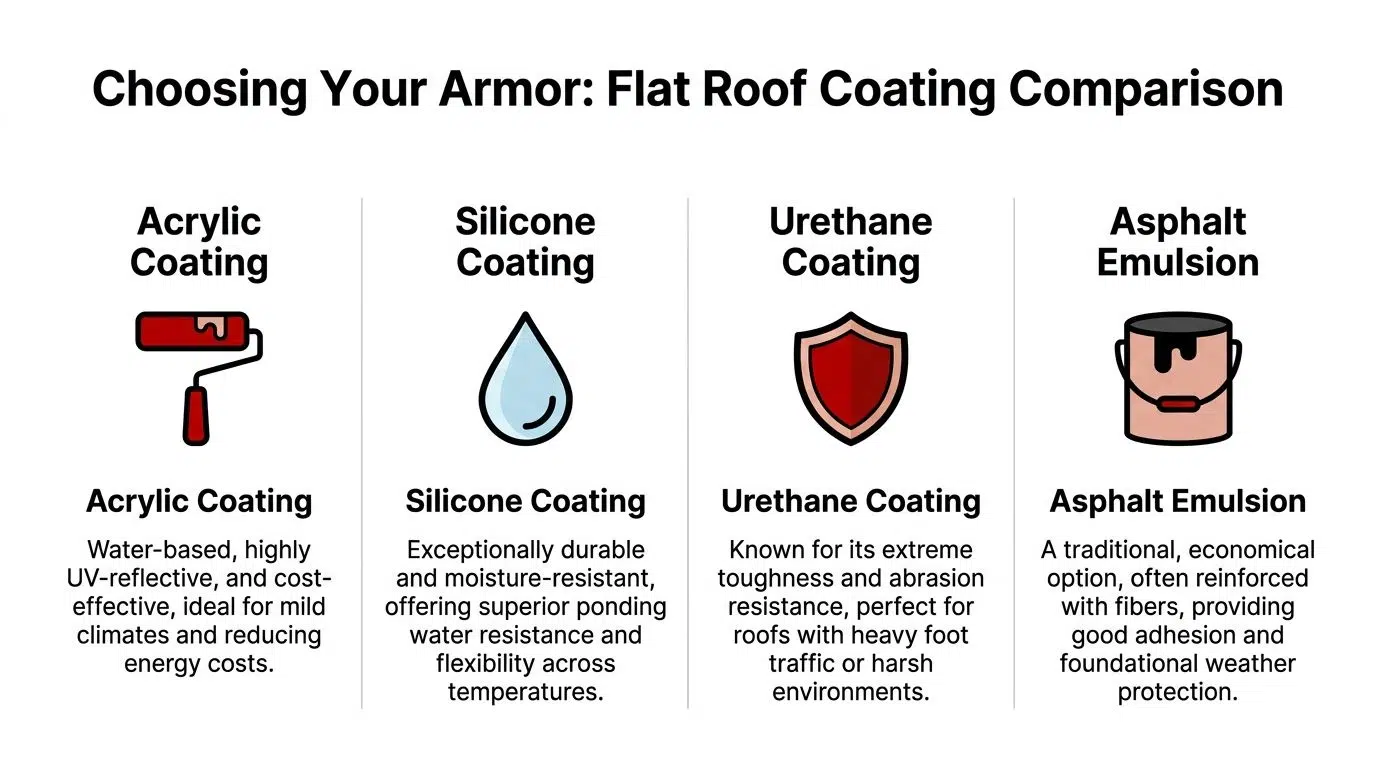
Silicone coating
If a roof holds water, silicone belongs near the top of the list.
Think of it as a continuous waterproof rubber-like shield. It’s one of the strongest options for low-slope and flat roofs because it resists UV very well and doesn’t absorb moisture. According to this flat roof coating performance overview, silicone coatings reflect up to 90% of the sun’s harmful UV radiation, achieve initial solar reflectance ratings of 0.88+, maintain 0.80+ after 3 years in CRRC rapid ratings testing, and a reflective white silicone coating on an asphalt roof reduced summer air conditioning energy consumption by 21.9%. That same source places silicone roof coating lifespan at 15-20 years.
That’s why silicone shows up so often on aging EPDM, TPO, and modified bitumen roofs that still have structural life left in them.
Silicone’s strengths are straightforward:
- Ponding water: It handles standing water far better than acrylic.
- Sun exposure: It reflects heat and protects the membrane below.
- Temperature swing flexibility: It stays serviceable through changing conditions.
Its trade-offs are real too.
- Surface cleanliness matters later: Recoating aged silicone can be more demanding.
- Foot traffic can be an issue: Service paths may need added protection on roofs with regular rooftop traffic.
- Not every roof should get silicone by default: If the substrate is unstable or wet underneath, coating over the problem won’t fix it.
Acrylic coating
Acrylic is the coating many owners hear about first because it’s familiar and often easier on the budget. In the right setting, it works well. On the wrong roof, it disappoints.
Acrylic is best understood as a reflective skin that likes dry conditions and decent drainage. It can make sense on roofs where UV exposure is the main enemy and water doesn’t sit around for long.
Where acrylic falls short is the issue that matters most in Chicago: chronic ponding.
If a flat roof drains well and the existing membrane is in good shape, acrylic may be serviceable. But if water sits after storms or snowmelt, acrylic isn’t the coating I’d want to bet the building on. It’s not the material I trust for a roof that already has drainage trouble.
Urethane coating
Urethane is the tough one in the group.
The easiest analogy is automotive clear coat. It’s valued for durability, abrasion resistance, and adhesion. That makes it useful on roofs with heavier foot traffic, service tech activity, or surfaces that need a harder-wearing coating layer.
On its own, urethane often enters the conversation when the roof takes abuse. Maintenance crews cross it. HVAC techs drag tools over it. Access paths see repeated wear. In those conditions, toughness matters just as much as waterproofing.
This is also why urethane often performs best as part of a system instead of a one-material answer. Used as a base layer under silicone, it brings strength and adhesion to the assembly.
For owners comparing systems on rubber membranes, this page on best EPDM roof coating in Chicago gives useful context on why substrate compatibility matters as much as the coating itself.
A coating should match the roof’s failure pattern. If the roof fails from standing water, buy ponding resistance. If it fails from traffic wear, buy toughness. If it fails from both, a layered system usually makes more sense than a single-material shortcut.
Bituminous and asphalt-based coatings
Bituminous coatings are old-school, and there’s a reason they still come up. They’re familiar, often economical upfront, and they can bond well in certain restoration situations.
But they come with limitations.
These coatings are usually more of a practical maintenance play than a premium long-term restoration strategy. They can help on some roofs, especially where budget drives the decision, but they don’t usually win the conversation when you’re prioritizing reflectivity, ponding performance, and long service life in a severe climate.
In plain terms, they’re often the “good enough for now” option rather than the best roof coating for flat roof longevity.
What works best
For many Chicago-area flat roofs, the primary contenders are:
- Silicone for roofs with ponding water and strong sun exposure
- Urethane-silicone hybrid systems for tougher, more demanding roofs
- Acrylic only where drainage is reliable and the climate exposure is less punishing than the roof’s weak points
That’s the practical ranking, not the marketing ranking.
If a contractor tells you every coating is excellent and it just depends on preference, that’s usually a sign they’re selling inventory instead of diagnosing the roof. Flat roof coatings are tools. The best one is the one built for the exact failure modes your roof already has.
The Chicago Factor Selecting a Coating for Local Conditions
Chicago changes the conversation fast. A coating that performs well in a dry climate can struggle here because local roofs don’t just face sun. They face meltwater, slush, drain backups, and relentless expansion and contraction.
That’s why I put ponding resistance and flexibility at the top of the list for this market.
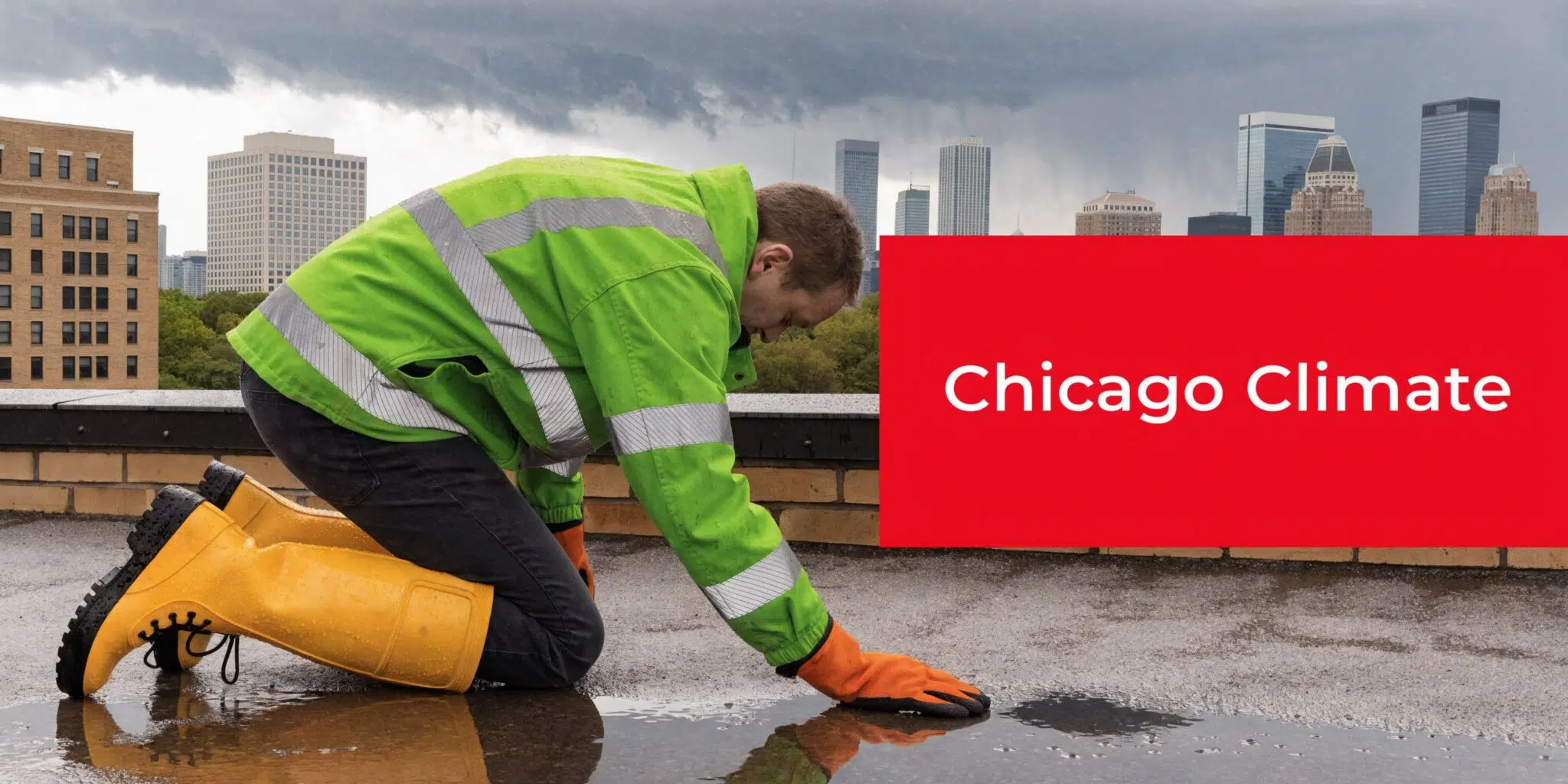
Ponding water is not a side issue
Many national guides treat ponding like an occasional nuisance. On Chicago flat roofs, it’s a central design problem.
Snow doesn’t just disappear. It melts, refreezes, moves toward blocked drains, and leaves water standing in low spots. If the coating absorbs moisture or degrades under standing water, the roof starts losing the battle before spring is over.
A performance analysis discussed in this Midwest-focused roof coating review says silicone coatings outperform acrylics in wet, snowy regions like Ohio and Michigan, and on flat roofs with ponding. That same analysis notes Chicago can experience over 50 freeze-thaw events annually, and that urethane-silicone hybrids offer stronger adhesion and crack resistance for leak prevention tied to ice damming and winter movement.
That lines up with what seasoned roofers see in the field. Wet roofs punish weak coating choices.
Freeze-thaw movement breaks brittle solutions
Flat roofs move. The deck moves. The membrane moves. Penetrations and flashings move at different rates.
When temperatures bounce up and down, the roof assembly expands and contracts over and over. If the coating can’t flex with that movement, it starts showing stress at seams, scuppers, drains, corners, and penetrations first.
That’s why flexible systems matter more here than they do in milder climates. It’s also why a roof that looks “mostly okay” in autumn can show fresh trouble after one hard winter.
Don’t pick a coating based on the best day of the year. Pick it based on the worst week your roof goes through.
Common Chicago roof types and what matters
A lot of local properties carry one of these roof systems:
- EPDM roofs: Adhesion and compatible prep matter. A good coating can restore a weathered membrane, but only after proper cleaning, seam review, and moisture checks.
- TPO roofs: Surface condition is everything. If the membrane is aging but intact, restoration can make sense. If seams are failing broadly, coating alone won’t save it.
- Modified bitumen: These roofs often respond well to restoration if the substrate is still stable and dry.
- Torch-down systems: Compatibility, detail work, and surface prep decide success.
Chicago owners also care about cooling costs in summer. Reflective coatings can help there, but not every white roof coating belongs on every roof. The local priority is balance. You want reflectivity, yes, but not at the expense of waterproofing and winter durability.
So if you’re choosing strictly for this region, the best roof coating for flat roof use usually isn’t the cheapest or most advertised system. It’s the one that stays waterproof under standing water, remains flexible through repeated freeze-thaw cycles, and adheres well to the membrane already on the building.
Coat or Replace A Strategic Cost-Benefit Analysis
Here, owners either save serious money or spend it twice.
A coating is not a substitute for a roof that’s already failed at the system level. But a lot of roofs get replaced earlier than necessary because nobody did an honest restore-versus-replace analysis.
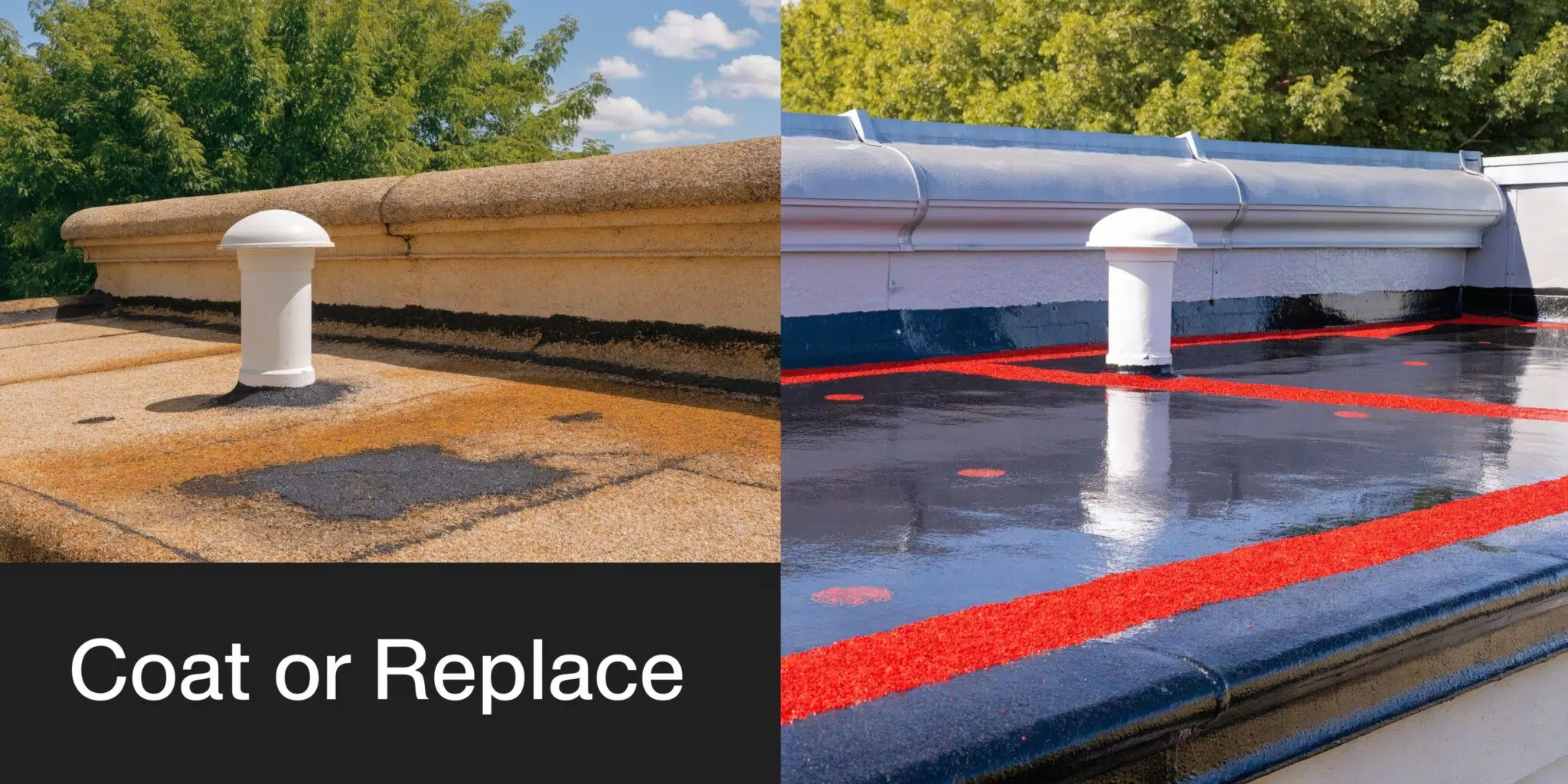
When coating makes financial sense
A roof is often a solid coating candidate when the membrane is aged but still largely intact. The roof may have surface wear, weathering, minor splits, or vulnerable details, but the structure underneath hasn’t crossed the line into widespread failure.
That’s where coatings can shine.
According to this roof coating cost and lifecycle discussion, a coating might cost $2.50/sqft and extend roof life by 15-20 years, while a full TPO replacement can cost $8-12/sqft. That kind of spread is why lifecycle cost matters more than raw upfront price, especially on large commercial and industrial buildings.
If the roof qualifies, coating can buy years of service without the disruption of a tear-off.
When replacement is the smarter move
Some roofs are past restoration. Coating them is like painting over rotten wood.
Red flags include:
- Widespread trapped moisture: If insulation is soaked across broad areas, coating won’t remove the water.
- Major structural trouble: Deflection, deck damage, and unsafe substrate conditions point toward replacement.
- Severe membrane breakdown: If splits, open seams, or failures are widespread, patch-and-coat can become a temporary bandage.
- Repeated leak history across many areas: At some point, the roof is telling you it’s done.
If you’re looking at old coatings that are peeling, incompatible, or failing, this overview of flat roof coating removal cost in Chicago helps frame another part of the decision. Existing material on the roof can change the economics.
A simple decision lens
Ask three questions.
| Question | If the answer is yes | If the answer is no |
|---|---|---|
| Is the roof structurally sound? | Restoration stays on the table | Replacement moves to the front |
| Is moisture damage limited and repairable? | Coating may be viable | Tear-off becomes more likely |
| Does the roof’s condition match a coating’s strengths? | Restoration may produce strong ROI | Replacement may be the safer long-term move |
Why cheap bids often cost more
A full replacement carries a higher ticket, but a bad coating job can still waste money fast. Owners get in trouble when they compare a proper restoration system to a bargain quote that skips prep, skimps on repairs, or coats over wet areas.
That isn’t restoration. That’s delay.
If the roof is a good candidate, coating can be the smarter financial move. If it isn’t, replacement is cheaper than repeating emergency repairs for the next few seasons.
The point isn’t to force every roof into a coating program. The point is to make a disciplined call based on roof condition, not fear or sales pressure.
The Professional Application Process Done Right
A Chicago flat roof usually does not fail because the coating chemistry was wrong. It fails because somebody coated over wet insulation, skipped detail repairs, or rushed the job before a temperature swing.
That matters here more than it does in milder markets. Snow sits. Meltwater ponds. Then a hard freeze opens up every weak seam, drain edge, and flashing corner that was left half-prepped.
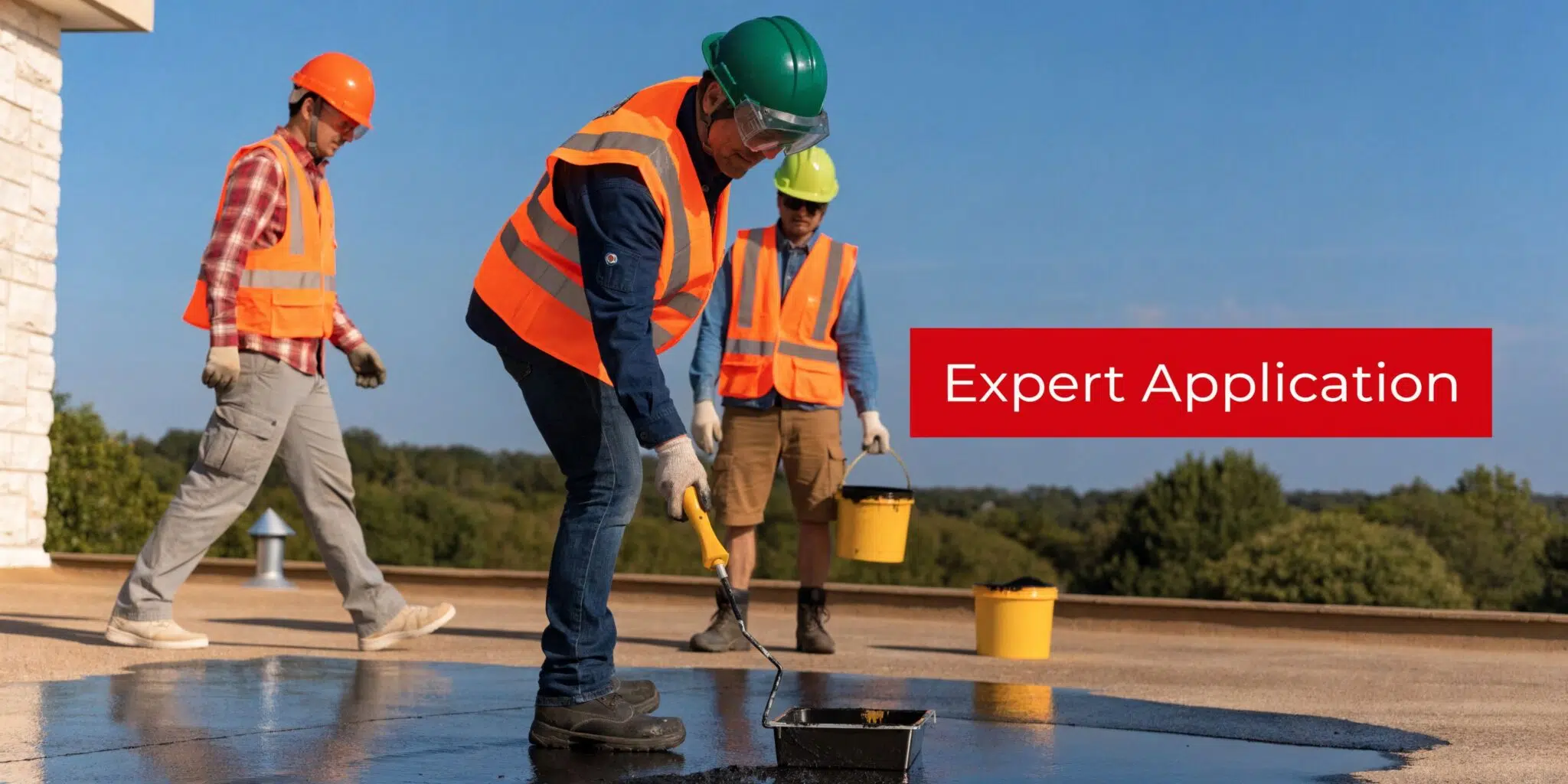
Inspection comes first
The job starts with a hands-on inspection, not a coating quote.
A contractor needs to check the membrane, seams, flashing lines, penetrations, drains, parapet walls, and any area that may be holding moisture below the surface. Trouble often hides around rooftop units and at transitions where repeated freeze-thaw movement has already stressed the roof. From the ground, a roof can look serviceable. Up close, it may be a poor coating candidate.
Use matters too. A commercial roof with regular foot traffic, service carts, and HVAC work needs a different build-up than a roof that only sees occasional maintenance.
Prep decides whether the coating bonds or peels
Surface preparation takes most of the labor for a reason. Coatings need a clean, dry, sound surface to grab onto. If the roof still has dirt, chalking, oils, loose granules, algae, or failing old material, the new coating is being asked to stick to contamination instead of the roof.
That is where cheap bids usually cut corners.
Proper prep often includes:
- Cleaning the roof thoroughly: Remove dirt, residue, biological growth, and loose material.
- Repairing damaged areas: Fix open seams, punctures, split flashing, failed terminations, and soft spots that can still be repaired.
- Reworking problem details: Give drains, penetrations, curbs, corners, and wall transitions the extra build-up they need.
- Priming when the substrate calls for it: Some surfaces need a primer to get reliable adhesion and an even cure.
On Chicago roofs, drying time matters just as much as cleaning. After snowmelt or a cold rain, trapped moisture can sit longer than owners expect, especially in low areas. Coating over that moisture is one of the fastest ways to shorten the life of the system.
Thickness, sequencing, and weather control matter
A serious coating contractor does not apply material until the roof is merely covered. The system has to hit the specified film thickness, and the details usually need reinforcement before the field gets its full coating build.
Sequence matters. Repairs come first. Detail treatment comes next. Then primer, base coat, reinforcement where needed, and topcoat. If that order gets rushed, weak points show up fast around drains and penetrations, which are already the hardest-working parts of a flat roof in winter and during spring thaw.
Application conditions matter too. Temperature, surface moisture, dew point, and cure time all affect the result. A coating installed under the wrong conditions may look fine on day one and start losing adhesion long before the warranty period should even be tested.
Owners should expect five things from a contractor who knows flat roof restoration:
- A documented inspection before work starts
- Repairs completed before coating begins
- A written system specification for primer, base coat, topcoat, and reinforcement
- Jobsite records or photos showing detail work at drains, seams, and penetrations
- Clear weather controls during application and cure
The best roof coating for flat roof performance still depends on the crew putting it down. In Chicago, application quality is not a small detail. It is the difference between a roof that makes it through repeated freeze-thaw cycles and one that starts failing after the first hard winter.
Your Decision Checklist and How Expert Super Seal Can Help
A Chicago owner usually calls at the same point. Snow has melted, water is still sitting on the roof, and someone has already suggested the cheapest coating on the shelf. That is when bad decisions get made.
Use a simple filter before you sign anything.
A fast checklist for owners
- Water sits on the roof after rain or snowmelt: Start with silicone or a urethane-silicone hybrid. Chicago roofs that hold water need a system that can tolerate it.
- Maintenance crews, HVAC techs, or other trades walk the roof regularly: Put more weight on impact resistance and reinforced traffic paths.
- The membrane is aging but still dry, attached, and structurally sound: A coating system may buy useful service life at a much lower cost than a tear-off.
- Insulation is wet in multiple areas or the deck has widespread damage: Skip the coating pitch and price out replacement.
- You care more about long-term performance than the lowest bid: Ask for a written system scope, repair plan, and warranty breakdown. Cheap coating jobs usually get expensive after the first hard freeze.
Why hybrid systems deserve attention
Some roofs need more than one strength.
A urethane-silicone hybrid system pairs a tougher base layer with a silicone top surface that handles water exposure well. On the right roof, that combination can make sense for buildings with foot traffic, detail-heavy layouts, or chronic drainage problems. It is not the answer for every project, and it costs more than a basic coating system, but it can be a smart choice where Chicago weather keeps exposing the same weak points year after year.
The key question is not which product has the best brochure. The pertinent question is which system fits the roof you have, including drainage, surface condition, repairs, and winter exposure.
Warranty questions to ask
Ask these two questions separately, in writing:
- What does the manufacturer cover on the material itself?
- What does the contractor cover if the installation fails?
Owners mix those up all the time. A long material warranty does not fix bad prep, missed seams, thin application, or poor detail work around drains and penetrations.
Expert Super Seal Roofing & Tuckpointing helps owners sort that out before money gets wasted. The value is local judgment. A roof in Chicago has to deal with snow load, meltwater, ponding, and freeze-thaw stress that many national coating guides barely address. That means knowing when a coating is the right move, when repairs need to come first, and when the honest recommendation is replacement instead.
Frequently Asked Questions About Flat Roof Coatings
Can you coat over an existing flat roof coating
Sometimes, yes. Sometimes, absolutely not.
It depends on what coating is already there, how well it’s bonded, how dirty or degraded the surface has become, and whether the new coating is chemically compatible. A contractor should inspect adhesion, contamination, and moisture conditions before recommending an overlay.
If someone says they can coat anything over anything, that’s a red flag.
What’s the best roof coating for flat roof systems in Chicago
For many Chicago roofs with drainage issues or seasonal standing water, silicone is one of the strongest choices because of its moisture resistance and strong performance in ponding conditions. On tougher roofs with movement, traffic, or more demanding restoration needs, a urethane-silicone hybrid system can be the better answer.
Acrylic has its place, but it’s usually a better fit where drainage is reliable and water doesn’t linger.
How much does roof coating cost compared with replacement
A coating can be much less expensive than a full tear-off if the roof is still a good candidate. Earlier in this guide, the cited lifecycle example showed $2.50/sqft for coating versus $8-12/sqft for full TPO replacement, with coating potentially extending life for 15-20 years on the right roof.
The exact project price still depends on repairs, roof condition, detail complexity, and whether old material has to be removed first.
How long does a coating project take
It depends on roof size, prep work, weather, and how many repairs show up once the surface is cleaned. A straightforward small roof moves much faster than a large commercial building with drains, penetrations, traffic paths, and multiple repair areas.
The biggest schedule mistake owners make is assuming the coating itself is the whole project. Inspection, prep, detail repairs, cleaning, and curing often take more time than expected.
Is a white reflective coating worth it in a snowy city
Usually, yes, if it’s the right system for the roof.
The summer cooling benefit can be meaningful, and reflective systems help reduce heat gain during hot weather. The key is not to chase reflectivity alone. In Chicago, waterproofing, adhesion, and flexibility still come first.
Will coating fix an active leak problem by itself
Not always.
If the leak comes from failed flashing, open seams, trapped moisture, deteriorated substrate, or drainage defects, the contractor has to address those issues before or during restoration. Coating over active failure points without repairs is one of the fastest ways to waste money.
If your flat roof is leaking, aging, or showing signs of ponding water trouble, Expert Super Seal Roofing & Tuckpointing can inspect the roof and tell you plainly whether coating, repair, or replacement makes the most sense. They’ve served Chicago since 1972 and understand the local weather, the common flat roof systems in this market, and the detail work that makes restoration last. Reach out for a free, no-obligation estimate and get a recommendation based on your roof’s actual condition, not a one-size-fits-all sales pitch.