
If you're a property owner in Chicago, you've likely seen the wide range of numbers thrown around for flat roof coating removal. The reality is, stripping an old coating can cost anywhere from $3.68 to $15.00 per square foot. For most projects, however, you can expect to land somewhere in the $6 to $12 per square foot range.
So, for a standard 2,000-square-foot commercial roof, that puts the job between $12,000 and $24,000—and that’s just for the removal.
Your Quick Guide to Chicago Flat Roof Coating Removal Costs
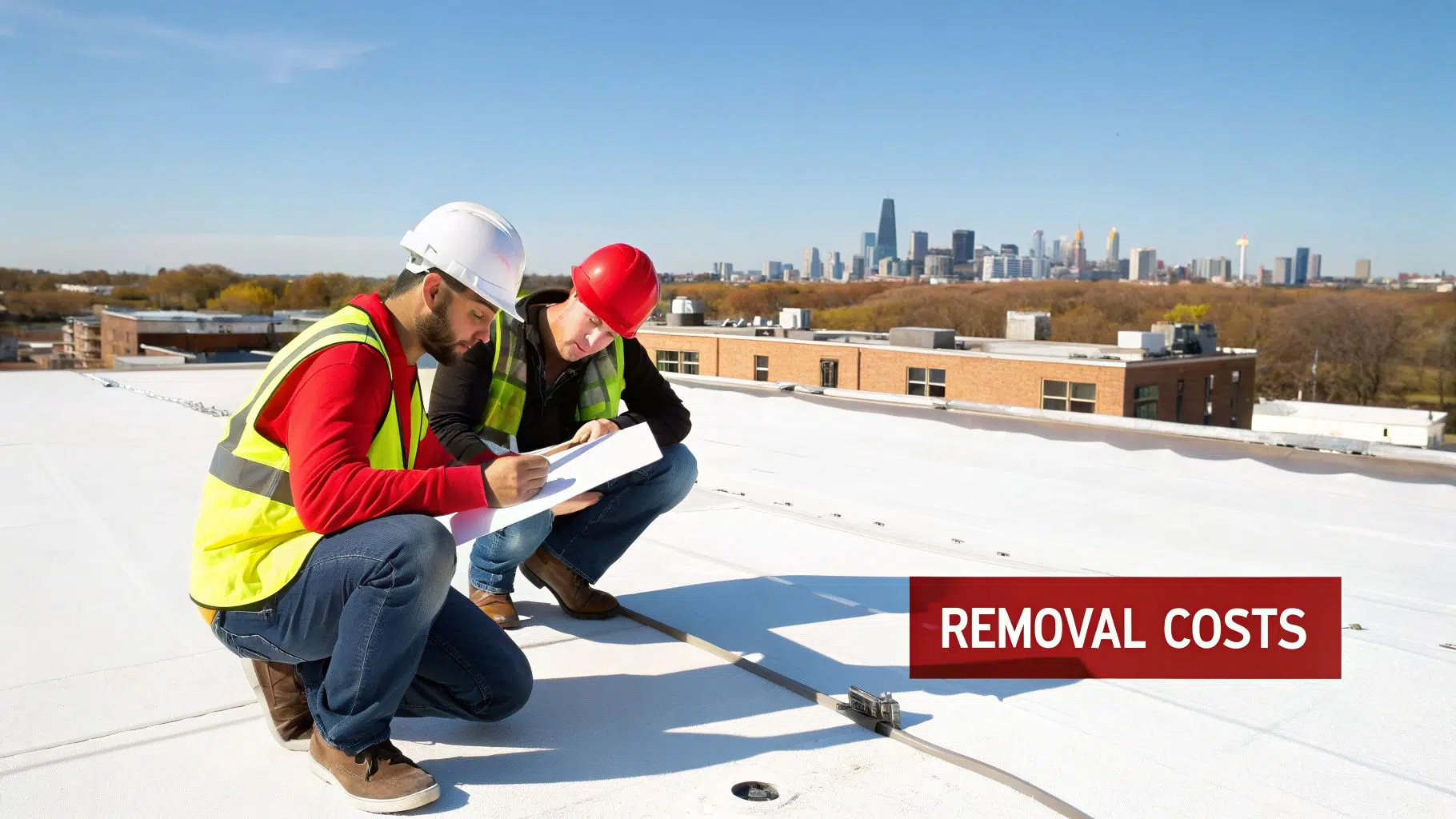
Getting a handle on these costs is the first real step in making a smart decision for your building. While that per-square-foot price is a decent starting point, the final number on a contractor's proposal is a different story altogether. Think of it less like buying a product off the shelf and more like a custom project—every roof has its own history and its own set of challenges.
This guide will give you a clear-eyed look at what to expect in 2026. We'll dig into the numbers, explain what drives them up or down, and give you the background you need to confidently assess quotes from local Chicago roofing crews.
A Snapshot of Estimated Costs
The final bill for removing a failed or aging roof coating is never one-size-fits-all. A straightforward job on a single-story warehouse with one layer of acrylic might fall on the low end. But if you’re dealing with multiple, caked-on layers of tough silicone on a high-rise in Lincoln Park, the price will climb significantly.
It all boils down to a few key variables:
- Labor and Technique: Some coatings can be pressure-washed off with special solvents. Others are so bonded they have to be mechanically ground away, inch by inch. The method determines the man-hours.
- Disposal: Not all waste is created equal. Certain materials, like old silicone, are trickier and more expensive to dispose of under environmental rules.
- Access and Safety: There's a world of difference between working on a one-story building in Joliet and a multi-story condo in Wrigleyville. The latter can require cranes, sidewalk closures, and complex safety rigging, all of which add to the cost.
To help you budget, here is a summary of typical per-square-foot and total project costs for removing different types of flat roof coatings on residential and commercial properties in the Chicagoland area.
Estimated Flat Roof Coating Removal Costs in Chicago (2026)
| Property Type | Roof Size (Sq. Ft.) | Coating Type | Estimated Cost Per Sq. Ft. | Estimated Total Project Cost |
|---|---|---|---|---|
| Residential Two-Flat | 1,500 | Old Acrylic | $4.00 – $7.00 | $6,000 – $10,500 |
| Small Commercial | 3,000 | Elastomeric | $5.00 – $9.00 | $15,000 – $27,000 |
| Mid-Size Industrial | 10,000 | Thick Silicone | $8.00 – $14.00 | $80,000 – $140,000 |
| High-Rise Condo | 5,000 | Multiple Layers | $9.00 – $15.00+ | $45,000 – $75,000+ |
Remember to use these figures as a starting point. They illustrate how much the size, location, and coating material can swing the final price of your project.
Why Removing an Old Roof Coating Is a Critical Investment
It’s a question every Chicago property owner asks: "Why pay good money just to scrape something off my roof?" When you’re staring at an estimate for a flat roof coating removal, it’s easy to see it as just another expense. But that's the wrong way to look at it. This isn't just an expense; it's a vital investment in your building's future.
Think of an old roof coating like a worn-out raincoat. A new one is great—it keeps the water out and protects what's underneath. But once it starts cracking, peeling, and blistering, that old raincoat doesn't just stop working. It starts causing bigger problems.
The Hidden Danger of a Failing Coating
A failing roof coating becomes a trap. It looks bad, sure, but its real danger is that it actively holds moisture against your roof. Now, consider Chicago’s infamous freeze-thaw cycle. Water finds its way into a tiny crack, freezes solid, and expands, prying the opening a little wider. When it thaws, even more water gets in. This cycle repeats all winter, pushing moisture deep into the roofing system where it has no way to dry out.
That trapped water is a silent killer for a flat roof, creating the perfect storm for major issues you can't even see from the ground.
- Structural Decay: Constant dampness will rot the wood or corrode the metal decking under your roof, weakening the whole structure and ruining the insulation.
- Mold Growth: All that trapped moisture is a breeding ground for dangerous mold and mildew, which can easily affect the air quality inside your building.
- Skyrocketing Energy Bills: Once insulation gets wet, its R-value plummets. Your HVAC system has to run constantly just to keep up, and you'll see the difference on your utility bills.
Putting off removal is like ignoring a slow leak under your sink. Eventually, the floor gives out. You're just letting the pressure build until it becomes a catastrophe.
From Small Cracks to Major Headaches
What starts as a few blisters on an old coating can quickly spiral into a full-blown emergency. The cost of dealing with the aftermath—from ruined inventory to displaced tenants—will make the original removal quote look like a bargain.
The real cost isn’t in the removal. It’s in the emergency calls, the waterlogged equipment, the damaged drywall, and the potential liability when a failing coating is left to rot. Proactive removal is how you avoid a much bigger financial hit down the road.
For a commercial property, that might mean thousands in lost product. For a multi-family building, it means dealing with angry tenants, stained ceilings, and urgent repairs. Either way, those emergency bills will be far higher than what you would have paid for a planned, professional stripping job.
Investing in a Solid Foundation
At the end of the day, removing an old, failing coating isn’t about taking something away—it’s about setting the stage for success. You simply can't put a new, high-performance roof system on top of a compromised, waterlogged base. It’s like trying to build a new house on a rotten foundation. The new system will fail, and you can bet the manufacturer's warranty will be void.
By investing in a proper removal, you’re giving your new roof a clean, solid surface to bond to. This is the only way to ensure it performs as designed and lasts for decades, turning a potential liability back into a reliable asset that protects your Chicago property.
Breaking Down What Drives Your Total Removal Cost
When you get a quote for flat roof coating removal in Chicago, it's easy to fixate on the final number. But to really understand the cost, you have to look at how that number is built. Think of it less like a single price tag and more like a detailed receipt from a mechanic—every line item tells a part of the story.
From the minute a crew sets foot on your property, the clock is running. Your final invoice is a direct reflection of the skilled labor, specialized equipment, materials, and disposal efforts needed to strip that old coating off safely and effectively.
Labor Rates: The Human Element
Hands down, the single biggest chunk of your bill will be labor. Removing a roof coating is grueling, physical work that demands a steady hand and a lot of patience. In a market like Chicago, those labor rates can swing quite a bit, especially depending on whether a contractor is using union or non-union crews.
But it’s not just about the hours spent scraping or power washing. A huge part of the job—and the cost—is the careful prep work and cleanup. A professional crew will spend significant time masking off and protecting your property's assets, like HVAC units, skylights, and landscaping, before the real demolition even starts.
This diagram shows you exactly what's at stake. A failing coating isn't just an eyesore; it's a gateway for serious problems that make the removal job much tougher.
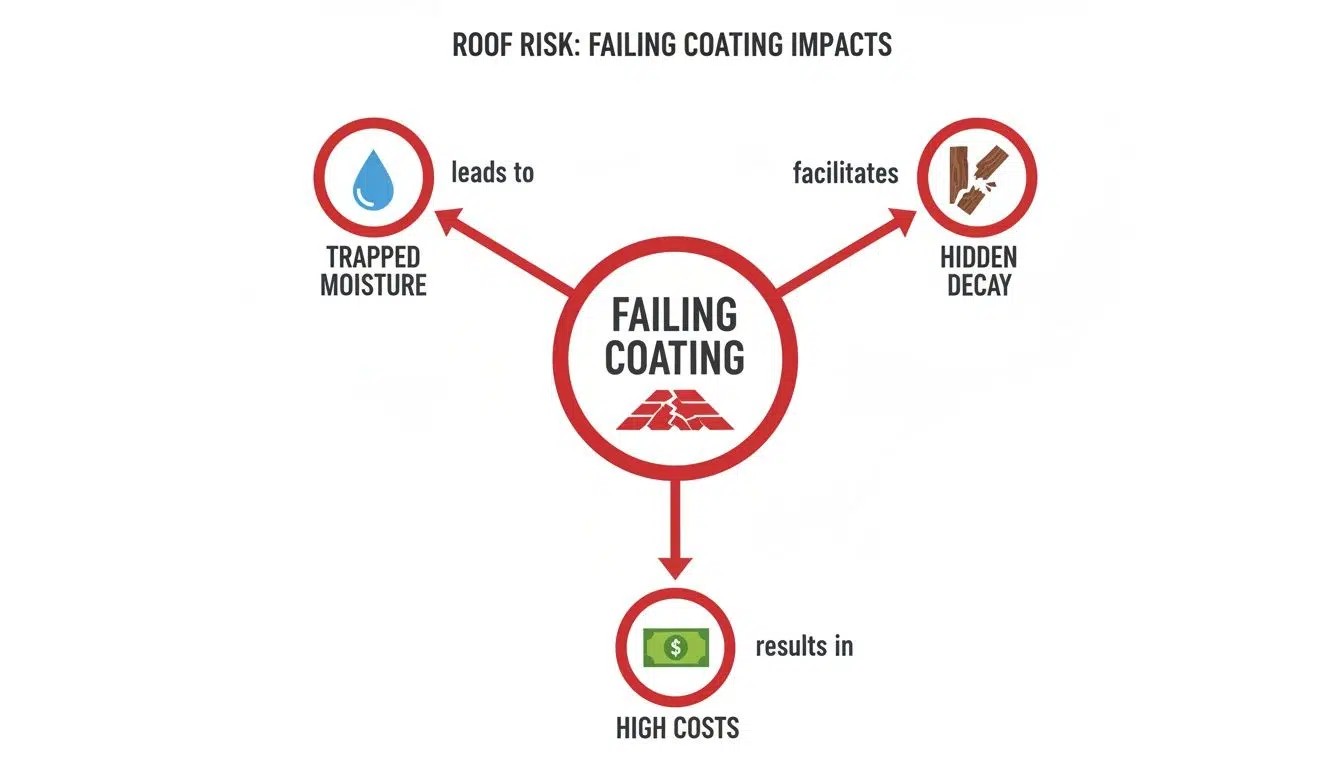
As you can see, once moisture gets trapped underneath, it creates a domino effect of decay. This hidden damage complicates the removal process and ratchets up the labor hours needed to get the roof deck ready for what comes next.
Materials and Equipment: The Tools for the Job
It might seem strange to pay for materials when the whole point is to remove material, but the job requires a surprising amount of consumables and heavy-duty gear. These costs get rolled into your estimate and can vary wildly based on what kind of coating you have.
- Solvents and Chemicals: Some coatings, like older acrylics, can be softened up with special solvents. The thicker and tougher the coating, the more of this stuff you'll need.
- Grinding and Scarifying Discs: For the really stubborn materials like silicone or multiple layers fused together, brute force is the only answer. Crews bring in heavy-duty grinders with diamond-toothed discs that wear out and have to be replaced on the job.
- Safety Gear and Protective Coverings: This isn’t just gloves and glasses for the crew. It includes heavy tarps and plastic sheeting to protect your building from the massive amount of dust and debris this work creates.
Here’s a bit of contractor wisdom: the tougher a coating is to remove, the better it probably was at doing its job. Those incredibly durable silicone coatings are fantastic for waterproofing, but that same resilience makes them a nightmare—and a costly one—to get off the roof years later.
Disposal Fees: The Cost of Tossing It Out
Once the old coating is scraped and peeled off, it has to go somewhere. And in Chicago, you can't just toss it in a regular dumpster. Disposal fees are a fast-growing, and often surprising, part of the total project cost thanks to strict environmental regulations.
Materials are billed by weight, and some coatings—especially silicone and certain older formulas—are classified as special waste. This means they require specific handling and have to be hauled to designated facilities, all of which costs more. These fees can easily add $1.00 to $2.00 or more per square foot to your bill. It’s a line item many building owners don't see coming.
We've seen these costs really climb. Thanks to Chicago's punishing weather, combined with rising labor and disposal fees, the price for flat roof coating removal has jumped by about 15-20% since 2020. Local roofers we’ve talked to say a standard removal on a 2,000 sq. ft. commercial roof now typically runs $6 to $12 per square foot. That's a total of $12,000 to $24,000, with waste disposal playing a major role due to EPA rules on roofing debris. You can dive deeper into these trends by reviewing local roofing cost and permit data from the city.
Roof Access and Logistics: Getting to the Worksite
Finally, where your building is and how easy it is to get to the roof makes a huge difference. The logistics for a one-story warehouse in an industrial park are worlds away from a high-rise condo in the heart of Lincoln Park, and the cost will reflect that.
These are the kinds of logistical hurdles that drive up the price:
- Height and Equipment: Taller buildings often need a crane or a material lift to haul equipment up and debris down. That alone can add thousands to the project budget.
- Site Constraints: Working on a tight city block might require permits to close a sidewalk or lane of traffic. You may even need to pay for flaggers to direct cars and pedestrians, all while dealing with restricted work hours.
- Safety Rigging: The higher you go, the more complex the safety setup. Taller buildings require extensive fall protection, like perimeter guardrails and tethering systems, which take time, specialized equipment, and expertise to install correctly.
Removal, Recoat, or Replacement: Weighing Your Options
When your flat roof coating starts to fail, you’ve hit a crossroads. As a Chicago property owner, you're essentially looking at three paths: tear off the old coating, just paint a new layer over it, or rip everything out and start fresh with a full roof replacement. Each option has a completely different impact on your wallet, your building's future, and your stress levels. Getting this right means looking past the initial price tag and thinking about the long-term health of your property.
It's always tempting to go for what seems like the quick and cheap fix: just applying a new coating right over the old one. But in my experience, that's usually like slapping a coat of paint on a rotting fence post. It might look better for a little while, but you haven't fixed the real problem. In fact, you've probably made it worse.
The Risk of Recoating Without Removal
When you layer a new coating over an old one that's already peeling, blistering, or failing, you're just trapping all the moisture, dirt, and compromised material underneath. The new coat simply can't get a solid grip on an unstable surface, which means it’s going to fail prematurely. This shortcut will almost certainly void the manufacturer's warranty on your new material, too, leaving you high and dry when it inevitably starts to leak.
A new coating is only as good as the surface it’s applied to. Covering up an underlying issue is a short-term fix that often leads to a much larger, more expensive failure down the line. It’s a gamble that rarely pays off, especially in Chicago's harsh climate.
You're essentially just hiding the issue. The trapped moisture and hidden decay will continue to eat away at your roof's structural deck and insulation, leading to problems that are far more expensive to fix than the coating itself.
When Is a Simple Recoat Acceptable?
There are a few, very specific times when a recoat can work. This is only a smart move if the existing coating is still in great shape—meaning it's fully bonded to the roof, has no blisters or bubbles, and shows no signs of moisture underneath. This usually only happens when you're proactively adding a maintenance coat well before the old one is scheduled to fail. You absolutely need a qualified professional to get up there and perform a thorough inspection to make that call.
The Case for Full Removal
For most situations we see, complete removal is the only truly reliable way to go. When you strip the old coating off, you get down to a clean, solid surface and eliminate all the guesswork. It's the only way to properly check the underlying roof deck for rot or damage, make any needed repairs, and give the new coating a perfect surface to bond to.
While the initial flat roof coating removal cost in Chicago is higher, this is an investment in the long-term performance of your roof. Think of it as giving a painter a clean canvas instead of one that's already dirty and peeling. This is how you protect your warranty and get the best return on your investment, avoiding the headache of emergency leak repairs down the road. As you plan, you might also want to explore our guide on selecting the best EPDM roof coating in Chicago to see how material choices play into this.
When to Consider a Full Roof Replacement
Sometimes, the problem goes deeper than the coating. If an inspection shows that moisture has gotten into large areas, the roof deck is rotting, or the insulation is saturated, then a simple removal and recoat isn't going to cut it. At that point, a full roof replacement is the only responsible choice. It's the most expensive route, for sure, but it’s the only way to fix deep structural issues and completely reset the lifespan of your entire roof system.
The cost of getting this decision wrong has skyrocketed. Back in the early 2010s, a typical coating removal job might have been $850-$1,246. By 2026, with construction costs soaring, that same job is now $3,000-$6,000. On the asphalt roll systems common in about 60% of Wrigleyville's commercial buildings, stripping that material can run anywhere from $3.68 to $15 per square foot. With over 70% of our calls involving old coatings on modified bitumen roofs, we know that proper removal prevents 35% more leaks during our brutal winters, where 50+ inches of snow is the norm. You can learn more about these trends from Chicagoland's roofing experts.
How to Get an Accurate Removal Quote in Chicago
Getting a straight answer on your flat roof coating removal costs in Chicago shouldn't feel like pulling teeth. But the truth is, a reliable quote goes way beyond a simple square footage number. A true professional has to size up the entire job—the grunt work, the risks, and all the moving parts.
Think of it this way: a good contractor isn't just glancing at the roof. They're playing detective, investigating every clue that points to how much work is really involved. If you know what they're looking for, you can help them build a quote that doesn’t come with nasty surprises down the road.
Prepare for the Contractor's Call
To move past a generic, ballpark estimate and get a number that’s actually useful, you need to have your facts straight. The more information you can provide upfront, the more tailored the quote will be to your specific building.
Before you even make the call, try to gather these key details:
- Roof Age and History: Do you know when the coating was applied? More importantly, do you know what kind it is—acrylic, silicone, or something else?
- Known Issues: Point out any active leaks, areas with ponding water, or spots where the coating is clearly bubbling, blistering, or peeling away.
- Repair Records: Have you had patchwork done before? Knowing the repair history helps a roofer understand what they might be getting into underneath the surface.
- Building Access: How easy is it to get on the roof? A simple hatch is very different from needing special lifts or equipment to get crews and materials up and down.
Having this info on hand gives a contractor a huge head start and shows you’re a serious property owner. It helps them formulate a much more thoughtful initial take on your flat roof coating removal cost in Chicago.
Spotting Red Flags in a Proposal
Here’s a hard truth: not all quotes are created equal. A shockingly low offer might look great at first, but it’s often a sign that the contractor is cutting corners—either in their estimate or, worse, in the work itself. A professional, detailed proposal is your first sign of a trustworthy partner.
Be extremely wary of any quote that comes in way under the others. In the roofing world, you absolutely get what you pay for. A suspiciously cheap bid often leads to surprise change orders, shoddy work, or even an abandoned job.
Keep an eye out for these classic warning signs:
- Vague Line Items: A real quote breaks down the costs for labor, materials, disposal, and equipment. If you just see one lump sum, that's a massive red flag.
- No Mention of Permits: Any pro operating in Chicago knows that permits are part of the job and will include them in the discussion and proposal.
- Lack of Insurance or Licensing Proof: Don't even think about hiring someone who can't immediately show you they are fully licensed, bonded, and insured to work in Illinois.
- High-Pressure Sales Tactics: Good roofers give you the facts and let you make an informed decision on your own timeline.
Data from recent Chicago projects shows that a full flat roof replacement after a coating removal can average $12,067. The removal work alone can easily make up 25-40% of that total. With costs sitting between $10-$20 per square foot, a standard 1,000 sq. ft. roof could cost $10,000-$14,000 just for stripping the old layers, a figure that's been climbing with labor rates. For more specifics, you can check out the latest Chicago roofing cost data.
Ultimately, a quality quote is an empowering tool. It gives you a clear roadmap and shows you exactly where your money is going. If you're comparing removal against other options, our guide to roof coating repair costs in Chicago can give you even more context.
Maximizing Your ROI Through Professional Coating Removal
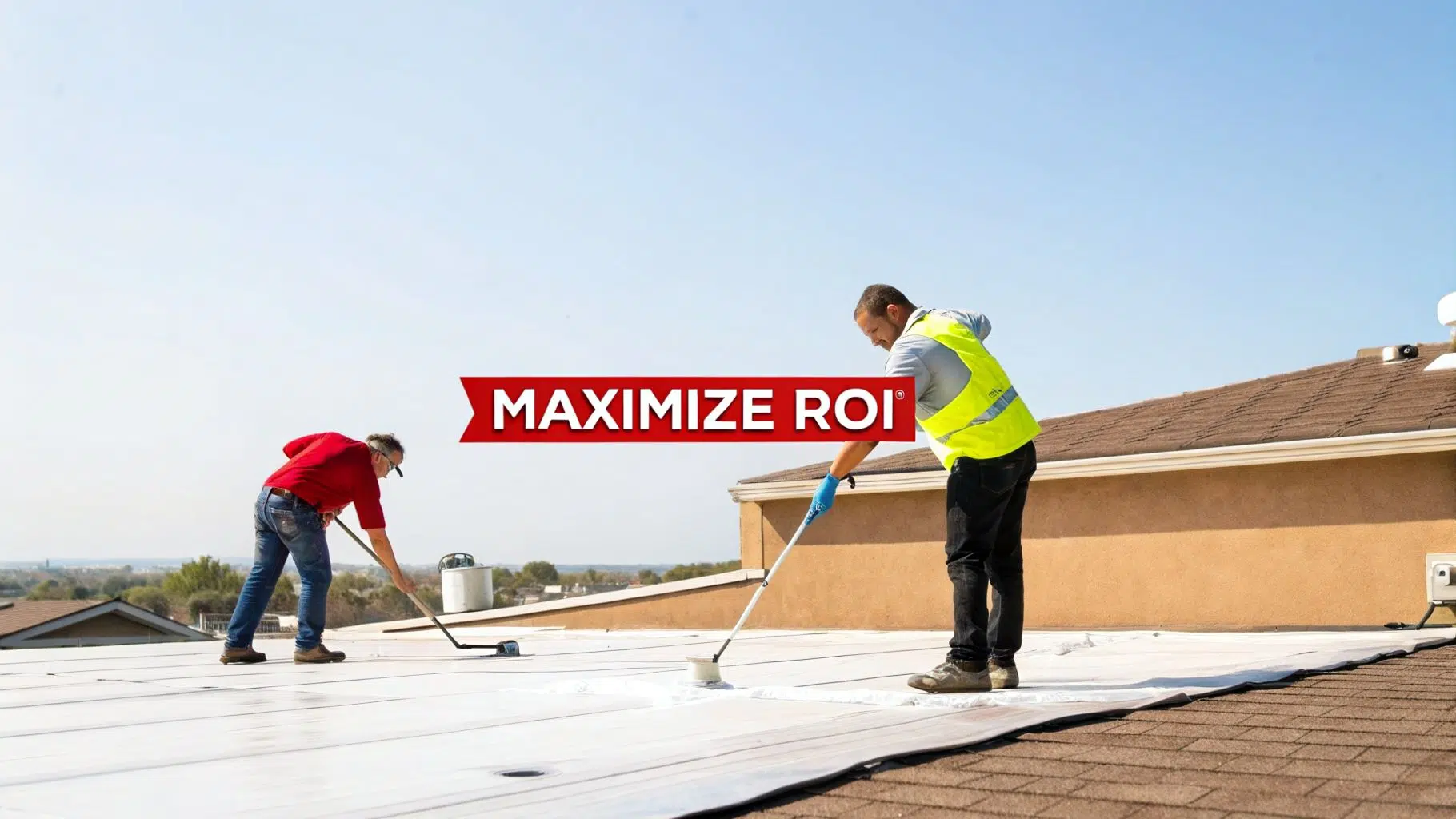
It’s easy to look at the flat roof coating removal cost in Chicago and see just another line item on a budget. But that’s only half the story. Viewing this as a simple expense misses the crucial point: professional removal is one of the smartest investments you can make in your building. This isn't just a repair; it's a strategic move to protect your asset.
Think of it this way: the upfront cost of stripping a roof correctly is a drop in the bucket compared to the future cost of ignoring a failing coating. We’re talking about structural rot, waterlogged insulation, ruined inventory, and emergency repairs at premium rates. A professional removal project stops a small headache from turning into a full-blown financial disaster.
The Tangible Returns on Your Investment
Once you get past the initial sticker shock, you start to see where the real value lies. When an old coating is properly removed and a new high-performance system is installed, the benefits show up almost immediately—and they keep delivering for years to come.
This is where the numbers really start to make sense:
- Extended Roof Lifespan: A new coating can’t perform if it’s put on a failing surface. Proper removal and prep is the only way to get the full warrantied lifespan from a new system, often adding 10-15 years of service life you would otherwise forfeit.
- Enhanced Energy Efficiency: A clean substrate allows a new reflective roof coating to do its job properly. By reflecting the sun’s rays, it can dramatically lower the temperature on your roof’s surface, which means your HVAC system doesn’t have to work as hard, cutting down those brutal Chicago summer utility bills.
- Increased Property Value: A healthy, well-maintained roof with a transferable warranty is a massive plus for any building. It’s a key selling point that boosts market value and makes your property far more attractive to potential buyers or tenants.
Protecting Your Warranty and Your Asset
Here’s something many property owners learn the hard way: applying a new coating over a failing one almost always voids the manufacturer’s warranty on the new material. Manufacturers won't back a product that was set up to fail.
A professional contractor ensures the roof deck is prepared exactly to the manufacturer’s specifications. This not only guarantees the best performance but also keeps your warranty locked in, protecting you from material defects. If you'd like to learn more about proactive care, our comprehensive guide to flat roof maintenance for Chicago properties is a great resource.
A professional estimate for coating removal isn’t a sales pitch—it's the first step in a risk assessment for your most valuable asset. It provides the clear, actionable information you need to protect your building’s future and secure a strong return on your investment.
Common Questions About Flat Roof Coating Removal in Chicago
When you're looking at a flat roof coating removal, a lot of questions are bound to come up. As a Chicago property owner, getting straight answers is the key to planning your budget and avoiding nasty surprises down the road. We've been doing this for a long time, so we’ve heard just about every question there is.
Let's walk through the most common ones we get, covering everything from project timelines and safety to the red tape and how the work might affect your day-to-day operations.
How Long Does Coating Removal Take on a Typical Chicago Roof?
This really depends on what we find once we get up there. On a straightforward job—say, a 2,000 sq. ft. commercial roof with a single, older layer of acrylic—a good crew can typically strip it in 2-4 days, assuming the weather plays nice and access is simple.
But things can get complicated fast. If we’re dealing with multiple, thick layers of a stubborn coating like silicone, or if the roof is difficult to get to and requires extensive safety rigging, that timeline could easily stretch to a week or more. And this is Chicago, after all. Any roofer worth their salt will build some buffer time into their estimate to account for our unpredictable rain and wind.
Can I Just Power Wash the Old Coating Off Myself?
In a word: no. We see the temptation to save a few bucks with a power washer, but this is one of the riskiest things you can do to your roof. A high-pressure sprayer can—and often does—gouge, tear, or shred the underlying roof membrane. This is especially true for older EPDM or TPO systems. One wrong move and you've just turned a coating removal project into a full, much more expensive, roof replacement.
Professionals use a careful, controlled process. It starts with specific solvents to soften the old coating, followed by work with specialized scrapers, spud bars, or grinders. It's a methodical approach designed to strip the coating without ever compromising the waterproof membrane below. Honestly, it’s a skill that takes years to get right.
Trying this yourself almost always voids any existing warranties and usually ends up costing far more to fix than if you'd just hired a pro from the beginning.
Is a Permit Needed for Roof Coating Removal in Chicago?
It depends on the exact scope of the work. If all you're doing is removing an old coating to prep for a new one, you often won't need a permit from the City of Chicago or in suburbs like Naperville.
However, the minute that job grows, you'll need one. If the project involves tearing off any of the original roofing layers, replacing water-damaged decking, or making structural repairs, a permit is almost certainly required. This is where a licensed, insured contractor is non-negotiable. They'll know the local codes inside and out and will handle all the permitting to make sure your project is 100% compliant.
Will This Project Disrupt My Business Operations?
Any experienced contractor knows that keeping your business running is priority number one. We work with property managers and owners all the time to create a phased plan that fits their schedule. This might mean scheduling the noisy work for off-hours or weekends, or we might tackle the roof in sections to keep the disruption contained to one area at a time.
While some noise and debris are unavoidable, a quality crew prides itself on keeping the worksite clean, organized, and safe. It just makes the whole process smoother for your employees, tenants, and customers. Good, consistent communication from your contractor is the key here—it ensures the project moves along without getting in the way of your business.
When it comes to protecting your property, getting the job done right the first time is the only option. For a transparent, no-obligation estimate from a team that has served Chicagoland for over 50 years, contact Expert Super Seal Roofing & Tuckpointing and let our family-owned business protect yours. Get your free estimate today.