
Yes, a new roof absolutely helps with heating and cooling, and homeowners often see energy savings of 20-40% depending on the old roof’s condition and the new materials chosen. In the right setup, an energy-efficient roof can also reduce peak cooling demand by 11-27% and cut overall heating and cooling energy use by as much as 40%.
If you're in Chicago, you already know the pattern. Summer hits, the second floor gets stuffy, the AC runs all afternoon, and the electric bill looks wrong. Then winter comes, the furnace never seems to stop, one bedroom stays cold, and ice starts building at the eaves.
That usually isn't just an HVAC problem. A worn-out roof can leak heat in January, trap hot air in July, and let moisture damage the insulation that was supposed to protect the house. A properly built new roof does the opposite. It helps the whole building hold temperature better, reduces strain on the heating and cooling system, and makes the house feel more even from room to room.
In Chicago, that matters more than it does in milder climates. We ask one roof to handle humid summer heat, lake-effect weather, freeze-thaw cycles, snow load, wind, and ice dams. If the roof system is tired, your utility bills usually show it before the ceiling ever does.
Your Roofs Impact on Your Monthly Energy Bills
A Chicago homeowner usually notices the roof on the utility bill before they notice it from the street. The upstairs stays muggy in August. The furnace runs hard in January. Snow melts unevenly, and ice builds along the eaves while one bedroom never feels right.
That pattern points to the roof assembly more often than people think. On houses I’ve worked on across Chicago, especially older bungalows and flat-roofed two-flats, high heating and cooling costs often trace back to problems at the top of the building. Heat escapes through weak attic areas in winter. Summer heat builds above the ceiling and pushes your air conditioner to run longer. If moisture has been getting in for years, insulation performance usually drops too.
What an aging roof does to energy use
An older roof can raise monthly energy costs in a few different ways at the same time.
- It lets conditioned air escape. Gaps, failed flashing areas, and worn components allow air movement that makes the furnace and AC work harder.
- It traps excess heat. Poor ventilation and heat-soaked roofing materials can turn the attic into a hot box during Chicago summers.
- It reduces insulation performance. Once insulation gets damp or compressed, it does a worse job slowing heat transfer.
- It creates uneven comfort. The result shows up as hot second floors, cold upper rooms, and longer HVAC run times.
I see this a lot after rough winters. A homeowner calls about ice dams, but the bigger problem is usually heat loss. The house is sending too much warmth into the attic, and that same weakness is part of the reason the gas bill stays high.
What a new roof can change
A new roof can improve energy performance because it gives you a chance to correct the whole assembly, not just replace old shingles. If the job includes proper ventilation, sound underlayment, dry insulation, and careful air sealing at key transitions, the house holds temperature more evenly and the HVAC system does less catch-up work.
The savings are not automatic.
If a contractor tears off old roofing and installs new material over the same ventilation and insulation problems, the energy improvement may be modest. If the old roof was failing, the attic was overheated, or moisture had already damaged the system, the difference can be much more noticeable. In Chicago, that gap matters because the roof has to handle both heating season and cooling season, not just one or the other.
The practical takeaway is simple. If your top floor is uncomfortable and your heating and cooling bills keep climbing, the roof deserves a serious look.
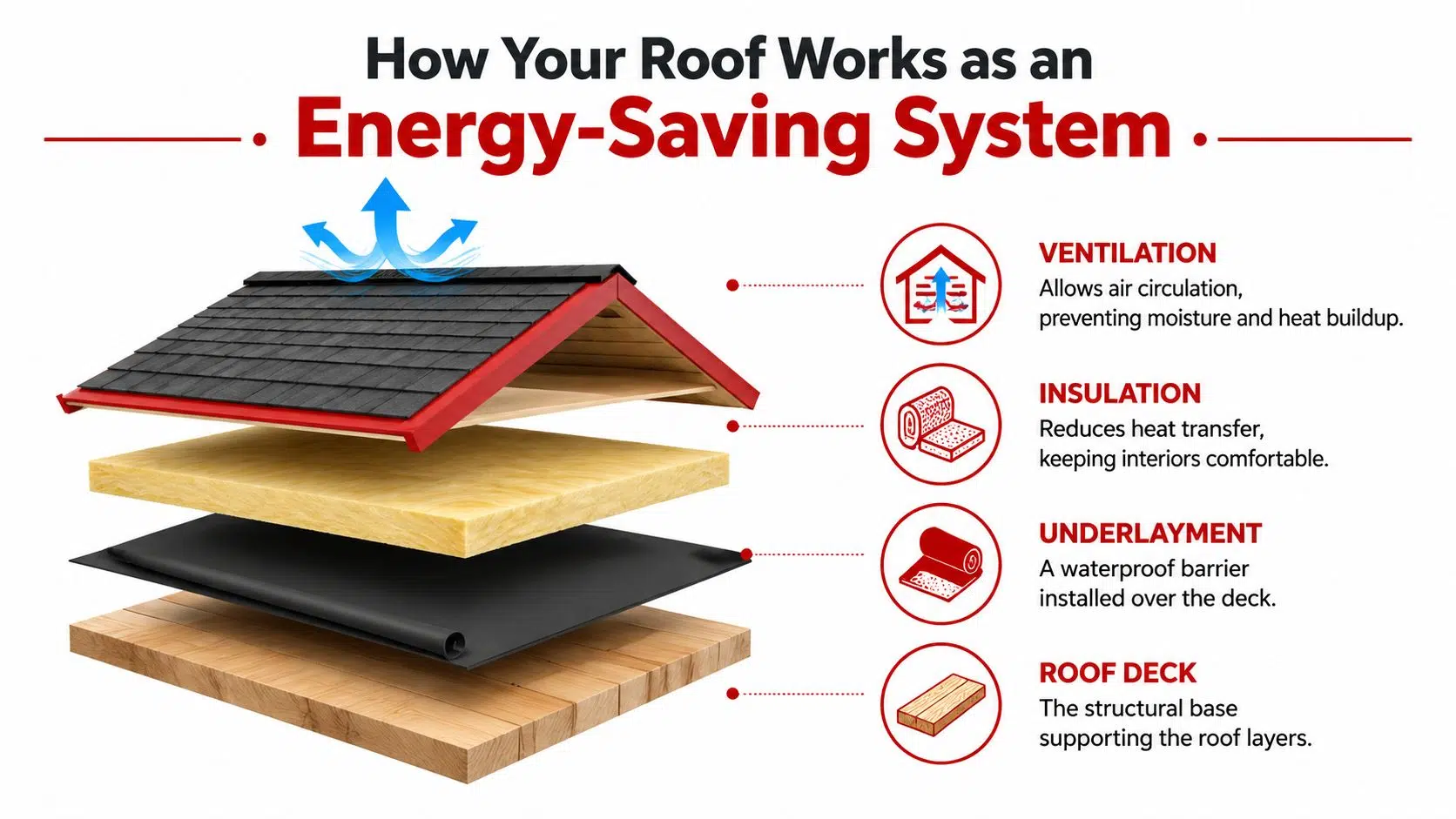
How Your Roof Works as an Energy-Saving System
On a January job in Chicago, I can usually tell what kind of energy bill a house is fighting before I even step inside. Frost at the soffits, a warm attic, damp insulation, and weak airflow at the ridge all point to the same problem. The roof system is letting heat and moisture move where they should not.
A roof saves energy when the whole assembly is doing its job. The deck has to stay dry. The underlayment has to back up the outer roofing material. The insulation has to stay fluffy and dry. The ventilation has to move heat and moisture out in a controlled way. Miss one of those, and the house pays for it in both January and July.
Roof deck and underlayment
The roof deck is the base of the system. On older Chicago bungalows and two-flats, we often find sections that have taken on moisture for years around valleys, chimneys, and ice-dam areas. A soft or damp deck does more than threaten the shingles above it. It can also allow air leaks and moisture problems to keep working below the surface.
The underlayment sits on top of that deck and serves as the backup water barrier. In a climate like ours, it also plays a role in controlling air and moisture movement through the assembly. That is especially important after freeze-thaw cycles, wind-driven snow, and heavy summer storms.
Good materials help, but detailing is what separates a roof that performs from one that only looks new. Around eaves, penetrations, and transitions, the installation has to be tight and intentional.
Insulation works only when it stays dry
Insulation is where a lot of hidden energy loss shows up. Once it gets damp, compressed, or dirty from years of airflow, it stops doing the job you are paying it to do. Analysts cited in an earlier roofing performance source note that moisture can cut insulation performance sharply, and that proper ventilation can reduce cooling demand. The practical takeaway is simple. Wet insulation and trapped attic heat drive up utility costs.
Chicago makes that problem show up fast.
In winter, heat escapes into the attic, warms the roof deck, and contributes to uneven roof temperatures that can worsen ice dam conditions. In summer, the same weak assembly lets attic heat build and press downward into second-floor rooms. That is why a house can have decent HVAC equipment and still feel cold upstairs in February and stuffy in August.
I see this constantly in older homes where the owner thought they needed a furnace or AC upgrade, but the roof system was the bigger problem.
Ventilation has to be balanced
Ventilation is not just a few vents cut into the roof. It is a system of intake and exhaust that has to be sized and laid out correctly for the building. On a Chicago bungalow, that usually means making sure soffit intake is open and not blocked by insulation. On flat-roofed multi-units, the approach is different, but the principle is the same. Heat and moisture need a controlled path out.
Too little ventilation traps heat and moisture. Too much exhaust without enough intake can pull conditioned air from the house and create a different set of problems. That is why energy performance improves most when the roofing work includes diagnosis, not just replacement.
Material choice also affects how the assembly performs. Homeowners comparing architectural shingles and composite shingles should look beyond appearance and warranty language. The right product still needs the right deck, underlayment, insulation condition, and ventilation plan underneath it.
A roofing proposal that takes energy savings seriously should address four things clearly:
- Deck condition and any damaged areas
- Underlayment type and where ice-and-water protection goes
- Insulation condition in the attic or roof cavity
- Ventilation layout, including intake and exhaust balance
If a bid only talks about shingles, color, and price, it is leaving out the part that affects comfort and utility bills.
Choosing Materials for Maximum Energy Efficiency
Chicago doesn't have one housing type, so there isn't one best roofing material for everyone. A brick bungalow with an attic, a frame house in the suburbs, and a flat-roof three-flat all handle heat and moisture differently. Material choice should match the building, not just the budget.
Asphalt shingles, cool shingles, metal, and TPO
For many pitched residential roofs, asphalt shingles remain the standard because they're practical, serviceable, and widely available. But not all shingles perform the same. Standard dark asphalt shingles absorb 80-95% of solar radiation, while cool shingles or white TPO membranes can reflect up to 80-90% of sunlight, keep roof surfaces 50-100°F cooler, and reduce cooling loads by 20-40%, based on the CertainTeed summary of Oak Ridge National Lab and DOE findings.
That doesn't mean dark shingles are always wrong. In Chicago, some homeowners care more about appearance, neighborhood fit, or winter performance than maximum summer reflectivity. The point is to understand the trade-off.
Metal roofing performs well when the assembly is detailed correctly and paired with the right underlayment and ventilation. It can be a strong option for durability and reflectivity, but it's not automatically the best choice for every older Chicago home. Installation details matter more than marketing language.
For flat and low-slope roofs, especially on multi-units and commercial buildings, TPO often stands out because of its reflective white surface and strong summer performance. On many Chicago flat roofs, that reflectivity can make a real difference in top-floor comfort.
Roofing Material Energy Performance Comparison
| Material | Cooling Performance | Heating Performance | Best For |
|---|---|---|---|
| Standard asphalt shingles | Lower reflectivity, more solar absorption | Can perform well if insulation and ventilation are right | Budget-focused pitched roofs |
| Cool asphalt shingles | Better solar reflectance, useful for hot summer exposure | Still depends on attic insulation and air sealing below | Homes that want shingle aesthetics with better summer performance |
| Metal roofing | Reflective finishes can reduce heat gain | Works well when paired with solid underlayment and ventilation design | Homeowners prioritizing longevity and energy performance |
| White TPO membrane | Excellent reflectivity for low-slope and flat roofs | Good when the full roof assembly is sealed and insulated properly | Chicago flats, multi-units, condos, and commercial buildings |
What actually works in the field
Material alone won't save a poorly designed roof. A premium shingle installed over bad ventilation still leaves you with a hot attic. A reflective membrane over a roof with trapped moisture still leaves you with a building problem.
For pitched roofs, many homeowners comparing styles and performance start with the differences between architectural shingles and composite shingles because appearance, service life, and summer heat behavior all factor into the decision.
The best roofing material is the one that fits the building type, the exposure, and the way the roof assembly is actually going to be built.
A Chicago bungalow with a vented attic may benefit from one solution. A flat-roof courtyard building may need something entirely different. The right call comes from matching the material to the structure, not from chasing a one-size-fits-all product.
Understanding Key Performance Metrics R-Value and SRI
On a January service call in Chicago, the pattern is usually obvious. The second floor is cold, the furnace keeps running, and the homeowner assumes the shingles are the whole story. In July, that same house traps heat upstairs and the AC struggles by late afternoon. Two measurements help explain why: R-value and Solar Reflectance Index, or SRI.
R-value in plain English
R-value measures how strongly the roof assembly slows heat flow. Higher R-value means better thermal resistance.
In Chicago, that matters most during long heating season stretches, especially in older bungalows, Cape Cods, and frame homes with underinsulated attic floors or sloped ceiling areas. I see plenty of homes where the roof looks acceptable from the street, but the insulation below it is compressed, damp, missing near the eaves, or interrupted around can lights, plumbing stacks, and access hatches. On paper, the insulation may have started with a decent rating. In the field, gaps and moisture cut into real performance fast.
A roof replacement often exposes these problems. Once the old materials come off, you can spot wet decking, failed ventilation paths, and air leakage details that explain high heating bills better than the shingle color ever will.
SRI and summer heat
SRI measures how well the roof surface reflects sunlight and sheds absorbed heat. Higher SRI usually means a cooler roof surface under direct sun.
That matters more than many Chicago owners expect. Our summers are humid, upper floors overheat, and west-facing roof sections on brick homes can hold heat well into the evening. On flat and low-slope buildings, surface temperature becomes a major comfort issue for the top unit. A high-SRI membrane or coating can help reduce that heat load, but only if the rest of the assembly is sound.
For low-slope properties, coatings are part of the conversation, especially when the membrane is aging but still structurally serviceable. If you're weighing that option, this guide on the best roof coating for a flat roof explains where a coating makes sense and where a full tear-off is the better call.
How these numbers work together
R-value and SRI do different jobs. Good roof design accounts for both.
- R-value controls heat loss and heat gain through the assembly.
- SRI reduces how much solar heat the roof surface picks up.
- Air sealing and ventilation determine how well those numbers hold up in actual Chicago conditions.
A reflective roof over poor insulation can still leave top-floor rooms uncomfortable in winter. High insulation levels under a heat-absorbing roof surface can still make upper rooms harder to cool in summer. On a Chicago bungalow, the priority is often holding heat inside and preventing the conditions that lead to ice dams. On a flat-roof three-flat, summer reflectivity often carries more weight because the top unit sits right below the roof deck.
The right target is not one high number. It is a roof system built for the building, the season, and the way Chicago weather punishes weak details.
Solving Chicago-Specific Roofing and Energy Challenges
Chicago roofs fail in familiar ways because Chicago weather is hard on buildings. The details differ by neighborhood and property type, but the pattern stays the same. Heat escapes in winter, moisture follows, summer sun bakes upper floors, and flat roofs punish any shortcut in materials or workmanship.

Bungalows and the ice dam problem
A classic Chicago bungalow often tells on itself in winter. Snow melts unevenly. The eaves freeze. Water backs up under the shingles. Inside, the homeowner notices a cold second floor and higher heating bills.
That starts when heat escapes through the roof assembly. Warm areas on the roof melt snow above them. The meltwater runs down to the colder eaves and refreezes. That's an ice dam. Once that cycle starts, the roof is doing two bad jobs at once. It's wasting heat and creating water risk.
The fix isn't just removing ice when it appears. The long-term solution is a roof system that holds heat where it belongs, manages attic airflow properly, and protects vulnerable edges with modern materials.
Three-flats and flat-roof heat gain
Flat and low-slope roofs are common across Chicago's multi-units, mixed-use buildings, and commercial properties. These roofs take direct sun all day, and top-floor apartments often feel it first.
A black or weathered flat roof can turn the upper level into the hardest space in the building to cool. Residents lower the thermostat, the equipment runs longer, and the comfort problem still doesn't fully go away because the roof assembly is absorbing and holding heat.
Modern reflective membranes, especially on properly prepared flat roofs, address that problem directly. They don't solve every issue by themselves, but they are usually a better fit for these buildings than systems that absorb more heat.
What works in local conditions
Chicago roofing has to account for more than temperature alone. Wind-driven rain, freeze-thaw movement, snow at parapet walls, and aging masonry all affect performance.
The roofs that hold up best typically share a few traits:
- Balanced ventilation on pitched roofs: Enough intake and exhaust to control heat and moisture.
- Strong edge and flashing details: Especially near gutters, valleys, parapets, and penetrations.
- Material matched to roof type: Reflective low-slope systems on flat roofs, properly detailed shingle or metal systems on pitched roofs.
- Attention to moisture pathways: Because moisture damage can subtly erode efficiency before you ever see a leak indoors.
A Chicago roof doesn't need flashy features. It needs to be built for Chicago.
Calculating the Payback on Your New Roof Investment
January in Chicago is when owners usually feel the cost of a bad roof. The furnace keeps running, the upstairs is still cold, and the utility bill shows the house is losing heat somewhere. In a summer heat wave, the same roof can trap heat over the top floor and keep the AC running longer than it should. After doing this work in Chicago for more than 50 years, I can tell you the payback question is rarely just about shingles. It is about whether the new roof fixes the parts of the system that are wasting energy now.
Where the savings actually come from
A new roof pays back when it reduces heat loss in winter, limits heat gain in summer, and keeps insulation dry enough to do its job. On Chicago bungalows, that often means correcting attic airflow and air leakage at the same time as the replacement. On flat-roofed two-flats and six-units, it usually means improving the roof membrane, insulation setup, and flashing details so the top floor is not fighting roof heat all season.
The biggest mistake is pricing a replacement as if every roof delivers the same result. It does not. If the old roof has failed flashing, wet insulation, poor venting, or years of patching around penetrations, the new roof can cut waste that has been driving utility costs up month after month. If the old roof is still structurally sound and the primary problem is old windows or an oversized furnace, the energy payback from roofing alone will be smaller.
Return that shows up outside the utility bill
Homeowners and building owners often focus on gas and electric costs because those are easy to see. The secondary return matters too, especially in Chicago's freeze-thaw conditions.
- Less HVAC runtime: Heating and cooling equipment does not have to work as long to hold temperature.
- Better comfort on upper floors: That matters in bungalows with finished attics and in top-floor apartments under flat roofs.
- Lower moisture risk: Dry insulation performs better and helps prevent the hidden deterioration that drives future repair costs.
- Fewer recurring trouble spots: A well-built roof system can reduce repeat service calls for leaks around chimneys, parapets, skylights, and vents.
If you are weighing cost against expected return, review local pricing with local conditions in mind. This guide on how much a new roof costs in Chicago gives a useful baseline for different roof types and project scopes.
A practical way to judge payback
Start with the building you have, not a generic savings promise. Ask these questions:
- What is the roof doing wrong today? Look for uneven temperatures, ice dam history, top-floor overheating, wet insulation, or visible air leakage problems.
- What exactly will the new system correct? New shingles alone do not fix an underinsulated attic, and a white membrane alone does not solve bad drainage.
- How long will you keep the property? The longer you own a Chicago home or multi-unit, the more value you get from lower operating costs, fewer repairs, and steadier comfort.
Doing nothing has a cost. You just pay for it a little at a time through higher bills, more HVAC wear, and recurring roof problems that get more expensive once water reaches insulation, decking, or interior finishes.
The best roof investments in Chicago solve two problems at once. They protect the building from our weather and reduce the energy waste that has been built into the old roof for years.
Your Action Plan for a More Efficient Roof
Most homeowners don't need a crash course in building science. They need a clear way to spot trouble and ask better questions before signing a contract.
Warning signs your roof may be wasting energy
Look for patterns, not just obvious leaks.
- Uneven indoor temperatures: The second floor is hotter in summer or colder in winter than the rest of the house.
- High attic heat: The attic feels brutally hot in warm weather, which often points to poor ventilation.
- Uneven snow melt: Some roof areas clear fast while others stay covered, a common sign of heat loss.
- Recurring ice at the eaves: Ice dams suggest the roof assembly isn't controlling heat and moisture well.
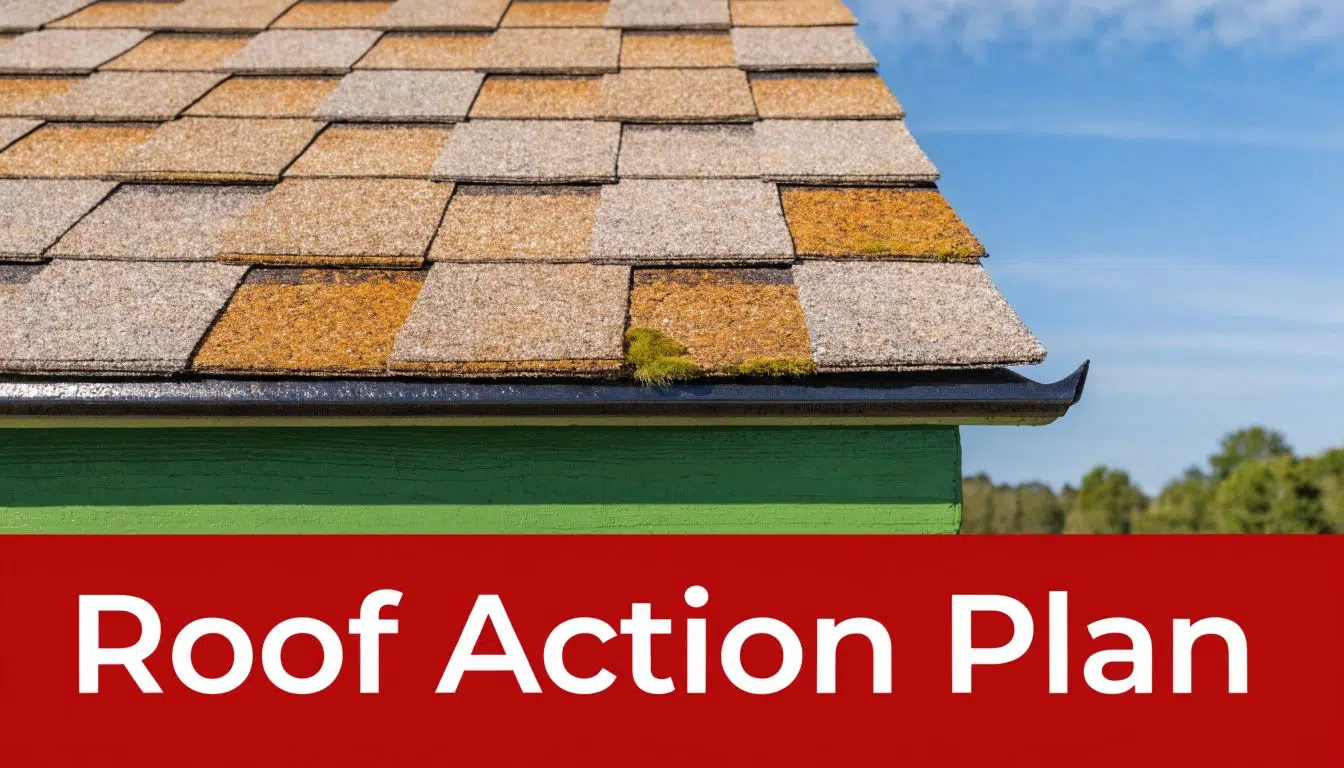
- Visible aging: Curling shingles, worn flashing, moss growth, and failing gutters often go hand in hand with broader roof-system problems.
- Persistent drafts near ceilings: Air leakage from the top of the house can show up as comfort problems long before you see water damage.
Questions to ask a roofing contractor
A good contractor should welcome these questions. If the answers are vague, keep looking.
- How will you evaluate ventilation, not just shingles?
- Will you inspect the deck and insulation condition during replacement?
- What material do you recommend for this specific roof type in Chicago weather, and why?
- How will you address flashing, eaves, valleys, parapets, and penetrations?
- If this is a flat roof, is a coating enough, or is the assembly too far gone for that to make sense?
- What signs would tell you my current roof is driving heating and cooling loss?
- Are there product options that may qualify for available incentives or energy-related benefits?
The right roof isn't just the cheapest bid or the most expensive product. It's the one built correctly for the structure, climate, and energy goals of the property.
If your Chicago home or building feels hard to heat, expensive to cool, or overdue for a serious roof assessment, Expert Super Seal Roofing & Tuckpointing can help. Serving Chicagoland since 1972, the team handles shingle, flat, TPO, EPDM, metal, coating, repair, replacement, and emergency service with the kind of local experience that matters when weather and building type both work against you. Reach out for a free estimate and get a roof plan built for real Chicago conditions.