A Chicago owner walks an adjuster around the property the morning after a storm. Water stained the top-floor ceiling overnight. A few shingles are creased on a steep-slope section, and the flat roof over the rear addition is already holding water near a drain. The meeting can sound casual, but it is closer to a site inspection where every offhand comment can end up shaping how the carrier reads the loss.
What you say matters because adjusters document statements in the claim file. If your wording points to age, neglect, delay, or guesswork, you hand the carrier an opening to frame storm damage as a maintenance issue. I see this problem all the time. The roof may have real hail hits, lifted seams, or flashing damage, but the wrong sentence can muddy a clean claim.
Chicago roofs make that risk worse. Freeze-thaw cycles can open small gaps into active leaks. Ice dams can push water far from the entry point. On flat roofs, ponding, parapet-wall moisture, and older patchwork repairs can make storm damage and pre-existing wear look similar unless the conversation stays precise. Insurance works a lot like a photo taken at one moment. The adjuster is trying to answer a narrow question: what did this event do, and what was already there?
That is why this first meeting needs discipline. Keep your answers factual. Describe what you observed, when you observed it, and what temporary steps you took to protect the building. If you need help sorting out roof conditions before or during that inspection, a roofing contractor like Expert Super Seal can document storm-related damage, emergency mitigation, and Chicago-specific problem areas. A public adjuster is a different call. Bring one in when the loss is large, the scope is disputed, or the claim is already sliding into a fight over coverage or valuation.
Below are seven phrases to avoid, why they create problems, and what to say instead.
1. I've already hired a contractor to fix it
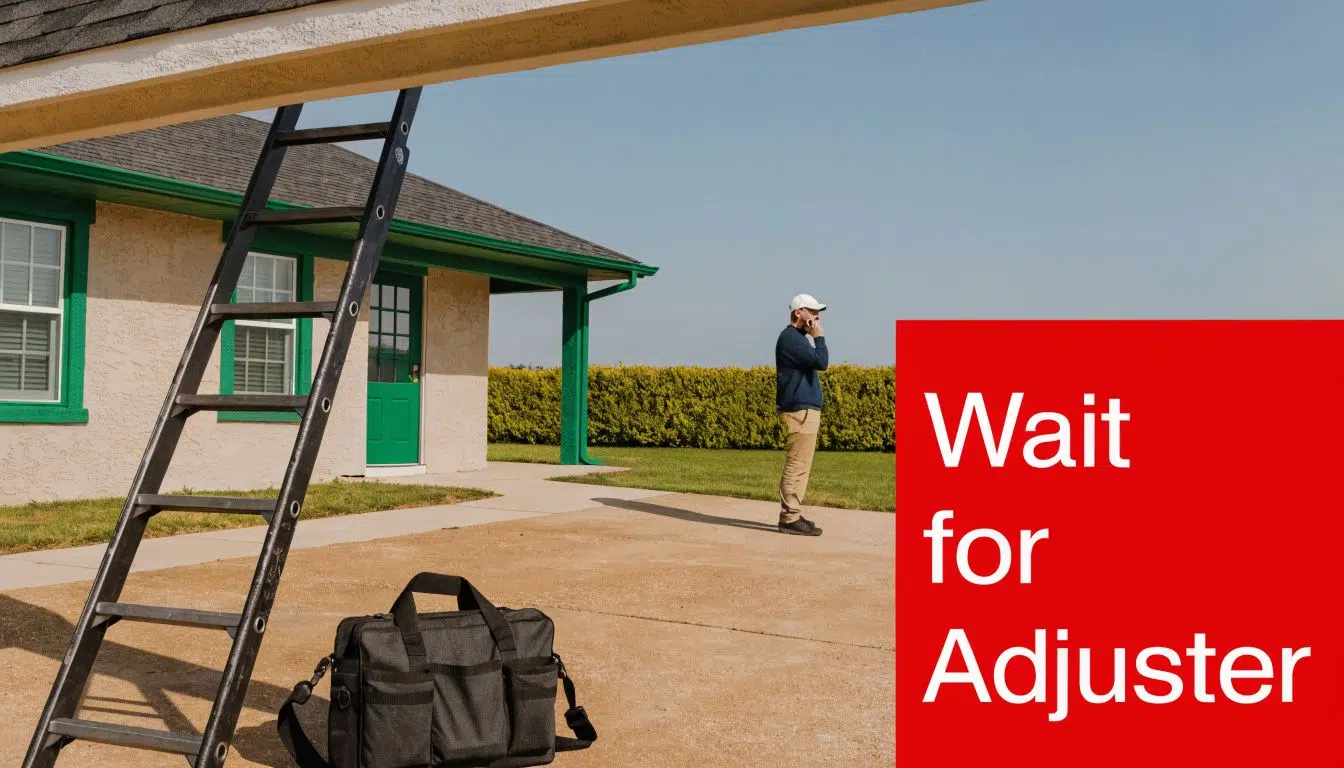
Saying you've already hired someone to do the work can make the adjuster think the inspection no longer reflects the original loss. On a roof claim, original condition matters. If shingles have been removed, a flat roof has already been patched, or wet insulation has been disturbed before the carrier sees it, you may have just erased part of your evidence.
That doesn't mean you should sit and let water pour into your kitchen. It means you need to separate emergency protection from full repair. Tarping an opening or stopping active interior water entry is one thing. Authorizing full replacement before the insurer inspects is another.
What works better
If a Lincoln Park homeowner calls for help after hail and says, "We need to stop leaks, but we're waiting for the adjuster before major work," that's a clean, defensible position. The same goes for a condo board dealing with membrane damage on a flat roof after wind. Stabilize the building, document everything, and preserve the scene.
Practical rule: Protect the property, but don't change the evidence more than necessary.
Use language like this instead:
- For emergency mitigation: "We've only done temporary measures to prevent further damage."
- For scheduling: "We're waiting for the insurance inspection before authorizing permanent repairs."
- For documentation: "We took photos and kept records of what was needed immediately."
That wording shows you're acting responsibly without sounding like you've already decided the scope, cause, and price of the claim.
Chicago trade-off to understand
In winter, this gets tricky. Ice dam damage can worsen by the hour, especially on older gutters, valleys, and low-slope roof transitions. On a commercial roof, standing water near drains can create interior damage that spreads through insulation and ceiling systems. In those cases, call a roofer first for emergency stabilization and documentation, then notify the carrier right away.
What doesn't work is telling the adjuster, "The roofer's coming tomorrow to replace everything." That can sound like you're racing the process instead of preserving the loss.
2. The damage happened weeks or months ago, but I'm just now reporting it
A delayed report gives the insurer room to ask a simple question that can derail the whole claim. If the damage was serious, why wasn't it reported sooner?
Roof claims are all about cause and timing. If a Waukegan homeowner reports hail damage long after the storm, the adjuster can argue the marks came from something else, or that later water entry came from time and exposure instead of the original event. On flat roofs and low-slope systems, that gap is even harder because multiple weather cycles can change the condition.
Why timing matters so much
The burden of proof sits with the policyholder, not the adjuster, according to Roofing Contractor's discussion of insurance claim mistakes. That means you need to connect the damage to a specific event with photos, notes, dates, and a clear explanation of when you discovered it.
For HOAs and property managers, delayed reporting creates another problem. It can look like there was no inspection routine, no follow-up after storms, and no effort to limit damage. That's not a good look when the carrier is already deciding whether the problem came from a covered peril or long-term maintenance.
What to say instead
You don't need to guess. You need to be precise.
- If you found it later: "We discovered the damage on this date and are reporting it now."
- If you suspect a storm date: "The damage appears related to the storm on or around this date, and we documented what we found when we discovered it."
- If you manage multiple buildings: "We inspected after the event, identified concerns, and reported them once confirmed."
A good real-world example is a condo board that notices staining after snow and freeze-thaw conditions. Don't say, "This has probably been going on for months." Say, "We observed interior staining on this date after recent weather, and we're documenting roof conditions now."
Delayed notice doesn't automatically kill a claim. Vague, inconsistent timing often does.
If you're not sure when the damage first happened, don't fill the silence with a guess. Guessing gives the file contradictions, and contradictions give the insurer an advantage.
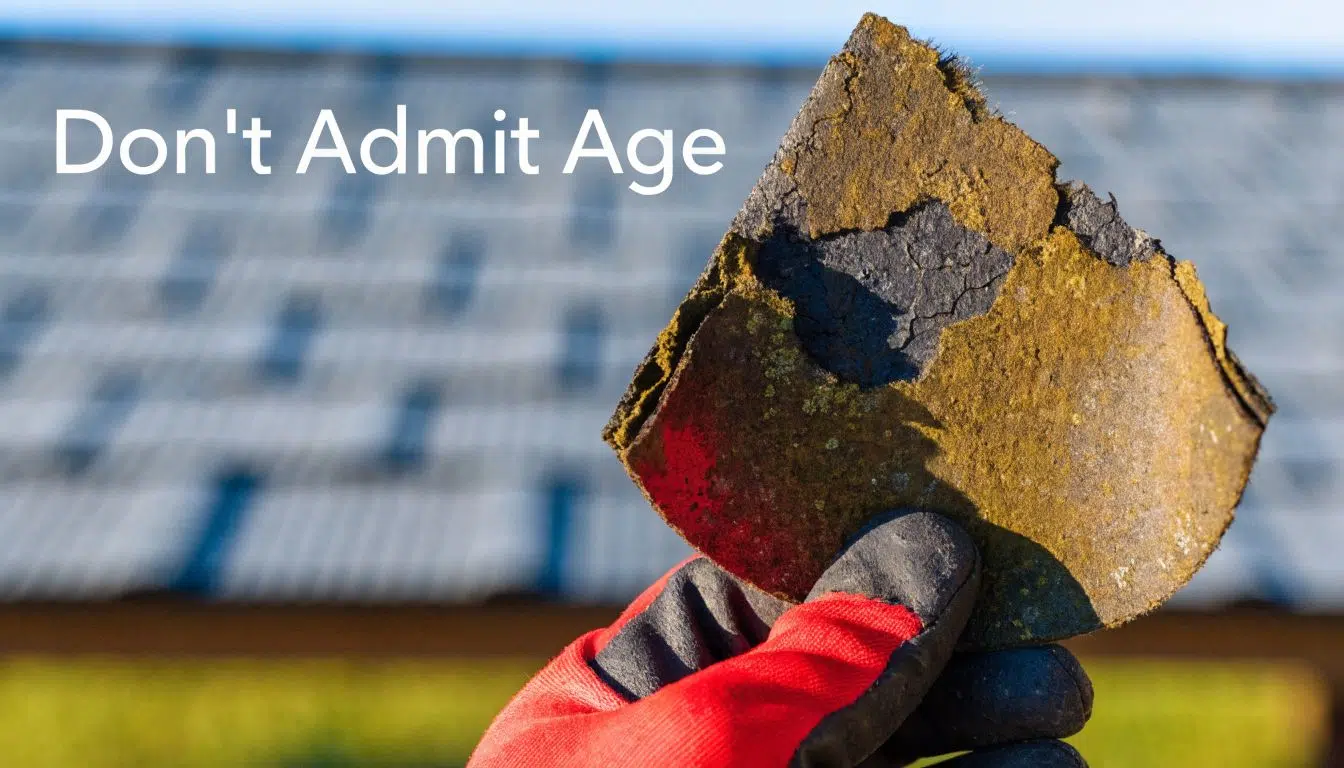
3. The roof is old anyway or We knew it was in bad shape
An adjuster hears that sentence and often starts building a wear-and-tear file.
Age matters in roofing. It does not decide the whole claim. A 20-year-old roof can still suffer sudden wind damage, hail bruising, membrane punctures, or flashing failure during a Chicago storm. The problem is how your words frame the cause. If you say the roof was already shot, you make it easier for the carrier to argue that the condition came from long-term deterioration instead of a covered event.
That distinction gets expensive fast. On older systems, insurers already look hard at depreciation, prior condition, and remaining service life. You do not need to hand them extra language that supports a partial payment or a denial.
Why owners get tripped up here
Property owners often try to sound honest and cooperative. They say, "It was old anyway," thinking that transparency will help. In practice, that comment can blur two separate issues: the roof's age and the specific damage being claimed.
Chicago roofs make that distinction even harder. A flat roof in Logan Square may have ponding near a drain, old patchwork around penetrations, and fresh membrane damage after a wind event. A shingle roof on the North Side may show normal granule loss on one slope but also have lifted tabs or missing shingles after a storm. Ice dams add another wrinkle. A roof can have age-related wear and still suffer a sudden loss from freeze-thaw backup or wind-driven water.
The roof's age is background. Cause is the main question.
If you already suspect the roof may be near the end of its service life, review the common signs you need a new roof separately from your insurance conversation. Replacement planning and claim reporting are related, but they are not the same discussion.
What to say instead
Keep your answer narrow and factual.
- If asked about the roof's condition: "We are reporting damage observed after the recent storm."
- If asked about age: "The roof is approximately this old."
- If there were visible changes after the event: "We observed missing shingles, membrane displacement, or interior staining after the weather event."
- If you're unsure about pre-existing wear: "We want the inspection to determine the cause and extent of the damage."
A good rule is simple. Describe what changed, when you noticed it, and where it showed up. Do not volunteer opinions about whether the roof was already finished.
I tell Chicago owners to treat this like a cracked windshield claim. The car may have high mileage. That does not mean a flying rock did not cause the crack. Same idea here. An aging roof can still sustain sudden covered damage, especially after high winds, hail, heavy snow load, or ice dam conditions.
When to call a roofer and when to call a public adjuster
Call a roofer like Expert Super Seal when you need the roof conditions documented, the storm-related damage identified, and temporary protection installed to prevent further water intrusion. That is especially important on flat roofs, where small seam failures and flashing splits can let in a lot of water before the ceiling shows it.
Call a public adjuster if the claim is already disputed, the carrier is attributing everything to age or maintenance, or the loss is large enough that professional claim handling makes financial sense. Roofers document roofing. Public adjusters argue valuation and coverage. Those are different jobs.
The safest approach with the insurance adjuster is plain, disciplined language. State the age if asked. State the damage you observed. Leave conclusions about "bad shape" out of your mouth and out of the claim file.
4. My neighbor or contractor said roofs always fail like this or This kind of damage is normal
Normal is a dangerous word in insurance.
The minute you call the damage normal, typical, expected, or routine, you weaken the argument that this was a sudden covered loss. Insurance doesn't exist to pay for ordinary aging or predictable decline. It responds to covered events. If your own description makes the condition sound inevitable, the adjuster may treat it that way.
The problem with borrowed opinions
Property owners often repeat what they heard from a neighbor, maintenance tech, or even a contractor in passing. "Flat roofs always split around here." "Ice dams happen every winter." "Older shingles always lose tabs in these winds." Those comments may sound practical, but they hand the insurer a maintenance narrative.
That matters in Chicagoland, where winter damage often sits in a gray area. Ice dams, freeze-thaw movement, and wind-driven water can all be real storm-related problems. But once you frame them as ordinary and expected, you've made causation harder to prove.
What to say instead
Stick to your own observations, not general roof folklore.
- For visible evidence: "This damage appeared after the recent weather event."
- For first-time issues: "We had not observed this condition before."
- For uncertain scope: "We want the inspection to determine the cause and extent."
The better comparison is a cracked windshield after a hailstorm. You wouldn't say, "Glass always breaks eventually." You'd say it was damaged in the storm. Roof claims need the same discipline.
Keep the story narrow. Date, weather event, visible damage, affected areas.
If your contractor has useful technical input, that belongs in photos, notes, measurements, and a written scope. It doesn't need to come out as casual small talk during the inspection.
5. We didn't maintain it properly or We've been neglecting maintenance
This is another phrase that turns a claim against you fast. If you admit neglect, skipped maintenance, or long-known problems that weren't addressed, the carrier may argue the loss wasn't caused by the storm alone.
For Chicago property owners, maintenance has real weight. Gutters clog. Downspouts freeze. Flashings separate. Flat roofs need drains checked and seams watched. If you volunteer, "We haven't stayed on top of it," you're giving the adjuster an opening to tie the damage to owner inaction rather than the weather event.
A claim file doesn't hear regret the way a person does. It hears admissions.
How to handle maintenance questions
If asked, answer directly and briefly. Don't confess. Don't editorialize. Don't add, "we probably should have done more."
Use language like:
- For routine care: "We have performed maintenance as needed."
- For a specific item: "The gutters were last serviced on this date," if you know it.
- For uncertainty: "We'll provide any records we have."
If you're an HOA or building manager, organized records are especially important. Maintenance logs, prior work orders, and service visits show that the property wasn't ignored. Property owners who want cleaner documentation going forward should keep formal records and consider a scheduled roof maintenance program.
Chicago-specific reality
On a two-flat or courtyard building, poor drainage can make a storm claim messy. Water may enter through coping, masonry joints, roof penetrations, or the roof surface itself. If you blurt out, "Yeah, we've had drainage issues forever," you've widened the insurer's path to call the damage long-term.
A better approach is simple. Report what happened, where you saw it, and when it appeared. Let the inspection and documents carry the rest.
Jobsite advice: Never fill quiet moments in an inspection with self-criticism. Those comments don't help your credibility. They help the other side's file.
6. I don't have receipts or documentation of the previous condition
A lot of owners panic here and overshare. They think honesty means saying, "I can't prove what it looked like before." That's understandable, but it's not helpful.
Documentation gaps are common. Most homeowners don't keep a roof photo archive like a facilities department. But the mistake is announcing that weakness before anyone asks. Once you say you can't prove prior condition, the adjuster has a ready-made argument that the baseline is unclear.
What the adjuster hears
They don't hear, "I'm a normal person who didn't expect this." They hear, "There's no clear record separating old conditions from new damage."
That's important because documentation inconsistencies can trigger red flags, according to the roof adjuster meeting guidance from iRoofing. That same guidance also points to a practical issue many owners miss. Roofer-adjuster disputes are a real factor in denied claims in Illinois, so the cleaner your documentation and communication are, the better.
What to say instead
Don't frame the file around what you lack. Frame it around what you do have.
- For available evidence: "We have photos, observations, and records to share."
- For partial records: "We'll provide the documents and prior invoices we can locate."
- For new professional evidence: "Our contractor documented current conditions with photos and measurements."
For a homeowner in Aurora, that may mean pulling old repair invoices, listing when a leak first appeared, and sharing phone photos from before and after the storm. For an HOA, it may mean maintenance logs, reserve studies, prior proposals, and seasonal inspection notes.
Also remember the field dynamics. If your roofer attends the inspection, keep the process professional. Don't use the adjuster's ladder. Don't turn the meeting into an argument on the roof. Let your roofer document conditions, then submit the support in an organized way if supplements are needed.
7. I called multiple contractors to compare prices and they all said different things
It's smart to gather information. It's not smart to present your claim as confusion.
When you tell the adjuster that every contractor said something different, you can make the damage sound uncertain or negotiable in the worst way. The insurer may conclude you're shopping for the highest number, or that no one agrees on what was damaged. Either way, you've weakened your position before the estimate fight even begins.
What the better approach looks like
Choose one detailed, credible scope to lead with. The best estimate isn't just the cheapest or the highest. It's the one that shows measurements, materials, affected components, and the connection between the storm and the repair items.
Pricing tools shape claim outcomes. A discussion of roof claim settlement behavior in guidance on what not to say to a roof adjuster notes that Xactimate is widely used by insurers and that underplayed claims often settle lower. If your own language sounds uncertain, it's easier for the carrier to keep the scope narrow.
What to say instead
Use language that signals organization, not shopping.
- For your estimate: "We have a detailed contractor assessment and repair scope."
- For contractor choice: "We selected a contractor based on experience, licensing, and the quality of the documentation."
- For disagreement on scope: "We'd like the estimate reviewed alongside the documented damage."
If you're trying to budget for replacement outside the claim process, it's fine to compare proposals privately. Just don't turn the adjuster meeting into a running commentary on who said what. If you need a baseline for local pricing on replacement work, review a practical breakdown of how much a new roof costs in Chicago on your own time.
A homeowner saying, "One guy said repair, another said full replacement, and I don't know," sounds uncertain. A homeowner saying, "Here is our contractor's documented assessment of the storm-related damage," sounds prepared.
7 Phrases to Avoid with a Roof Insurance Adjuster
| Statement / Scenario | Implementation complexity (to avoid/remediate) | Resource requirements | Expected outcomes (claim impact) | Ideal use cases | Key advantages |
|---|---|---|---|---|---|
| I've already hired a contractor to fix it (Before Adjuster Assessment) | Low, simply delay full repairs until inspection; emergency mitigation may be needed | Photographs, written notifications to insurer, documentation of emergency repairs | High risk of denial or reduced payout; complicates adjuster assessment | Only for immediate temporary emergency repairs (tarping) with prior notification | Prevents further damage if emergency measures are taken |
| The damage happened weeks/months ago, but I'm just now reporting it | Moderate, requires prompt discovery and reporting processes | Incident logs, weather event records, dated photos, inspection reports | Raises suspicion of pre-existing damage; increased scrutiny; possible denial | Late discovery with clear documented reason and timeline | Allows filing when discovery is delayed; may preserve some coverage if well-documented |
| The roof is old anyway or We knew it was in bad shape | Low, avoid volunteering condition details; provide age only if asked | Prior inspection reports, age records, maintenance history | Likely denial or reduction due to pre-existing wear and tear exclusions | When asked about age, state facts (age) without commentary | Prompts realistic expectations and maintenance planning |
| I heard from my neighbor/contractor that roofs always fail in this way or This kind of damage is normal | Low, refrain from normative or comparative statements | Professional damage assessment to counter "normal" claims | Undermines sudden-loss argument; increases chance of denial | Use only for internal maintenance planning, not in adjuster conversations | Helps identify recurring maintenance needs when documented separately |
| We didn't maintain it properly or We've been neglecting maintenance | Moderate, requires established maintenance schedules and records to avoid admissions | Maintenance logs, invoices, inspection schedules, remediation records | High likelihood of denial; possible policy consequences or reduced settlement | None for claims; admission only when required with documented context | Encourages establishing maintenance programs to protect future claims |
| I don't have receipts/documentation of the previous condition or I can't prove what it looked like before | Moderate, implement documentation practices going forward | Prior inspection reports, dated photos, contractor invoices, archived records | Weakens causation proof; may reduce payout or scope of covered loss | File claim anyway if damage is recent; gather any available evidence promptly | Encourages record-keeping that strengthens future claims |
| I called multiple contractors to see what repairs would cost, and they all said different things | Low, avoid mentioning multiple conflicting estimates to adjuster | One detailed, professional estimate from a reputable contractor; supporting photos | Invites adjuster skepticism; may lead to insurer commissioning a lower estimate | Internal market research and contractor selection | Can yield a realistic price range and help select a qualified contractor when kept private |
Navigating Your Claim Next Steps and When to Call for Help
Interacting with an insurance adjuster doesn't have to be a fight. It does need to be disciplined. Keep your answers short, factual, and tied to the current event. Date of storm, what you saw, where you saw it, when you noticed it, and what temporary steps you took to prevent further damage. That's the lane.
If you remember one thing, remember this. The adjuster is there to evaluate the insurer's liability, not to build your case for you. That's why preparation matters so much. Photos, interior moisture evidence, repair history, and a professional roof inspection can change the tone of the meeting before anyone climbs a ladder.
In Chicago, I usually tell owners to think in layers. First, protect the building from more damage. Second, preserve evidence. Third, bring in the right help based on the problem in front of you.
Call a professional roofer like Expert Super Seal when you need to identify storm-related roof damage, document visible conditions, provide measurements, prepare a repair or replacement scope, or stabilize the property with temporary protection. That's especially important with ice dams, flat-roof leaks, parapet wall issues, and hidden moisture that won't show up in a quick ground-level look.
Call a public adjuster when the dispute has already become about coverage, scope, or money rather than construction. If the insurer is denying obvious storm damage, underpaying major components, refusing to consider supplements, or using your statements against you, that's when a public adjuster can step in on the claim side. A roofer and a public adjuster do different jobs. One proves and prices the work. The other argues the claim.
For many owners, the best outcome starts with a roofer first. Get the roof properly inspected. Get the evidence organized. Then decide whether the claim is moving normally or whether it needs stronger representation.
The main mistake is trying to wing it. Roof claims are technical, and in a Chicago weather market they get technical fast. If you stay factual and avoid the phrases above, you give yourself a much better shot at a fair review.
If your roof was hit by hail, wind, ice dams, or a hard Chicago winter, Expert Super Seal Roofing & Tuckpointing can document the damage, help you protect the property, and give you a clear professional assessment before small mistakes turn into claim problems.