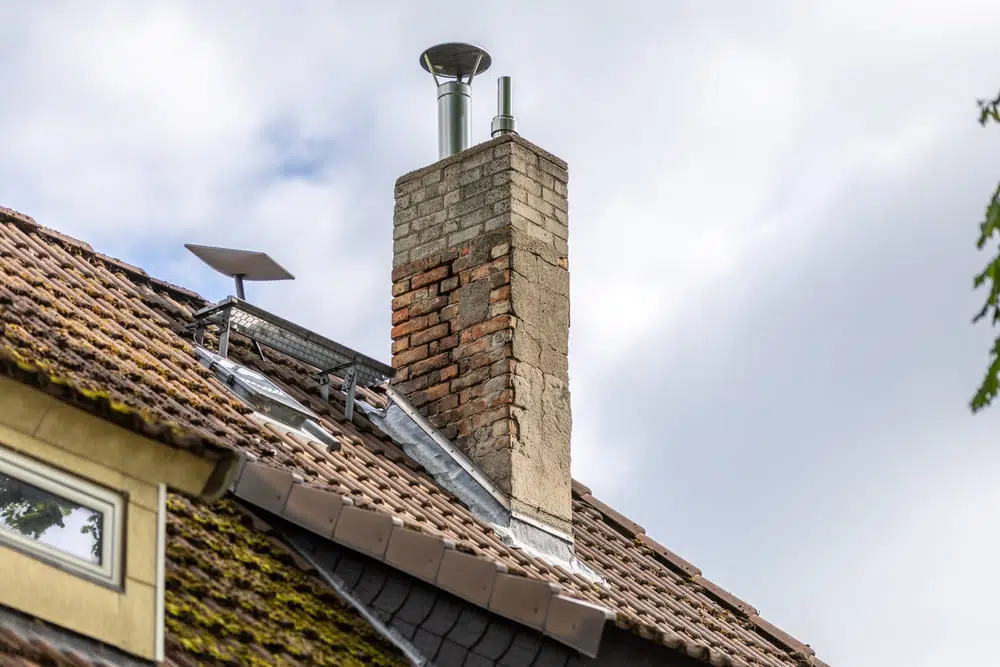
If you’ve ever noticed thick, black liquid dripping from your chimney or staining the walls around your fireplace, it can feel a bit alarming.
It’s not something you expect to see in a part of the house that’s supposed to handle smoke, not… well, tar-like goo.
The good news is that this is a fairly common issue, and once you understand what’s going on, it becomes much easier to deal with.
Most of the time, that black liquid is a mix of creosote (a byproduct of burning wood) and moisture.
In this post, we’ll explain why your chimney is leaking black liquid, and how to stop it.
# 1 Creosote Buildup + Rainwater
This is easily the most common cause behind chimney black liquid leaks.
Every time you burn wood, your chimney produces creosote, which is a thick, tar-like residue that sticks to the inside walls of the flue.
Over time, that buildup gets heavier, especially if the wood isn’t fully seasoned or the fire isn’t burning hot enough.
Now add rainwater into the mix.
If your chimney doesn’t have a proper cap, or if the cap is damaged, rain can get inside.
That water runs down the flue, mixes with the creosote, and turns into that black, oily liquid you’re seeing. Instead of staying stuck to the walls, it starts dripping out, sometimes even seeping through the masonry.
It’s messy, it smells smoky, and it’s definitely a sign your chimney needs attention.
Also Read: New Roof Leaking After 2 Years
#2 Condensation Inside The Flue
Even without rain, moisture can still build up inside your chimney.
This usually happens because of temperature differences.
When hot smoke travels up a cold flue, it cools down quickly and creates condensation, kind of like how water droplets form on a cold glass.
That moisture doesn’t stay clean for long. It mixes with soot and creosote particles, slowly turning into a dark liquid that can run back down the chimney.
Over time, you might notice stains, damp patches, or even small drips appearing around your fireplace.
This tends to happen more in chimneys that aren’t insulated properly or in homes where the fireplace isn’t used often, so the flue stays cold most of the time.
#3 Poor Ventilation
A chimney is supposed to pull smoke up and out of your home smoothly. When that airflow isn’t working the way it should, things start to build up inside.
Smoke lingers longer than it should, moisture doesn’t escape properly, and creosote accumulates faster.
Poor ventilation can be caused by blockages, like debris or even bird nests, or by structural issues that affect how the air flows. When everything gets trapped inside, it creates the perfect environment for that black liquid to form and eventually leak out.
You might also notice your fires don’t burn as cleanly, or that smoke sometimes comes back into the room instead of going up the chimney.
Also Read: Leaking Skylight Problems
#4 Damaged Masonry
Sometimes the issue isn’t just what’s happening inside the chimney, but the structure itself.
Cracks in the bricks, gaps in the mortar, or a damaged chimney crown can all let water seep in from the outside.
Once water gets into those small openings, it can travel through the structure and mix with soot and creosote along the way.
That’s when you start seeing stains on the exterior of the chimney or even inside your home near the fireplace.
Over time, this can get worse, especially in climates with heavy rain or temperature changes that cause expansion and contraction in the materials.
Signs The Problem Is Serious
Not every small stain means you’re dealing with a major issue, but there are a few signs that should definitely get your attention.
If you notice any of these, it’s a good idea to act sooner rather than later:
- A strong, lingering smoky or tar-like smell inside your home
- Thick, oily drips or streaks around the fireplace or chimney walls
- Dark stains spreading on ceilings or nearby walls
- Flaking bricks, peeling paint, or damp patches near the chimney
These aren’t just cosmetic problems, they’re signs that moisture and creosote are building up in ways that can lead to bigger issues.
Also Read: What Is the Cheapest Time of Year to Get a New Roof?
Are Black Chimney Leaks Dangerous?
Yes, it is dangerous if your chimney is leaking black liquid.
It might be tempting to ignore the mess and just clean up the stains, but this is one of those problems that goes deeper than it looks.
Creosote is highly flammable, so heavy buildup increases the risk of a chimney fire.
And when it’s mixed with moisture, it can spread into areas it normally wouldn’t reach.
There’s also the structural side of things. Water getting into your chimney can weaken the bricks and mortar over time, leading to cracks, instability, and costly repairs down the line.
On top of that, damp conditions can encourage mold growth, which is something no one wants inside their home.
How To Fix A Chimney Leaking Black Liquid
Fixing the issue usually involves tackling both the creosote buildup and the moisture problem at the same time. One without the other won’t fully solve it, so a combined approach works best.
Here are the most effective steps:
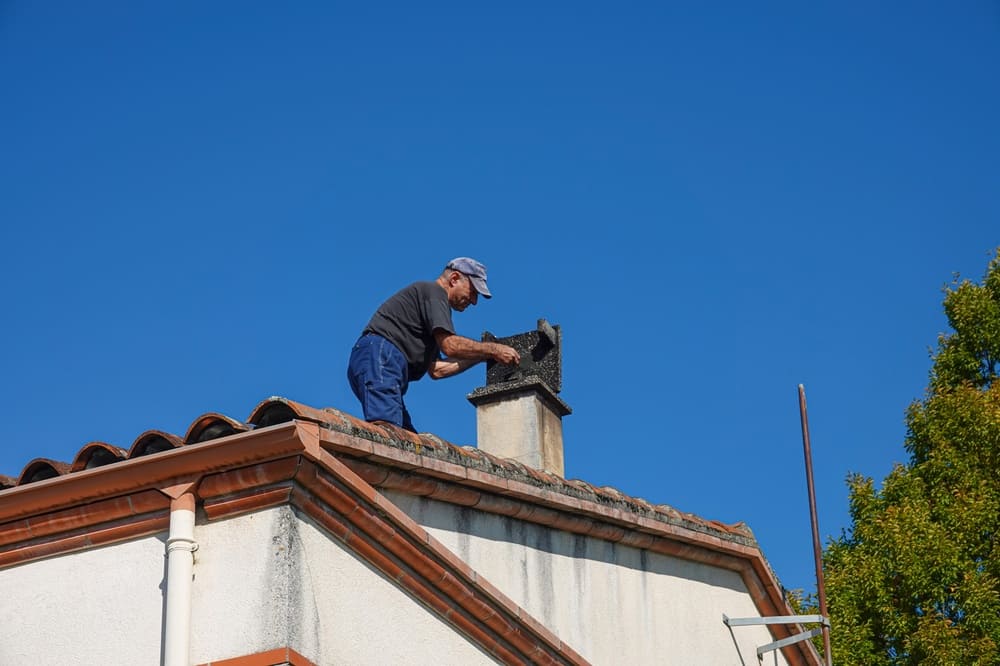
- Schedule a professional chimney cleaning to remove creosote
- Install or repair a chimney cap to keep rain out
- Seal cracks in the crown, bricks, or mortar
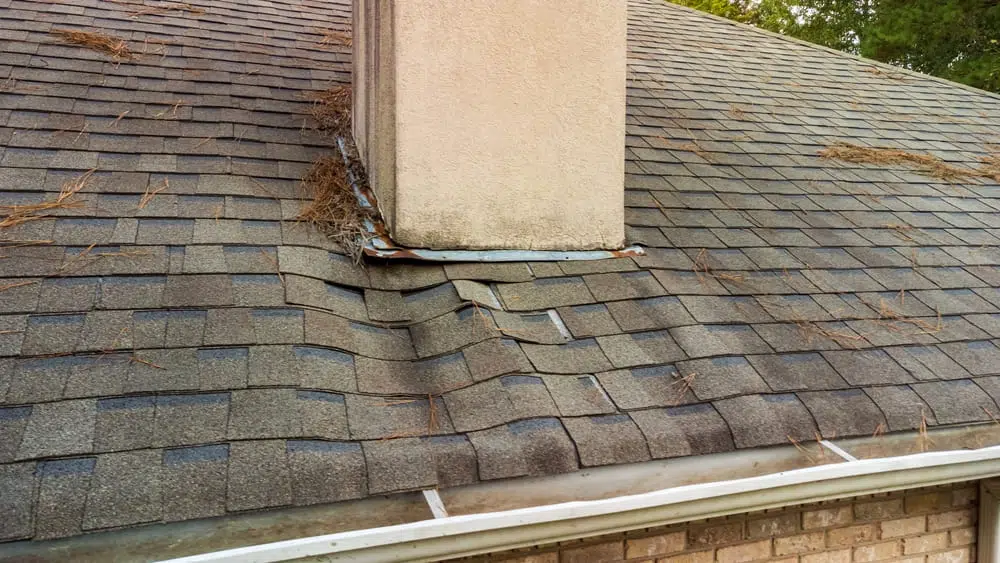
- Repair or replace damaged flashing where the chimney meets the roof
- Consider waterproofing the exterior masonry
In some cases, adding or upgrading a chimney liner can also help reduce condensation and improve how your chimney handles heat and airflow.
When To Call A Professional
There’s a point where this stops being a simple DIY fix and needs expert attention.
If the problem keeps coming back or looks worse over time, it’s best to bring in someone who knows exactly what to look for.
You should call a professional if:
- The leaking continues even during dry weather
- The smell is strong and persistent
- You see heavy creosote buildup or thick deposits
- There are visible cracks or structural damage
A proper inspection can pinpoint the exact cause and save you from guessing or making partial fixes that don’t last.
Bottom Line
A chimney leaking black liquid might look strange, but it’s usually a clear combination of creosote and moisture finding a way out.
The key is not to ignore it.
Once you understand what’s causing it, the solution becomes pretty straightforward, even if it takes a bit of work. Stay on top of maintenance, keep water out of your chimney, and make sure it’s venting properly.
Do that, and you’ll not only get rid of the mess but also keep your home safer and your chimney working the way it should.