
The cheapest move in Chicago is usually to book your roof in winter, when demand drops 20-30% and off-season discounts of 5-10% can make the effective cost 15-25% lower than summer. But the best overall value for actual installation is often fall, when pricing runs 10-15% lower than peak summer and the weather is much better for quality work.
That difference gets missed all the time. People hear “winter is cheapest” and assume that means tearing off and installing a roof in January is the smart play. In Chicago, that's not how this works. Booking and installing are two different decisions, and if you mix them together, you can chase a lower price and end up with a tougher job, more delays, or extra cost from cold-weather work.
Roofing season behaves a lot like airfare. You get the best deal when you buy at the right time, not necessarily when you want to travel. A winter calendar can be good for securing pricing and a place in line. It's often a bad calendar for shingles, sealants, snow, ice, and crew efficiency.
Chicago weather forces that reality. Asphalt shingles, flat roof membranes, staging, tear-off safety, cleanup, and warranty conditions all react differently in December than they do in September. Owners who save the most usually aren't bargain hunting at the last minute. They're planning early, locking in a schedule, and choosing the season that gives them the best balance of cost, workmanship, and timing.
When to Replace Your Chicago Roof for Maximum Savings
A new roof is one of the bigger property expenses most Chicago owners face. Whether you own a bungalow, a six-flat, a condo building, or a commercial property with TPO or EPDM, the same question comes up fast: when can you get it done without overpaying?
The short answer is this. The cheapest time to book isn't the same as the best time to install. That's the whole game in Chicago roofing. If you only chase the lowest headline price, you can miss the hidden cost of weather delays, material handling problems, and rushed scheduling.
A smarter way to think about it is to separate the job into two decisions:
- When you ask for proposals and reserve a slot
- When the crew performs the tear-off and installation
That distinction matters more in Chicago than in milder markets. Winter slows demand, so contractors have more room in the calendar. But winter also creates field conditions that can make roof work slower and more complicated. Fall usually lands in the middle where owners still get favorable pricing, but the weather is cooperative enough for cleaner execution.
Practical rule: If your roof is aging but not failing today, shop early and install in favorable weather. That's usually where the best value lives.
Another point worth keeping in mind is roof age. If you're not sure whether your system is near replacement time, it helps to review the average lifespan of a roof in Chicago before you wait yourself into an emergency.
Emergency timing almost always costs more in one way or another. You may pay through schedule pressure, temporary protection work, interior damage, or limited contractor availability. Planned replacement provides an advantage. This advantage is the source of savings.
The Winter Booking Advantage Why You Should Plan Ahead
The biggest myth around what is the cheapest time of year to get a new roof in Chicago is simple: people assume winter installation is the bargain season. It often isn't.

Why winter looks cheap on paper
In Chicagoland, winter brings a 20-30% demand drop, and contractors may offer 5-10% off-season discounts for advance bookings. That can reduce effective costs by 15-25% versus summer rates, and a 2,000 sq ft shingle roof that might run $18,000-$22,000 in peak summer can come in at $14,500-$17,500 with a winter pre-book, according to Leaders Roofing's Chicagoland seasonal pricing analysis.
That sounds straightforward. Fewer calls, emptier schedules, better price.
But look closely at the wording. The advantage is in the pre-book. That means committing in winter so the contractor can plan labor, reserve your slot, and order materials efficiently for a better installation window.
Why winter installation is a different story
Actual winter roofing in Chicago can be a headache. Snow cover hides conditions. Ice changes footing. Tear-off gets slower. Materials can stiffen up. Crews may need extra steps just to protect the structure and handle products properly.
On steep-slope roofs, that matters immediately. Asphalt shingles don't behave the same way in deep cold as they do in mild weather. On flat roofs, surface prep, seam work, and moisture control get less forgiving. Even when a qualified contractor can complete the work, the process can become more specialized and less efficient.
A lot of owners miss that because they're only looking at top-line price. In practice, the winter value comes from the timing advantage, not from betting that January is the easiest month to roof a Chicago building.
Book winter. Install when conditions help the crew, not fight them.
What smart owners do instead
The strongest play is usually a winter booking for a spring job. That gives you several advantages at once:
- Better scheduling position: You're not fighting the late spring and summer rush.
- Cleaner planning: The contractor can line up labor, dumpsters, permits, and material deliveries with less chaos.
- Less pressure on decision-making: You can review scope, ventilation details, flashing areas, and warranty terms without a leak forcing the timeline.
- Improved job conditions: The installation happens when materials and crews can work in a more normal rhythm.
This is the part owners feel later. The project starts on a stronger footing because the decisions weren't rushed.
When winter work still makes sense
Sometimes you don't get to choose. If a roof is actively leaking, if ice damage has opened the system, or if water is getting into units, waiting can cost more than acting. In those cases, emergency winter work is about protecting the building first.
That's different from asking which season is cheapest. Those are two separate questions, and they need two separate answers.
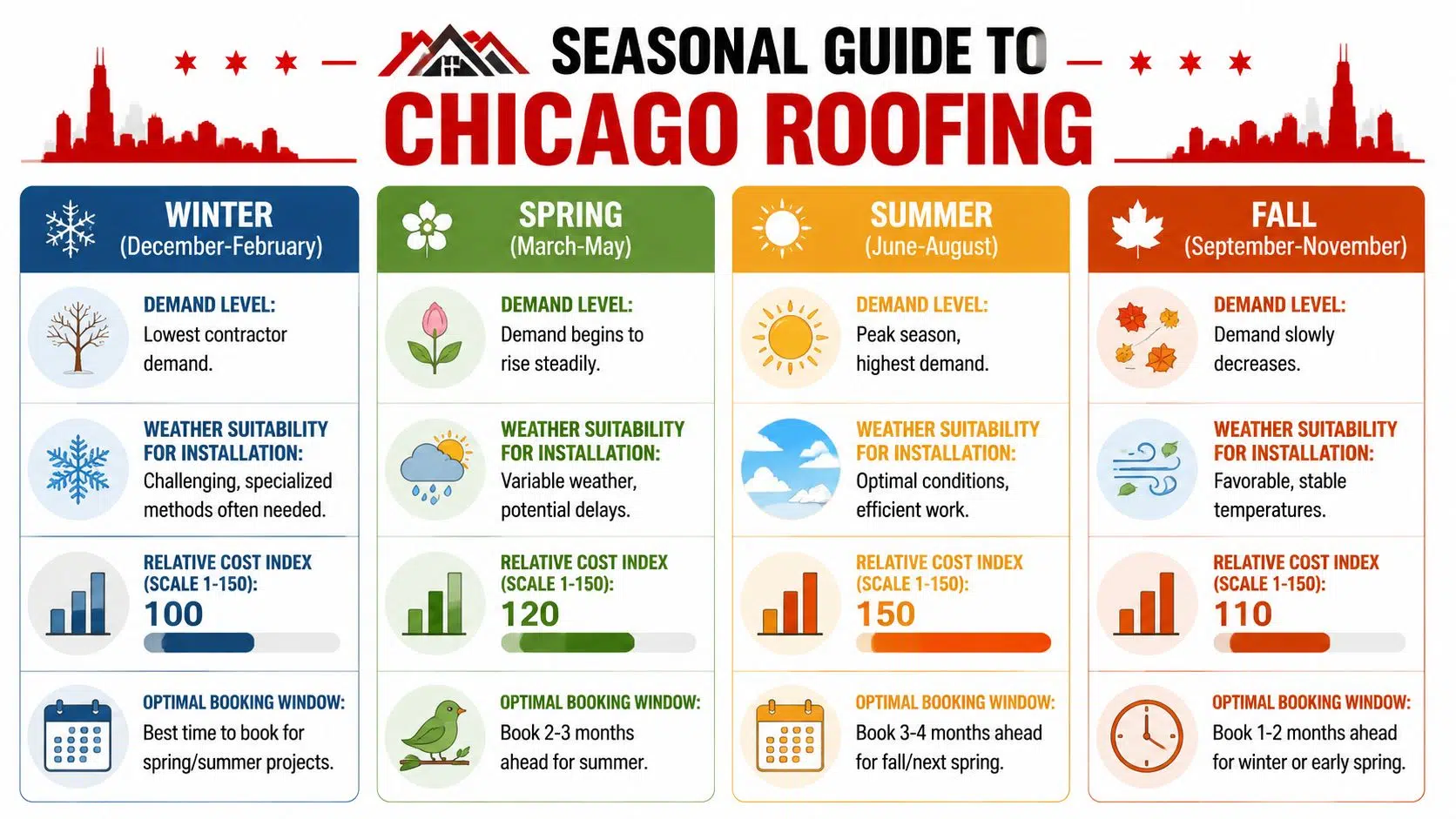
A Seasonal Guide to Chicago Roofing Costs and Conditions
Every season in Chicago changes the cost picture and the installation picture. Owners who understand both can time the job much better.
Winter
Winter is the quietest point in the calendar for many roofing contractors. That's why it's strong for pricing conversations, scope reviews, and locking in future work. It's a planning season.
For actual installation, it's the most conditional season. Some projects can move forward, especially when the need is urgent or the building type allows it, but winter puts more weight on weather windows and jobsite control.
Spring
Spring is when a lot of owners finally act on what winter exposed. Leaks show up. Ice dam damage becomes visible. Attics tell the truth. Gutters and fascia reveal what they've been hiding.
Spring can be a good installation season, but it also comes with stop-and-go scheduling. Rain, wet decking, and the first real surge in demand can slow things down. If you wait until everyone else starts calling, you're entering the line right when it gets longer.
Summer
Summer is the busiest season for a reason. Days are longer, weather is more consistent, and many owners prefer work while school is out or while tenants are easier to coordinate around.
It's also where pricing tends to climb. Storm demand, insurance-driven replacement volume, and packed schedules push summer into peak-season territory. If you need a roof in the middle of that rush, your options usually narrow. You may still get good work, but you usually won't get the best scheduling flexibility.
Fall
Fall is where cost, weather, and installation quality tend to line up best.
In Chicago, September and October can run 10-15% lower than peak summer, with average temperatures of 55-70°F that are well suited to roof installation. For flat roofs, those conditions are favorable for membrane work. For shingle systems, they help with sealant activation and smoother handling. The same source notes that labor needs can drop 15-20%, and a commercial flat roof priced at $45,000-$55,000 in summer can come down to $40,000-$48,000 in early fall, according to this Chicago roofing season breakdown from Midwest Windows.
That's why many contractors consider fall the practical sweet spot. You're often past the peak frenzy, but you're still ahead of hard freeze conditions.
If the roof can wait and you want strong installation conditions without peak-season pricing, early fall is hard to beat in Chicago.
Chicago Roofing Seasons At a Glance
| Season | Typical Cost Impact | Key Advantages | Key Disadvantages |
|---|---|---|---|
| Winter | Best for off-season booking value | Lower demand, easier scheduling conversations, good time to secure a future slot | Tough field conditions, more weather-related complications for active installation |
| Spring | Moderate | Good time to address winter damage, reasonable install conditions when weather cooperates | Rain delays, rising demand, schedules start tightening |
| Summer | Highest | Long workdays, fast production when weather holds, convenient for many owners | Peak pricing, crowded calendars, storm-related demand pressure |
| Fall | Lower than peak summer | Stable temperatures, efficient installation, good balance of cost and quality | Popular with proactive owners, so the best slots still fill up |
Choosing by property type
A single-family homeowner and a commercial facility manager shouldn't always make the same timing decision.
- Homeowners: If the roof is aging but serviceable, winter booking or early fall installation usually gives the best mix of savings and lower stress.
- HOAs and condo boards: Fall works well because stable weather makes coordination easier across shared buildings and common areas.
- Commercial owners: Flat roof projects often benefit from steady temperatures and cleaner scheduling, which makes fall especially attractive.
- Landlords and property managers: Advance booking matters because tenant communication, access, and protection planning are easier when the project isn't an emergency.
Deconstructing Your Roof Replacement Cost Estimate
Season affects price, but timing alone doesn't explain a roofing proposal. Owners save money when they understand what's actually inside the estimate instead of comparing one lump sum against another.
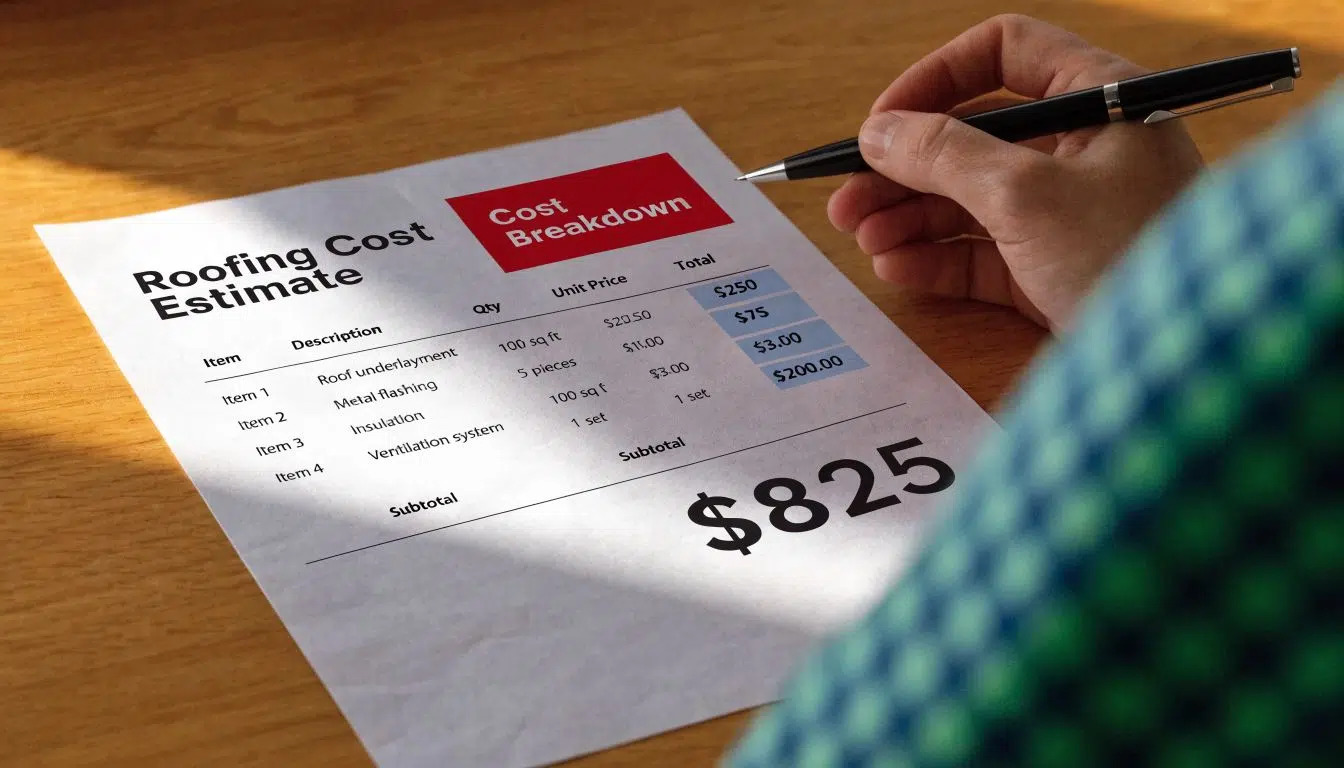
Labor is more than crew size
Roofing labor isn't just “how many guys show up.” It includes tear-off, deck inspection, flashing work, staging, protection of landscaping or tenant areas, cleanup, and site safety. On a Chicago building, labor may also involve tricky chimney flashing, parapet transitions, coping details, or tight alley access.
A cheaper estimate sometimes means corners are hidden in the labor scope. Maybe the crew is smaller than the project needs. Maybe protection is thin. Maybe cleanup is basic. Maybe the quote is silent on problem areas that always show up once the old roof comes off.
Material choices change the whole price structure
A roofing estimate can look similar at the top and be very different underneath. Asphalt shingles, TPO, EPDM, modified bitumen, metal, and coatings all carry different handling requirements and accessory details. Even inside one category, the system can vary based on underlayment, insulation, flashing metal, fasteners, and ventilation components.
That's why it helps to compare proposals line by line. If you want more context on the cost drivers themselves, this guide on how much a new roof costs in Chicago is a useful companion.
Permits and code items are real costs
Chicago and suburban municipalities don't all handle permits the same way. Some jobs need straightforward paperwork. Others involve stricter inspection requirements, decking compliance issues, or detailed coordination for multi-unit and commercial properties.
Those costs don't feel exciting, but they're part of a legitimate roof replacement. If one contractor includes permit handling and another leaves it vague, those proposals are not equal.
A low bid that skips permit clarity, flashing detail, or deck contingency isn't automatically cheaper. It may just be incomplete.
Overhead is where reliability lives
Owners sometimes treat overhead like fluff. It isn't. Overhead pays for insurance, supervision, office coordination, equipment maintenance, warranty administration, and the systems that keep a project organized.
That matters when something unexpected shows up. A contractor with real infrastructure can respond, document, schedule, and resolve issues better than a price-only operator who disappears once the check clears.
What to look for in the estimate
Instead of asking only “Which bid is lowest?”, ask these questions:
- What exactly is being removed and replaced? Old roofing layers, underlayment, insulation, flashing, vents, and accessories should be clear.
- How are vulnerable details handled? Valleys, pipe boots, wall flashings, parapets, skylights, and drainage points deserve specific language.
- What happens if the deck has damage? Good estimates explain how hidden substrate issues are addressed.
- Who handles cleanup and protection? Dumpsters, magnetic nail sweep, daily site management, and tenant or driveway protection should be spelled out.
That's how you compare value instead of just comparing a number at the bottom.
Smart Scheduling Strategies for Chicago Property Owners
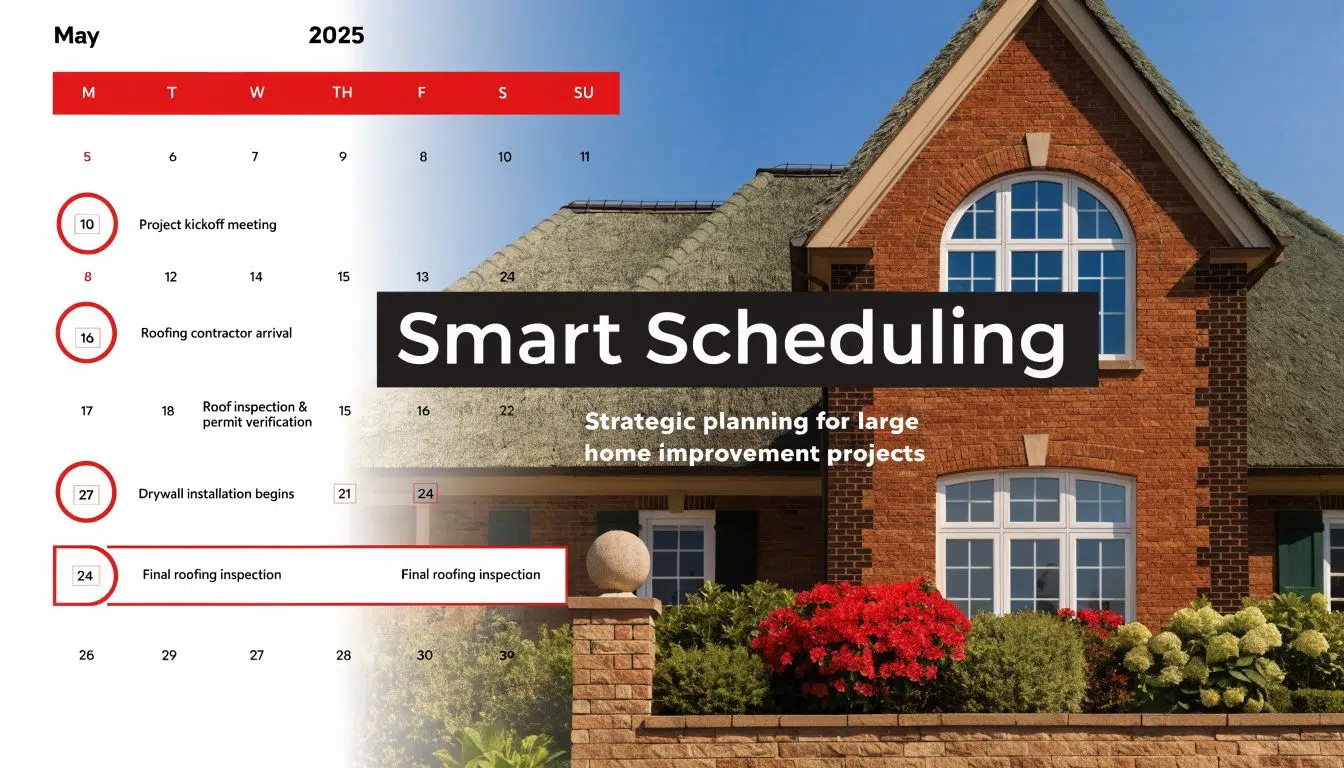
Good timing saves money. Better scheduling protects quality. The owners who do best usually treat roofing like a planned capital project, not a panic purchase.
For homeowners
If your roof is aging, don't wait for a ceiling stain to tell you it's time. Start conversations in the slow season, even if the install will happen later. That gives you room to compare scope, ask questions about ventilation and flashing, and choose a contractor without rush pressure.
A homeowner's best scheduling moves usually look like this:
- Get proposals before urgency shows up: Winter and early spring are often calmer for planning.
- Stay flexible on start date: If you can give a contractor a reasonable scheduling window instead of demanding one exact day, that often helps.
- Handle related work together: Gutters, soffit, fascia, chimney flashing, and masonry details are easier to coordinate before the roof crew arrives.
For landlords and property managers
Multi-unit properties add another layer. Tenants need notice. Access routes matter. Parking and debris control matter. So does communication around noise, temporary protection, and completion timing.
For these buildings, the smartest scheduling usually comes from grouping decisions early. If the roof, parapet, coping, and drainage details all need attention, coordinate them together instead of treating each one as a separate surprise.
The cheapest project is often the one that's organized well enough to avoid repeat mobilization, tenant confusion, and reactive patchwork.
For HOA boards and condo associations
Boards often lose time in meetings, proposal review, and owner communication. That's normal. It also means they should start earlier than a single-family owner would.
A practical board process usually includes:
- Inspect early
- Collect comparable proposals
- Review scope, not just totals
- Approve before the preferred season gets crowded
- Notify residents well before material delivery and tear-off
The board that starts in a favorable planning window usually has better options than the board that starts after water enters units.
For commercial and industrial properties
Commercial owners should match roof timing to operations. A retail building, warehouse, school, office, or mixed-use property all have different disruption limits. Some want work done before winter. Others want it aligned with budget cycles or lower occupancy periods.
For flat roofs in particular, stable weather helps the crew move efficiently and helps the owner avoid drawn-out disruption. If your project requires staging, loading-area coordination, or protection around rooftop equipment, planning months ahead makes a major difference.
Questions worth asking any contractor
Not every savings opportunity shows up as a line-item discount. Sometimes it comes from asking the right scheduling questions:
- Can this be booked now for a better installation window?
- Is there pricing advantage in flexible scheduling?
- Can materials be secured early once scope is approved?
- Would related exterior work be more efficient if bundled with the roof?
Those questions usually lead to a better project, even when the contract price doesn't change dramatically.
Your Next Steps for a Secure and Cost-Effective New Roof
The cheapest answer and the smartest answer are close, but they aren't identical.
If you're asking what is the cheapest time of year to get a new roof in Chicago, the most accurate answer is usually winter booking for a later install. If you're asking when you're likely to get the best balance of price, weather, and installation quality, fall is often the better target.
That's the distinction most quick advice misses. It treats roofing like buying a box off a shelf. Roofing isn't retail. It's a weather-sensitive construction project with labor, safety, material handling, and scheduling all tied together.
One more myth needs to be put to bed clearly. Winter work itself often isn't the cheap shortcut people think it is. In Chicago, the risk of ice dams, snow delays, and brittle shingles can raise true costs by 10-20% because crews may need special methods or heated enclosures. Savings are more often in 5-10% off-season bookings for spring or summer installation, as explained in Novarooftek's discussion of Chicago roofing timing.
That means your next move should be practical, not dramatic.
A solid action plan
- If the roof is still serviceable: Start getting estimates in the off-season and target a favorable install window.
- If the roof is leaking now: Treat it as a building protection problem first. Cost optimization comes second.
- If budget is the obstacle: Review roof financing options before delaying into a worse season or a more urgent failure.
- If storm damage may be involved: Have the roof inspected promptly and sort out whether repair, replacement, or insurance coordination makes sense.
A roof replacement goes best when the owner controls the calendar instead of the calendar controlling the owner. That's how you protect the building, protect the workmanship, and keep the cost from getting away from you.
If you want clear guidance on timing, scope, and pricing, Expert Super Seal Roofing & Tuckpointing can help you evaluate your roof and plan the project around Chicago's real-world conditions. Since 1972, the company has served homeowners, condo associations, property managers, and commercial owners across Chicagoland with transparent estimates, experienced crews, and roofing systems built to last.