Yes, you can finance a roof, and for many homeowners it’s the normal way to handle a project that usually costs $8,000 to over $20,000. In practice, financing a roof often occurs through home equity loans or HELOCs, unsecured personal loans, government-backed programs, or contractor financing instead of paying the full amount out of pocket.
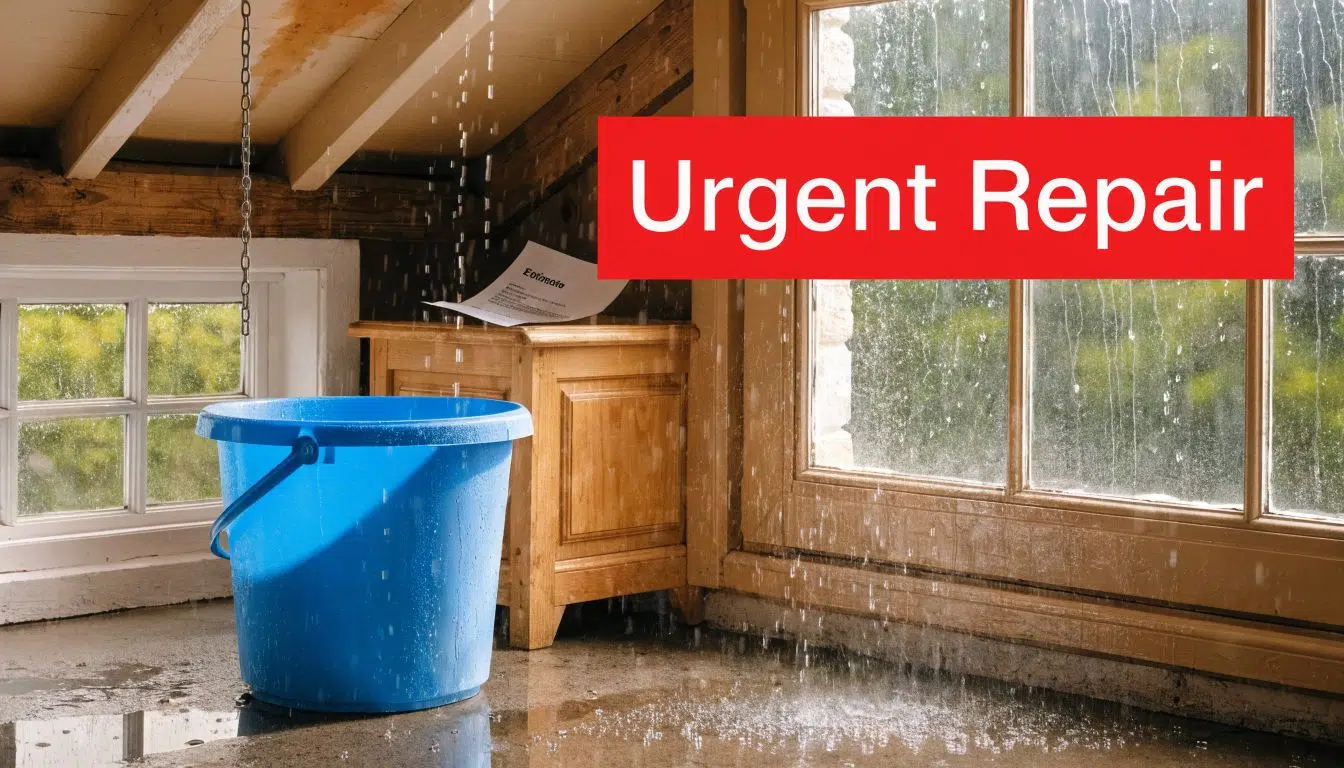
If you’re reading this because you just saw a ceiling stain spread after the last Chicago rain, or because a roofer handed you a quote that made your stomach drop, you’re not alone. Roof work is urgent, expensive, and rarely planned at a convenient time.
The good news is that financing a roof isn’t unusual or a sign you’re in trouble. It’s often the most practical way to stop damage, protect the house, and keep your savings available for everything else that can go wrong with a home.
That Leaky Roof and the Shocking Quote You Just Got
A roof problem usually starts small. A drip in the attic. Missing shingles after a windstorm. Water around a vent stack. Then the estimate comes in, and serious stress hits.
For most homeowners, the question isn’t just “Do I need a new roof?” It’s “How am I supposed to pay for this right now?” That’s why roof financing is common. The average cost of a full roof replacement in the United States typically ranges from $8,000 to over $20,000, depending on home size, location, and materials, and that’s exactly why many homeowners don’t pay cash for the whole job (roof replacement cost ranges explained here).
Why financing often makes sense in Chicago
Chicago roofs take a beating. Freeze-thaw cycles, wind, snow load, ice damming, and older housing stock all create situations where waiting usually costs more than acting. A leak that starts as a flashing issue can turn into damaged decking, insulation trouble, and interior repairs.
That’s why I tell homeowners to separate two decisions:
- The roofing decision: Is the roof repairable, or is replacement the smarter long-term move?
- The payment decision: What’s the cleanest way to fund it without creating a bigger financial problem?
Those are related, but they’re not the same.
Practical rule: Don’t choose a bad financing option just because the roof is urgent. Slow down long enough to understand the terms, then move fast on the work.
What homeowners usually get wrong
Many people assume financing a roof means they’re stuck with one expensive loan from a roofing company. That’s not how it works. You usually have several paths, and each one fits a different situation.
If the roof still has some life left, regular upkeep can buy you time and reduce the odds of a surprise replacement. That’s why affordable roof maintenance in Chicago matters. Maintenance won’t fix a failed system, but it can prevent a manageable issue from becoming an emergency purchase.
The main thing to know is simple. If you’re asking can you finance a roof, the answer is yes. The main task is picking the option that matches your credit, equity, timeline, and how fast the roof needs attention.
Your Top 4 Roof Financing Options Explained
Some financing options look good on paper and go bad in the details. Others are slower to arrange but save real money over time. The right answer depends on whether you need speed, lower monthly payments, less paperwork, or a path that works with weaker credit.
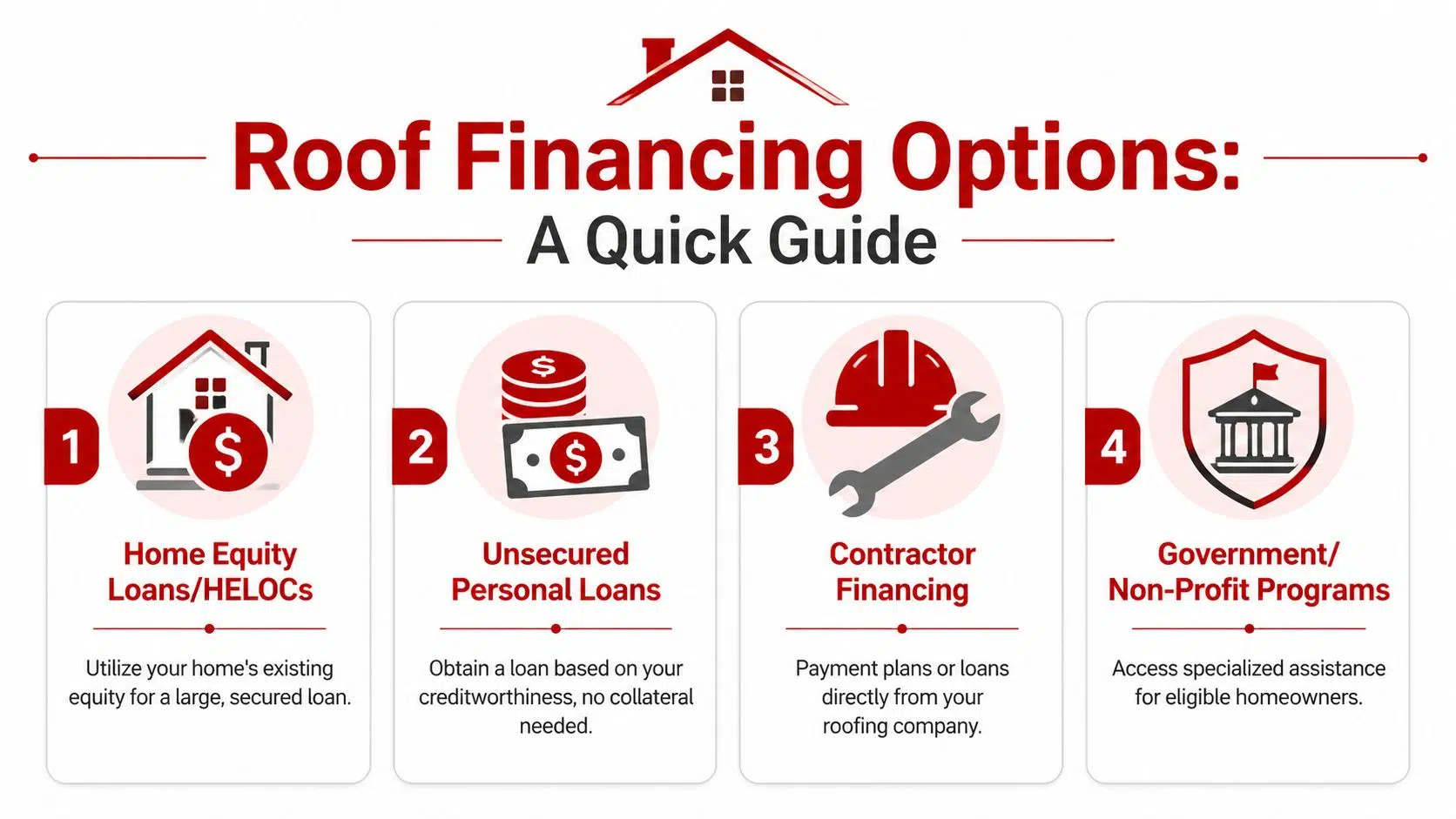
Roof financing options at a glance
| Financing Type | Best For | Typical APR | Key Pro | Key Con |
|---|---|---|---|---|
| Home equity loan or HELOC | Homeowners with usable equity | 7-9% APR | Lower monthly cost over longer term | Loan is tied to your home |
| Unsecured personal loan | Fast funding without home collateral | 15-25% APR | No home equity required | Higher APR |
| Government-backed loan | Larger upgrades and qualified borrowers | Often 1-3% below market | Can support broader renovation scope | More paperwork and slower timeline |
| Contractor financing | Homeowners who want a simpler application path | Varies by lender and plan | Convenient and often fast | Terms vary widely, so review carefully |
For local budgeting, it also helps to compare the finance numbers against the project itself. A Chicago roof cost guide gives useful context before you choose a loan amount.
Home equity loans and HELOCs
If you have equity in the property, this is often the strongest option. Home equity loans and HELOCs typically require a minimum credit score of 620+ and may allow loan-to-value ratios up to 80-97%. For a $20,000 asphalt shingle roof on a Chicago-area home, that can mean monthly payments of $200-300 over 15 years at 7-9% APR, which is materially lower than many unsecured loans (Chicago-area home equity roof financing details).
What works:
- Lower rates: Secured borrowing usually costs less than unsecured borrowing.
- Longer terms: That can keep monthly payments manageable.
- Better fit for full replacements: Especially when the roof scope is large.
What doesn’t:
- Your home is part of the equation: This is secured debt.
- It’s not ideal for every emergency: You may not want the extra steps if water is actively entering the house.
- Some owners don’t have enough equity: That ends the conversation quickly.
This option is usually best for owners with stable income, decent credit, and enough equity to borrow against.
Unsecured personal loans
Personal loans are straightforward. You borrow based on creditworthiness, income, and lender criteria. No home equity is required.
Their biggest strength is speed and simplicity. Their biggest weakness is cost. The verified comparison above shows why many homeowners use personal loans only when they need fast action or don’t qualify for equity-based borrowing. The APR range can be much higher than a home equity product.
If the roof leak is urgent but your long-term plan is refinancing or a broader renovation, a personal loan can work as a bridge. It’s rarely the cheapest long-term money.
Best fit:
- Homeowners who need funding quickly
- Borrowers without enough home equity
- Owners who don’t want a loan secured by the house
Poor fit:
- Anyone focused on the lowest total borrowing cost
- Larger roof projects where high APR turns expensive fast
Government-backed loans
Government-insured programs can be a very good fit when the roof project is part of a larger property improvement plan. FHA 203(k) and Title 1 options are the two names homeowners usually hear first.
According to the verified lending guidance, government-insured loans like FHA 203(k) and Title 1 can offer rates 1-3% below market due to federal backing. The same guidance notes minimum renovation thresholds of $5,000, county-specific caps that can be $50,000+ in Cook County, and that Title 1 unsecured loans cap at $7,500 for urgent repairs. It also notes that 203(k) standard loans appraise on after-improved value, which can increase eligible borrowing for worn properties, but that the process can take 30-60 days rather than the faster timing common with personal loans (government-backed roof financing details).
That mix of pros and cons matters in real life.
Good use cases:
- You’re buying or refinancing a property and the roof is part of the plan
- The job includes more than shingles alone
- You need a structured path for a larger rehabilitation scope
Bad use cases:
- Active leaks that need a quick start
- Homeowners who want minimal paperwork
- Situations where the roof contractor needs a rapid approval decision
Contractor financing
Contractor financing sits between convenience and caution. It can be the easiest path because the roofer helps coordinate the process, and some lenders give quick decisions through an app or online platform. Verified guidance on roofing finance notes that some financing partners advertise no deposits for fully financed jobs and quick approvals, but also warns about lien risks if you default.
This option can work well when:
- You want one workflow for quote, financing, and scheduling
- The roof needs prompt replacement
- You want to compare deferred plans against standard installment plans
This option doesn’t work well when:
- You haven’t compared the terms against bank or credit union alternatives
- You only look at the monthly payment and ignore total cost
- You sign before the roof scope and exclusions are clear
The best contractor financing setups are transparent. You should know the roof system, warranty, payment structure, and what happens if additional decking or flashing work is needed before you sign.
How to Get Approved for Your Roofing Loan
Most roofing loan approvals go smoother when the homeowner gets organized before filling out the application. Lenders want a clean picture of who you are, what the project costs, and whether the payment fits your finances.
Start with your credit and your budget
First, check your credit before you apply anywhere. Don’t guess. A rough idea isn’t enough because financing options change a lot depending on whether you qualify for equity-based lending, unsecured lending, or a special program.
Then decide what monthly payment is comfortable. Not barely possible. Comfortable. A new roof should solve a building problem, not create a payment problem.
Gather what lenders usually ask for
The exact paperwork depends on the loan type, but most lenders want the basics. Get them ready before you start.
- Proof of identity: Government-issued ID is standard.
- Income documents: Pay stubs, tax returns, or other income verification may be required.
- Property information: Address, ownership details, and sometimes mortgage information.
- Project estimate: A written roofing quote showing the scope and cost.
A homeowner who has this ready usually moves faster than someone who starts shopping for documents after submitting the application.
Get the roofing scope right before you borrow
People make avoidable mistakes when they borrow based on a vague ballpark number, then discover the actual project includes decking replacement, ventilation corrections, flashing work, chimney sealing, or code-related upgrades.
Ask for a written estimate that spells out:
- The roofing system being installed
- Tear-off versus overlay
- Flashing and ventilation scope
- Warranty coverage
- Payment schedule
- How change orders are handled
A financing approval is only useful if the loan amount matches the real job. If the quote is sloppy, the financing plan will be sloppy too.
Apply in the right order
The order matters. A clean process usually looks like this:
- Check fit first: Decide whether home equity, personal, government, or contractor financing is the best lane.
- Use the written quote: Apply for the amount tied to the actual roof scope.
- Review terms, not just approval: Look at APR, repayment period, fees, and whether the financing is secured.
- Confirm project timing: Make sure funding timing matches the urgency of the roof.
If your roof is actively leaking, tell both the lender and the contractor. The financing path may need to favor speed over ideal pricing. If the roof is worn but stable, you can take more time and shop the financing more carefully.
Unlocking Local Help for Chicago Area Homeowners
National advice usually stops at bank loans, personal loans, and FHA programs. That’s useful, but it misses an important local reality. Illinois and Chicago-area homeowners may have access to programs that don’t show up in generic roof financing articles.
The local gap most guides miss
Verified guidance notes that local and state-specific financing programs for roofing in Chicago and Illinois are rarely detailed in general guides, even though programs such as Illinois’ Residential Energy Efficiency Loan Assistance Program (REELAP) and local weatherization initiatives may help cover roof upgrades tied to energy efficiency (Illinois and Chicago roofing assistance gap explained here).
That matters in Chicago because many roof projects aren’t just about the surface. They connect to insulation performance, ventilation, heat loss, moisture management, and building envelope issues. On older bungalows, two-flats, and flat-roof buildings, that overlap can open doors that a standard “roof loan” search won’t show you.
Where to look first
Local help isn’t one single program. It’s a category of possibilities, and eligibility can be narrow. Start with these:
- State energy-efficiency assistance: Programs connected to energy upgrades may apply when the roof work affects efficiency.
- Weatherization-related aid: Some homeowners may qualify when the work supports broader home performance needs.
- County or city-administered repair programs: These often change, open and close, or have application windows.
- HOA or condo funding structures: Multi-unit properties sometimes need a shared financing approach rather than an individual homeowner loan.
What makes local programs different
These programs can be more attractive than standard borrowing because they may be tied to public goals like energy efficiency, health, safety, or housing preservation. But they also tend to come with more rules.
Look closely at:
- Eligibility standards: Income, occupancy, and property type often matter.
- Scope restrictions: Not every roofing system or related repair qualifies.
- Approval timing: Local programs can move slower than private lenders.
- Documentation burden: Expect more paperwork and follow-up.
For Chicago homeowners, the smartest move is often a layered approach. Check local assistance first, then compare it against a bank loan or contractor financing so you know the real trade-off.
If you own a brick two-flat, a bungalow, or a flat-roof property in the city, ask whether the roofing work also touches insulation, drainage, or envelope performance. That one question can uncover programs most national articles never mention.
Common Roof Financing Pitfalls and How to Avoid Them
A financing offer can solve the immediate problem and still be the wrong deal. Homeowners usually get into trouble when they focus on speed or monthly payment and ignore the structure underneath.

Watch the loan, not just the roof
A good roof doesn’t automatically come with good financing. Read the paperwork carefully, especially if the sales process feels rushed.
Common problems include:
- Teaser-style offers: Deferred or promotional terms can be useful, but only if you understand what happens afterward.
- Prepayment penalties: Some loans punish you for paying them off early.
- Unclear security interest: You need to know whether the loan is unsecured, home-secured, or attached another way.
- Pressure tactics: If someone wants a same-day signature before you’ve reviewed terms, step back.
Be careful with PACE financing
PACE financing gets attention because it can help homeowners who don’t fit traditional underwriting. Verified guidance notes that PACE financing in Illinois has surged, can allow 100% funding repaid through property taxes, and may work for homeowners with poor credit. The same guidance warns that many articles gloss over serious downsides, including tax delinquency liens and higher effective rates of 8-12% APR compared with more traditional loans (PACE roof financing risks in Illinois).
That doesn’t make PACE automatically bad. It means you need to understand exactly what you’re signing.
Questions to ask before accepting PACE:
- How is repayment collected?
- What happens if property taxes become difficult to pay?
- How does this affect sale or refinance plans?
- Is the effective cost better or worse than the alternatives you already qualify for?
A practical way to protect yourself
Use a short checklist before signing any roof financing agreement.
- Compare at least two financing paths: Even one extra quote can reveal a major difference in structure.
- Match the loan to the roof timeline: Don’t use a slow product for an urgent leak unless you have a backup plan.
- Review tax implications carefully: If you’re sorting through financing and ownership questions, this overview of Illinois roof replacement tax deductibility can help frame the conversation you should have with your tax professional.
- Make sure the roof contract is complete: Financing bad paperwork is still a bad deal.
The safest financing is the one you can explain clearly to someone else after reading the documents once. If the terms are hard to describe, stop and ask more questions.
Finance Your Roof with Confidence with Expert Super Seal
A roof replacement is a big expense, but it doesn’t have to be a financial scramble. Most homeowners have more than one workable option. Some will benefit from home equity financing. Others need the speed of a personal or contractor-backed plan. Some Chicago-area owners should check state or local assistance before borrowing privately.
What works best is usually simple. Get a real inspection, get a written scope, and match the financing to the urgency of the roof and the condition of your finances.
If you want a practical starting point, Expert Super Seal Roofing & Tuckpointing offers free estimates and payment options for roofing and related exterior work. That gives homeowners a way to price the actual scope first, then compare financing against a defined project instead of a rough guess.
The roof has to make sense. The financing has to make sense too. When both are clear, the decision gets much easier.
Frequently Asked Questions About Roof Financing
Can you finance a roof with bad credit
Yes, sometimes you can. The available options may change, though. Traditional bank products can be harder to access with weaker credit, while contractor financing or alternatives such as PACE may be more available. The trade-off is that easier approval can come with higher cost or more risk, so read the terms carefully.
Should I finance a roof repair or wait and save up
If the roof is actively leaking or failing, waiting usually isn’t the smart move. Water intrusion can spread into insulation, framing, ceilings, and masonry. If the roof issue is minor and repairable, you may be better off making the repair now and planning the larger replacement on your timeline.
Is contractor financing better than a bank loan
Sometimes. Contractor financing is often easier and faster, which helps when the roof is urgent. A bank or credit union may offer a stronger long-term cost structure, especially if you qualify for home equity financing. The better option is the one with clear terms, a manageable payment, and a total cost you understand before signing.
If your roof is leaking, aging out, or you’ve already received a quote and need a clear next step, contact Expert Super Seal Roofing & Tuckpointing. You can schedule a free estimate, get a written scope for the work your roof needs, and discuss practical payment options without guessing your way through the process.