
In Chicago, the average lifespan of the most common roof type, asphalt shingles, is typically 20 to 25 years on a well-maintained home. In tougher conditions, or without good ventilation and upkeep, that practical lifespan can drop to 15 to 20 years.
If you're asking because your roof is starting to look tired after another winter, that's a smart instinct. A lot of homeowners look at a manufacturer brochure, see a long lifespan estimate, and assume they have more time than they really do. In Chicago, that assumption gets expensive.
Our weather is hard on roofs in ways that generic advice misses. Freeze-thaw swings work shingles loose. Lake-effect snow and ice sit where they shouldn't. Hail bruises surfaces that might still look acceptable from the ground. What is the average lifespan of a roof in Chicago? The honest answer depends less on the label on the bundle and more on how that roof was installed, ventilated, and punished by local weather.
How Long Should a Roof Really Last in Chicago
You come out after a January thaw, see granules washed up by the downspout, and notice a brown spot near a second-floor ceiling corner. That is usually when the question gets serious. Is this a repair, or is the roof running out of road?
For a Chicago house, the answer starts with a hard truth. Manufacturer lifespan ranges are broad, but our weather cuts into them. Freeze-thaw cycles pry at shingle edges and flashing. Lake-effect snow lingers in valleys and along eaves. Hail can bruise a roof badly enough to shorten its service life even when it still looks passable from the yard.
On most homes here, asphalt shingles should be judged by realistic local service life, not the best-case number on the wrapper. A roof may still be intact in the mid-teen years, but that is the point when I tell homeowners to pay closer attention to condition, ventilation, and past storm exposure. If you are comparing longer-lasting shingle options, this breakdown of architectural shingles vs composite shingles helps clarify where the added cost can make sense.
What the average really means
Average lifespan does not mean a roof performs perfectly until one specific year and then suddenly fails. In Chicago, aging usually shows up piece by piece. Flashing starts to separate. Valleys hold water longer. Chimney lines and vent boots become weak spots. South- and west-facing slopes often wear faster because they take more sun, more temperature swing, and more storm exposure.
That is why roof age by itself never tells the whole story.
A 17-year-old roof with good attic airflow, solid flashing, and prompt repairs may have useful life left. A 12-year-old roof installed poorly, baked by bad ventilation, and hit by a couple of hard hailstorms can already be in replacement territory.
Three factors usually decide which way it goes:
- Installation quality: Good-looking shingles do not guarantee a good roof. The nailing pattern, underlayment, flashing work, ice barrier placement, and edge details are what hold up when Chicago weather gets rough.
- Attic ventilation: Heat and trapped moisture shorten shingle life from below. In winter, poor ventilation also helps create condensation and ice dam conditions that damage the roof system.
- Maintenance and repair timing: Small flashing issues, lifted tabs, and open seal lines are manageable early. Left alone through a Chicago winter, they turn into decking damage, interior staining, and bigger repair bills.
The practical way to judge a Chicago roof is simple. Look at the age, the material, the quality of the install, the attic conditions, and what the last few winters and storm seasons have done to it. That gives you a much more honest answer than any generic lifespan chart.
Chicago Roof Lifespan by Material Type
Material choice changes the whole maintenance and replacement conversation. Some systems are cheaper to install and easier to repair. Others cost more upfront but give you a much longer service life and better resistance to hail, wind, and winter abuse.
Here's the broad local picture.
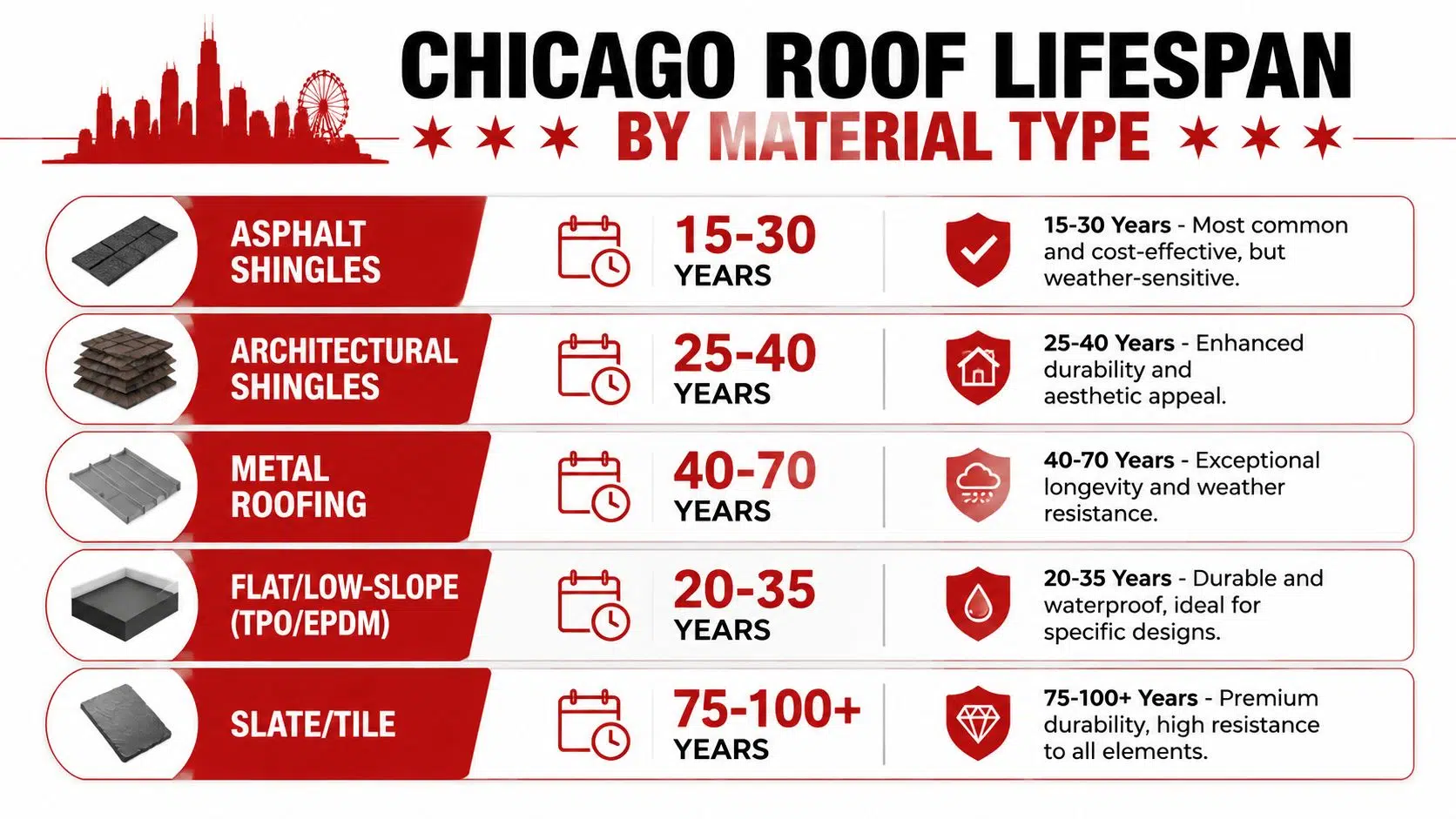
Side by side material comparison
| Material | Realistic Chicago lifespan | Relative cost | Best fit | Main trade-off |
|---|---|---|---|---|
| Asphalt shingles | 20 to 25 years on a well-maintained roof | $ | Standard residential homes | Most weather-sensitive |
| Architectural shingles | 30 to 50 years or more | $$ | Homeowners wanting longer shingle life | Higher upfront spend |
| Metal roofing | 40 to 70 years | $$$ | Homes and buildings prioritizing durability | Higher initial cost, detail work matters |
| Wood shakes and shingles | 20 to 40 years | $$ to $$$ | Specialty aesthetic projects | More maintenance in Chicago moisture |
| Tile and slate | 50 to 100 years | $$$$ | Long-term ownership, premium buildings | Heavy, expensive, specialized installation |
According to Illinois roof lifespan guidance, metal roofing lasts 40 to 70 years, architectural shingles can reach 30 to 50 years or more, wood shakes and shingles last 20 to 40 years, and tile and slate roofs last 50 to 100 years.
Asphalt versus architectural shingles
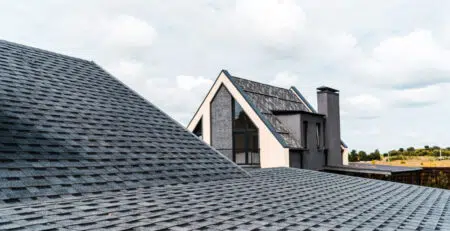
A lot of Chicago homeowners still have standard asphalt shingles because they're the most common and usually the most budget-friendly route. They do the job, but they take a beating from weather. If the roof is exposed, poorly ventilated, or installed without strong detail work around penetrations, the lower end of the lifespan range shows up fast.
Architectural shingles are the better shingle option for many homes. They're thicker, layered, and generally more durable than basic 3-tab products. If you're weighing appearance, performance, and lifespan, this breakdown of architectural shingles vs composite shingles is worth reviewing before you decide.
On a Chicago house, the cheapest shingle is often the most expensive roof over time if it has to be replaced earlier or patched repeatedly after storms.
Where metal, slate, and wood fit
Metal roofing has become a serious option for owners who plan to stay put. Its lifespan and weather resistance make sense in this climate, especially where wind and hail are regular concerns. The catch is that metal is less forgiving of sloppy trim, flashing, and panel detailing. Good material won't rescue bad workmanship.
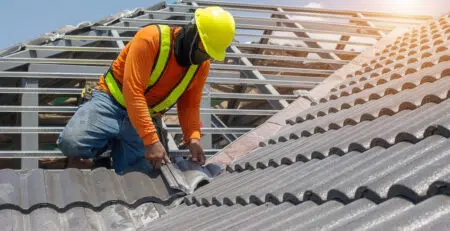
Tile and slate are long-haul systems. They belong on buildings that can structurally support them and owners willing to pay for skilled installation. They can last a very long time, but they are not casual purchases.
Wood shakes and shingles can look fantastic on the right property. In Chicago, though, moisture is the issue. You need more maintenance discipline, and many owners eventually decide the look isn't worth the extra attention.
What about flat and low-slope roofs
For Chicago two-flats, commercial buildings, condo associations, and industrial properties, flat and low-slope systems are a different category altogether. TPO, EPDM, and modified bitumen are common choices because they suit buildings with limited pitch and mechanical equipment on the roof.
I'm not assigning precise lifespan numbers here because the verified data for this article focuses on shingles, metal, wood, tile, and slate. In practice, flat roofs live or die by drainage, seam quality, flashing details, rooftop traffic, and maintenance discipline. A flat roof with standing water is telling you exactly how the story ends if nobody intervenes.
Key Factors That Shorten Your Roofs Lifespan
A Chicago roof can come through one winter looking fine, then come out of the next one with curled shingles, popped flashing, and a leak that stains the bedroom ceiling. That is how this climate works. The wear is cumulative, and it shows up faster here than the generic lifespan charts on product brochures suggest.
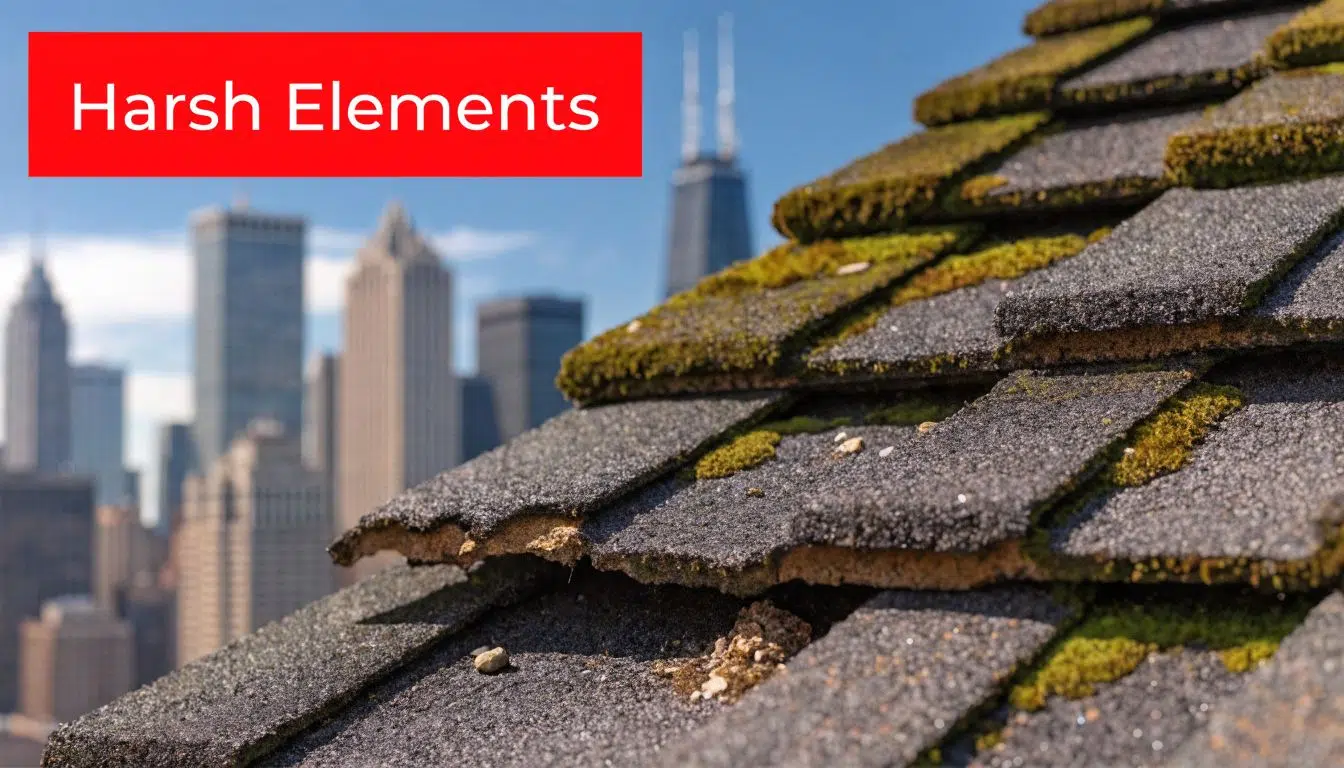
Chicago weather wears roofs down faster
Freeze thaw cycles do a lot of the damage. Water gets into small openings around shingles, flashing, nail penetrations, and masonry transitions. Then it freezes, expands, and pries those weak points wider. Add lake-effect snow, ice backup at the eaves, summer heat, and hail, and the roof keeps getting stressed from every direction.
That is why national lifespan estimates often miss the mark in Chicago. As noted in this Illinois roof lifespan article, harsher hail and wetter winters are cutting into asphalt shingle life, and poor attic ventilation is a common factor in premature failure. In plain terms, a roof here often ages on a Chicago schedule, not a manufacturer schedule.
Hail is a good example. A roof may still look decent from the sidewalk, but bruised shingles, loosened granules, and softened impact points can shorten its remaining life long before you see an active leak.
Ventilation and moisture problems start from underneath
A lot of owners look at the surface and miss what is happening below it. Bad attic ventilation cooks shingles from underneath in summer and traps warm, moist air in winter. That moisture can condense on the underside of the roof deck, wet the sheathing, and weaken the whole assembly over time.
I have seen roofs lose years of service life because intake was blocked, exhaust was undersized, or insulation was thrown in without thinking about airflow. The shingles were only part of the problem. The attic setup was aging the roof every day.
One sentence says it plainly.
A roof system that cannot dry out will not last as long as it should.
Installation quality and ignored small defects
Chicago weather exposes bad workmanship fast. Misplaced nails, sloppy valley cuts, weak chimney flashing, and cheap pipe boots usually fail before the main field of the roof does. Good shingles installed badly still produce expensive repairs.
Neglect speeds that up. The common trouble spots are predictable:
- Flashing at chimneys, walls, skylights, and vents: These joints move, collect water, and fail early if they were detailed poorly.
- Clogged gutters and downspouts: Water backs up at the roof edge, wets the fascia, and helps create ice problems.
- Tree limbs and roof debris: Branches scrape the surface, drop organic material, and keep areas damp longer after storms.
- Small storm damage left alone: One lifted shingle or one loose flashing tab can turn into wet decking and interior damage after the next freeze or hard rain.
Chicago roofs rarely fail because of one dramatic event alone. More often, a rough winter, a humid attic, and a few ignored details shave years off the roof together.
Telltale Signs Your Chicago Roof Needs Attention
A lot of Chicago roof calls start the same way. A homeowner notices a brown ceiling stain after a thaw, or finds shingle pieces in the yard after a hard wind off the lake. By then, the roof has usually been warning you for a while.
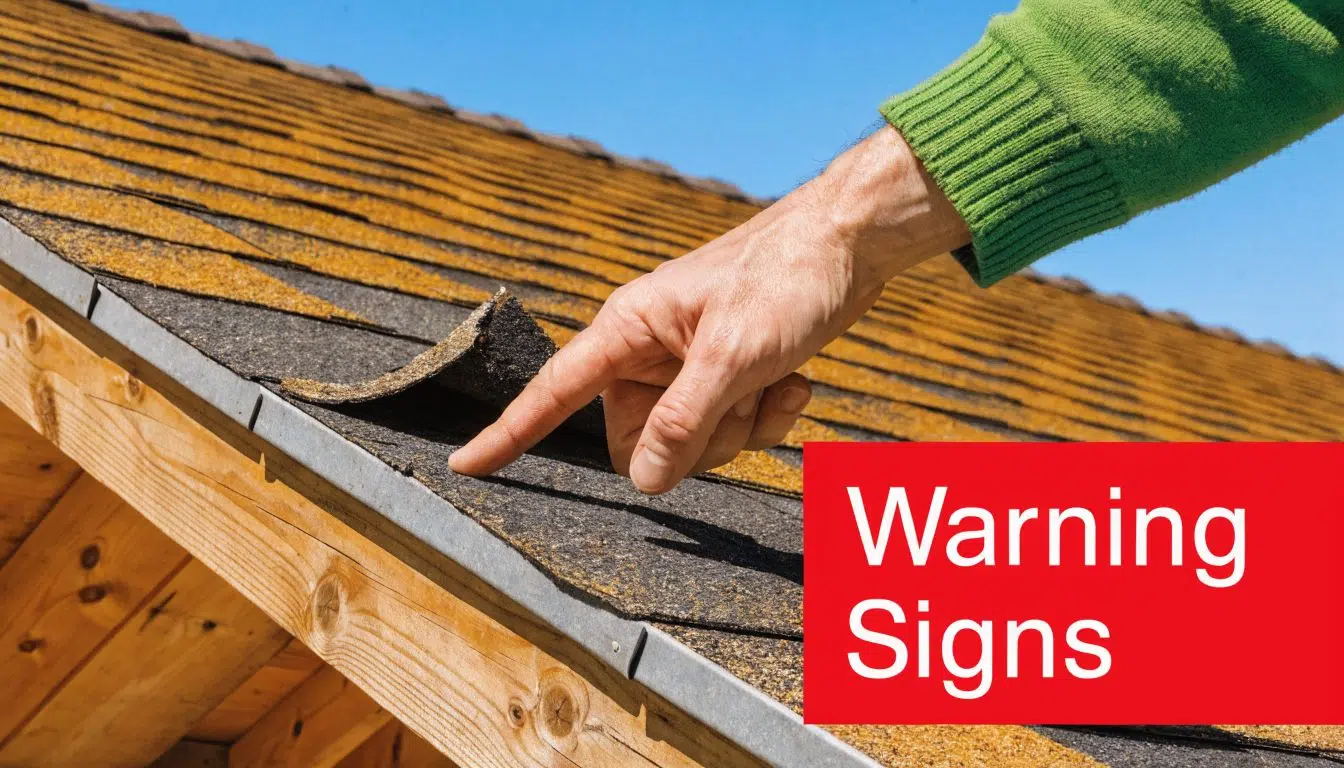
Chicago roofs show their age differently than roofs in milder climates. Freeze-thaw cycles open up small cracks. Lake-effect snow keeps moisture sitting longer at edges and valleys. Hail knocks granules loose. A roof can still look passable from the street and already be losing years of service life.
What you can spot from the ground
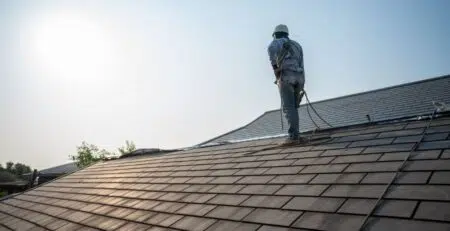
Start with a walk around the house. Morning or late afternoon light usually makes trouble easier to see because shadows expose lifted edges, dips, and uneven lines.
Watch for these signs:
- Granules in gutters or below downspouts: A little shedding is normal on an older asphalt roof. Heavy granule loss means the shingle surface is wearing thin, and Chicago sun, ice, and hail will finish the job faster.
- Uneven roof lines: A sag, dip, or wavy section can point to wet decking, long-term leakage, or movement in the structure below.
- Flashing that looks open or rusted: Around chimneys, walls, and dormers, look for separated joints, lifted metal, or dried-out sealant.
- Gutters pulling away at the eaves: That often means the edge wood has stayed wet through more than one season.
- Shingle debris in the yard after a storm: That is common after wind events on aging roofs, especially where tabs were already brittle from repeated winter cycles.
On many Chicago asphalt roofs, the warning stage shows up earlier than the shingle wrapper would lead you to expect. If curling, cracking, and granule loss are showing up across multiple slopes, start planning instead of hoping for a few more easy years. If you want a good baseline before problems spread, schedule affordable roof maintenance in Chicago and get eyes on the trouble spots.
What usually shows up on the roof itself
If you can see the roof safely from a window, with binoculars, or in clear drone photos, look for patterns. One damaged tab is a repair item. Repeating defects across several sections usually mean the roof is wearing out as a system.
Common warning signs include:
- Curling shingle edges
- Cracked or split tabs
- Bald spots where granules are missing
- Dark sections that stay damp longer than the rest
- Lifted tabs or exposed nails after wind
- Loose or shifted ridge caps
- Moss or algae in shaded areas that stay wet
Scattered defects on one slope may be repairable. The same defects across front, back, and ridge usually point to broader aging.
Flat roof warning signs
Flat and low-slope roofs fail in a different way. On Chicago two-flats, three-flats, and small commercial buildings, the early clues are usually drainage problems, seam stress, and movement around penetrations.
Check for:
- Ponding water that sits long after rain
- Blisters or bubbles in the membrane
- Open seams or shrinking laps
- Cracked pitch pans around pipes and equipment
- Soft areas underfoot during a professional inspection
- Ceiling stains near parapet walls, drains, or top-floor corners
One indoor stain does not tell you where the leak started. Water can travel along decking, insulation, or framing before it shows itself. In Chicago winters, that delay causes trouble. A small leak that freezes, thaws, and freezes again can open up fast and turn a manageable repair into wet insulation, damaged plaster, and rotten wood.
Your Practical Roof Maintenance and Inspection Checklist
A roof lasts longer when somebody pays attention to it between emergencies. You don't need to become a roofer, but you do need a routine. The goal is simple. Keep water moving off the roof, catch damage early, and don't let small defects sit through a Chicago season.
Seasonal checklist that actually helps
Use this as a working list for a house, small multifamily building, or managed property:
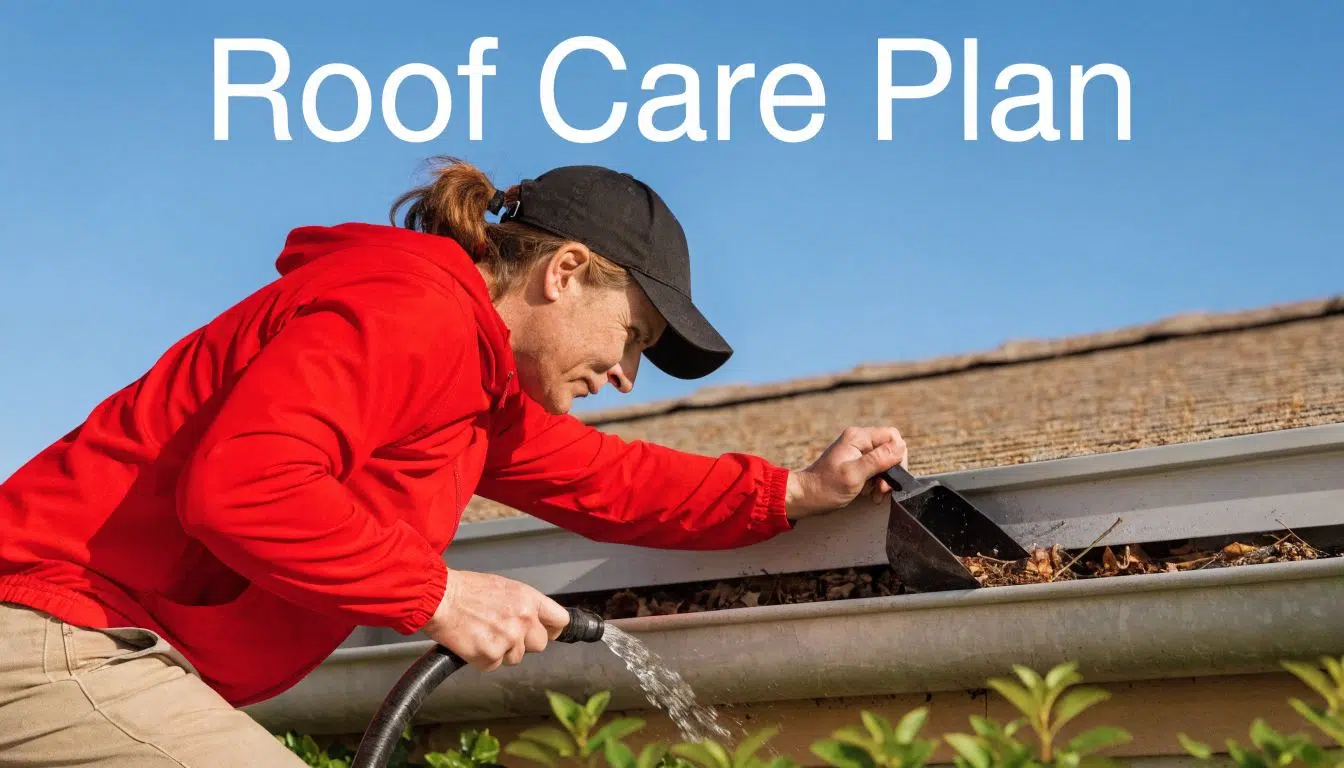
- Spring check after freeze-thaw season: Look for lifted shingles, displaced flashing, loose gutter spikes, and debris packed in valleys.
- After major storms: Walk the perimeter and check for shingles on the lawn, dented metal trim, clogged downspouts, or fresh ceiling stains indoors.
- Late fall gutter cleaning: Clear leaves and seed pods so meltwater can drain instead of backing up at the eaves.
- Attic spot check: Look for damp insulation, staining on the underside of the roof deck, moldy smell, or daylight where it shouldn't be.
- Tree control: Trim branches back so they don't scrape the roof or dump debris into one area.
- Penetration review: Keep an eye on the flashing around vents, chimneys, skylights, and wall intersections.
If you manage several properties or just want a more organized upkeep routine, this guide to affordable roof maintenance is a useful starting point.
What not to do yourself
There's a line between smart maintenance and creating bigger problems.
Avoid these mistakes:
- Pressure washing shingles: It strips granules and shortens life.
- Smearing roof cement everywhere: That's not repair work. It's often a temporary patch that hides the leak path.
- Walking steep or aged roofs casually: One bad step can crack brittle shingles or injure you.
- Ignoring the attic: People check the roof and skip the space directly beneath it, where moisture problems often show up first.
The best homeowner maintenance is observation and housekeeping. The best repair work is done before water gets inside.
When to Call Expert Super Seal Roofing & Tuckpointing
Call a professional when you have an active leak, visible storm damage, repeated repairs in the same area, or a roof that's getting close to the age where replacement becomes a realistic conversation. If your asphalt roof is in that older range, waiting for a major interior leak is the wrong trigger.
A proper inspection should answer a few direct questions. Is the roof still serviceable. Are the problems localized or spread across multiple sections. Is the issue the roofing material itself, the flashing, the drainage, or the attic ventilation. Those answers decide whether repair money is smart money or wasted money.
If you're already seeing warning signs, this checklist of signs you need a new roof can help you frame the conversation before you schedule an inspection.
Chicago roofs need local judgment. Building style, exposure, parapet walls, chimney condition, attic airflow, and storm history all matter. That's why the right call is rarely made from one photo or a guess from the driveway.
Frequently Asked Questions About Chicago Roofs
Is it better to repair or replace an older roof
If the problem is isolated and the rest of the roof is in solid condition, repair usually makes sense. If defects are showing up in multiple areas, shingles are brittle or curling, flashing is failing in several places, or the roof is near the end of its expected service life, replacement is often the cleaner long-term decision.
How much does a roof replacement cost in Chicago
The price depends on material, roof shape, tear-off condition, access, ventilation corrections, flashing work, and whether decking needs repair. I'm keeping this answer qualitative because the verified data for this article doesn't include cost figures I can cite here. Get a written estimate that separates materials, labor, tear-off, and any additional repair scope.
Do roofing warranties cover Chicago weather damage
Sometimes yes, sometimes no. Material warranties typically address manufacturing defects under specific conditions. Storm damage, installation mistakes, ventilation problems, and neglected maintenance often fall outside what owners think is covered. Read both the manufacturer warranty and the workmanship warranty, and ask who handles claims in practice.
How do I tell if a roofing contractor is reputable
Start with the basics. They should be licensed, bonded, and insured. They should inspect the roof, attic, drainage, and flashing details instead of giving you a number from satellite images alone. They should explain whether they recommend repair or replacement and why, in plain language.
Also ask direct questions:
- Who handles permits and code compliance
- What ventilation corrections, if any, are included
- Will flashing be replaced or reused
- What warranty applies to labor
- What changes the price after tear-off
A good contractor doesn't hide behind vague terms like “complete system” without spelling out what that means on your specific building.
If your roof is aging, leaking, or showing storm wear, Expert Super Seal Roofing & Tuckpointing can inspect it and give you a clear, honest assessment. They've served Chicago since 1972 and handle residential, commercial, and industrial roofing with free estimates, fast response, and the kind of local experience that matters when Chicago weather is part of the job.