
You notice it fast. A dark ring on the ceiling. A steady drip into the hallway. Maybe water starts running down a light fixture during a Chicago storm, and now the house feels different in a matter of minutes.
At that point, you’re not doing a home improvement project. You’re managing an emergency. A temporary leak fix for roof from inside can buy you time, protect the structure, and limit interior damage, but only if you handle the first hour the right way. The job is simple in principle: keep people safe, control the water, patch the entry point from the attic if you can reach it, then line up a proper roof repair before the next weather swing makes the damage worse.
That Drip Is an Emergency – Here’s Your First Response
A roof leak rarely stays small. The drip you see in the living room often started somewhere higher up on the roof deck, then traveled along rafters before it showed itself indoors. That’s why homeowners get fooled into thinking the problem is minor when the stain is still small.
It isn’t minor.
The stakes are bigger than drywall paint or a bucket on the floor. The Insurance Information Institute notes that water damage from leaks causes over $10 billion annually in U.S. claims, and delayed mitigation can lead to claim trouble because water can travel along rafters before dripping and interior damage worsens every hour. If you wait to “see if it stops,” you give water more time to soak insulation, spread into ceilings, and work into framing.
What your first response should be
Your first response has one purpose. Slow the damage path.
That means:
- Catch active water immediately with buckets, pans, or anything waterproof.
- Move valuables out of the splash zone before furniture, electronics, or flooring get hit.
- Look for ceiling bulges that suggest trapped water overhead.
- Stay off the roof during active rain or ice and work from inside only.
Practical rule: A temporary patch is not the repair. It’s the move that keeps a leak from turning into a larger interior loss.
In Chicago, this matters even more because freeze-thaw cycles, wind-driven rain, and ice dam conditions punish weak patches fast. A small leak during one storm can turn into a larger deck problem by the next temperature swing. That’s why calm, fast action beats panic every time.
What not to tell yourself
Homeowners lose time by saying the same three things:
| Thought | Why it’s dangerous |
|---|---|
| “It’s only a drip.” | The visible drip is often not the full water path. |
| “I’ll deal with it tomorrow.” | Moisture keeps moving through insulation, framing, and ceilings overnight. |
| “The patch can be permanent.” | Interior fixes are temporary containment, not a full roofing repair. |
Treat the leak like a building-envelope failure, because that’s what it is. Your goal right now is to control it, document it, and keep the structure from taking a deeper hit.
Before You Patch – Safety Checks and Damage Containment

Before you touch roofing cement or climb into the attic, make the house safe. A lot of bad outcomes happen before the patch even starts. Water near wiring, soaked insulation, slick attic joists, and swollen drywall all create risk.
If you own or manage a property in Chicago, this is also where routine upkeep pays off. A solid affordable roof maintenance plan makes emergency response easier because access points, past repairs, and trouble areas are easier to identify.
Start with hazards, not materials
Use this checklist in order:
- Shut off power to affected areas if water is near ceiling lights, fans, outlets, or visible wiring.
- Keep people out of the leak zone if the ceiling is sagging or stained heavily.
- Set buckets and plastic below the drip path to keep floors and contents dry.
- Move furniture, electronics, and rugs out of the room if possible.
- Watch the ceiling for bulging. If water is trapped overhead, controlled drainage is safer than waiting for the ceiling to open on its own.
If the ceiling is bulging
A water-filled ceiling can let go suddenly. When that happens, it doesn’t make a neat little drip hole. It can dump a large amount of water and debris all at once.
Do it carefully:
- Place a large bucket under the lowest point
- Use a screwdriver or similar pointed tool
- Puncture the lowest spot gently
- Let the water drain in a controlled stream
Don’t stand directly under the bulge while you do this. Water, wet drywall, and insulation can all come down together.
Attic safety matters more than speed
Once you go up into the attic, slow down. Step only on stable framing or a secure work platform. Don’t put weight on drywall between joists. Use a flashlight or headlamp, and keep both hands free when possible.
A good containment setup includes:
- Buckets under active drips
- Plastic sheeting over stored items
- Towels or rags for splash control
- A clear path in and out of the attic
- Photos of the leak area and interior damage for records
That last point matters. A leak emergency isn’t just about stopping water. It’s also about showing that you acted promptly and responsibly.
Your Emergency Roof Leak Repair Toolkit
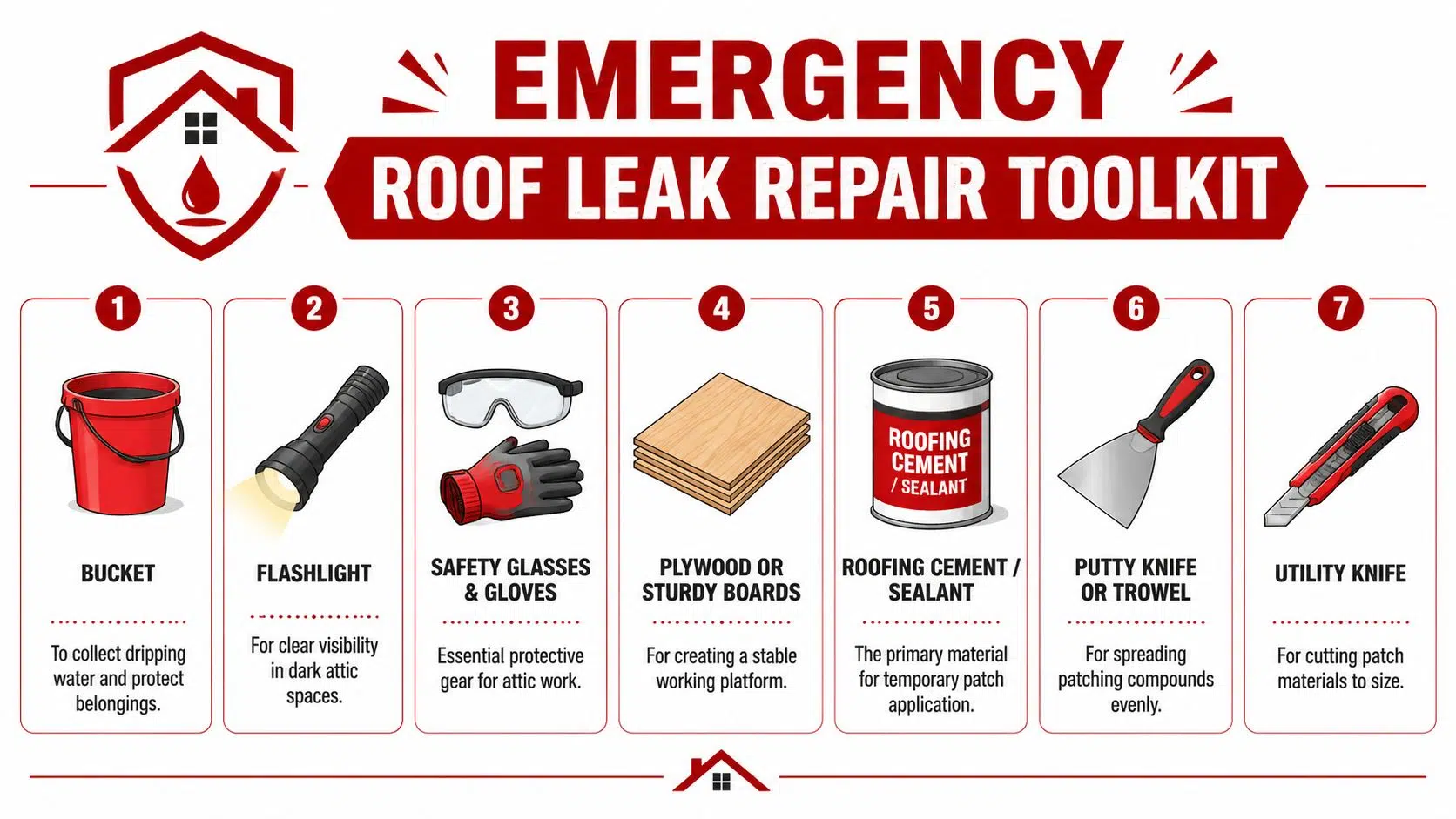
When people rush into an attic with the wrong materials, the patch usually fails for simple reasons. The sealant won’t bond, the patch doesn’t span enough area, or the material can’t handle the movement and moisture around the leak. The right toolkit doesn’t have to be complicated, but every item should earn its place.
The core gear you actually need
Here’s the working kit I’d want within reach for an interior emergency patch:
- Flashlight or headlamp for tracking water stains on the underside of the roof deck
- Gloves and safety glasses for insulation, nails, splinters, and overhead debris
- Buckets and plastic sheeting to keep interior damage contained while you work
- Wire brush to clean the deck surface before patching
- Putty knife or trowel to spread roofing cement
- Utility knife to cut plastic sheeting or trim patch material
- Plywood or rigid patch backing to reinforce the repair
- Roofing cement for small penetrations and crack sealing
- Butyl roofing tape for certain punctures or as reinforcement when conditions allow
- Fasteners if you’re securing material to rafters rather than just pressing it into cement
What works best for what
Not every leak needs the same response. Consequently, people often waste time.
| Material | Best use | Trade-off |
|---|---|---|
| Asphalt-based roofing cement | Small cracks, seams, and localized leak points on the underside of the deck | Needs a clean, dry surface to bond well |
| 6-mil plastic sheeting | Broad water catch and short-term interior barrier | Better for redirecting water than sealing a true puncture |
| Plywood patch | Reinforcing a cemented leak area from inside | Heavier to handle in a tight attic |
| Butyl roofing tape | Spot reinforcement over a small accessible opening | Sensitive to wet surfaces and not ideal as a stand-alone answer in harsh conditions |
| Galvanized sheet metal | Stronger temporary professional mitigation for punctures and wind damage | Usually better handled by a roofer, especially in bad weather |
Know the difference between containment and repair
A lot of products get sold as miracle leak fixes. Most are just one part of the job. Tape can help in the right spot. Cement is useful when the deck is ready for it. Plastic can redirect water. None of those replace locating the actual entry point and building a patch that holds.
The best emergency toolkit is the one that lets you work clean, dry, and controlled. Leaks don’t care how many products you bought. They care whether the patch matches the damage.
If you’re buying supplies in a storm, go simple. Skip gimmick products. Get dependable basics that roofers rely on for temporary mitigation.
How to Apply a Temporary Patch from Your Attic

This is the part most homeowners want right away. Fair enough. But the patch only works if you’re disciplined about prep.
For routine upkeep after the emergency is under control, it also helps to understand what ongoing residential roof maintenance looks like, because many leaks start from neglected flashing, aging materials, or winter stress that could have been caught earlier.
Step one is finding the actual entry point
Go into the attic with a strong light. Look for wet decking, dark water trails, damp insulation, or active drips. Follow the stain upward, not downward. Water often travels before it drops into living space.
If you can’t identify the path clearly, stop guessing. A patch in the wrong place wastes time and gives water another route.
Prep decides whether the patch holds
Many DIY projects fail at this step. The deck surface has to be clean and dry enough for the material to bond.
That one detail matters more than people expect. If the surface is wet, the patch may look finished and still fail fast.
A practical patch sequence
Use this order:
- Clean the area with a wire brush. Remove loose debris and old material.
- Dry the surface as much as possible. Use towels and time if needed.
- Apply roofing cement generously over the crack, seam, or hole on the underside of the deck.
- Feather the cement outward beyond the damage so the patch isn’t concentrated on one tiny point.
- Press your reinforcement into place, either plywood or plastic sheeting depending on the situation.
- Extend the patch beyond the leak zone so water can’t slip around the edges.
- Secure to rafters when appropriate so the patch stays stable rather than sagging.
What works and what doesn’t
Some leak points respond well to this method. Small penetrations, localized cracks, and accessible deck openings are good candidates. Broad saturated areas, rotted decking, repeated leaks around chimneys or valleys, and hidden pathways usually are not.
Common failure points include:
- Too little overlap so water bypasses the patch edge
- Wet application so cement never bonds properly
- Patching the stain instead of the entry point
- Using flimsy material that flexes or tears
- Leaving soaked insulation packed against the repair
A temporary attic patch should feel boring when it’s done right. Clean surface, enough material, enough overlap, stable support. The flashy shortcut is usually the one that leaks again.
If the leak slows but doesn’t stop, or shifts to another point nearby, don’t keep layering product blindly. That’s when you move from DIY containment to professional diagnosis.
When Your Temporary Fix Is Not Enough

A temporary patch should buy time. It should not buy false confidence.
There’s a real difference between “I stopped the water for now” and “the roof is handled.” In Chicago, that gap gets exposed quickly because wind, snow load, ice damming, and freeze-thaw movement test weak repairs hard.
Know the realistic life of the patch
The short version is simple. A homeowner patch from inside can help, but it has limits.
As noted in this emergency leak repair comparison, a DIY interior cement patch can last 30 to 90 days in moderate conditions, while a professional temporary fix using sheet metal and specialized tape can last 60 to 120 days and withstand 70 mph wind gusts. That tells you exactly what the inside patch is for. It’s a bridge to real repair, not the destination.
Red flags that mean stop and call a roofer
Use judgment here. If any of these conditions are present, the job has moved past a simple interior patch.
- The leak source isn’t clear and water appears to be traveling across a wide area
- The decking feels soft or deteriorated
- You have repeated leaks in the same zone
- Water is entering around penetrations, flashing lines, or roof transitions
- The ceiling shows heavy sagging or widespread staining
- Attic access is unsafe or too tight for stable work
- The leak returned quickly after patching
Why professionals get different results
A roofer doesn’t just add more sealant. A good emergency crew identifies the failure mode, checks the field of roofing around it, and decides whether a temporary exterior stabilization is needed before the permanent repair. That’s a different level of mitigation than a homeowner can usually do from the attic.
If you need local help, start with a contractor that handles roof repair in Chicago and can respond in active weather conditions.
If your patch gave you time, it did its job. Don’t ask it to survive the season.
Frequently Asked Questions About Interior Leak Repair
How long will a temporary leak fix for roof from inside really last in a Chicago winter
Less reliably than it would in mild weather. Cold, ice, and repeated thawing can stress an interior patch quickly. Even when the patch appears to hold, winter conditions can redirect water under roofing materials and create a new path. In practical terms, treat any inside repair as short-term containment and get the roof inspected for a proper exterior repair as soon as conditions allow.
Can I use Flex Seal or another spray product instead of roofing cement
For a roof leak, I wouldn’t treat a spray-on product as the primary answer from the attic. Roofing cement is made for this kind of temporary sealing work when you’ve got a clean, dry target area and enough reinforcement behind it. Spray products may seem convenient, but convenience isn’t the same as a dependable seal on a moving, damp roof assembly.
What if I don’t have attic access
That changes the job. If you have a vaulted ceiling or no attic path to the underside of the roof deck, your focus shifts to damage control only. Catch the water, protect the room, manage any ceiling bulge carefully, and call for professional service. Without access, you can’t build a meaningful interior patch on the roof deck itself.
Should I remove wet insulation
If insulation is soaked in the leak area, it usually needs to come out of the immediate path so the area can dry and so you can see what’s happening. Wet insulation hides water movement, holds moisture against wood, and makes leak tracking harder. Bag it carefully and keep the work area clear.
Is tape enough on its own
Sometimes for a very short window, but that depends on the surface condition, the type of opening, and whether the tape is being used alone or as part of a stronger patch. Tape tends to be less forgiving when the surface is damp or cold. For many attic repairs, it’s better as reinforcement than as the whole strategy.
What should I document after the leak is under control
Take photos of the ceiling damage, attic staining, active drip points, damaged belongings, and the temporary patch itself. Keep receipts for materials. Write down when the leak started, what the weather was doing, and what steps you took to limit damage. That record helps when you talk to your insurer and your roofer.
Can I just leave the patch in place if the leak stops
You can leave it in place temporarily while waiting for repair, but you shouldn’t treat silence as proof the roof is fixed. Water often returns with a different wind direction, melting pattern, or storm intensity. If the leak stopped, that means you bought time. Use that time well.
If you’re dealing with an active leak, need a professional inspection, or want a permanent repair done correctly, Expert Super Seal Roofing & Tuckpointing serves Chicagoland with licensed, bonded, and insured roofing support backed by local experience since 1972. They handle emergency response, repairs, maintenance, and full replacements for homes, multi-unit buildings, and commercial properties, with phones answered 24/7/365.