Maybe, but probably not for the full replacement cost. In Chicago, a 15-year-old roof often gets pushed onto Actual Cash Value coverage, which can leave you paying most of the bill yourself if a storm hits.
That's the part homeowners usually learn too late. The letter from the insurer shows up at renewal. Or a lender asks for proof of coverage. Or the wind starts rattling the house in the middle of the night, and suddenly the age of the roof matters more than the weather.
In Chicago, this gets tougher than the generic national advice makes it sound. Dense blocks, older housing stock, flat roofs mixed with shingle systems, and rough winters all complicate claims. A roof that still “looks okay” from the sidewalk may already be treated by an insurer like a worn-out part on an old car. It might still function, but the company insuring it no longer wants to promise a full replacement.
The Worrying Reality of an Aging Chicago Roof
A common Chicago scenario goes like this. A homeowner knows the roof was replaced years ago, but not exactly when. Then renewal season arrives, or they start shopping for a new policy, and someone asks, “How old is the roof?” That one question changes the whole conversation.
Once a roof gets near 15 years old, insurers in the Chicago area often stop treating it like a fully insurable asset and start treating it like a risk. That doesn't always mean an immediate denial. It does mean closer scrutiny, more conditions, and a higher chance that any future claim gets paid on a depreciated basis instead of full replacement.
If you're trying to figure out whether your roof is old for this market, it helps to compare its age against the average lifespan of a roof in Chicago. Age alone doesn't decide every claim, but it absolutely affects how an insurer views the property.
What homeowners usually notice first
Homeowners often don't discover the insurance problem during a sunny week in June. They notice it when one of these happens:
- A renewal notice changes the terms and the policy language gets tighter.
- A lender asks for updated insurance details before closing or refinancing.
- A storm passes through, and now the roof has both age and visible wear working against it.
- A buyer or inspector raises the issue during a sale.
A 15-year-old roof in Chicago can still be serviceable. That doesn't mean an insurer will treat it like a new one.
Why this feels unfair to homeowners
From the homeowner's side, the roof may not leak, the shingles may still be in place, and no one has had a major problem yet. But insurance underwriting doesn't work on “seems fine.” It works on risk categories, claim exposure, and what the carrier believes it may have to pay next.
That's why the answer to “Will insurance cover a 15 year old roof in Chicago?” is rarely a clean yes or no. It's usually, “Yes, maybe, but under tighter rules and with less money available if something goes wrong.”
Why Insurers Distrust a 15 Year Old Roof
A 15-year-old roof makes an underwriter nervous for the same reason a 15-year-old furnace or a high-mileage truck does. It may still be working today, but the odds of a costly failure are rising, and the next storm can expose every weak spot at once.
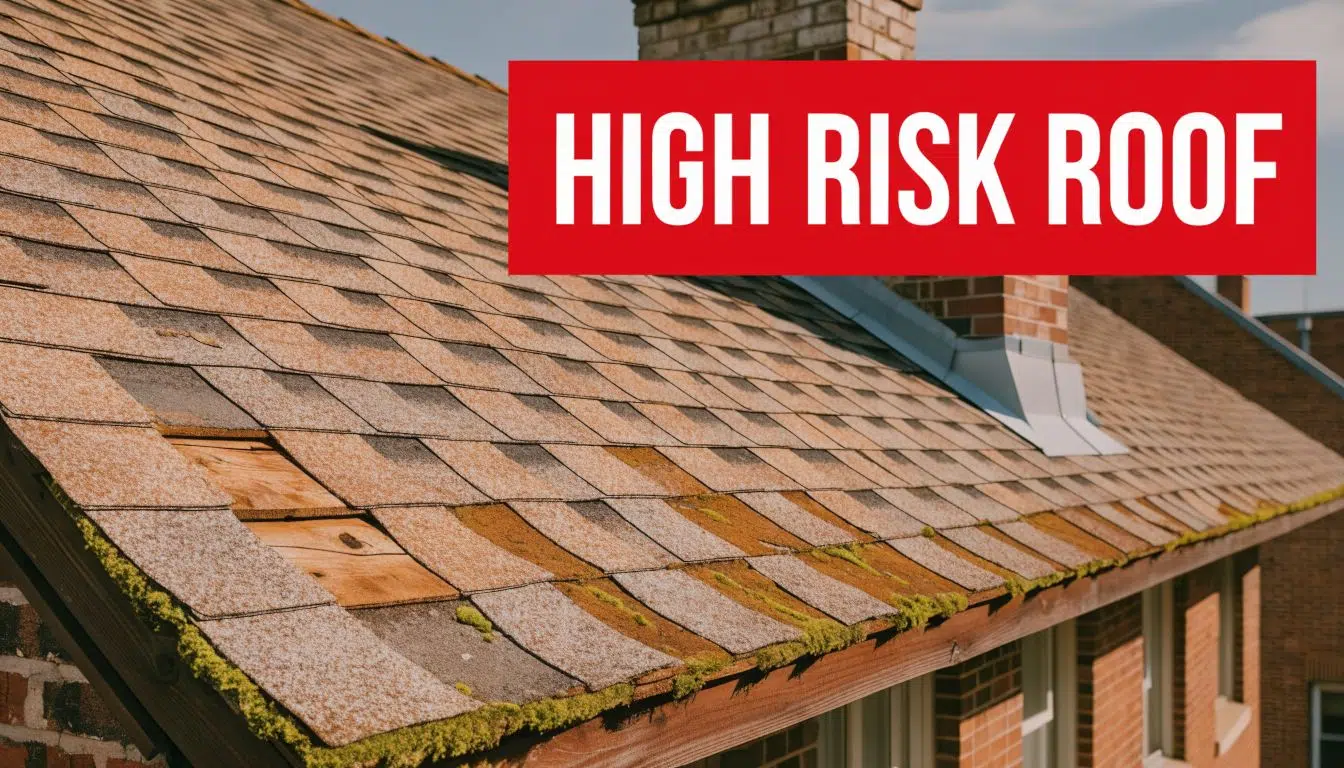
Carriers have tightened roof rules because older roofs produce bigger claims, more disputes, and more partial failures that turn into full replacements. Once a roof reaches the mid-teen range, many insurers stop treating it like a long-term asset and start treating it like a component nearing the end of its predictable service life. That shift affects underwriting, renewals, inspection requirements, and claim payouts.
The car warranty comparison fits. A newer car usually gets broader coverage because the manufacturer expects fewer breakdowns. As the car ages, coverage shrinks because wear, fatigue, and hidden problems become more likely. Roofs work the same way.
On paper, 15 years may not sound old. In Chicago, it often is old enough to trigger extra scrutiny.
What carriers are actually worried about
Insurers are not only looking at the install date. They are asking a harder question. How will this roof behave under stress when wind gets under the tabs, hail hits brittle shingles, or ice backs water up at the eaves?
Common concerns include:
- Brittle shingles that crack during a storm or during repair work.
- Weakened seal strips that make blow-offs more likely in high wind.
- Older flashing details around chimneys, parapet walls, and penetrations that fail before the field shingles do.
- Hidden deck or ventilation issues that do not show up from the ground but can expand the scope of a claim.
- Repairability problems when matching materials are discontinued or pulling one area apart damages the surrounding roof.
That last point matters more than homeowners expect. An insurer may see a roof as risky not because it is leaking today, but because one damaged slope can become a much larger claim if the surrounding materials cannot be repaired cleanly.
Why Chicago raises the stakes
This city puts roofs through more than age. Freeze-thaw cycles, lake-effect wind, hail, heavy snow, and ice damming all hit the same roofing system, year after year. On flat and low-slope roofs common across Chicago two-flats, three-flats, and mixed-use buildings, drainage problems and ponding add another layer of risk that national advice usually glosses over.
Then there is the jobsite reality. Dense housing means tight access, overhead wires, alley restrictions, scaffold needs, and nearby cars, porches, and neighboring walls that have to be protected. On a multi-unit building, one roof problem can also affect several residents, tenants, or owners at once. Insurers know that a claim in Chicago can cost more to stage, repair, and complete than the same roof on a wide suburban lot.
That is why the generic national advice about a "15-year rule" falls short here. In Chicago, the insurer is judging the roof and the building around it.
What this means for the homeowner
A 15-year-old asphalt roof can still have life left. But if you wait until a storm hits to learn how your carrier views it, you are negotiating from a weak position.
Get ahead of that risk. Review the age and condition of the roof now, document prior repairs, and compare that condition against the cost of a new roof in Chicago so you are not blindsided if the insurer limits coverage or pushes depreciation hard. That is the practical move in this market.
Actual Cash Value vs Replacement Cost What Your Policy Pays
A lot of Chicago owners find out what their policy really says after the storm, not before. That is an expensive time to learn the difference between Replacement Cost Value and Actual Cash Value.

The simple difference
RCV usually gives you a path to replace the roof with materials of like kind and quality after a covered loss, subject to deductibles and policy conditions. ACV pays the depreciated value of the roof at the time of loss.
That gap matters.
| Coverage type | What it means | What it feels like in real life |
|---|---|---|
| RCV | Pays for a new roof of like kind and quality, subject to policy terms | You have a realistic path to full replacement after a covered loss |
| ACV | Pays the roof's depreciated value at the time of loss | You may get a check that covers only part of the job |
On a 15-year-old roof, depreciation can cut the payout hard. I explain it to homeowners the same way I would explain an old car. The insurer is not paying you what it costs to buy new parts and make it whole unless the policy says replacement cost. Under ACV, they are paying based on what that used roof was worth just before the loss.
So yes, insurance can approve the claim and you can still be thousands short.
Why ACV hits harder in Chicago
In Chicago, the roof price is not just shingles or membrane. It is staging, tear-off, debris loading, alley access, permit requirements, parking headaches, protection for neighboring property, and the extra labor that comes with tight lots and taller buildings. On a two-flat or a larger multi-unit property, one roof job can also mean tenant coordination, interior protection, and stricter scheduling.
That is why ACV hurts more here than generic national articles suggest. The check is based on depreciation. Actual project cost is based on Chicago jobsite conditions.
Before a claim puts you in a corner, review the real cost to replace a roof in Chicago. Owners who skip that step often assume the settlement and the contract price will be close. They usually are not.
The lender problem people miss
Older roofs also create a financing problem. A lender may expect coverage strong enough to protect the property value, while the insurer may only offer ACV because of the roof's age and condition. That mismatch can show up during a purchase, refinance, or policy renewal.
The result is practical, not theoretical. You may need more carrier shopping, a fresh inspection report, documented maintenance, or partial repairs to keep the deal on track. In some cases, replacing the roof sooner costs less than fighting limited coverage, claim disputes, and financing delays later.
If your declarations page says ACV, read that as partial help, not a full reset. On an older Chicago roof, that distinction can decide whether a claim protects your budget or blows it up.
How Adjusters Evaluate Damage on an Older Roof
Age matters, but age alone doesn't settle a claim. The adjuster's job is to decide whether the roof failed because of a covered event or because the roof was worn out.
That distinction decides everything.
What counts as covered damage
An older roof can still qualify for insurance if the damage ties back to a specific event like hail, wind, or fire. The key is evidence. An insurer can still cover a roof over 15 years old if the adjuster can link the failure to a storm through patterns such as directional shingle dislocation, consistent hail denting, or seam lifting, not just general aging, according to this technical explanation of older-roof claims.
That's why adjusters look for cause, not just condition.
What usually gets rejected
Claims run into trouble when the roof shows broad, uniform aging instead of event-specific damage. Adjusters often push back when they see:
- Granule loss spread evenly across the field
- Brittle shingles that crack from handling
- Curling, shrinking, or surface wear
- Old repairs and patchwork that suggest long-term deterioration
- Leaks with no clear storm-linked point of entry
A roof can have both storm damage and wear. That's where disputes start.
Material type matters too
Not every 15-year-old roof is judged the same way. Standard three-tab asphalt shingles are often viewed as more vulnerable than architectural shingles, and flat-roof assemblies have their own inspection issues. On Chicago buildings, older flat roofs may show ponding, seam fatigue, flashing movement, or surface wear that can blur the line between sudden damage and deferred maintenance.
On an older roof, the strongest claim is a specific event tied to a specific pattern of damage.
What helps your side of the claim
When a homeowner can show storm timing, maintenance history, prior condition, and current damage patterns, the claim gets stronger. What doesn't help is filing first and trying to gather evidence later.
A good inspection report doesn't “make” a claim valid. It gives the adjuster a cleaner record to evaluate. On a 15-year-old roof, that can be the difference between a storm claim and a wear-and-tear denial.
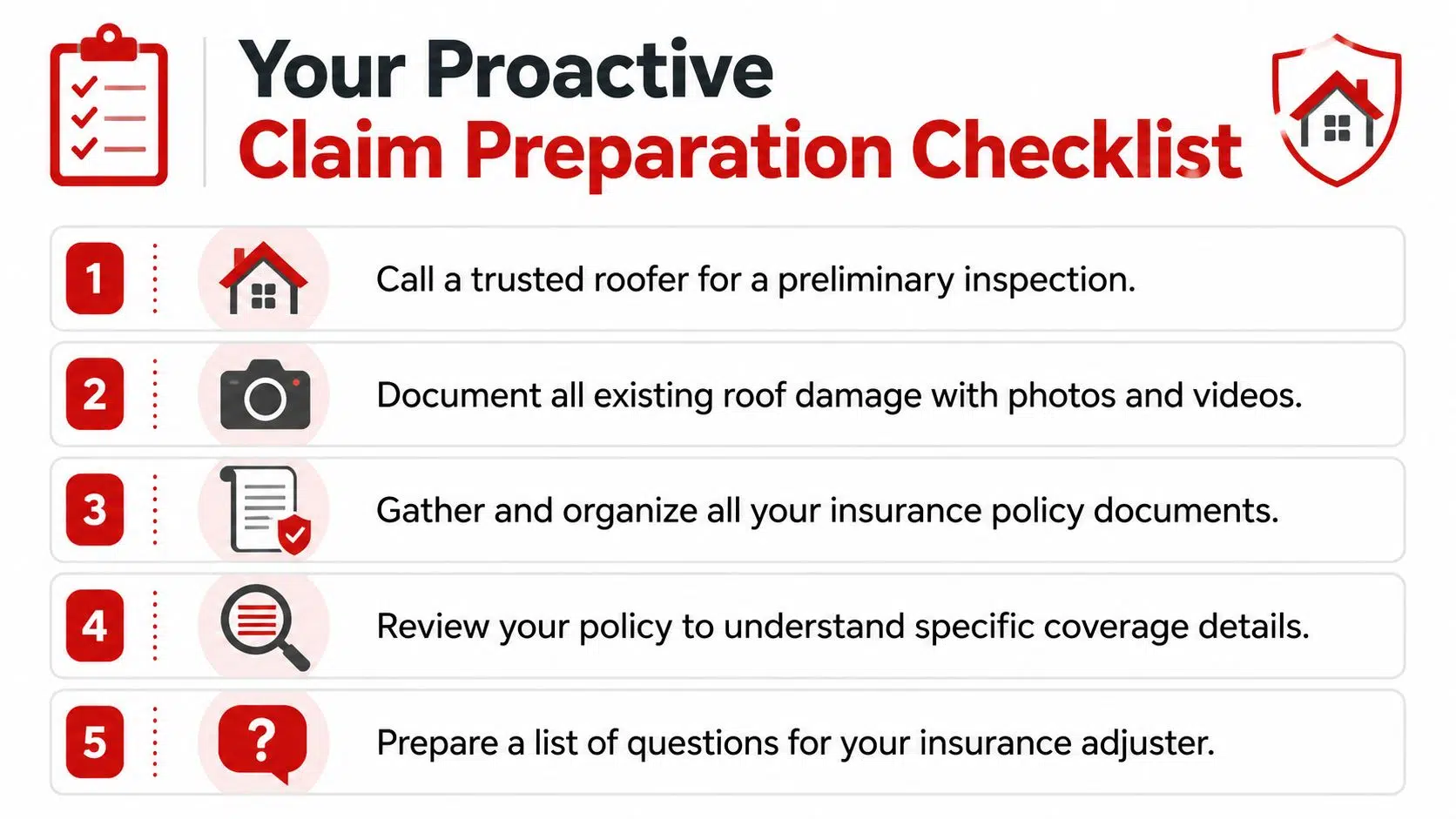
Your Proactive Claim Preparation Checklist
A 15-year-old roof in Chicago can put you in a bad spot fast. A storm hits on Sunday, water shows up Tuesday, and by Wednesday you are trying to explain an older roof on a tight lot, shared walls, parked cars below, or tenants calling for updates. Filing too early can hurt you. Filing too late can do the same. The smart move is to prepare the file before the carrier starts asking questions.
In Illinois, insurers often review roofs with satellite images, drone photos, and prior underwriting notes before anyone sets foot on the building. That matters more in Chicago than many national articles admit. Dense blocks, flat roofs, additions, parapet walls, and neighboring structures can make remote images look worse than the roof performs in real life. If your records are thin, the carrier's first impression can shape the whole claim.
A Proactive Claim Preparation Checklist
Get a roofer's inspection before you file
Start with the roof's current condition. A straight inspection can tell you whether you are looking at storm damage, long-term wear, or a mix of both. On a Chicago two-flat or multi-unit building, that inspection should also note flashings, parapet coping, drains, and any areas where water can move sideways into another unit.Photograph what changed, not just what exists
Take clear photos of shingles, membrane seams, flashing, vents, gutters, interior stains, attic moisture, and exterior metal damage. Save the date on every file. If possible, separate overview shots from close-ups so the adjuster can see both the location and the detail.Pull every roof-related document into one file
Gather installation records, permits if you have them, repair invoices, warranty papers, maintenance notes, and photos from before the loss. For Chicago owners, that file often matters most when the roof serves multiple units or covers a rear addition built at a different time than the main structure.Read the policy wording that controls the roof claim
Check whether the roof is settled on ACV or replacement cost, whether cosmetic damage is excluded, and whether wind, hail, or interior water damage have separate limits or conditions. If you will meet the adjuster, review what not to say to a roof insurance adjuster so you do not hand the carrier a wear-and-tear argument by mistake.Write out a clean storm timeline
Note the date of the weather event, when the leak or damage was first noticed, what rooms or units were affected, and what temporary steps were taken. Keep it simple and factual. A short, consistent timeline is stronger than a long explanation that wanders.
For roofs between 12 and 14 years old
This is the window to get organized. Once a roof starts showing age, the paperwork matters almost as much as the material.
- Schedule a documented condition review. Expert Super Seal Roofing & Tuckpointing can inspect the roof, note visible wear, and give you a record of present condition.
- Handle small repairs before they become claim problems. Loose shingles, open laps, cracked sealant, and flashing issues are cheaper to fix early and easier to explain later.
- Keep a maintenance file that a stranger can understand. If an adjuster or underwriting reviewer sees only an older roof, your records need to show upkeep, dates, and prior condition without guesswork.
Chicago owners lose money when they rely on generic 15-year roof advice written for suburban homes with easy access and simple roof lines. In the city, one weak claim can create a repair bill, a tenant problem, and a scheduling mess at the same time. Preparation gives you options.
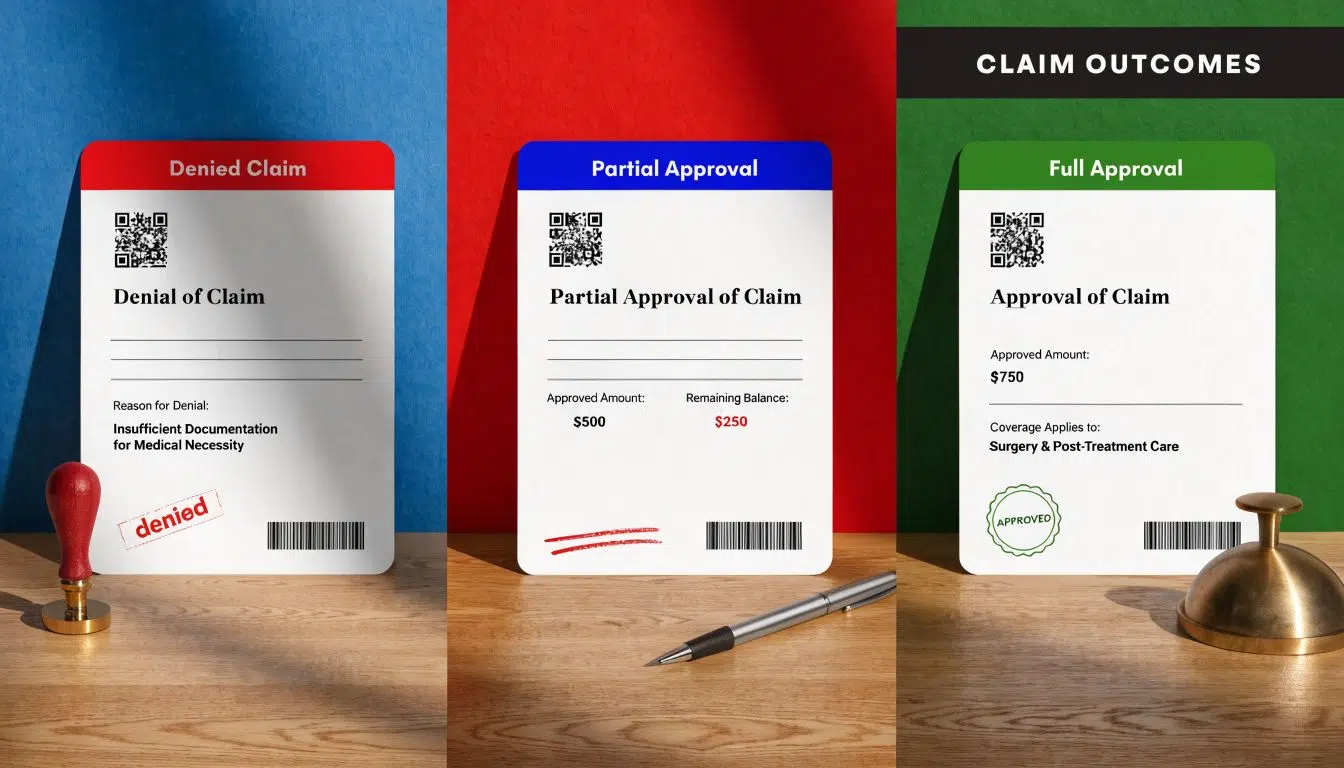
Common Insurer Responses and How to Respond
A Chicago owner with a 15-year-old roof can do everything right, report the loss on time, meet the adjuster, and still end up staring at an answer that does not cover the actual job. That happens a lot in the city. Tight lot lines, steep access costs, detached garages, porches, and multi-unit coordination make roof work more expensive and more complicated than the generic advice you see in national articles.
Denial
A denial usually cites wear and tear, prior damage, poor maintenance, or no proof that a covered storm caused the problem. Read the denial letter line by line. The reason matters more than the label.
Then compare it against the inspection photos, test squares, repair history, and the adjuster's scope. If the carrier says the issue is old deterioration but the damage pattern points to a specific wind or hail event, challenge that point directly. Keep the response tight and technical. Long emotional explanations rarely help.
On Chicago buildings, access and surrounding structures also matter. If a rear slope is hard to see from the ground, or damage is concentrated near parapet walls, dormers, flashing, or party-line conditions, a quick carrier inspection may miss the actual problem. A contractor report with clear photos often gives the claim file the detail it was missing the first time.
Partial approval with ACV
This is the result that catches many owners off guard. The insurer accepts part of the claim but pays actual cash value, leaving you to cover the gap between a depreciated settlement and the full cost to replace the roof.
In Chicago, that shortfall hurts more. Labor, staging, material delivery, permit coordination, debris handling, and protecting nearby buildings can turn a basic roof job into a difficult urban project fast. On a two-flat, six-flat, or mixed-use property, the money problem can become a tenant and scheduling problem the same week.
The response is simple in concept, but not always easy in practice. Review the scope carefully. Check whether the estimate leaves out steep charges, flashing, ice and water protection, code-related items, parapet tie-ins, or detached structures that were damaged in the same storm. If the roof must be replaced to restore the system properly, the paperwork should explain that in plain language.
Full approval
Full approval sounds like the finish line. It is not.
Read the estimate closely and compare it to the actual roof system. Carriers sometimes approve replacement but understate accessories, waste factors, flashing details, ventilation components, or code-triggered items. On older Chicago homes and multi-unit buildings, those missing line items can be the difference between a proper job and a patchwork result that causes trouble later.
What helps in every outcome
Good documentation gives you something solid to stand on after the carrier makes its decision.
- For denials, use a contractor report to answer the insurer's stated reason point by point.
- For partial approvals, use the roof scope to dispute missing items and low quantities.
- For full approvals, use the same documents to make sure the approved work matches what the building actually needs.
Words matter too. If you are speaking with the adjuster after inspection, review what not to say to a roof insurance adjuster before that call. One careless comment about "old leaks" or "wear over time" can hand the carrier an argument they were already looking for.
When to Call Expert Super Seal for a Roof Inspection
Timing matters more than is often understood. The best time to get a roof inspection usually isn't after the insurer has already downgraded the policy or denied the claim. It's before the file gets that far.
Call for an inspection when the roof is approaching the 15-year mark, especially if you don't have clean records showing installation date, maintenance history, and current condition. That early inspection helps you decide whether to repair, maintain, or replace before insurance terms get worse.
Call after severe weather if you notice lifted shingles, missing tabs, interior staining, flashing movement, or new leaks. On older roofs, delay hurts. The longer you wait, the easier it becomes for the insurer to argue the issue was ongoing.
For buyers, landlords, and HOA boards, an inspection also makes sense before closing on a property with an older roof or before renewing coverage on a multi-unit building. Chicago's dense building layout and repair logistics make insurance shortfalls much harder to absorb than many owners expect.
If you've already received a notice about ACV terms, non-renewal risk, or a request for roof information, treat that like a warning light on the dashboard. It doesn't always mean immediate replacement, but it does mean you need facts, photos, and an informed next step.
If your roof is nearing 15 years old, has recent storm exposure, or your insurer has started asking questions, Expert Super Seal Roofing & Tuckpointing can provide a roof inspection and estimate so you can understand the condition of the roof before you make an insurance decision.