A lot of Chicago homeowners start this search the same way. There’s a water stain on the ceiling, a drip in the attic, shingles in the yard after a storm, or a home inspector has written the sentence nobody wants to read: the roof is at the end of its useful life.
The next question arrives quickly. How much does a new roof cost in Chicago? Then the frustration starts, because online calculators throw out ranges that feel too broad to trust. One number seems suspiciously low. Another sounds like a luxury upgrade. Neither explains why one Chicago bungalow is straightforward and another turns into a much larger project once the crew gets on the roof.
That gap is where most homeowners get burned. Roofing prices in Chicago aren’t shaped by square footage alone. Flat roofs on two-flats, steep older homes, historic details, winter damage, ice issues, and access problems all change the estimate in ways generic calculators miss. A roofer sees those issues. A form online can’t.
That Drip is a Sign Your Big Question Has Arrived
A ceiling stain shows up at the worst time. It might be during a cold stretch when snow has sat on the roof for days, or during a hard rain when water finally finds its way past flashing, old shingles, or a tired flat roof seam.

For many people, the leak itself isn’t the hardest part. The harder part is not knowing whether they’re looking at a manageable repair or a full replacement. Chicago homes make that harder because roof style provides only part of the story. A brick bungalow may look simple from the street but hide weak decking, poor ventilation, and multiple old layers. A two-flat may look flat and easy, but drainage details and parapet walls can turn small mistakes into expensive water problems.
The stress is real because the stakes are real
A roof isn’t a cosmetic project. It protects insulation, framing, ceilings, masonry, and everything under it. Once water gets in, the cost of waiting can spread beyond roofing.
That’s why many homeowners go from “I’ll deal with it later” to “I need real numbers now” in one afternoon.
Practical rule: If water has entered the house, stop thinking only about price and start thinking about scope. The right estimate tells you what has failed, what has to be removed, and what has to be rebuilt.
Chicago roofs need Chicago answers
A national average won’t help much if your building has a low-slope rear section, a chimney with aging flashing, or a steep front pitch that slows labor and changes safety needs. The estimate process has to account for Chicago conditions and Chicago building types.
That’s what this guide does. It looks at roof replacement the way a local roofer looks at it. Not as a generic price per square foot, but as a combination of roof type, access, weather exposure, building age, and installation details that decide whether the project goes smoothly or turns into a callback.
The Bottom Line Chicago Roof Replacement Costs in 2026
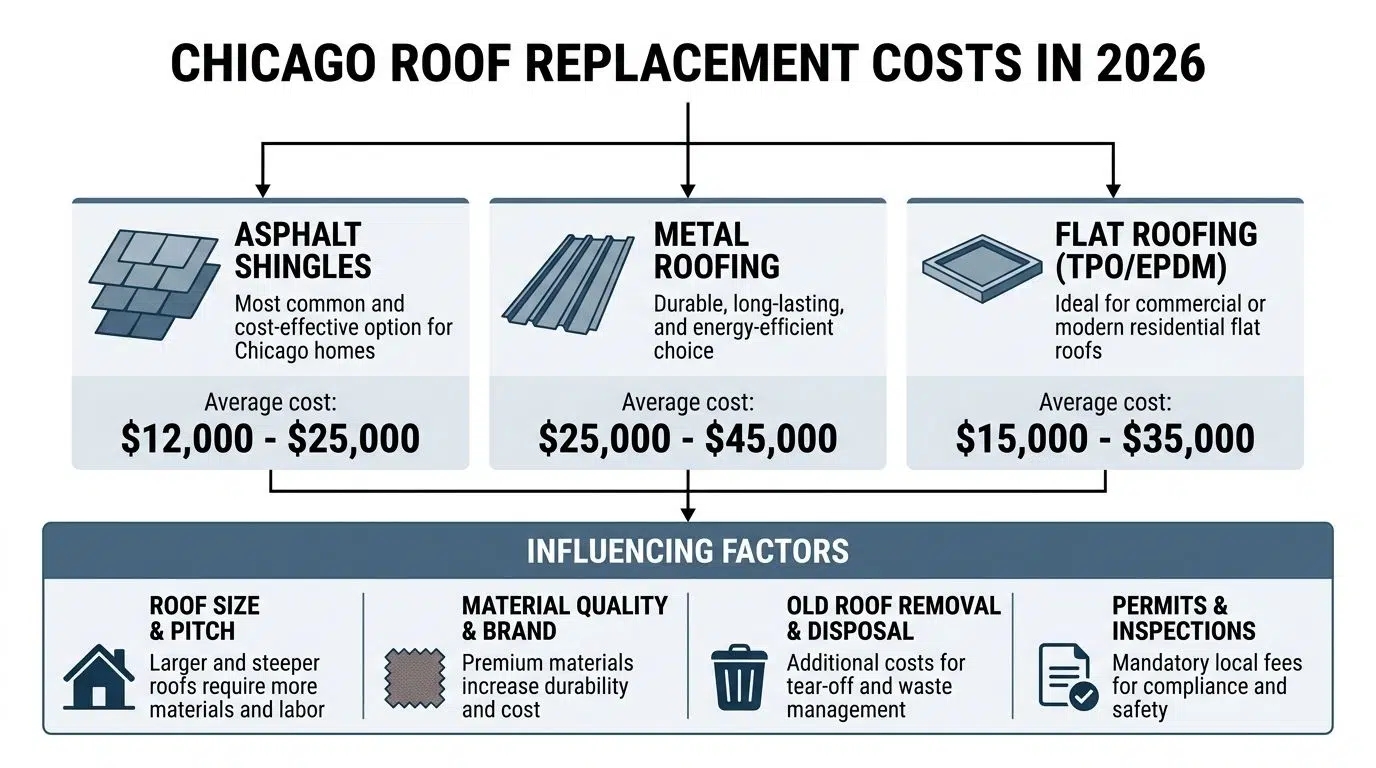
The direct answer is this. Projected 2026 roof replacement cost in Chicago averages about $18,923, with a typical range of $8,290 to $29,439, according to Chicago roof cost data compiled by HomeHero Roofing. The same source lists asphalt shingle roofs at $7,621 to $21,703, metal roofs at $24,202 to $46,723, and flat roofs at $5,893 to $13,309.
That’s the all-in view most homeowners want first. It also explains why one quote can be far from another without either one being wrong. Material choice, layout, and building type move the number fast.
What a roof quote is really paying for
A proper estimate includes a few major cost categories.
- Roofing material itself. Shingles, metal panels, membranes, underlayment, flashing, and accessories.
- Labor. Tear-off, installation, cleanup, and the extra time required by difficult access or roof geometry.
- Disposal. Old roofing has to be removed, loaded, hauled, and dumped.
- Permit and inspection handling. In Chicago, paperwork and compliance matter, especially on certain building types and locations.
The exact line items will vary by contractor, but those are the pillars behind almost every serious quote.
2026 Chicago roofing material cost and lifespan comparison
| Material Type | Estimated Cost per Sq. Ft. | Average Lifespan | Best For |
|---|---|---|---|
| Asphalt shingles | Moderate | A typical duration | Homeowners who want the most cost-effective option |
| Metal roofing | Higher | A long duration | Owners prioritizing durability and long service life |
| Flat roofing | Costs vary by system, with Chicago flat roof replacements averaging $5,893 to $13,309 | Not specified in the verified data for this row | Two-flats, commercial buildings, and low-slope sections |
Where homeowners usually make the wrong comparison
A cheap quote and a fair quote can look similar at a glance if you only focus on the bottom number. The better comparison is whether both quotes include the same scope. Tear-off, disposal, flashing details, deck repairs if needed, and ventilation work can all affect the final invoice.
That matters a lot on low-slope buildings. If you’re comparing membrane systems for a commercial or multi-unit property, this overview of commercial TPO roof cost in Chicago is useful because it frames the flat-roof side of the discussion more clearly than a steep-slope calculator will.
The roof material is only part of the investment. The assembly, the flashings, and the installation details decide whether the roof stays dry.
What Makes a Chicago Roof Estimate Go Up or Down
Two houses can have similar square footage and still produce very different bids. In Chicago, the primary reason is not the material. It’s the roof itself.
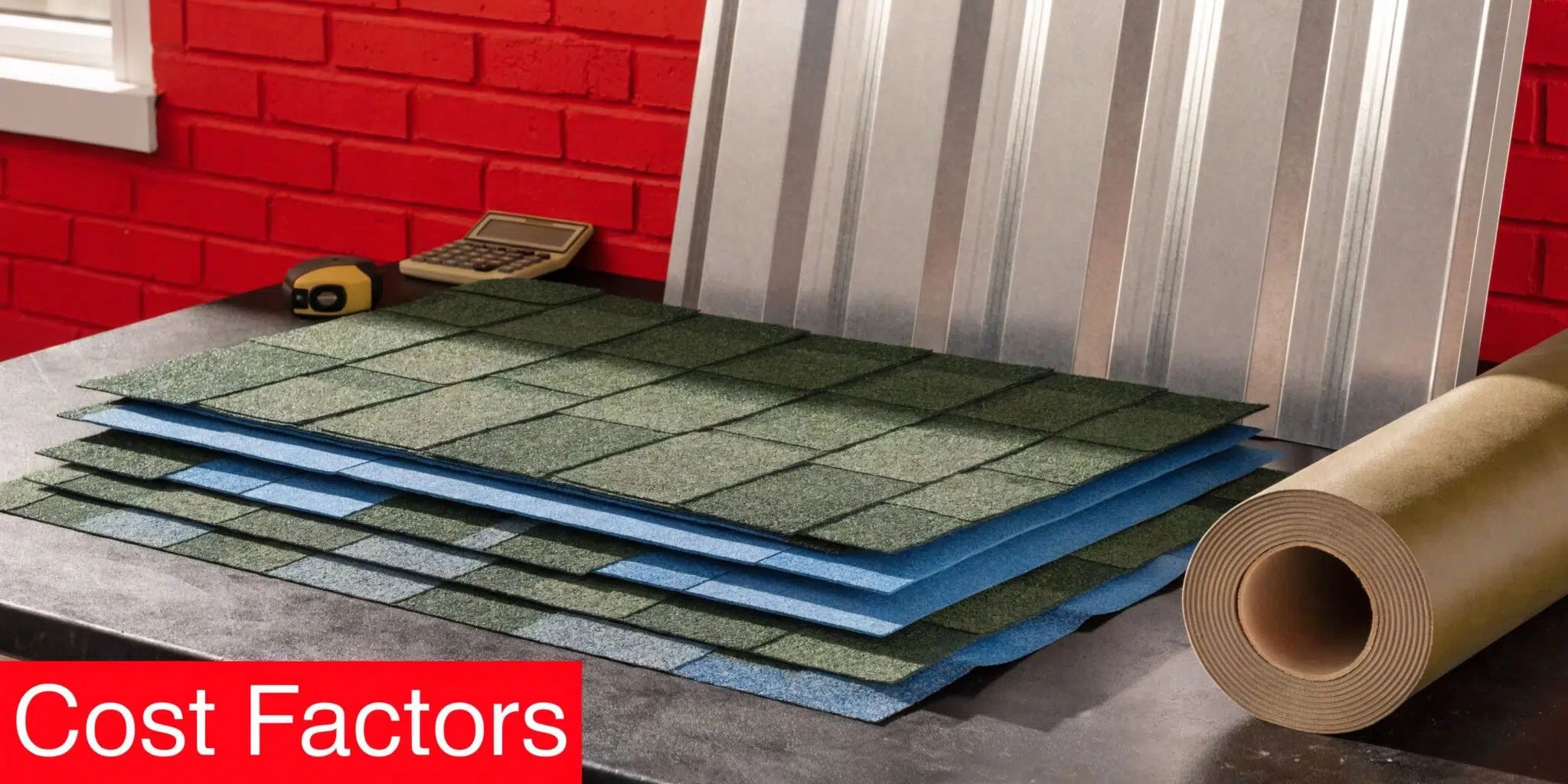
According to Economy Roofing’s Chicago roof cost guide, roof complexity can add a 25 percent to 50 percent premium. The same source says a simple gable roof might run $4.00 to $6.00 per square foot, while a more complex roof with valleys and steep pitches can rise to $6.00 to $8.50 per square foot.
Shape changes labor faster than homeowners expect
A simple roof is easier to tear off, easier to stage, and easier to waterproof. A complex roof creates more cuts, more waste, and more spots where water can enter if the crew misses a detail.
Think about the difference between these two roofs:
- Simple gable roof. Long straight runs. Fewer transitions. Faster production.
- Hip roof with valleys. More edges, more intersections, more custom flashing work.
- Dormers and additions. Every tie-in adds another place where installation quality matters.
On Chicago homes, valleys and wall intersections deserve special attention. Snow sits there longer. Water concentrates there. A shortcut in those spots usually doesn’t stay hidden for long.
Pitch, height, and access affect labor
Steeper roofs cost more because they take longer and require more safety setup. That’s not padding. It involves moving bundles, tools, and debris on a surface that crews can’t walk casually.
Multi-story homes, tight gangways, overhead wires, rear garages, and limited dumpster placement all add friction. A roof on a detached suburban home with open access is one thing. A roof on a city lot with narrow spacing is another.
Tear-off and hidden damage change the scope
Some roofs come off cleanly. Others reveal soft decking, deteriorated sheathing edges, or old repairs around penetrations that won’t support a clean new installation.
A contractor can price known conditions. Unknown deck damage becomes clearer only after tear-off. That’s one reason low bids can lead to hard conversations mid-project.
Flat roofs need a different mindset
Chicago has a lot of flat and low-slope roofs. They’re common on two-flats, mixed-use buildings, rear additions, and commercial properties. People sometimes assume flat roofs should cost less because they’re easier to stand on. That misses the waterproofing side of the job.
Seams, drains, parapet walls, curbs, and ponding areas decide whether a flat roof performs well. If you’re weighing systems, this explanation of what torch down roofing is helps clarify why some assemblies fit certain low-slope buildings better than others.
On older Chicago buildings, the roof estimate isn’t only about covering the top. It’s about how that roof ties into masonry, parapets, chimneys, and drainage.
Historic details and city realities
Chicago-specific estimating also means respecting the building itself. Historic homes and older neighborhood housing stock can limit what’s easy to replace, what must be preserved, and what requires extra labor to do neatly. Even when formal district requirements don’t change the material choice, they may change the pace and care the project demands.
That’s why a roofer’s-eye estimate matters. It reflects the roof you have, not the one a generic calculator assumes.
Sample Roof Replacement Scenarios From Around Chicago
The ranges make more sense when you attach them to real property types. Angi’s Chicago roof replacement page shows how wide size-based pricing can be, including $7,500 to $22,000 for a 1,500 square foot home and $15,000 to $45,000 for a 3,000 square foot home.
Portage Park bungalow with shingles
A classic brick bungalow around 1,500 square feet often lands in the range above, but where it falls inside that range depends on the details.
If the roof has a straightforward layout and the owner chooses asphalt shingles, the job tends to stay on the more manageable end of the local spectrum. If the house has added dormers, difficult chimney flashing, or old decking that needs replacement after tear-off, the number rises quickly.
This is the kind of project where homeowners do best with architectural shingles. They’re a practical middle ground for many Chicago houses. Not the cheapest material on paper, but a better fit than cutting all the way down to the most basic option.
Lincoln Park two-flat with a flat roof
A multi-unit city building is a different animal. The roof may be easy to access in one sense because the crew can move around on a flat surface, but the details are stricter.
Drainage has to work. Flashings at parapet walls have to be clean. Penetrations for vents and mechanicals have to be watertight. If there’s an occupied unit directly below, mistakes show up quickly and tenants will notice.
For a flat-roof building, the estimate isn’t just material plus labor. It’s membrane choice, insulation approach, edge detailing, and how the contractor handles the transitions that tend to fail first on older Chicago buildings.
Larger suburban home with a complex roofline
On a 3,000 square foot home, the wider range starts to make obvious sense. A large house with a simple layout and standard materials is one thing. A large house with hips, valleys, height changes, and steep sections is another.
Here, homeowners may experience sticker shock, not because the contractor is inflating the job, but because the roof has a lot of corners to turn. More cuts. More staging. More time. More flashing. More places where experience matters.
A big roof doesn’t become expensive only because it’s big. It becomes expensive when size combines with complexity.
The takeaway from all three scenarios is simple. House type matters. Roof type matters more. And in Chicago, the details around drainage, flashing, and access can decide whether a quote feels reasonable or confusing.
Protecting Your Investment With Warranties and Financing
A roof replacement isn’t finished when the crew cleans up. The true test starts later, after the first hard rain, the first snow cycle, and the first full season of expansion and contraction.
That’s why warranty language deserves more attention than most homeowners give it.
Material warranty and workmanship warranty are not the same
A manufacturer’s warranty covers the roofing product itself. That matters. If a shingle or membrane has a material defect, that protection can help.
A workmanship warranty covers how the roof was installed. In practice, this is a common protection homeowners lean on first, because many roof problems come from flashing details, fastening mistakes, poor transitions, or bad tie-ins rather than a defective bundle of material.
If a roof leaks around a chimney, curb, wall edge, or vent, the question is about installation.
What to ask before you sign
Ask the contractor these questions in plain language:
- Who backs the material warranty. Is it the manufacturer, and what are the conditions?
- Who backs the labor warranty. Is it the roofing company itself?
- What could void the coverage. Poor ventilation, unapproved alterations, and unrelated building movement can all affect claims.
- How service calls are handled. If something goes wrong, you want a clear process, not confusion.
A warranty only has value if the company that issued it is reachable and still operating. That’s one reason a long-standing local contractor matters more than a rock-bottom bid from a company you’ve never heard of.
Paying for the work without rushing the decision
Most homeowners fund roof replacement in one of a few familiar ways. Some pay from savings. Others use a home equity line, a personal loan, or financing offered through a contractor. Landlords and property managers may budget the work as part of broader building-envelope maintenance.
The key is not to let financing drive you into the wrong roof system. Match the roof to the building first. Then choose the payment path that fits your timeline and budget.
A roof is expensive. A failed roof is worse. The right combination is durable materials, careful installation, and written protection that makes sense when you read it line by line.
How to Get an Accurate On-Site Roof Estimate
Online calculators have their place. They’re fine for a rough ballpark. They are not enough to approve a contract.
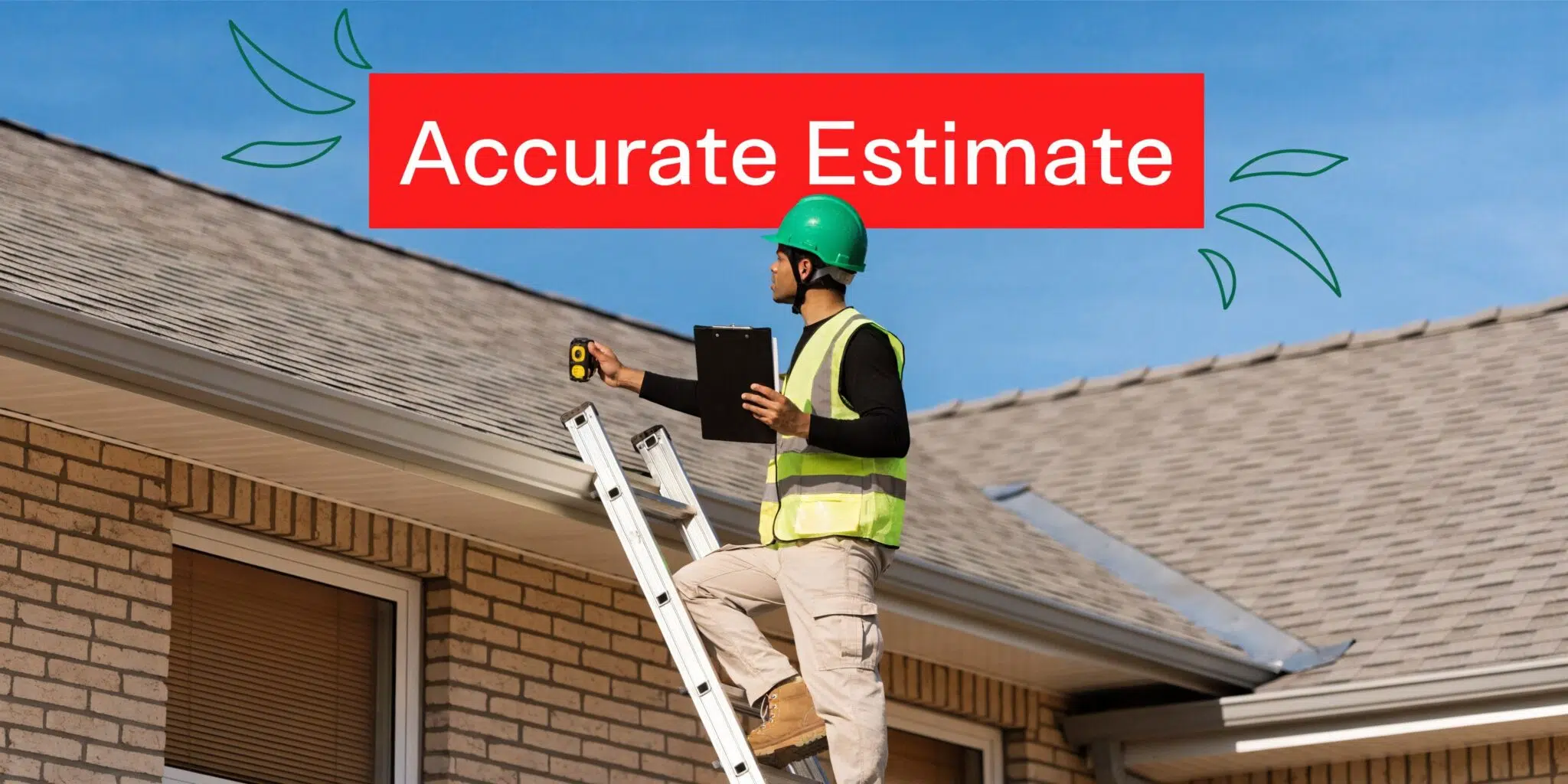
A serious roof estimate in Chicago has to be built from an on-site inspection. There’s no substitute for seeing the roof, the access, the drainage, the flashing points, and the condition under and around the visible surface.
What a proper inspection should include
A real estimate includes several checks, not just a glance from the driveway.
- Roof measurement. The contractor should verify the actual roof area, not guess from interior square footage.
- Surface condition review. Shingles, membrane seams, flashing, penetrations, edges, and drainage points all need inspection.
- Attic or interior check when relevant. Signs of moisture, ventilation problems, and staining can tell the full story.
- Assessment of tear-off conditions. Multiple layers, brittle material, and visible deck concerns affect scope.
- Access planning. Crew setup, material delivery, and debris removal can be simple or difficult depending on the site.
On flat roofs, a good estimator pays close attention to drains, parapet walls, ponding areas, and transitions. On steep-slope roofs, they focus on valleys, wall flashings, chimney details, and ventilation.
Red flags in a quote process
If someone gives you a firm number without seeing the roof, be careful.
If the proposal is vague, be careful.
If the estimate doesn’t spell out what gets removed, what gets replaced, and what happens if the decking is damaged, be careful.
A useful estimate is specific enough that you can compare scope, not just price.
What a homeowner should expect in writing
The written proposal should tell you what system is being installed, what tear-off is included, what cleanup is included, and what warranty coverage applies. It should also describe important accessory work such as flashing replacement or edge details when those items are part of the job.
Some contractors also offer digital measurement tools and online quote requests before the site visit. For example, Expert Super Seal Roofing & Tuckpointing provides roof measurement and quote-request options through its website, but the final number still needs the jobsite view to be reliable.
If you want to make smart comparisons, ask every contractor for the same level of detail. That’s how you spot whether one bid is lean because the company is efficient, or lean because key work has been left out.
Choosing a Licensed and Insured Chicago Roofer You Can Trust
By the time you’re ready to hire, the choice usually isn’t between a cheap roof and an expensive roof. It’s between a contractor who has accounted for the actual job and one who hasn’t.
The checklist that matters
Use a short list and stick to it.
- Licensed and insured. Ask for proof, not verbal reassurance.
- Local experience. Chicago roofing means dealing with flat roofs, bungalows, masonry transitions, and weather exposure that out-of-town outfits may underestimate.
- Clear written scope. You should know what’s included before materials arrive.
- Track record you can verify. Look for a company with an established presence in the neighborhoods it serves.
- Ability to handle your roof type. Steep-slope shingles, low-slope membranes, and mixed systems aren’t interchangeable specialties.
For homeowners comparing neighborhood contractors, a page like this one for a roofing contractor in Humboldt Park Chicago shows the kind of localized service footprint worth looking for when you want a company that understands city buildings.
The final decision should come down to confidence. Does the contractor understand your roof, explain the trade-offs clearly, and put the scope in writing without hand-waving? That’s what protects your property.
If you’re ready for a detailed answer on your own building, Expert Super Seal Roofing & Tuckpointing offers free, no-obligation roof estimates across Chicago and the surrounding suburbs. If you want a roofer’s-eye assessment instead of a generic calculator number, schedule an on-site inspection and get a written quote that reflects your roof’s actual condition, access, and material options.