Yes, you can sell a house with a 20-year-old roof in Chicago, but it is almost always a major point of negotiation. At that age, the roof is sitting right where buyers, inspectors, lenders, and insurers start asking how much life is really left, and the answer depends far more on condition than on age alone.
If you're getting ready to list and that roof keeps nagging at you, that's a normal place to be. A lot of Chicago sellers are in the same spot. The house may show well, the mechanicals may be solid, and the location may carry the value, but once a buyer hears “20-year-old roof,” the conversation changes fast.
In this city, generic advice misses the core issue. A roof on a Chicago bungalow or two-flat doesn't age in a mild climate. It ages through lake-effect snow, freeze-thaw swings, wind exposure, blocked gutters, ice damming along eaves, and years of patching around chimneys, porches, and dormers. That's why a roof can look passable from the sidewalk and still become the biggest issue in the deal.
Selling Your Chicago Home With an Older Roof
You don't need a brand-new roof to sell. You do need a plan.
A 20-year-old roof puts your home into a category where buyers assume one of three things. Either the roof is still serviceable and documented, it needs repair and a credit, or it needs full replacement soon. If you don't control that narrative before listing, the buyer's inspector will control it for you.
What sellers usually get wrong
The biggest mistake is treating roof age like a cosmetic problem. It isn't. Buyers don't just see shingles. They see future expense, insurance headaches, possible leaks, and a reason to negotiate hard.
Chicago buyers are especially alert to this because so much of the housing stock is older. Bungalows, Cape Cods, brick two-flats, and greystones often have complicated roof lines, older flashing details, masonry interfaces, and additions done in different eras. A roof with twenty winters on it may still be functioning, but buyers know they may be inheriting layered issues, not just worn shingles.
Practical rule: If your roof is old enough to raise questions, answer those questions before the house hits the market.
What actually helps
Start with a contractor inspection, not guesswork from the ground. Get clear on these points:
- Remaining useful life: Buyers want to know whether the roof has a little time left or whether replacement is next.
- Leak history: Even one prior leak around a chimney, valley, or vent can become a negotiation issue if it wasn't resolved correctly.
- Visible red flags: Missing shingles, soft spots, sagging areas, patchwork repairs, and heavy granule loss matter more than age by itself.
- Documentation: A written inspection report, repair invoice, or certification carries more weight than “we've never had a problem.”
If you're asking, “Can you sell a house with a 20 year old roof in Chicago?” the practical answer is yes, when you treat the roof like a transaction issue early instead of a surprise later.
Why the 20-Year Mark Matters in Chicago
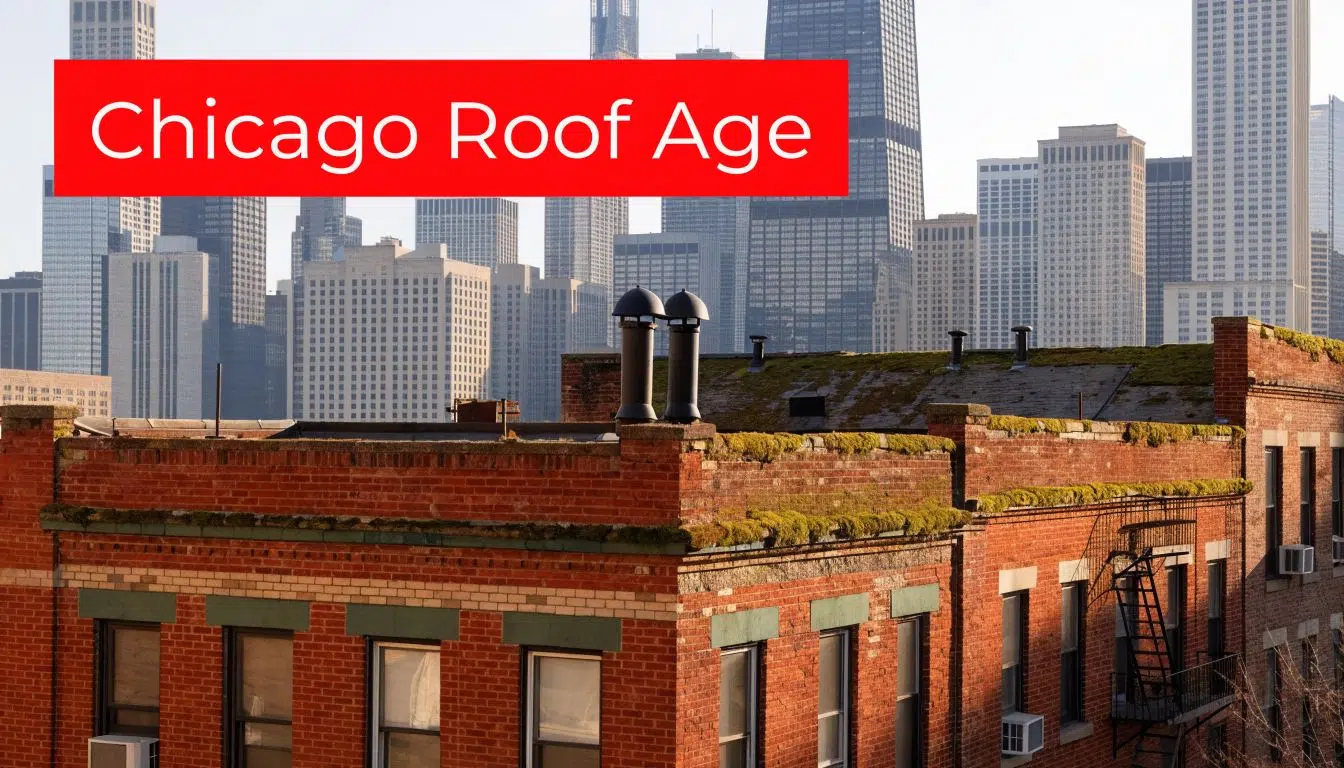
In Chicago, the 20-year mark isn't just a round number. It's where an asphalt shingle roof usually enters the risk zone. Local guidance notes that most asphalt shingle roofs in Illinois last about 20 to 25 years, and Chicago-specific guidance treats a 20-year-old roof as a high-risk age, not an automatic failure. That's the key distinction for sellers. Old doesn't always mean failed, but it does mean closely scrutinized by everyone involved in the sale, as explained in Illinois guidance on replacing a roof before selling.
Chicago weather is harder on shingles than sellers expect
A shingle roof here doesn't age in a straight line. It takes repeated stress.
Lake-effect snow and long winter stretches keep roof surfaces colder for longer. Ice damming at the eaves is common on older homes, especially bungalows with uneven attic insulation or limited ventilation. When meltwater backs up under the shingle edge, it doesn't need a dramatic opening to start causing trouble. It only needs a weak seal, brittle tab, or tired flashing joint.
Summer doesn't give the roof a break either. Heat bakes the shingle surface, then cool nights contract it again. Add strong wind events off the lake and around open exposures, and a roof that looked “fine last year” can start losing tabs, granules, and watertight integrity faster than the owner expected.
For a deeper look at local service life, this guide to the average lifespan of a roof in Chicago is a useful starting point.
What inspectors and buyers are looking for
The technical problem with aging asphalt shingles is simple. They lose granules, they lose flexibility, and they stop sealing as well as they did when new. That makes them more vulnerable around the exact areas Chicago roofs struggle with most:
- Chimneys and flashing lines: Common trouble spots on brick homes and older two-flats
- Valleys: Areas where snow and water concentrate
- Low-slope transitions: Especially on rear additions and porch tie-ins
- Eaves and overhangs: Where ice damming tends to show itself first
On many Chicago homes, the roof doesn't fail all at once. It fails at the details first.
That's why a 20-year-old roof can still be dry today and still worry a buyer tomorrow. On paper, the roof may be “still functioning.” In practice, buyers see a system that's nearing the point where small weak spots turn into active leaks.
Impact on Your Home's Saleability and Value
A 20-year-old roof affects more than curb appeal. It changes who will buy the house, how confidently they'll bid, and how much bargaining power they think they have.
In Chicago and other major housing markets, a 20-year-old roof is often near the point where buyers and inspectors treat it as a liability. That lines up with seller timing too. The average U.S. homeowner stays in a home for only 8 years, with a median tenure of 13.2 years, so many owners try to sell before a roof reaches this age threshold, according to Chicago roofing lifespan observations tied to homeowner tenure.
The buyer pool gets narrower
Turnkey buyers usually don't want to inherit a major roof decision right after closing. That matters in city neighborhoods where buyers are already budgeting for higher taxes, moving costs, and updates to kitchens, baths, or windows.
A roof that's visibly aged can push some buyers out before they even make an offer. Others stay in the game but come in cautious. They assume they'll be paying for replacement sooner rather than later, and they build that assumption into their numbers.
On Chicago bungalows and two-flats, this effect can be stronger because buyers know these homes often have more than one roofing-related issue tied together. The main roof may be one age, the rear porch another, the garage a third, and the chimney flashing older than all of them. A buyer doesn't separate those mentally. They bundle them into one future project.
Financing and insurance are often the real pressure point
The roof can also create problems beyond buyer opinion. If the roof is in poor condition, financing can get shaky. Lenders and insurers don't care whether the shingles merely “look old.” They care whether the house can be insured and whether the roof appears likely to fail during the loan term.
Here are the issues that commonly come up:
- Loan concerns: If an appraiser or inspector flags significant roof deterioration, the buyer's loan may stall until repairs are made.
- Insurance friction: Buyers may struggle to bind a policy on a house with an obviously aged or compromised roof.
- Inspection fallout: Once the report uses words like brittle, deteriorated, prior patching, or active seepage, the buyer gains the upper hand.
What that means for your price
Aging roofs usually show up in the deal one of three ways.
| Situation | What often happens |
|---|---|
| Roof is old but serviceable | Buyer asks for documentation, certification, or a modest concession |
| Roof has visible wear or prior repairs | Buyer pushes for credit or price reduction |
| Roof shows active problems | Buyer may ask for replacement, walk away, or run into financing trouble |
This is why sellers get frustrated. The house may still be absolutely sellable, but the roof becomes the easiest line item for a buyer to attack during negotiation.
Your Three Main Options Replace Repair or Sell As-Is
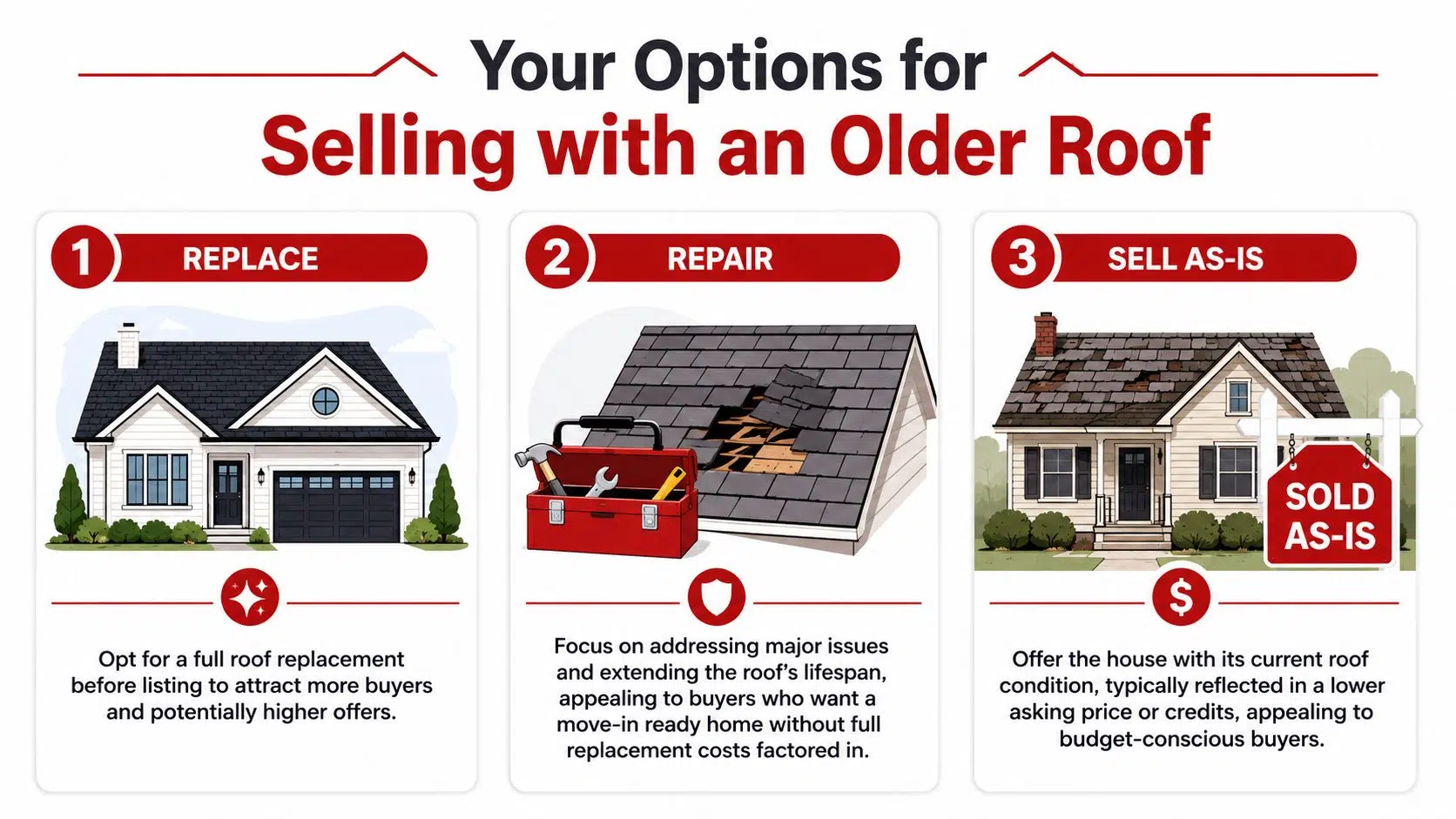
By the time a Chicago roof hits 20 years, the decision usually gets pretty simple. You either replace it, make focused repairs and document them well, or sell the house as-is and accept the pricing pressure that comes with that choice.
The right move depends on what kind of wear the roof has taken here. A roof on a Chicago bungalow that has dealt with years of ice damming along the front eave is a different case than a two-flat with one chronic leak around a rear addition tie-in. Age matters, but Chicago history matters more.
Option one is replacement
Replacement makes sense when the roof is plainly near the end. That includes widespread shingle wear, repeated leak history, soft decking, sagging lines, failing flashing at chimneys or walls, or visible signs that winter has been winning for years.
For many sellers, this is the cleanest path because it removes the biggest question before buyers ask it.
Pros
- Buyers see less risk
- The house shows better online and in person
- Lenders and insurers are less likely to raise concerns
- You cut down the chance of late-stage renegotiation
Cons
- You pay before you sell
- You rarely get every dollar back
- A new roof will not hide other deferred maintenance
In Chicago, replacement often pays off most on homes where roof wear is easy to spot from the street or easy to explain in a bad way during showings. Curled shingles, patched valleys, tired chimney flashing, and old ice-dam repairs tell a story buyers understand fast. If you need a pricing baseline, this Chicago roof replacement cost guide gives a realistic local frame for what that work can involve.
Option two is targeted repair plus documentation
This is often the best middle ground.
If the roof is old but still serviceable, focused repairs can calm buyer concerns without sinking money into a full replacement right before listing. That may mean replacing a damaged section, resealing flashing, correcting a vent issue, repairing storm-related shingle loss, or addressing one leak-prone area that has a clear cause.
This works especially well on older Chicago housing stock, where problems are often concentrated in predictable spots. On bungalows, I often see trouble around chimneys, front eaves, and low-slope transitions. On two-flats, dormers, parapet tie-ins, and rear porch or addition connections are common weak points.
The goal is not to make an old roof look new. The goal is to show that the roof has been examined, the known defects were handled, and the remaining condition is clear enough for a buyer to judge without assuming the worst.
Pros
- Lower upfront cost than replacement
- Can resolve the issues buyers notice first
- Gives you paperwork to support the roof's current condition
Cons
- Only works if the roof still has credible remaining life
- Poor patchwork can make buyers more suspicious
- You need a contractor who can separate isolated defects from full-system failure
Option three is selling as-is
Selling as-is fits owners who want speed, landlords unloading a worn building, or sellers who already know the house has several big-ticket items competing for attention.
It can still be the right call.
But in Chicago, buyers tend to assume a 20-year-old roof has seen hard winters, heavy snow load, freeze-thaw movement, and at least some ice-dam history unless you can show otherwise. On an as-is sale, they usually price in that risk aggressively, especially on older homes where the roofline is more complicated and hidden damage is harder to rule out.
Here is the practical trade-off:
| Option | Best when | Main trade-off |
|---|---|---|
| Replace | Roof is near the end or visibly hurting the listing | Highest upfront cost |
| Repair | Problems are limited and the roof still has usable life | Depends on good diagnosis and documentation |
| Sell as-is | Seller wants minimal investment or a faster exit | Lower offers and harder negotiation |
One practical note. If you're collecting proposals, firms such as Expert Super Seal Roofing & Tuckpointing can inspect, repair, replace, or document roof condition before listing. What matters is a clear scope tied to your roof's real condition.
Navigating the Inspection and Disclosure Process
Once the house is listed, the roof moves from your concern to everyone's concern. That means the home inspector, the buyer, the buyer's attorney, and sometimes the lender or insurer all start looking at the same issue from different angles.
A home inspection is not the same as a roofing inspection
A general home inspector gives a broad opinion. That's useful, but it isn't the same as a contractor evaluating flashing details, shingle condition, prior repair quality, vent penetrations, decking concerns, and likely remaining life.
On older Chicago homes, that difference matters. A general inspector may say the roof is old and recommend further review. A roofing contractor can say whether the actual issue is isolated flashing at the chimney, brittle shingles across the south slope, chronic ice-dam damage at the eaves, or a combination of all three.
If you're not sure what signs tend to trigger replacement conversations, these warning signs of needing a new roof are the ones sellers should understand before listing.
Disclose what you know
Illinois sellers should be careful here. You don't need to guess about conditions you don't know, but you do need to disclose known material problems truthfully. If you know the roof leaked, was patched, had ice-dam damage, or suffered storm loss, that isn't something to dance around.
A straightforward approach usually works best:
- State the roof age if known: Approximate is better than vague if records support it.
- Disclose known repairs: Buyers react better to documented repairs than to gaps in the story.
- Mention prior leaks truthfully: Especially if they affected ceilings, attic areas, or masonry.
- Provide records early: Invoices, photos, and inspection notes reduce suspicion.
Buyers can live with an old roof more easily than they can live with uncertainty.
Control the narrative before the buyer does
A pre-listing roof inspection puts you in control because it lets you decide your strategy before an inspection report lands in the buyer's hands. It also helps your agent price the house realistically and respond faster when questions come in.
If the roof is still serviceable, you can prove it. If repairs are needed, you can choose whether to do them. If replacement is unavoidable, you can decide whether to handle it now or sell with that fact built into the deal.
Winning Negotiation Strategies for an Older Roof

A Chicago roof deal usually gets tense after the buyer hears "20 years old" and starts pricing a full replacement in their head. On a bungalow or two-flat, that reaction gets stronger if the home has a history of ice damming, heavy snow load at the eaves, or patched flashing around a chimney. Sellers who do well in that moment stay focused on condition, records, and scope.
Age matters, but Chicago buyers are reacting to more than a number. They know what lake-effect snow, freeze-thaw cycles, and winter ice do to shingles, gutters, valleys, and roof edges. If the roof has held up well and the problem is limited, negotiate from that fact. If the roof has widespread wear, dried-out shingles, and repeated leak history, price that transparently and keep the deal clean.
A useful strategy is to stop arguing about "old" versus "good" and narrow the conversation to what the roof needs right now to keep the sale together. That keeps a buyer from turning one repair item into a full-roof demand.
Credit versus repairs
The better option depends on who needs what to close.
Offer a credit when:
- the roof is worn but still serviceable
- the buyer wants to pick their own roofer
- closing speed matters
- the lender and insurance carrier are still comfortable with the roof as it sits
Do the repair before closing when:
- the issue is isolated, such as flashing, a small leak area, or a trouble spot near a chimney
- the buyer's loan approval is tied to a specific correction
- a visible defect is making the whole roof look worse than it is
- you want to limit inflated estimates and keep control of the repair scope
In Chicago, I often see sellers save money by fixing the item that scares the buyer most. That might be active leakage around a masonry chimney, loose shingles on a wind-exposed slope, or evidence of past ice backup at the gutter line. A targeted repair with documentation can calm a deal faster than a large credit with no explanation.
Roof certification can steady the conversation
A roof certification can help when the roof is older but still has usable life. Buyers, lenders, and insurers want a professional opinion on remaining serviceability, especially on older Chicago homes where ventilation, attic moisture, and past ice dam issues can shorten roof life even when the shingles still look decent from the street.
Certification has limits. It will not fix active leaks, bad decking, soft spots, or systemic failure. But if the roof is weathered rather than failing, a written opinion from a qualified roofer gives everyone a firmer basis for the negotiation.
Negotiation advantage: Documentation carries more weight than opinion.
Keep the buyer focused on the actual scope
Some buyers will ask for the cost of a full replacement the minute their inspector calls the roof "near the end of its life." That is common in Chicago, especially after a tough winter. It is also where sellers give away money they did not need to give away.
Use a tighter process:
- Get a roofer's assessment with photos. Buyers respond better when they can see the condition of the shingles, flashing, penetrations, and roof edges.
- Separate weathering from failure. A 20-year-old roof may have limited remaining life without needing immediate replacement.
- Tie the concession to the defect. If one rear slope is brittle or a chimney flashing detail is failing, negotiate around that work, not the entire roof system.
- Choose the cleanest solution for the deal. That may be a repair, a closing credit, a certification, or a firm position if the roof is still financeable and documented.
That is how older-roof negotiations stay grounded in facts instead of fear.
Your Next Steps Getting a Professional Assessment
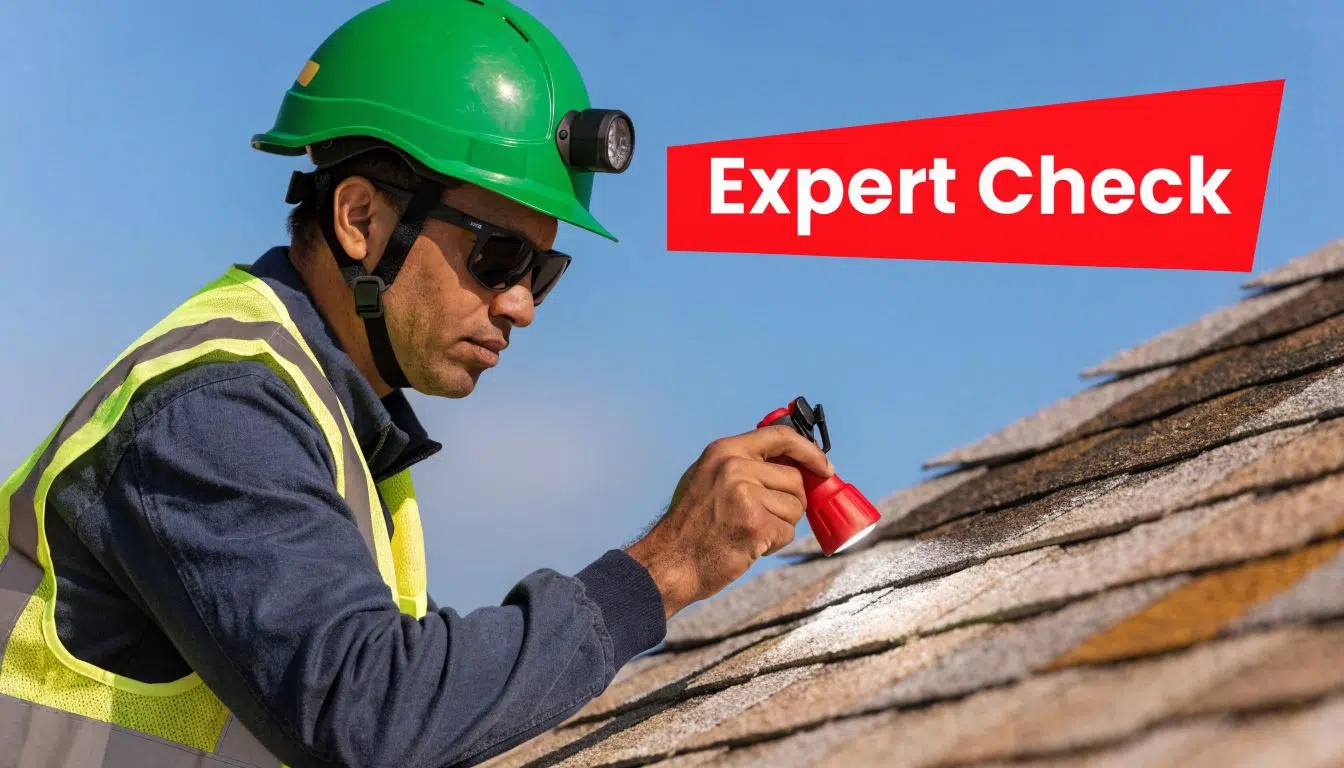
Before you list, get your own roofer on the house.
In Chicago, a 20-year-old roof can look passable from the sidewalk and still raise real concerns once someone checks the eaves, flashing, attic, and roof penetrations. I see this all the time on bungalows and two-flats. Years of lake-effect snow, freeze-thaw cycles, and old ice dam trouble leave a roof looking better than it performs. If you wait for the buyer's inspector to be the first one up there, you give up time and control.
Start with a seller's eye from the ground and inside the house. Look for wear that signals age or recurring winter stress:
- Shingle wear: Curling, cracking, missing tabs, or uneven color from granule loss
- Gutter evidence: Heavy granules, overflow staining, or marks at the eaves that suggest past ice damming
- Roofline problems: Dips, sags, or uneven planes, especially on older framing
- Masonry and flashing clues: Staining near the chimney, loose counterflashing, or patched sealant around penetrations
- Interior signs: Ceiling stains, attic moisture, musty insulation, or daylight where it should not be
That first look helps you spot red flags. It does not tell you how a buyer, inspector, insurer, or lender is likely to view the roof.
A proper assessment should answer the sale question, not just the roofing question. Sellers need to know whether the roof is still marketable with documentation, whether a limited repair will calm the deal down, or whether replacing it before listing will save money and stress later.
What to ask during the inspection
Ask for straight answers and written notes. Vague reassurance does not help at inspection time.
- How much useful life is left under Chicago conditions?
- Are the issues isolated to one area, or do they point to broader failure?
- Do the eaves, valleys, and attic show signs of past ice dam or ventilation problems?
- Would this roof likely raise lender or insurance concerns?
- Can the problem be repaired in a way a buyer will view as credible?
- Is roof-condition documentation or certification reasonable based on what is there now?
The best assessment gives you a clear plan. For a seller, that is the point. You need to know how the roof affects the deal, not just how it looks.
If you're preparing to sell in Chicago, Expert Super Seal Roofing & Tuckpointing can provide the inspection, repair scope, replacement proposal, or roof-condition documentation that helps sellers decide what to do next without guessing.
If you're trying to sell a Chicago home with a 20-year-old roof, the smartest first move is getting a clear professional assessment before the listing goes live. Expert Super Seal Roofing & Tuckpointing serves Chicagoland with roof inspections, repairs, replacements, and practical guidance for sellers who need to know whether to fix, certify, credit, or sell as-is.