
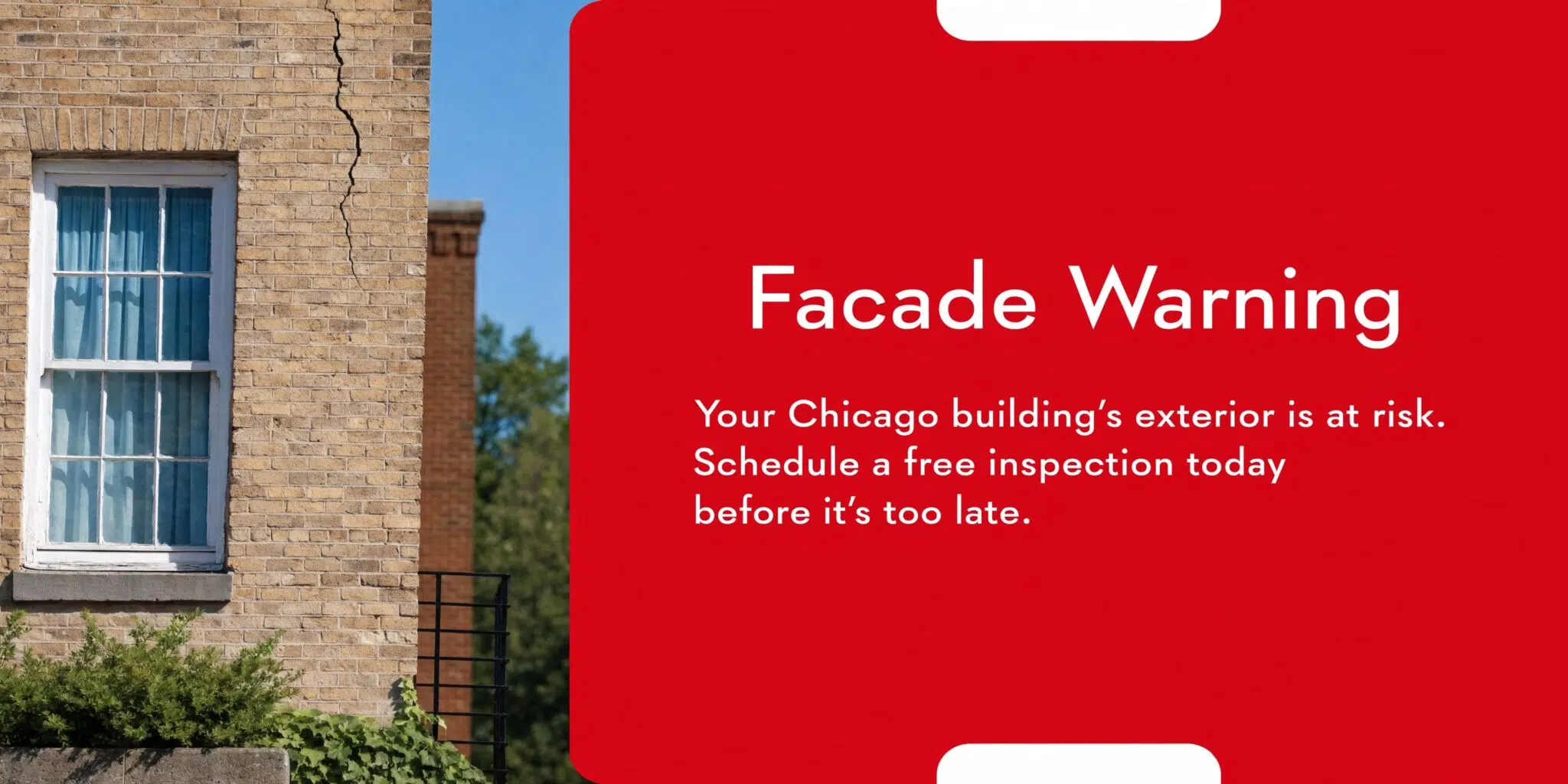
You notice it when the light hits the wall at an angle. A thin crack steps through the mortar above the window. Maybe the brick looks slightly pushed up in the middle. Maybe the window started sticking last winter, and you told yourself the house was just settling.
In Chicago, that’s often how lintel trouble starts. Small sign. Big implication.
If you’re researching lintel replacement cost in chicago, you’re probably trying to answer two questions at once. First, how much will this cost me right now? Second, can I wait a little longer?
The first answer is straightforward enough. The second is where property owners get hurt. Chicago’s weather punishes neglected masonry, and a lintel problem rarely stays confined to the steel over one opening for long.
That Ominous Crack Above Your Window and What It Means
A lintel is the steel support above a window or door opening. It carries the weight of the brick above that gap. When it starts failing, the wall tells on it.
The first sign is often the crack you can’t stop looking at. It might be a stair-step crack in the mortar joints. It might be brick separation at the corners of the opening. Sometimes the wall above the window looks slightly bowed, and sometimes rust staining starts showing through.
Why that crack matters
Think of the lintel as the silent workhorse inside the wall. You don’t see it during normal life. But it’s holding up a lot more than people realize.
When steel lintels rust, they expand. That expansion pushes against the masonry around them. Brick doesn’t like being pushed from the inside, so it cracks, lifts, and separates. What many owners call “just a little brick crack” is often the visible symptom of a steel problem buried behind the face of the wall.
What owners usually see first
On Chicago homes and small apartment buildings, the pattern is familiar:
- Over a window: A hairline stair-step crack starts in the mortar joint.
- At the corner: One brick looks slightly raised or out of plane.
- Inside the house: The window becomes harder to open or close.
- After rain or snow: Dampness starts showing up around the opening.
If you’ve already priced adjacent masonry work, a broader look at exterior brick repair cost in Chicago helps put the lintel issue in context, because the steel and the surrounding brick usually need to be evaluated together.
A crack over an opening is different from a random cosmetic crack in a field wall. Openings are stress points. When the support above them weakens, the wall often shows it there first.
Not every crack means full replacement
That’s the part people want to hear, and sometimes it’s true. A minor crack doesn’t automatically mean the lintel needs to come out that day. But if the steel is actively corroding, patching the mortar without addressing the lintel is usually money spent twice.
What works is a real inspection. That means checking the brick above the opening, the degree of rust, whether the steel has expanded enough to displace masonry, and whether water is getting behind the wall assembly.
What doesn’t work is smearing sealant over cracked joints and hoping the problem stops. If the steel is failing, the wall keeps moving.
Chicago Lintel Replacement Costs A Detailed 2026 Breakdown
Chicago pricing is higher than what many homeowners see in generic national articles, and that catches people off guard. Local conditions matter. Older brick buildings, stricter code expectations, and more complicated urban access all push costs upward.
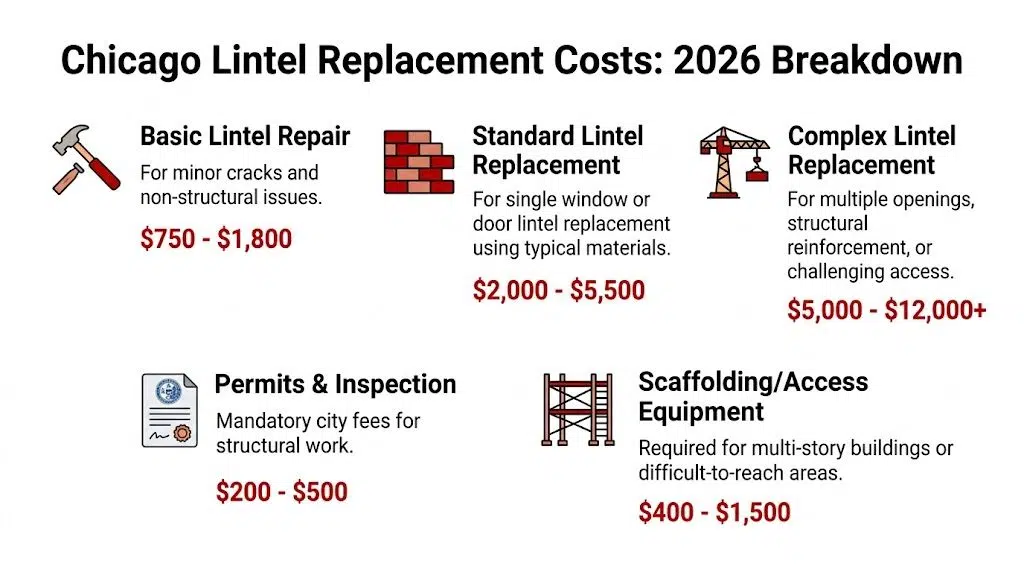
The baseline numbers are clear. Residential window lintel replacement in Chicago typically ranges from $800 to $2,500 per lintel, while door lintels or multi-unit replacements usually run $2,000 to $6,000 or more, and some commercial or ornamental jobs exceed $10,000, according to Krisbud Construction’s Chicago lintel replacement cost guide.
Typical price ranges by project type
Here’s the practical way to think about price.
| Project type | Typical Chicago cost |
|---|---|
| Standard residential window lintel | $800 to $2,500 per lintel |
| Door lintel or multi-unit replacement | $2,000 to $6,000 or more |
| Commercial or ornamental work | Can exceed $10,000 |
Those ranges come from the same Chicago market source above. They’re useful as budgeting numbers, not substitutes for an on-site inspection.
Why one window costs less than another
Two windows can look similar from the sidewalk and still price very differently.
A first-floor opening with clean access, limited brick disturbance, and straightforward steel replacement usually lands toward the lower end. A higher opening with deteriorated surrounding brick, a wider span, or more rebuilding around the bearing points moves toward the upper end.
A common pricing metric in Chicago is $200 to $600 per linear foot, based on complexity, according to the same Krisbud source. That helps explain why wider openings and heavier structural conditions cost more even before access equipment enters the picture.
Material and labor in plain terms
Property owners often ask whether the steel itself is what makes the project expensive. Usually, not by itself.
The same Chicago pricing guide notes that steel lintel materials alone often run $100 to $300 per piece, while labor can add $45 to $70 per hour, with brick masons generally at the higher end. In practice, you’re paying for careful demolition, shoring when needed, steel installation, masonry rebuilding, mortar matching, cleanup, and making the wall weather-resistant again.
Why Chicago costs more than generic national averages
Chicago is not a simple market for masonry work. The city has a huge inventory of older brick buildings, many from the early twentieth century. Those walls often hide corrosion, prior repairs, and moisture damage that you only uncover once work starts.
Krisbud’s Chicago guide states that local pricing is often 75 to 100 percent above national averages because of the city’s aging housing stock and stricter building codes. That tracks with what owners see in real estimates. The work usually requires more than swapping one piece of steel.
Time matters too
For planning purposes, the same source says standard residential projects typically take 1 to 2 days, while load-bearing or upper-floor installations can stretch to 3 to 4 days. That doesn’t always mean continuous disruption, but it does affect labor, staging, and scheduling.
Cost reality: Cheap bids on lintel work often leave out the masonry rebuilding needed to make the wall structurally sound and weather-tight again.
A better way to budget
If you’re trying to budget responsibly, think in layers:
- The opening itself: Window, door, or wider span.
- The condition around it: Intact brick versus displaced or cracked masonry.
- The building type: Single-family home, flat, mixed-use building, or storefront.
- The reach: Ground-level work versus upper-floor access.
- The finish expectations: Basic repair versus close mortar and brick integration.
That is the nature of lintel replacement cost in Chicago. It isn’t one price. It’s a structural repair with a masonry restoration component attached to it.
What Factors Influence Your Lintel Replacement Estimate
No honest contractor can price lintel work by photo alone. The estimate depends on what the wall is asking for, not just what the crack looks like from the sidewalk.

Access can change the job fast
Height is one of the biggest price drivers in Chicago. A first-floor rear elevation is one thing. A third-story front facade over a public sidewalk is another.
According to AO Handy’s lintel repair cost breakdown, work on buildings over 20 feet often requires swing stages that add $1,200 to $2,500 per setup, and the project may also need stamped engineering plans costing $500 to $1,000, which can increase the total by up to 40% before standard labor and materials are even counted.
That’s why two identical openings can produce very different estimates.
The opening size and structural demand
A small residential window usually needs less steel and less surrounding demolition than a door opening or a long span over multiple windows.
The bigger the gap, the more load the lintel has to carry. That affects the steel profile, the bearing requirements at each end, and how much masonry has to come apart so the new support can go in correctly.
For owners, the simplest rule is this:
- Shorter, lighter openings tend to be simpler.
- Wider spans tend to require heavier steel and more labor.
- Openings carrying more wall above them often demand more caution during replacement.
The condition of the surrounding brick
Such conditions cause estimates to move from simple to expensive.
If the steel has rusted enough to lift brick courses, the mason usually has to remove and rebuild more area above the opening. If the bed joints are loose, the shelf angle area is distorted, or the bricks are cracked from expansion, the surrounding wall becomes part of the repair.
That’s why “replace the lintel only” can be unrealistic. In many cases, the opening needs coordinated work:
- selective brick removal
- new steel installation
- resetting salvaged brick where possible
- replacing damaged units where necessary
- tuckpointing to tie the repair back into the wall
Material choice and fabrication
Not every lintel is the same shape or thickness. Some openings take a straightforward steel angle. Others need heavier members, custom lengths, or fabrication that fits unusual conditions.
On older Chicago buildings, dimensions don’t always follow modern assumptions. A field measurement matters because the replacement has to match the opening, the wall thickness, and the load path.
If a contractor gives a firm price without checking the steel size, the bearing ends, and the surrounding masonry, the number is probably built on guesswork.
Water management details
Owners often focus on the steel because that’s the named part of the job. The wall, however, fails again when water control gets ignored.
A good estimate should account for the details that keep the new steel from suffering the same fate. That can include flashing integration, weep paths, proper mortar repair, and sealing the rebuilt area in a way that fits the wall assembly. If those details are skipped, the opening may look repaired while moisture keeps feeding the corrosion cycle.
Site conditions and logistics
Some jobs are more expensive for reasons that have nothing to do with the lintel itself.
A quote may need to account for:
- Tight city access: Alley limitations, neighboring buildings, or no room for conventional scaffolding.
- Occupancy concerns: Work around tenants, storefront entrances, or active businesses.
- Protection measures: Sidewalk shielding, debris control, and safe staging.
- Matching requirements: Older brick and mortar can take more time to blend properly.
Why itemized estimates matter
A single lump-sum number doesn’t tell you much. A better estimate separates what you’re paying for.
Look for clear line items covering the steel, masonry removal and rebuilding, access equipment, permit-related requirements, debris handling, and finish work. That kind of quote tells you the contractor understands the job as a building-envelope repair, not just a metal swap.
Why Waiting to Fix Your Lintel Will Cost You More
Chicago winters are hard on masonry because water keeps finding a way in. Once moisture enters cracked joints around a failing lintel, the damage doesn’t pause politely until you’re ready to deal with it.
It gets worse through repeated freezing and thawing.

Chicago weather turns delay into a bigger repair
Homeowners often postpone lintel repairs priced at $200 to $600 per linear foot, not realizing that Chicago sees 40+ annual freeze-thaw cycles, and that a $460 replacement today can become a $2,000+ structural repair within 2 to 3 years of neglect, according to HomeAdvisor’s lintel replacement cost page referenced in the verified data.
That’s the part too many price guides miss. Delay isn’t neutral. In this climate, delay usually adds work.
What actually gets more expensive
A neglected lintel problem rarely stays limited to one line item. Water enters through cracked mortar and displaced brick. Freeze-thaw pressure widens those openings. Rusting steel keeps expanding behind the face of the wall.
The result is often a larger scope:
- More brick removal because the surrounding masonry has loosened
- Interior water issues around the opening
- More difficult rebuilding because the wall has moved farther out of plane
- Related repairs to adjacent facade components
The financial logic is simple
Owners sometimes see lintel work as optional because the wall hasn’t fallen and the window still functions. That’s understandable, but it’s the wrong way to price the risk.
You’re choosing between controlled repair now and a wider restoration later.
Small masonry problems become expensive structural problems when Chicago winter keeps feeding water into the wall.
What doesn’t work when a lintel is failing
Property owners often try the cheapest visible fix first. They fill the crack. They caulk the joint. They repaint an interior stain after a leak.
Those steps may hide symptoms for a season. They don’t stop steel corrosion behind the brick, and they don’t restore the support above the opening. Once the wall starts moving because the lintel is expanding or losing capacity, cosmetic fixes just buy time for the damage, not for the owner.
Why proactive work has better value
The best value in masonry isn’t the cheapest repair. It’s the repair that stops the problem at its actual source.
On lintel jobs, that usually means addressing the steel, rebuilding compromised masonry, and restoring water control before multiple winters widen the scope. If you wait until the wall bows more noticeably or leaks become regular, the invoice usually grows with it.
That’s why, in Chicago, lintel replacement is often less about today’s number and more about avoiding the much worse number that comes next.
Permits Timelines and Chicago Building Code Essentials
Owners often worry about the paperwork almost as much as the repair itself. That’s reasonable. In Chicago, lintel work can move from simple maintenance to regulated structural work depending on the opening, height, and scope.
When permits enter the picture
If the repair changes structural support, affects a visible facade area, or requires major access equipment, permit requirements often come into play. The same is true when engineering review is needed for the opening or the staging.
That’s one reason reputable contractors insist on seeing the site before quoting final logistics. The permit path depends on the actual building condition, not just the fact that a lintel exists over the window.
For broader envelope and structural masonry context, property owners often benefit from reviewing Chicago masonry restoration services, because lintel replacement commonly intersects with facade repair, rebuilding, and code-conscious restoration work.
How long the work usually takes
Timelines depend on the amount of masonry disturbance and how easy the opening is to access.
A straightforward opening can often be handled in a short window once scheduling, staging, and material coordination are settled. A more involved job takes longer because the crew has to remove brick carefully, support the surrounding area as needed, install the new steel, rebuild masonry, and allow the repair to progress in the right order.
Here’s the practical timeline lens owners should use:
| Project phase | What affects it |
|---|---|
| Inspection and scoping | Visibility of the steel, crack pattern, wall condition |
| Pre-job coordination | Access planning, occupant communication, permit review |
| Active repair | Demolition, steel install, masonry rebuilding |
| Closeout | Cleanup, final inspection, touch-up items |
Code compliance is not a luxury item
Chicago code and safety expectations can add cost and time, but they also prevent sloppy work.
Common code-related complications include sidewalk protection, engineered drawings, access rules for upper elevations, and facade safety considerations. On commercial buildings or mixed-use properties, these details become even more important because the public may be moving directly below the work area.
A contractor who treats permits and code requirements as optional is creating risk for the owner, not saving the owner money.
Why good planning saves frustration
The smoothest projects start with realistic expectations. Owners who understand that lintel work is part structural repair, part masonry restoration, and part logistics problem usually make better decisions and get cleaner results.
If your building has multiple failing openings, it’s often smarter to evaluate them together. That helps coordinate access, permits, and finish matching rather than treating each opening as a separate emergency.
Getting an Accurate Quote and Choosing the Right Contractor
A good quote should answer more than “what’s the price.” It should show what the contractor saw, what they plan to do, and what assumptions they’re making about your wall.
If the estimate is vague, the job usually gets vague too.
What should be in the estimate
A professional lintel quote should break out the main components of the work so you can see what you’re buying.
Look for these items:
- Scope of demolition: How much brick comes out, and whether surrounding loose masonry is included.
- Steel replacement details: The type of lintel being installed and whether fabrication is part of the price.
- Masonry rebuilding: Resetting brick, replacement brick if needed, and mortar integration.
- Access and protection: Scaffolding, staging, sidewalk protection, or lift-related logistics if applicable.
- Administrative items: Permit handling, engineering coordination if required, and cleanup.
- Completion details: How the repaired opening will be tied back into the surrounding wall.
If a quote doesn’t say what happens after the steel goes in, ask. That’s where a lot of bad work hides.
Questions that separate real masonry contractors from patch crews
Don’t ask only “How much?” Ask how they’ll execute.
Try questions like these:
How will you determine how much surrounding brick needs to come out?
A serious contractor should talk about visible cracking, displacement, looseness, and what they expect to uncover once the first courses are removed.How will you protect the wall while the old lintel is out?
You want to hear a clear sequence, not improvisation.What happens if the bearing ends are compromised?
That answer reveals whether they understand load transfer or are just planning a swap.How do you handle mortar matching and integration with the existing wall?
On older Chicago buildings, appearance matters, but performance matters more.What is your cleanup and debris plan?
Especially important for occupied buildings and storefronts.
If you’re comparing estimates with other facade repairs, it also helps to understand related Chicago tuckpointing prices, since lintel replacement and localized repointing often appear together in the same proposal.
One technical question worth asking every bidder
Ask this exactly:
After you install the new lintel, what is your detailed process for integrating it with the existing structure, including flashing, weep systems, and ensuring a perfect mortar match to protect against future water intrusion?
That question does two things. It tests whether the contractor thinks beyond steel, and it forces them to explain water management. A weak answer usually sounds like “we’ll seal it up.” A strong answer sounds like a sequence.
Warning signs in a low bid
Some bids look attractive because they exclude the expensive parts no one sees from the street.
Be cautious if the estimate:
- Skips structural language: No mention of support, bearing, or opening conditions.
- Omits masonry restoration: As if the steel can be changed without rebuilding the wall around it.
- Ignores water control: No discussion of flashing or moisture path.
- Doesn’t address access: Especially suspicious on upper-floor work.
- Promises certainty too early: Firm price before a proper site inspection.
The best quote is specific, not just cheap
Owners often feel pressure to move fast once they notice cracking. That’s fair. But the right move is still a documented site evaluation and a detailed estimate, not a rushed handshake price.
A good contractor should leave you understanding the problem better than before they arrived.
Protect Your Property with Expert Lintel Replacement
A failing lintel is not just an ugly crack over a window. It’s a warning that the wall support above an opening may be deteriorating, and in Chicago, that problem rarely improves on its own.
The right way to think about lintel work is simple. You are protecting structural support, keeping water out of the wall, and avoiding a wider masonry repair later. That’s why the cheapest short-term fix often becomes the most expensive choice over time.
Owners who act early usually keep the project smaller and more controlled. Owners who wait often end up paying for the lintel, the surrounding brick damage, and the moisture-related problems that followed.
If your building has stair-step cracks, lifted brick over a window or door, rust staining, or recurring leaks around an opening, get the wall inspected by a qualified Chicago masonry contractor. Ask for a detailed scope. Ask how the steel will be integrated with the surrounding masonry. Ask how they’ll keep the repair from becoming next decade’s problem.
That’s the standard the job deserves.
Expert Super Seal Roofing & Tuckpointing has served Chicagoland since 1972 with licensed, bonded, and insured roofing and masonry work for homes, multi-unit buildings, commercial properties, and industrial facilities. If you need a clear evaluation of lintel failure, a detailed quote, and repair work done right the first time, contact Expert Super Seal Roofing & Tuckpointing for a free estimate. Their team answers calls 24/7/365 and handles lintel replacement, tuckpointing, brick repair, parapet work, waterproofing, and full building-envelope restoration across Chicago and the suburbs.