
Late winter is when a lot of Chicago owners first notice it. A stair-step crack near a window. Mortar crumbs on the front walk. A rusty line above the lintel that wasn’t there in the fall. It’s easy to tell yourself it can wait until next season.
That’s how small masonry problems turn into expensive ones.
In Chicago, brick and stone don’t just age. They get worked over by freezing temperatures, repeated moisture, wind, and long wet stretches that keep walls from drying out the way they should. By the time damage is obvious from the sidewalk, water has often been getting in for a while. What looks cosmetic usually isn’t.
Families who’ve maintained Chicago buildings for generations learn the same lesson early. Brickwork is part finish, part structure, and part weather barrier. If one of those jobs fails, the others don’t stay intact for long.
Protecting Your Chicago Property Starts with Its Bricks
A Chicago owner usually calls after the wall has already started talking. The signs are familiar. A corner crack after winter. Brick faces popping near the parapet. Damp staining below a window that was not there in the fall. Those are not isolated cosmetic issues. They are early signs that the wall is losing its ability to shed water and protect the structure behind it.
In this city, masonry is not just exterior finish. It is part of the building envelope, part of the support system around openings and parapets, and the first line of defense against freeze-thaw cycles, wind-driven rain, and long periods of moisture that do not let walls dry properly.
That matters financially.
A small joint failure can let in enough water to rust a lintel, loosen surrounding brick, stain interior finishes, and turn a limited repair into a larger rebuild. On larger buildings, delayed repairs can also raise code and inspection exposure, especially when façade conditions become visible from the public way. In Chicago, masonry work often starts as maintenance and ends up as risk control.
Owners who protect their buildings well usually focus on three things first:
- Water management: Open mortar joints, failed sealant, cracked coping, and porous masonry give water a path into the wall.
- Load-bearing trouble spots: Lintels, sills, parapets, chimneys, and areas around windows and doors tend to fail first because they collect water and carry concentrated stress.
- Timing: Early repairs are usually narrower in scope, easier to match, and less expensive than work done after brick, stone, or embedded steel have started to break down.
That is the practical standard. Find the entry point. Fix the cause. Repair the materials that were damaged along the way.
For a bungalow, that may mean repointing before spalling spreads across a whole elevation. For a six-flat, it may mean correcting coping or shelf-angle leakage before bricks begin to move. For a commercial property, it can mean addressing façade defects before they turn into a much larger capital project. The goal is the same in every case. Keep water out, keep structural elements sound, and protect the value of the building in a climate that punishes neglect.
Decoding Distress Signals Seven Signs Your Masonry Needs Repair
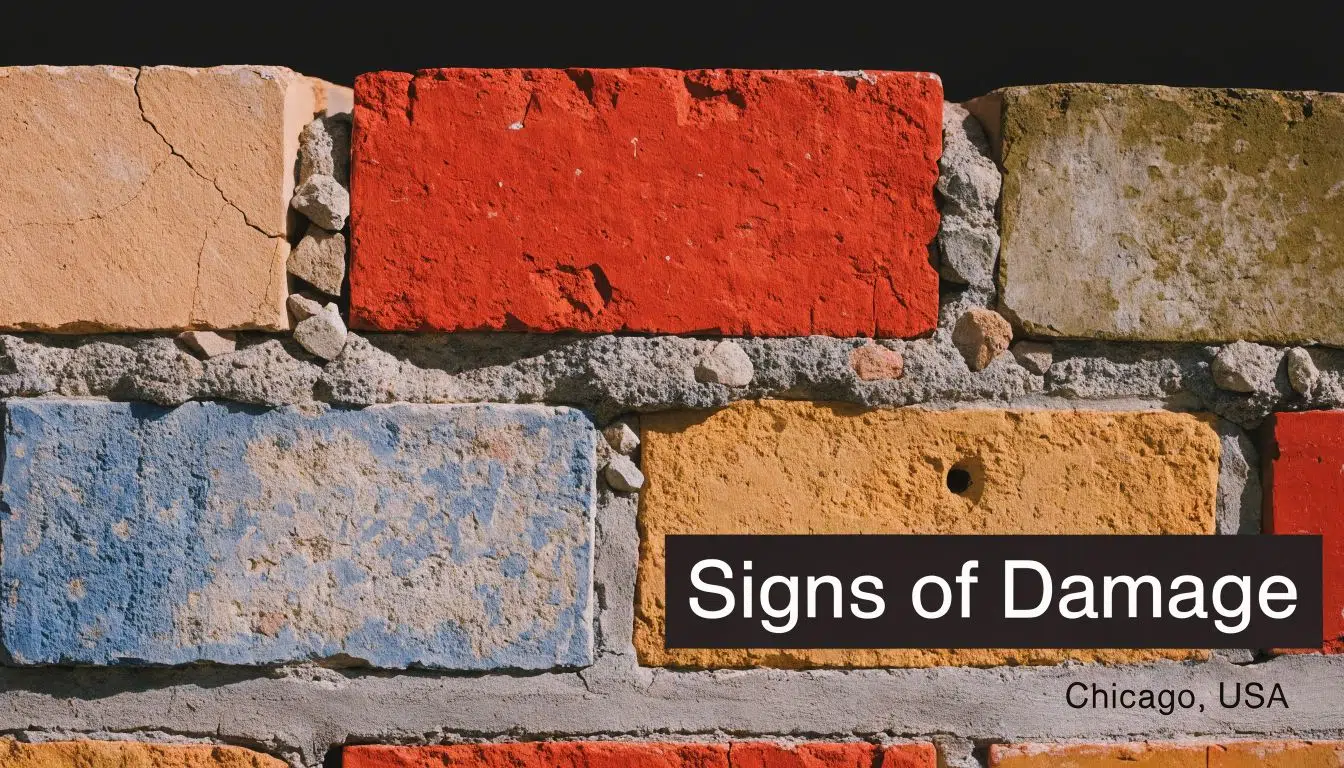
Masonry problems act a lot like health symptoms. One sign by itself might look minor. A few signs together tell you the building needs a proper diagnosis. If you own or manage property in Chicago, these are the signals worth taking seriously.
Stair-step cracks
These usually show up in mortar joints, often near windows, doors, corners, or areas where the wall is under stress. They follow the pattern of the brick rather than cutting straight through it.
That pattern often points to movement, moisture trouble, or stress around an opening. One crack doesn’t always mean immediate structural danger, but it does mean the wall shouldn’t be ignored. If the crack widens, reappears after patching, or shows up with interior staining, the problem is active.
Spalling or flaking brick
Spalling is when the face of the brick starts popping off, peeling, or breaking apart. In Chicago, owners usually notice it first on parapets, chimneys, window sills, exposed side walls, and upper elevations that take the worst weather.
This is what freeze-thaw damage looks like in the field. Moisture enters the brick, temperatures drop, and the surface begins to fail. Once the outer face is gone, the rest of the unit deteriorates faster.
White staining called efflorescence
Efflorescence is the chalky white deposit you sometimes see on brick or mortar. It isn’t the main problem. It’s evidence that water is moving through the wall, carrying salts to the surface.
That’s why washing it off without solving the moisture source never lasts. If you see recurring white residue, the important question is where water is entering and why the wall isn’t drying properly.
White staining is a moisture message. Treat it like a clue, not a cosmetic nuisance.
Bulging or bowing walls
A wall that looks swollen, out of plane, or pushed outward needs immediate attention. Owners sometimes notice this by standing at the sidewalk and looking up the face of the building, especially on older brick structures.
Bulging can signal trapped moisture, failing anchors, deteriorated internal support, or long-term structural movement. This isn’t a watch-and-wait issue. It calls for a contractor or design professional to inspect the area before pieces loosen or detach.
Crumbling mortar joints
If you can scrape mortar out with a key, see gaps between the units, or find loose mortar granules at the base of the wall, the joints are failing. Mortar is sacrificial by design. It’s supposed to weather before the brick does. But once it reaches that point, the wall becomes much more vulnerable to water infiltration.
Look closely at horizontal bed joints and vertical head joints. South and west exposures, chimneys, parapets, and walls near rooflines often show the worst wear first.
Rusted lintels
Lintels are the steel supports above windows, doors, and some larger openings. When they rust, the steel expands. That movement can crack surrounding mortar, push bricks upward, and create a telltale horizontal crack or rust stain.
This is one of the most commonly overlooked masonry issues in Chicago. Owners focus on the cracked brick above the opening, but the underlying problem is often the steel buried behind it.
Water stains and interior leakage
Masonry failure doesn’t always announce itself outside first. Sometimes the first sign is peeling paint near a window head, bubbling plaster, damp drywall, or staining on an interior wall after wind-driven rain.
That doesn’t automatically mean the roof is at fault. Water often enters through failed mortar joints, coping stones, parapets, or brick around openings and then travels before showing up indoors.
What to do when you spot more than one sign
If you’re seeing several of these at once, don’t ask whether the wall needs attention. Ask how far the deterioration has gone.
Use this quick field check before you call for estimates:
- Walk the full perimeter: Don’t stop at the front elevation. Side and rear walls often reveal the bigger issue.
- Check around openings: Windows, doors, and garage openings concentrate movement and water entry.
- Look high, not just low: Chimneys, parapets, and upper courses usually fail before eye-level areas.
- Take photos after storms or thaw cycles: Fresh staining and new cracking are easier to compare over time.
A good inspection starts the right conversation. Instead of telling a contractor, “I think I need tuckpointing,” you can say, “I’m seeing open joints, rust above two windows, and flaking brick on the parapet.” That usually leads to a better repair plan.
A Guide to Common Masonry Repair Services in Chicago
A Chicago owner gets a proposal that says tuckpointing, lintel replacement, parapet rebuild, waterproofing. On paper, those can look like interchangeable line items. In the field, they solve very different problems, and choosing the wrong one can leave the actual failure in place while the wall keeps taking on water through another winter.
That distinction matters in this city. Freeze-thaw cycles, lake-effect moisture, and code pressure on aging facades turn small masonry defects into expensive structural repairs if the scope is wrong.
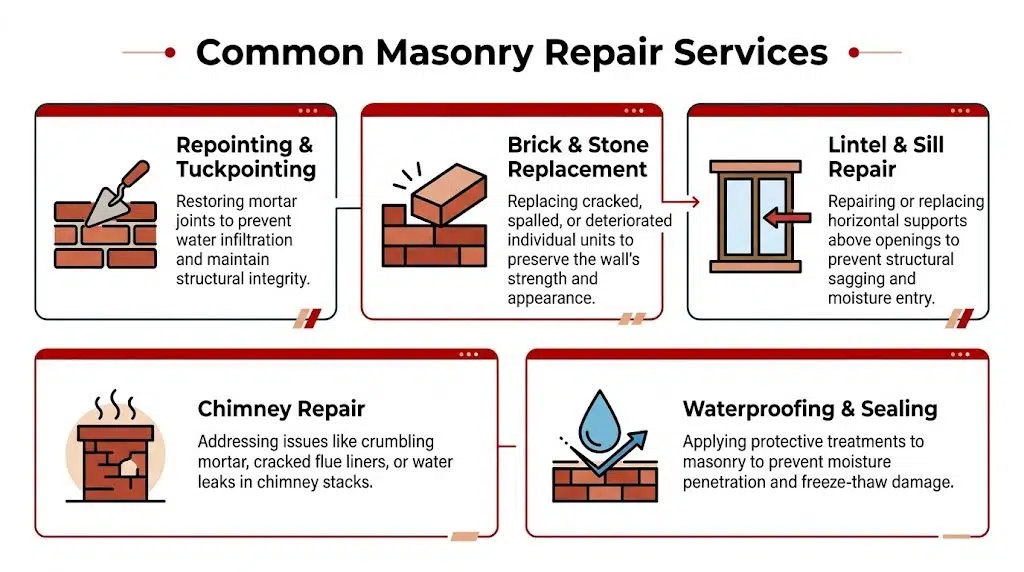
Tuckpointing and repointing
Owners use these terms loosely, but the work itself is straightforward. Deteriorated mortar is cut out to the proper depth, new mortar is installed, and the joints are restored so the wall can shed water again.
Good tuckpointing protects more than appearance. It restores joint strength, reduces water entry, and helps prevent surrounding brick from loosening as the mortar continues to fail. On older Chicago buildings, mortar selection also matters. If the replacement mortar is too hard for the brick, the wall can start sacrificing brick faces instead of joints during freeze-thaw movement.
A proposal should spell out the removal depth, mortar type, areas included, and whether brick replacement is part of the price or billed separately. Owners comparing bids often miss those differences and end up comparing numbers that do not cover the same work. If you want a clearer sense of scope and pricing before you sign anything, this Chicago tuckpointing price guide breaks down the main cost drivers.
Chimney repair
Chimneys wear out fast in Chicago because they sit above the roofline with exposure on all four sides. They take direct rain, snow, wind, and repeated freezing, and they often deteriorate long before the rest of the wall system.
Some chimneys need joint repair and crown work. Others need partial rebuilding or a full rebuild from the roofline up because the upper brick has lost too much strength to hold. The trade-off is cost now versus cost later. A limited repair can make sense when the damage is isolated. If the stack is soft, leaning, or losing brick faces across multiple courses, rebuilding is usually the better investment.
This is one area where waiting gets expensive fast. Once water starts entering through the chimney, the repair scope can spread to flashing, roof decking, ceilings, and interior finishes.
Lintel replacement
Lintels are steel supports over windows and doors. In Chicago masonry, they fail often enough that every crack above an opening should be taken seriously until proven otherwise.
Steel rusts as moisture reaches it. Rust expands, and that expansion pushes the brick above the opening upward and outward. The visible result is familiar. Stepped cracking, separated joints, displaced brick, and sometimes loose masonry at exactly the spot where the wall is carrying a concentrated load.
A proper lintel repair usually means shoring the masonry, removing brick in the affected area, replacing or treating the steel where appropriate, adding flashing or weeps if the opening lacks drainage, and rebuilding the brickwork. Surface patching over the crack costs less up front, but it does not stop active steel corrosion behind the facade.
Parapet wall repair
Parapets are one of the costliest trouble spots on Chicago buildings because they sit exposed at the top of the wall and collect water from both weather and roof conditions. Once the coping, cap, top joints, or upper courses start failing, leaks and falling masonry are close behind.
Repair can range from localized repointing to rebuilding the parapet above the roofline. The right scope depends on what is failing. Open joints and isolated brick damage call for one repair. A parapet that is bowing, separating, or moving at the roof connection needs a broader fix that addresses stability, anchorage, and water control together.
For many multifamily and mixed-use properties, parapet work is not just maintenance. It is risk control. In Chicago, neglected high-level masonry can become a life-safety issue and trigger code-related headaches that cost far more than timely repair.
Waterproofing and sealing
Water repellents have a place, but only after the wall is repaired. They do not replace joint repair, brick replacement, parapet work, or lintel correction.
The goal is to reduce water absorption while still letting the wall dry. Breathable products can help with that. The wrong product, or the right product applied to the wrong wall, can trap moisture and speed up spalling during winter. That is why sealing should follow diagnosis and repair, not substitute for them.
Which service solves which problem
The quickest way to sort the terms is to match the service to the failure:
| Service | Main problem it solves |
|---|---|
| Tuckpointing | Failed mortar joints and water entry through open joints |
| Chimney repair | Roofline deterioration, crown failure, loose brick, and water entry from an exposed stack |
| Lintel replacement | Rusting steel over openings and cracking brick above windows and doors |
| Parapet repair | Top-of-wall failure, leaks, loose masonry, and facade safety concerns |
| Waterproofing | Reduced surface absorption after masonry defects are properly repaired |
Some contractors handle only one part of this work. Others, including Expert Super Seal’s Chicago masonry restoration service, perform multiple repair types on the same building envelope. What matters is a scope that matches the actual failure, protects the wall through Chicago winters, and reduces the chance that a repair issue turns into a larger structural or code problem later.
How Professional Masonry Repairs Are Performed
A good masonry project follows a sequence. A bad one skips steps, rushes prep, and hides weak workmanship under fresh mortar. If you want repairs that hold up in Chicago, the process matters as much as the materials.
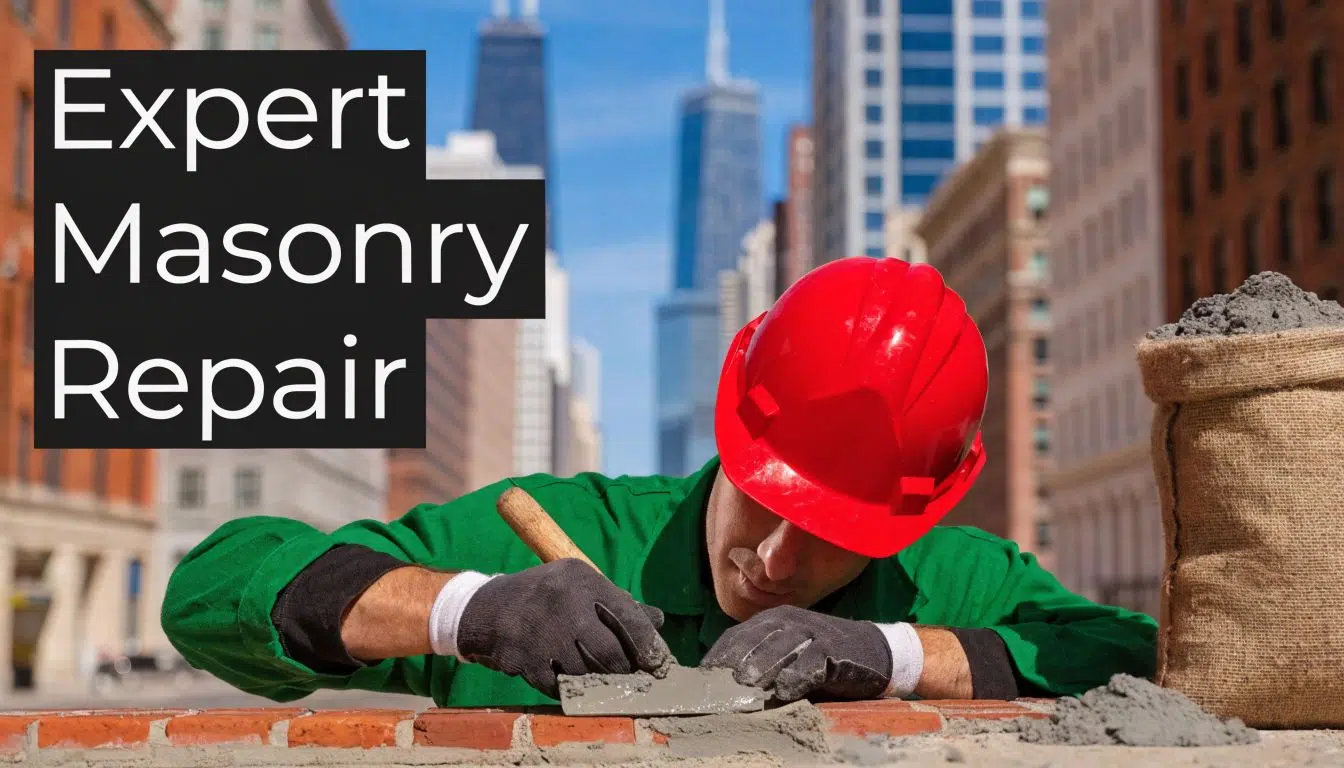
Inspection and scope definition
The first stage is close inspection. Not a glance from the driveway. The contractor should identify where joints have failed, where brick replacement is needed, whether steel is rusting behind the facade, and how water is moving through the assembly.
For larger or more complicated properties, that may also mean reviewing prior repairs, checking multiple elevations, and looking at transitions around roofs, windows, coping, and parapets. Good scopes are specific. They identify locations, quantities, access needs, and what’s included if hidden damage appears once the wall is opened.
Site setup and protection
Professional crews spend real time on setup because masonry work creates dust, debris, and access risks. That means scaffolding or lifts, ground protection, protection for adjacent windows and landscaping, and safe staging for materials.
This part often gets undervalued by owners comparing bids. But when a company cuts corners on access and protection, the actual repair work usually suffers too. A crew working off unstable ladders and rushing cleanup isn’t set up for precise joint work.
Well-run jobs look organized before the first joint is cut open.
Removal of failed material
Quality separates fast patching from lasting repair. For tuckpointing, deteriorated mortar has to be removed to the proper depth, not just scratched on the surface so new mortar can be pressed into the face.
Professional guidelines require specific depth-to-width relationships. For example, a 1/2-inch joint must be cut to a minimum depth of 1-1/4 inches, and failure to meet that standard can lead to premature failure within 5-10 years, according to these masonry preservation repointing specifications.
That same guidance also matters for method. In stonework, vertical head joints must be removed by hand tools rather than rotary saws to avoid damaging masonry edges. And if removal damages units, those units should be replaced with matching material.
Repair, rebuilding, and replacement
Once weak material is out, the actual repair begins. Mortar should be compatible with the existing masonry, matched in profile and appearance where needed, and installed in a way that allows proper bonding and curing.
Depending on the scope, this phase may include:
- Joint repointing: New mortar is packed and tooled after proper removal.
- Brick or stone replacement: Damaged units are cut out and replaced to match the existing wall.
- Lintel work: Masonry above openings is temporarily supported while steel and surrounding brick are repaired.
- Parapet or chimney rebuilding: Loose or failed sections are rebuilt rather than disguised.
This is also where experienced crews make practical decisions that owners don’t always see in a proposal. Sometimes the wall says a partial repair will hold. Sometimes the wall clearly says a patch will fail and more area needs to be opened.
Cleanup, curing, and final review
The end of the project should not look rushed. Mortar needs proper curing conditions. The site should be cleaned without damaging fresh work. Debris should be removed fully, not left scattered along foundations, roofs, or landscaping.
Then comes the final walkthrough. The contractor should review completed areas, note any replaced units or expanded repairs, and explain what was done so the owner has a clear record for future maintenance.
What substandard work usually looks like
Cheap masonry work has a pattern. You’ll often see one or more of these signs:
- Shallow grinding: New mortar sits near the face and breaks loose early.
- Mortar smeared on brick: Fast, messy work instead of clean joints and proper tooling.
- Poor color or texture match: The repair stands out because no effort was made to match the building.
- Skipped underlying repairs: Cracked brick is patched while the failed lintel or parapet remains.
That’s why the lowest quote can become the most expensive one. A proper repair costs more than a quick patch because it removes enough failed material to solve the problem.
Chicago-Specific Challenges Weather Codes and Costs
A common Chicago call goes like this: the wall looked fine last winter, and now there is brick flaking onto the gangway, mortar on the window sill, and a leak showing up inside the top-floor bedroom. That is how masonry problems often surface here. Chicago weather turns small openings into structural and financial problems fast.
Why Chicago masonry fails faster
This city is hard on brick. Walls take wind-driven rain, long wet periods, freeze-thaw cycling, and moisture that hangs around longer near the lake. Water gets into open joints, hairline cracks, failed coping seams, and the top of parapet walls. Once it freezes, it expands inside the wall assembly and starts breaking bond.
The result is familiar to any contractor who has worked here for years. Face brick starts to scale. Mortar opens up. Lintels rust and expand. Parapets move. What looked like a minor maintenance item in fall can become a safety issue by spring.
Older Chicago buildings carry more risk because the wall system has usually been patched more than once. Different mortars, isolated brick replacement, old steel, and trapped moisture rarely age evenly. One weak area usually means nearby sections are close behind.
Owners are not just maintaining appearance. They are controlling water entry, structural movement, and liability.
Chicago codes change the cost of waiting
On taller buildings, exterior masonry problems can trigger more than repair bills. They can trigger compliance issues under the city’s facade inspection rules. Chicago façade inspection requirements for buildings over 80 feet matter because once a defect is documented, delaying work gets harder to justify from a safety and ownership standpoint.
That changes the math.
A deferred repair on a high-rise or mid-rise can lead to emergency protection, sidewalk closures, scaffold costs, consultant fees, and phased restoration instead of a planned repair program. Even smaller buildings that are not subject to the same inspection cycle still pay for delay through leaks, damaged interiors, rusted steel, and repeated patchwork.
In Chicago, waiting rarely saves money. It usually shifts the bill into a larger category.
What owners should expect on pricing
Masonry pricing here depends less on a simple square-foot number than many owners expect. Access, traffic control, staging, material matching, wall height, and hidden deterioration all push costs around. A one-story garage wall is one thing. A street-facing parapet on a multi-unit building with limited access is another.
For a practical local reference, this Chicago exterior brick repair cost guide gives owners a starting point for understanding how repair scope affects budget.
The bigger point is straightforward. Early tuckpointing, isolated brick replacement, or a localized parapet repair usually stays in the maintenance range. Once water reaches embedded steel or starts moving behind the face brick, the job often expands into demolition, rebuilding, and longer scaffold time.
Historic buildings raise the stakes further. Matching old brick, lime-based mortar, stone details, and original profiles takes more labor and more judgment. Done right, that work costs more up front. Done wrong, it traps moisture or creates a visible patchwork that lowers the building’s value and often has to be redone.
The three Chicago cost drivers owners miss
Some repair budgets rise for obvious reasons. Others rise because the underlying problem is hidden until the wall is opened. In this city, these are the cost drivers that surprise owners most often:
- Access and protection: Busy sidewalks, tight gangways, roof protection, scaffold setup, and material handling add real labor.
- Water behind the facade: Open joints may be the visible symptom, while rusted lintels, failed backup masonry, or deteriorated shelf angles are the actual repair.
- Code and safety exposure: Once loose masonry or instability is documented, temporary protection and faster scheduling may become necessary.
That is why the cheapest proposal can be the most expensive outcome. If the contractor prices only what is visible from the ground, the final cost often changes once the wall is opened.
The real investment decision
The practical question is not whether a wall can limp through one more winter. The question is what that extra winter is likely to damage.
In Chicago, freeze-thaw cycles do not leave problems standing still. A failed joint can become loose brick. A small leak can turn into rusted steel, damaged plaster, stained interiors, and a larger facade repair that draws in code concerns. Masonry repair here protects the building twice. It stops structural decline, and it prevents a manageable maintenance job from becoming a capital project.
How to Choose a Qualified Chicago Masonry Contractor
A Chicago owner usually calls a mason after the wall has already made the decision for them. Mortar is falling onto a porch roof. A parapet starts opening up above the sidewalk. Water shows up inside after a hard lakefront rain. At that point, hiring the wrong contractor is not a small mistake. It can turn a repair job into a code problem, a second mobilization, or a much larger facade project after another winter.
Choosing well starts with one question. Does the contractor understand how Chicago buildings fail, or are they just selling brickwork by the square foot?

Start with the basics
A qualified contractor should be able to provide proof of licensing where required, insurance, and bond coverage. Ask for the certificate, not a verbal answer. Masonry crews work off scaffolds, around roofs and windows, and over walkways. If something goes wrong, the paperwork matters fast.
Then look at how they inspect the building.
A serious contractor does not price everything from the sidewalk and call it done. In Chicago, the visible crack is often the cheap part. The expensive part is the rusted lintel behind the brick, the loose coping, the failed flashing, or the parapet that has been taking water for years. If the contractor does not ask where leaks show up, how old the wall is, whether prior patching has been done, or whether the property falls under facade inspection requirements, that is a warning sign.
Look for Chicago-specific experience
Local experience is not a slogan. It shows up in the way a contractor talks about your building.
Chicago masonry has patterns. Older flats and bungalows often need careful mortar matching and selective brick replacement so the repair does not stand out. Corner buildings and taller facades take more weather and often show failure first at parapets, chimney tops, and window heads. Mixed-use and commercial properties add access limits, tenant coordination, sidewalk protection, and permit timing.
Ask to see projects similar to yours and ask what went wrong on those jobs. Good contractors have real answers. They will explain where hidden damage showed up, how the scope changed, and what they did to keep the repair aligned with the building instead of overcutting and rebuilding more than necessary.
Read the proposal like a repair plan
The proposal should read like a field document, not a sales sheet. If the scope is vague, the price is vague too.
Look for details such as:
- Exact repair locations, such as the north parapet, rear chimney, or west elevation window heads
- How failed mortar will be removed and how new joints will be matched
- Whether damaged brick, coping, flashing, lintels, or sealant are included or excluded
- Access setup, protection for roofs and windows, and debris handling
- What happens if the wall is opened and hidden deterioration is found
One line that says "tuckpoint as needed" is not enough in this city. It leaves too much room for shallow grinding, poor mortar matching, and change orders after the scaffold is up.
Ask questions that expose shortcuts
Owners do not need to speak like masons. They do need to ask direct questions.
| Question | Why it matters |
|---|---|
| How deep will you remove failed mortar? | Shallow grinding leaves weak material in place and shortens the life of the repair |
| How will you match mortar hardness and joint profile? | Mortar that is too hard can damage older brick during freeze-thaw cycles |
| If you find rusted steel or loose backup masonry, how do you handle it? | This shows whether the contractor is prepared for common Chicago wall failures |
| Who supervises the crew each day? | Sales promises mean little if the field supervision is weak |
| Will you put exclusions, unit pricing, and warranty terms in writing? | Clear paperwork reduces disputes after hidden conditions are found |
The answers should be plain and specific. Evasive answers usually mean the contractor either lacks experience or wants room to cut scope later.
Price matters. Scope matters more.
Low bids often leave out the parts of the job that keep the wall from failing again. That can mean limited mortar removal, no allowance for brick replacement, weak protection, or no plan for steel and flashing issues. On paper, those proposals look efficient. In the field, they usually become expensive.
For owners comparing repair scopes, it helps to review the range of work included in Chicago masonry restoration services. The point is not to buy every service. The point is to see whether your proposal addresses the full failure, not just the surface symptom.
The right contractor for masonry repair chicago work identifies the actual cause of the deterioration, explains the trade-offs, documents the scope, and performs the work safely. In Chicago, that protects more than the brick. It protects the budget, the schedule, and the building from the next winter.
If you’re seeing cracked mortar, spalling brick, rusted lintels, chimney deterioration, or parapet movement, Expert Super Seal Roofing & Tuckpointing can inspect the problem and provide a clear scope for repair. The company has served Chicagoland since 1972 and handles tuckpointing, chimney work, lintel repair, parapet repair, brick replacement, and waterproofing for residential, commercial, and industrial properties.