A lot of Chicago owners first start asking what is modified bitumen roofing after they see the same warning sign. A brown ceiling stain shows up after a snowmelt. The top-floor hallway smells damp after a hard rain. A tenant says water is coming in near the parapet wall, not the middle of the roof.
That is how flat-roof problems usually work here. They do not always fail in a dramatic way. They leak at seams, flashings, drain areas, and wall transitions after months of freezing, thawing, standing water, wind, and rooftop traffic.
Chicago is hard on low-slope roofs. Lake-effect snow sits. Summer heat bakes dark surfaces. Winter cold shrinks materials. Spring and fall keep roofs wet. If the roof system is too brittle, too thin, or poorly tied into the masonry around it, the building pays for it.
Modified bitumen has been a workhorse in this market for good reason. It is durable, repairable, and well suited to flat and low-slope roofs when it is specified and installed correctly. It also gives owners something they need: a roof that can take abuse without turning every minor issue into a full replacement job.
Your Guide to a Stronger Chicago Flat Roof
If you own a bungalow with a rear addition, a six-flat, a warehouse, or a commercial strip building, you already know the flat-roof problem is never the roof field alone. Water finds edges. It backs up at drains. It gets into coping joints, parapet caps, and cracked masonry. Then it shows up inside where it should not.
That is why roof selection in Chicago has to be practical, not trendy. You need a system that handles movement, resists punctures, and can be repaired without tearing apart half the roof.
Why modified bitumen keeps coming up
Modified bitumen is not new. It is a proven flat-roof system with a long track record on buildings that take weather seriously. It has also become a major part of the market. U.S. polymer modified bitumen membrane systems hold 19% of new construction projects and 22% of reroofing markets according to Dataintelo’s modified bitumen roofing market report.
That matters because market share on its own is not the point. The point is what contractors and owners keep choosing after years of seeing what fails and what holds.
What Chicago owners need from a flat roof
A roof here has to do a few things well.
- Handle expansion and contraction without splitting when temperatures swing.
- Resist standing water better than lightweight systems that get damaged easily.
- Take foot traffic from service crews, snow removal, and maintenance work.
- Work with masonry details at parapets, chimneys, and wall flashings.
A flat roof in Chicago is only as reliable as its weakest edge detail. The membrane matters. The wall transitions matter just as much.
Modified bitumen checks those boxes when the roof assembly is built correctly and maintained with the rest of the building envelope in mind.
What Exactly Is Modified Bitumen Roofing
Step onto a Chicago flat roof in late February. Snow has melted during the day, water has worked into every weak seam and wall transition, and the overnight drop has turned that moisture back into ice. That is the kind of cycle a roof system has to survive here.
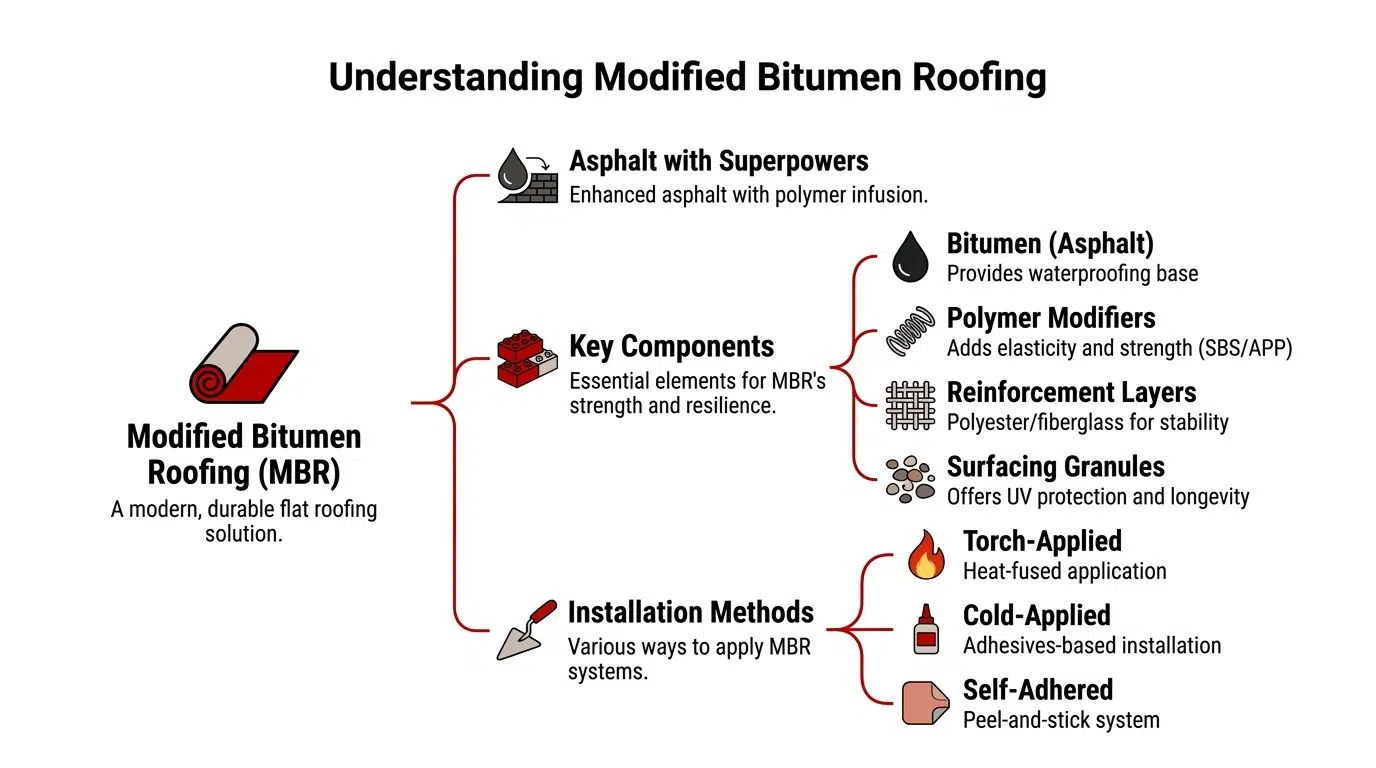
Modified bitumen is an asphalt-based membrane made for that kind of work. Manufacturers blend asphalt with polymers, then reinforce it so the finished sheet has more stretch, better tear resistance, and better weathering than old built-up asphalt alone. On low-slope roofs, that extra flexibility matters because the roof is always moving a little. The deck shifts. The temperature swings. The parapet walls move on their own schedule.
The parts that make up the system
Modified bitumen is often installed as a layered assembly, not a single exposed sheet doing every job at once.
A typical system includes:
- Base sheet. The lower layer that attaches to the substrate and gives the roof a stable foundation.
- Cap sheet. The upper weathering layer that takes sun, rain, snow, and foot traffic.
- Reinforcement. Often polyester or fiberglass, used to improve strength, dimensional stability, and puncture resistance.
- Protective surface. Granules, coatings, or other finishes that help shield the membrane from UV exposure and surface wear.
That layered construction is one reason this system keeps showing up on Chicago apartment buildings, commercial properties, and mixed-use roofs. If the surface gets scuffed by service crews or nicked during snow removal, the waterproofing is not hanging on one thin membrane alone.
The other part owners miss is that the roof membrane is only part of the assembly. On many Chicago buildings, modified bitumen ties into parapet walls, coping edges, chimney flashings, and masonry terminations. If the tuckpointing is shot or the parapet cap is letting water in, the roof can still leak even when the field membrane is in decent shape. We see that all the time on older brick buildings. The roof and the masonry have to be maintained as one water-control system.
Modified bitumen also gives contractors options when the roof is less than perfect. It can work on new construction, full tear-offs, and some recover projects, depending on the deck condition and the existing assembly. That makes it practical for Chicago buildings where drainage is not ideal, rooftop traffic is common, and edge details do a lot of the hard work.
In plain terms, modified bitumen is a reinforced asphalt roof system built for low-slope buildings that need durability, repairability, and better tolerance for movement and ponding than older asphalt systems. In Chicago, SBS-modified systems often get the most attention because they hold up better to freeze-thaw stress, but the membrane still has to be paired with sound flashing work and solid masonry at the perimeter.
Understanding the Two Main Types SBS vs APP
A Chicago roof goes through a rough cycle. January cold tightens the membrane. A thaw lets water sit. Then another hard freeze tests every seam, flashing line, and tie-in at the parapet. That is why the SBS versus APP choice matters here more than it does in milder climates.
SBS for movement and cold
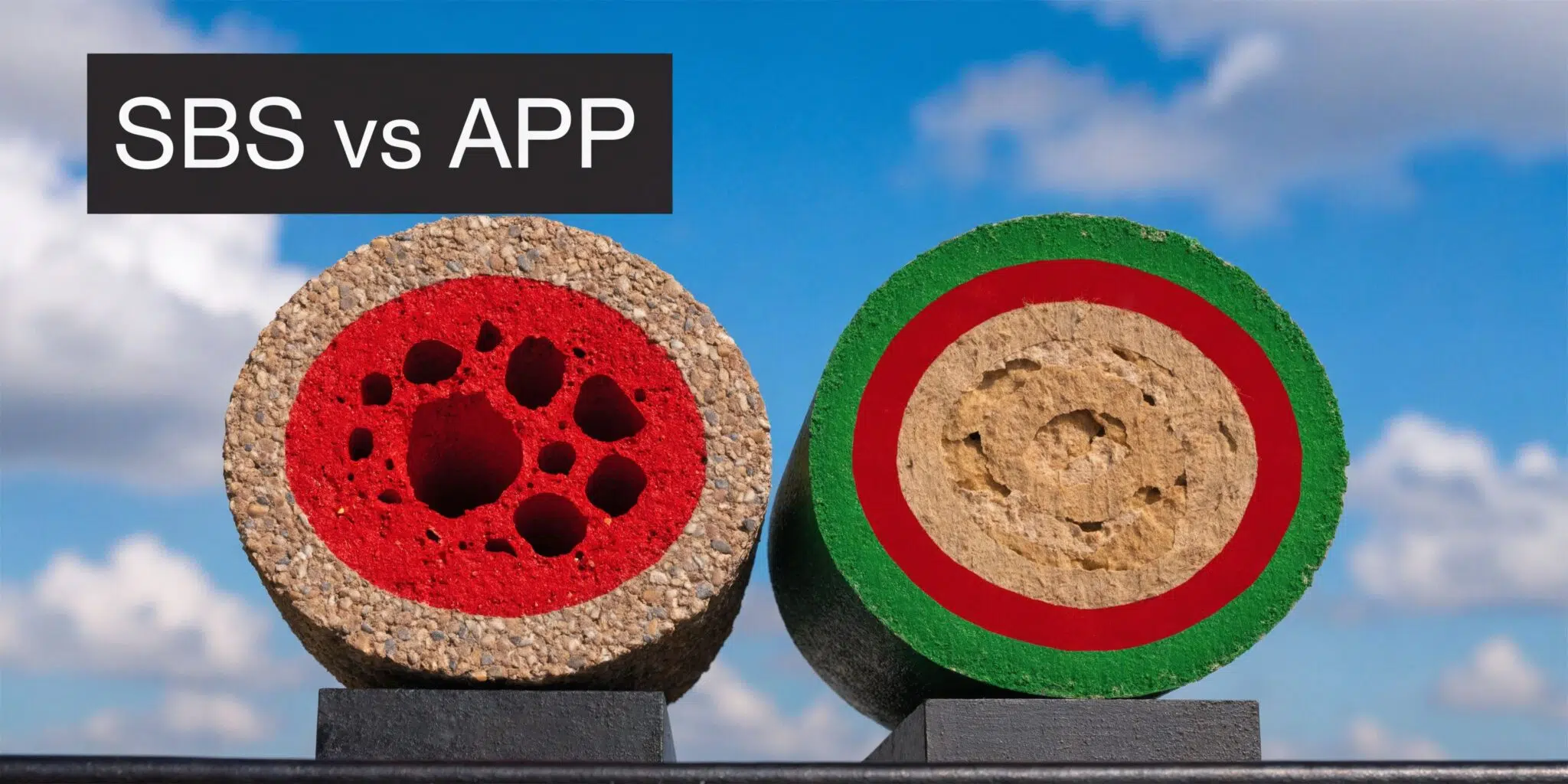
SBS is rubber-modified asphalt. It stays more flexible in cold weather, handles building movement better, and is often the membrane we trust most on Chicago low-slope roofs.
That matters on buildings with parapet walls, older decks, and plenty of seasonal shifting. The field membrane may be sound, but if the roof has to move at inside corners, wall flashings, and masonry transitions, a stiffer system has less margin for error. SBS gives crews and owners more tolerance there. It also tends to be easier to service later, which matters on roofs that see regular foot traffic, snow removal, HVAC work, or recurring flashing repairs.
APP for heat and exposure
APP is a plastic-modified asphalt membrane. It performs well under heat and direct sun, and it has a long track record in the right assembly.
In Chicago, APP is often a more selective choice. It can work well, but the local stress on a roof is not just summer exposure. It is winter contraction, freeze-thaw cycling, and water working at seams and perimeter details. On many buildings here, flexibility wins that argument.
Key Trade-offs
The simple version is this:
- SBS handles cold and movement better
- APP handles heat and UV exposure well
- SBS is often easier to repair on aging Chicago roofs
- APP can still be a good fit when the assembly and exposure conditions support it
Material choice should also match the building details around the membrane. Many Chicago leaks start at parapets, coping joints, counterflashings, and masonry terminations, not out in the open field. If the brick is taking on water or the tuckpointing has opened up, the roof system is already under more stress. SBS often gives better forgiveness where roofing meets masonry and where seasonal movement keeps working those edges.
Which one makes more sense here
For most Chicago flat roofs, SBS is the better fit. It deals with cold-weather movement more effectively, holds up well where ponding and snow loads keep testing the system, and makes more sense on older buildings where perimeter details are rarely perfect.
APP still has its place. But if a contractor recommends modified bitumen on a Chicago building, the useful question is not merely which membrane costs less. Ask which modifier they are using, how it handles freeze-thaw cycles, and whether they looked closely at the parapet walls and masonry tie-ins before making that call.
How Modified Bitumen Roofs Are Installed
A good membrane can still fail if the installer gets the adhesion wrong. Modified bitumen is unforgiving that way. Seams, substrate prep, and temperature control decide whether the roof stays tight or starts blistering and separating.
There are three common installation approaches.
Torch-applied systems
Torch-down is the traditional method many owners have heard of first. The installer uses heat to bond the membrane as it is rolled into place.
When done by an experienced crew, torch application creates a strong bond and a reliable seam. It is widely used and proven. The downside is obvious. Open flame adds risk, especially on older buildings, wood decks, and tight urban sites with lots of adjacent materials and penetrations.
Torch work is not something to hand to a generalist who “also does roofs.”
Cold-applied systems
Cold-applied modified bitumen uses adhesives instead of open flame. That can be a smart fit where fire risk, fumes, or site conditions make torching less attractive.
The technical side matters here. Professional installation benchmarks state that hot asphalt should be applied at its equiviscous temperature, or EVT, plus or minus 25°F, to ensure full adhesion and prevent blistering. The same guidance explains that cold adhesives form a solvent weld as volatiles evaporate, with low-VOC options available for urban regulations, according to the UT Dallas modified bituminous roofing specification.
That sounds like spec-book language, but the field lesson is simple. Adhesion is not casual. Temperature, spread rate, and compatibility have to be right.
Self-adhered systems
Self-adhered systems are the peel-and-stick side of modified bitumen. They reduce flame risk and can make sense on occupied buildings, sensitive properties, and certain repair or replacement conditions.
They are not a shortcut. The deck still has to be sound, clean, and ready. If the substrate is dirty, uneven, or damp, self-adhered products will not rescue bad prep.
What owners should ask before installation starts
A useful conversation with your roofer should cover more than “how much per square.” Ask these:
- What attachment method fits this deck? A concrete deck, wood deck, and recover job do not behave the same.
- How are drains, penetrations, and parapets being detailed? That is where many leaks start.
- What is the plan for insulation and surface prep? No membrane fixes a wet or unstable base.
- How will repairs be handled later? Modified bitumen is repairable, but the original detailing affects how easy those repairs will be.
Good installation is not only about getting the membrane down. It is about building a roof that another roofer can inspect, maintain, and repair properly years later.
Modified Bitumen vs Other Flat Roof Systems
A Chicago flat roof in February gets hit from both sides. Snow sits. Daytime thaw pushes water toward drains and wall lines. Nighttime cold freezes that water again. In July, the same roof bakes in direct sun. A roof system here has to handle movement, standing water, and abuse from service traffic. That is why this comparison matters.
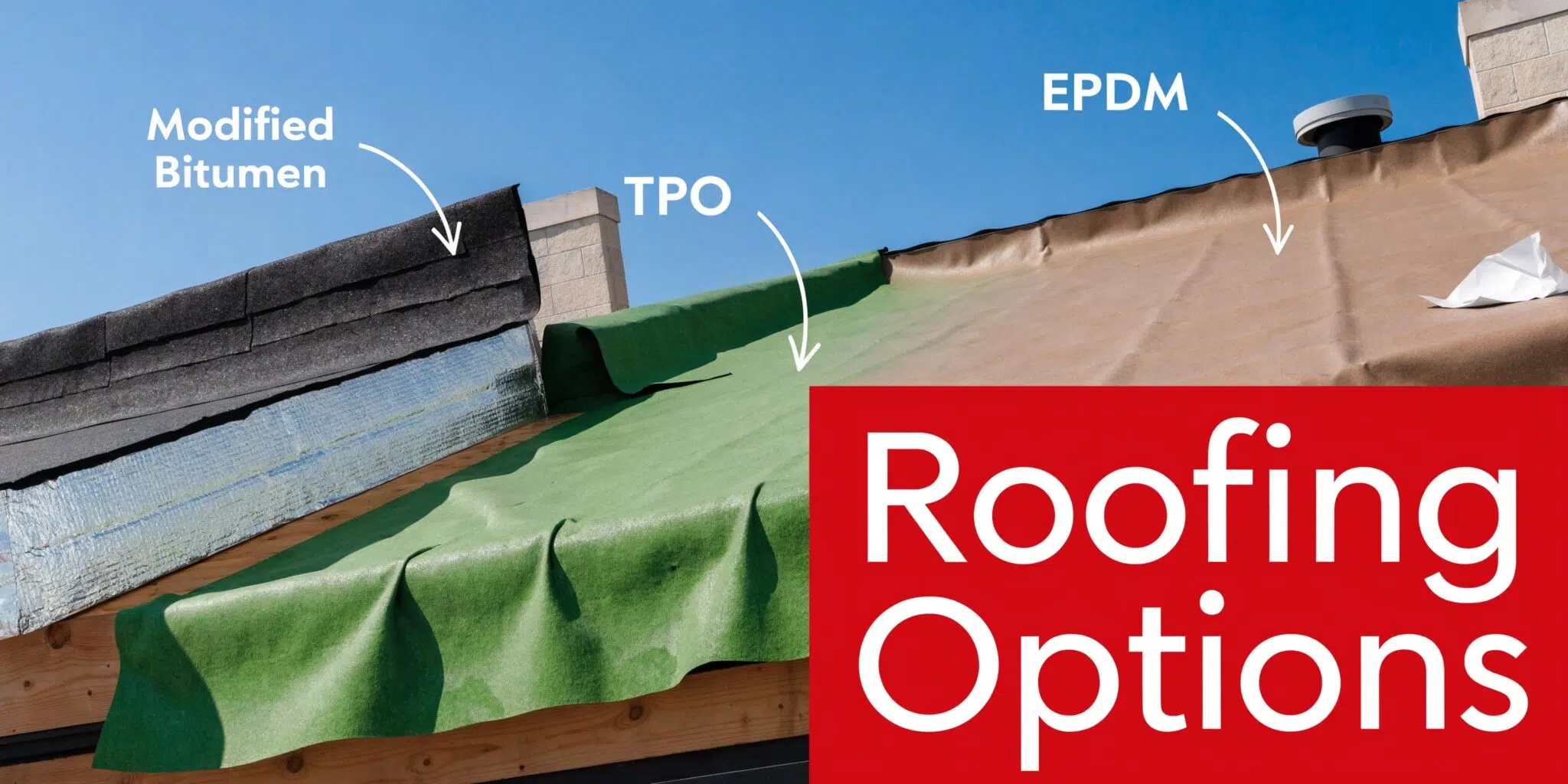
Chicago owners usually stack modified bitumen up against TPO, EPDM, and traditional BUR. On paper, each system can work. In the field, they do not all tolerate Chicago conditions the same way.
Where modified bitumen stands out
Modified bitumen earns its place on durability. A multi-ply assembly gives you more material above the deck, which helps on roofs that see foot traffic, tools, HVAC service, and wind-blown debris. In Chicago, I put extra weight on SBS modified bitumen because it stays more flexible during freeze-thaw swings than many owners expect.
That flexibility matters at transitions, drain areas, and perimeter details where movement shows up first.
If you want a closer look at one common installation method, this guide on torch-down roofing for low-slope buildings explains where that approach fits.
Flat Roof System Comparison
| System | Best Fit | Main Strength | Main Weakness | Chicago Climate Notes |
|---|---|---|---|---|
| Modified Bitumen | Low-slope roofs that need toughness and repairability | Strong puncture resistance, especially in multi-ply SBS systems | Often less reflective than white single-ply membranes | Handles freeze-thaw movement well when detailed properly. Performs best when drains, flashings, and parapet transitions are maintained |
| TPO | Buildings focused on reflectivity and clean membrane appearance | Heat-reflective surface and welded seams | More vulnerable to puncture from traffic and dropped tools than multi-ply systems | Can work well, but details and membrane quality matter. I am more cautious on roofs with heavy service traffic |
| EPDM | Large simple roof areas with fewer penetrations | Good cold-weather flexibility | Single-ply surface leaves less margin for punctures and surface damage | Solid option in cold climates, but repairs and seam conditions need regular attention |
| BUR | Older buildings or projects where a traditional layered assembly is still preferred | Long track record and heavy build | Heavier system, more labor, less common than it once was | Still serviceable in the right application, though many owners now choose mod bit for easier repair and modernization |
The practical trade-offs
TPO has a real place. If summer heat gain is the top concern and the roof sees limited traffic, a reflective single-ply roof can make sense.
EPDM also deserves respect. It handles cold weather well and has been around long enough that most commercial roofers know how it behaves.
Modified bitumen often wins when the roof has to take punishment and stay repairable. That is a strong fit for Chicago three-flats, condo buildings, mixed-use properties, and commercial roofs with a lot of penetrations or regular foot traffic. SBS stands out in that group because it deals with thermal movement better than stiffer systems.
The other piece owners miss is the wall connection. Flat roofs do not fail just in the field membrane. They fail where the roof ties into parapet walls, coping, counterflashing, and brick joints. If the masonry at the perimeter is cracked, open, or poorly pointed, water gets behind the roof edge and starts working into the system. A good modified bitumen roof paired with neglected tuckpointing is still a leak risk.
That is one reason modified bitumen makes sense on many Chicago buildings. It gives you a durable roof surface, and it pairs well with the kind of perimeter repair work older masonry buildings often need. On this market, roof performance and parapet maintenance are tied together. Ignoring either one shortens the life of both.
Costs Lifespan and Maintenance in Chicago
A Chicago flat roof can look fine in October, then get tested hard by January. Snow sits. Drains back up. Ice forms at the edges and around scuppers. By spring, the roofs that were installed well and maintained well separate themselves from the ones that were just left alone.
Owners often want three straight answers. What does it cost, how long will it last, and what kind of upkeep does it need here.
For modified bitumen, installed price can vary significantly, depending on the system build, insulation, deck condition, flashing details, and how much perimeter work the building needs. Lifespan can extend for many years, often beyond what some systems offer, especially when the roof is maintained and the wall conditions around it are handled early.
That last part matters in Chicago. Roof age by itself does not tell the whole story. Freeze thaw movement, snow load, foot traffic, ponding water, and open masonry joints at parapets can cut years off an otherwise solid roof.
What shortens roof life here
The membrane is only part of the story.
In Chicago, I would pay as much attention to the perimeter as the field of the roof. Modified bitumen, especially SBS, holds up well to thermal movement compared with stiffer systems, but it still depends on sound flashing details, secure coping, and masonry that is not letting water in behind the roof line.
Best Roofing notes that many modified bitumen problems in northern markets trace back to perimeter waterproofing failures at parapet walls rather than the membrane alone. That matches what roofers on older Chicago buildings see every season. The leak shows up at the ceiling, the membrane gets blamed, and the actual path started through cracked joints, failed coping seams, or weak counterflashing.
Ponding water is another factor. Some standing water after a storm is common on older flat roofs, but long-term ponding wears on seams, flashings, and drain areas. Add a winter freeze, and those stressed spots get hit again.
The maintenance plan that helps
A modified bitumen roof does not need constant attention, but it does need regular attention.
- Clear drains and scuppers before winter and after heavy storms.
- Inspect seams, laps, and flashing details at least twice a year.
- Check parapet walls, coping, and masonry joints for cracks, open joints, and loose sections.
- Repair traffic damage early around HVAC units, service paths, and access points.
- Patch isolated damage promptly while it is still a small repair.
One neglected detail can create a much bigger repair.
Many roof leaks on Chicago masonry buildings start at the wall line. Water gets behind coping, into brick joints, or through failed tuckpointing, then shows up inside where owners assume the membrane failed. On these buildings, roof maintenance and masonry maintenance belong in the same conversation.
Why lifecycle cost matters more than install price
The cheapest number on a proposal is not always the lowest cost roof.
A modified bitumen system can cost more up front than some single-ply options, but it often earns that back on buildings that see foot traffic, repeated service work, more penetrations, or repair needs over time. SBS is especially worth a look in Chicago because it stays more flexible during cold weather swings and is often easier to repair in sections than a roof where one damaged area can turn into a broader seam problem.
Owners who are comparing systems side by side should look beyond first cost. A page on commercial TPO roof cost in Chicago is useful for that reason. It helps frame the central question, which is what the roof costs to own, maintain, and repair over its service life.
Modified bitumen is a strong long-term choice in Chicago when the roof, parapets, coping, and tuckpointing are treated as one assembly. Ignore the masonry, and even a good roof can end up taking the blame for leaks it did not create.
Hiring a Qualified Chicago Roofing Contractor
This roof system is only as good as the crew installing and detailing it. That is especially true on older Chicago buildings where the roof ties into masonry, metal, drains, skylights, and rooftop equipment.
What to verify first
Do not overplicate the vetting process. Start with the basics.
- Licensing and insurance. Ask for proof.
- Bonding. Important for commercial and multi-unit work.
- Modified bitumen experience. Not merely “flat roofs” in general.
- Chicago-specific detail work. Snow, ponding, parapets, and wall flashings are local realities.
Questions worth asking
Ask direct questions and listen for direct answers.
How often do you install SBS modified bitumen?
What attachment method are you recommending for this deck and why?
Who inspects the parapet walls, coping, and adjacent masonry before the roofing proposal is finalized?
Can you handle both the roof membrane and the wall waterproofing issues if they are part of the leak path?
That last question matters more than most owners realize. A contractor who can evaluate the roof and the parapet together is often better equipped to diagnose the true source of water entry.
For owners who want to compare service scope, commercial modified bitumen roofing services are one example of the kind of specialized offering to look for when screening contractors.
Expert Super Seal Roofing & Tuckpointing is one Chicago option that handles both roofing and masonry work, which is relevant on buildings where parapet walls and roof edges fail together.
Frequently Asked Questions About Modified Bitumen
Can modified bitumen be installed in winter in Chicago
Sometimes, yes. It depends on the product, deck condition, weather window, and installation method. Cold weather does not automatically stop the job, but it raises the importance of storage, surface prep, and adhesion control. Emergency repairs are often possible even when a full replacement should wait for better conditions.
What is the purpose of the granule surface
The granule surface protects the cap sheet from weather exposure and surface wear. It also gives the membrane a tougher outer layer against foot traffic and day-to-day abuse. On service-heavy roofs, that extra protection matters.
Is torch-down roofing dangerous
It can be if the crew is careless or inexperienced. Torch-applied modified bitumen is proven, but open flame requires real jobsite discipline. On older buildings or occupied properties, many owners prefer cold-applied or self-adhered options to reduce risk.
Does ponding water mean I need a full replacement
Not always. Ponding can come from clogged drains, poor slope, crushed insulation, settlement, or bad edge conditions. The right answer starts with diagnosis. Some roofs need repairs and drainage corrections. Others have enough trapped moisture or membrane deterioration that replacement makes more sense.
Is modified bitumen a good fit for residential buildings too
Yes, especially for low-slope sections on porches, additions, garages, and multi-unit buildings. It is not solely a commercial product. The key is matching the system to the slope, traffic level, and drainage pattern.
What usually fails first on a Chicago mod bit roof
Many failures start at details, not in the open field. Flashings, penetrations, drain areas, coping edges, and parapet transitions are the places to watch first.
If you need a straight answer on whether modified bitumen is the right fit for your building, contact Expert Super Seal Roofing & Tuckpointing for a free, no-obligation estimate. They serve Chicago-area residential, commercial, and industrial properties and can inspect both the roof system and the adjacent masonry details that often cause leaks.