A 15-year-old roof in Chicago is at a critical turning point. Asphalt shingle roofs here typically last about 15 to 28 years, with 3-tab shingles commonly lasting 15 to 20 years and architectural shingles about 22 to 28 years, so at year 15 your roof may be near the end of its life or it may still have useful years left.
That's why this age matters so much. You might have gotten an insurance question, noticed your neighbor replacing a roof that looks a lot like yours, or realized your own roof is old enough that guessing is no longer a smart plan. In Chicago, a 15-year-old roof needs the same thing a high-mileage truck needs: a real inspection, not wishful thinking.
The 15-Year Question Every Chicago Homeowner Asks
Homeowners rarely ask, “Is a 15 year old roof good in Chicago?” because they're curious. They ask because something pushed the issue. A leak stain shows up. A home sale is coming. An insurance carrier wants more information. Or a roofer knocked on the door after a storm and suddenly the roof that looked “fine” yesterday feels like a problem today.
The honest answer is simple. A 15-year-old roof is not automatically bad, but it is no longer a roof you should judge by age alone. At this point, condition matters more than assumptions.
Chicago makes that especially true. Our roofs deal with freeze-thaw cycles, hail, snow load, summer heat, attic moisture, and big temperature swings. Two roofs installed the same year on the same block can age very differently if one had poor ventilation or sloppy flashing work.
Why year 15 matters
At year 15, a roof often enters the middle-to-late stage of its expected service life in this climate. Lower-grade shingles may already be close to done. Better architectural shingles may still have useful life left. The difference comes down to what was installed, how well it was installed, and how well the roof system breathes.
Practical rule: At 15 years, inspection stops being optional. It becomes part of basic home maintenance.
That inspection should answer a few real questions:
- Is the roof still shedding water well? A roof can look decent from the yard and still be failing around penetrations or valleys.
- Are the shingles aging evenly? Uneven wear usually points to ventilation issues, sun exposure differences, or prior repair problems.
- Is the roof only physically sound, or also acceptable to insurers and lenders? That's a separate issue, and it catches a lot of homeowners off guard.
A lot of bad roof decisions come from chasing the wrong question. People ask, “Can I squeeze more time out of it?” The better question is, “What evidence shows this roof is still a safe bet?”
Expected Roof Lifespans in the Chicago Climate
Chicago roofing guidance says asphalt shingle roofs typically last about 15 to 28 years, with 3-tab shingles lasting 15 to 20 years and architectural shingles about 22 to 28 years in local conditions, which is why a 15-year-old roof often sits right at the decision point where material quality and installation history matter most (Chicago roof lifespan guidance).
That's the local reality. The paperwork that came with the roof may sound more generous, but roofs don't live on paper. They live on Chicago houses.
Manufacturer promise versus Chicago reality
Here's the cleanest way to think about it. A warranty tells you what the product was marketed to do under ideal assumptions. A working roof tells you what happened after years of sun, ice, wind, and contractor choices.
| Roofing Material | Manufacturer Warranty (Typical) | Real-World Chicago Lifespan |
|---|---|---|
| 3-tab asphalt shingles | Varies by manufacturer | 15 to 20 years |
| Architectural asphalt shingles | Varies by manufacturer | 22 to 28 years |
| TPO | Varies by manufacturer | Depends heavily on installation quality, seam integrity, drainage, and maintenance |
| EPDM | Varies by manufacturer | Depends heavily on membrane condition, flashing details, drainage, and maintenance |
| Metal | Varies by manufacturer | Can be long-lasting, but real life depends on coating condition, fastener details, flashing, and installation quality |
For shingle roofs, the range is the part homeowners need to pay attention to. Fifteen years can mean “end of life” for one roof and “inspection checkpoint” for another.
If you want a broader plain-English explanation of how long asphalt shingles last, that resource does a good job explaining why roofing age never tells the whole story by itself.
What changes the lifespan most
A roof's lifespan in Chicago usually comes down to a handful of jobsite truths:
- Shingle grade matters. A basic 3-tab roof and a better architectural roof do not age the same way.
- Ventilation matters more than most homeowners realize. Heat trapped in the attic cooks shingles from underneath.
- Installation details matter at the edges. Flashing, valleys, pipe boots, and chimney lines usually fail before the field shingles do.
- Storm exposure is uneven. One side of a roof can take a beating while another still looks respectable.
For a local overview of roof service life by system type, average roof lifespan in Chicago is worth reviewing before you decide whether repair or replacement makes more sense.
A roof doesn't retire because the calendar says so. It retires when the materials, details, and weather exposure catch up to it.
How Chicago Weather Punishes a 15-Year-Old Roof
By the time a roof reaches 15 years in Chicago, it has been through a lot. Not one dramatic event. A long series of small beatings.
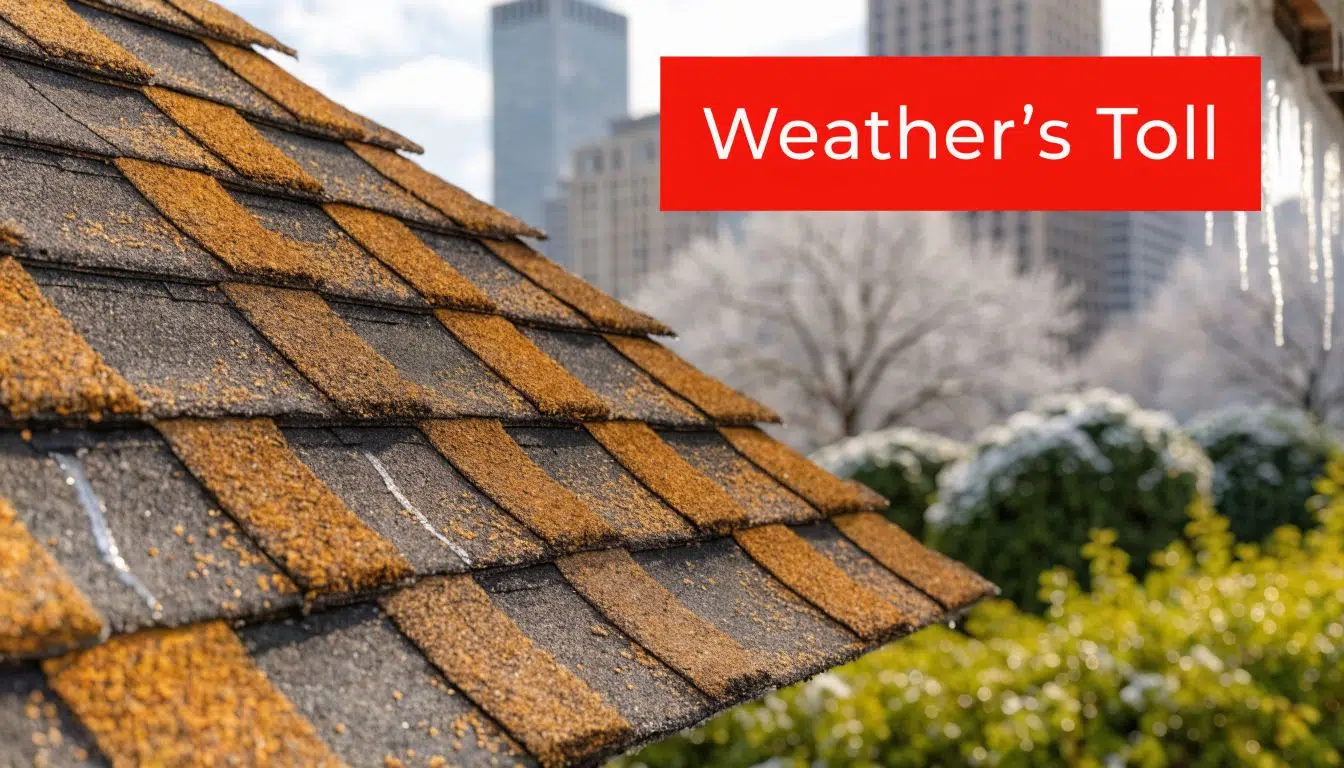
A Chicago winter alone can expose weak spots that never showed up in summer. Water gets under a shingle edge, freezes, expands, then loosens the seal. That cycle repeats until the roof starts acting older than it is. Add hail, spring wind, heavy rain, and sun baking the south-facing slopes, and the margin for error gets thin fast.
Freeze-thaw and attic heat
Freeze-thaw is hard on shingles because it keeps stressing the same weak points. Seal strips lose grip. Tabs lift. Small cracks get bigger. It's a lot like bending an old plastic lid over and over. At first it flexes. Then one day it splits.
Attic heat makes the problem worse. A poorly ventilated attic turns the roof system into an oven from below. Shingles dry out faster, become brittle sooner, and show wear earlier than they should.
Hail, wind, and temperature swings
Insurance and research reporting cited by IBHS showed how sharply age affects shingle performance in severe wind. In those wind studies, over 90% of 15-year-old shingle roofs showed visible damage after 100 to 110 mph gusts, showing how much resilience drops as roofs age, even though Chicago is not a hurricane market (reporting on age-related roof wind damage).
That matters here because Chicago doesn't need hurricane conditions to expose an aging roof. A roof that's already dry, curled, or losing granules is less forgiving during straight-line wind, hail, and repeated storm cycles.
Common weather-related wear on older Chicago roofs includes:
- Granule loss that leaves shingles exposed and tired-looking
- Curling edges that catch wind more easily
- Cracking from repeated expansion and contraction
- Flashing fatigue around chimneys, vents, and wall lines
- Ice dam trouble near eaves where drainage and insulation aren't right
An older roof rarely fails all at once. Chicago weather picks at the weak spots until one of them opens up.
A 15-year-old roof in Phoenix, San Diego, and Chicago may all have the same birthday. They do not have the same life story.
A Practical Inspection Checklist What to Look For
When homeowners try to judge an older roof, they often make one of two mistakes. They either panic over normal aging, or they miss the damage that matters. A good inspection fixes both problems.
Start with what you can safely see from the ground. Then get a roofer to inspect the parts that can't be judged from the driveway.
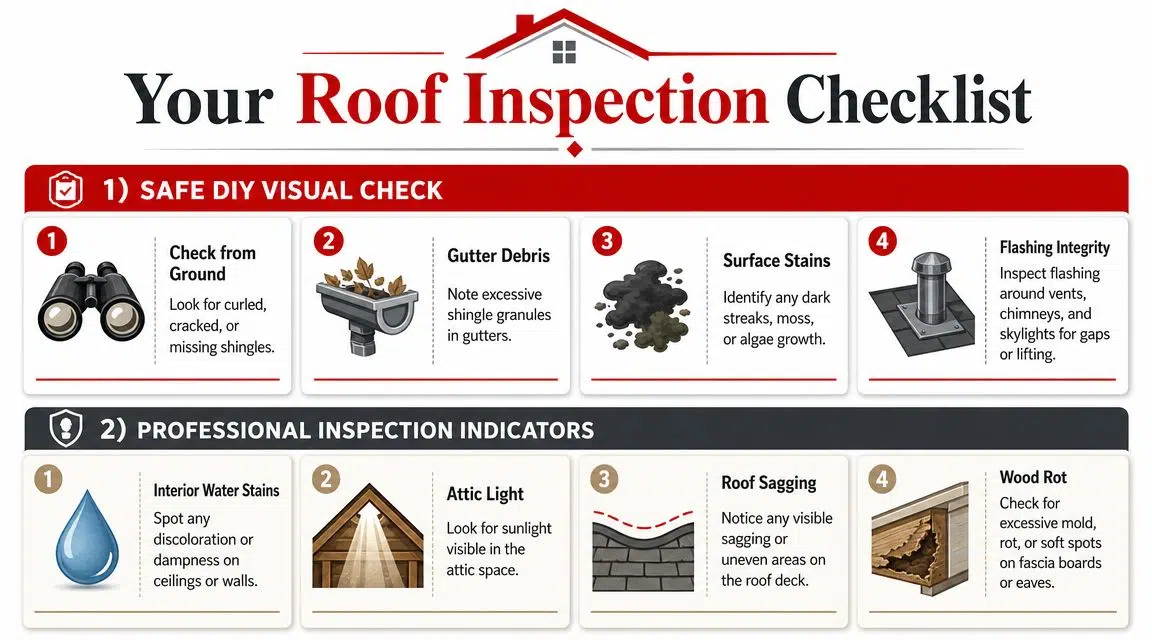
Safe DIY visual check
Use binoculars. Walk the full perimeter. Look in daylight when the roof is dry.
- Shingle shape: Look for curled corners, cracked tabs, slipped shingles, or areas that look patchy compared to the rest.
- Gutters and downspouts: Check for heavy granule buildup. A few granules are normal on a newer roof. Heavy accumulation on an older roof usually means the protective surface is wearing away.
- Staining and growth: Dark streaks, moss, or algae don't always mean failure, but they can hold moisture and hide wear.
- Flashing lines: Look around vents, chimneys, skylights, and wall intersections. If metal is lifted, rusted, separated, or missing sealant, water usually finds it before the homeowner does.
Then go inside.
- Ceilings and walls: Brown stains, bubbling paint, or peeling drywall near outside walls can point to roof or flashing leaks.
- Attic view: If you can safely access the attic, look for damp decking, dark staining, musty smell, or daylight coming through.
What a professional inspection should document
A real inspection is not someone glancing at shingles for five minutes. It should produce evidence.
Contractor guidance on this issue notes that a professional inspection report documenting granule loss, curling, cracking, and proper attic ventilation can help override the 15-year stigma, and that poor attic ventilation alone can cut shingle life by 25% or more (inspection evidence and ventilation impact).
That report should usually cover:
Surface condition
Are the shingles still flexible and seated, or brittle and failing?Roof penetrations and flashing
Pipe boots, step flashing, counterflashing, and valleys tell the truth fast.Deck condition
Soft spots, sagging, or hidden moisture damage matter more than cosmetic surface aging.Ventilation balance
Intake and exhaust need to work together. Without that, the roof ages from both sides.
If you want a homeowner-friendly reference for red flags, signs you need a new roof is a useful checklist to compare against what your inspector finds.
Field advice: The most useful inspection report isn't the one that says “roof is old.” It's the one that shows exactly where the system is holding and where it's breaking down.
Repair vs Replace Deciding Your Next Move
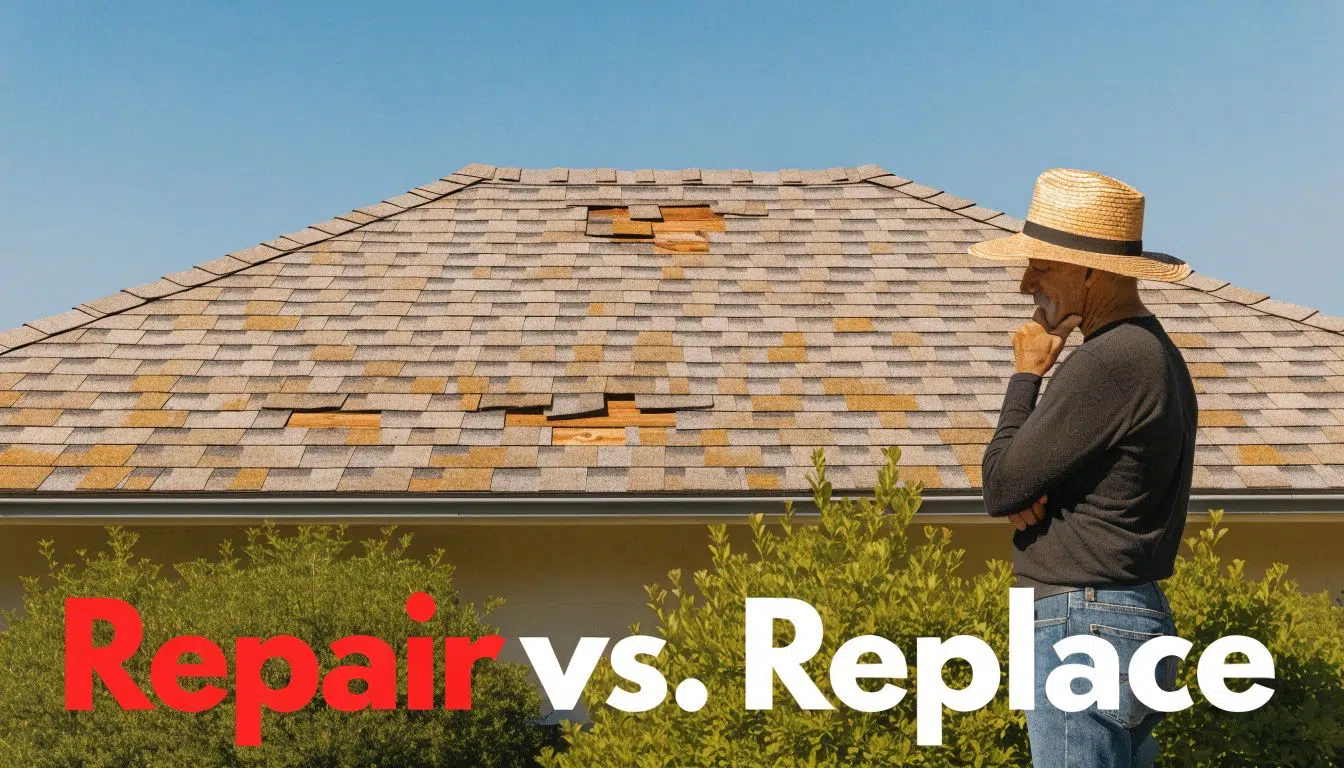
A 15-year-old roof puts a lot of owners in a gray area. They don't want to replace a roof early, but they also don't want to keep pouring repair money into something that's wearing out across the whole surface.
That's why the right decision isn't based on age alone. It's based on whether the problems are isolated or systemic.
When repair still makes sense
Repair is usually the smart move when the roof still has good overall structure and the issue is limited.
Examples include:
- One flashing failure around a chimney or wall line
- A small section of wind damage where matching shingles are still available
- A bad pipe boot or vent detail causing a localized leak
- Minor maintenance items caught before water reaches the deck
In those cases, a focused repair can buy meaningful time.
When replacement is the smarter money decision
Replacement usually wins when the roof is aging broadly instead of failing in one spot.
That includes situations like:
- Widespread granule loss across multiple slopes
- Brittle shingles that crack during basic repair handling
- Repeated leaks in different areas
- Visible wear combined with ventilation problems
- Prior patchwork that has turned the roof into a quilt
At that point, repairs become bandages on a system that's already giving up. Homeowners often pay for several “small” fixes and still end up replacing the roof soon after.
A good way to think about it is this. If one tire has a nail, you repair the tire. If all four tires are bald, you stop talking about patches.
Choose the inspector carefully
Before you act on a repair-or-replace recommendation, make sure the inspection itself is credible. This guide from NW Claims Management on vetting roof inspectors is useful if you want a practical checklist for evaluating who's qualified to assess the roof.
For owners who want a documented local inspection, Expert Super Seal Roofing & Tuckpointing is one Chicago contractor that handles roof inspections, repairs, and full replacements across residential, commercial, and industrial properties.
If the roof has one failing detail, repair it. If the whole system is wearing out, replacement usually saves money, stress, and interior damage.
The Insurance Problem With 15-Year-Old Roofs
A roof can be physically serviceable and still create headaches with insurance or lending. That's the part many homeowners don't see coming.
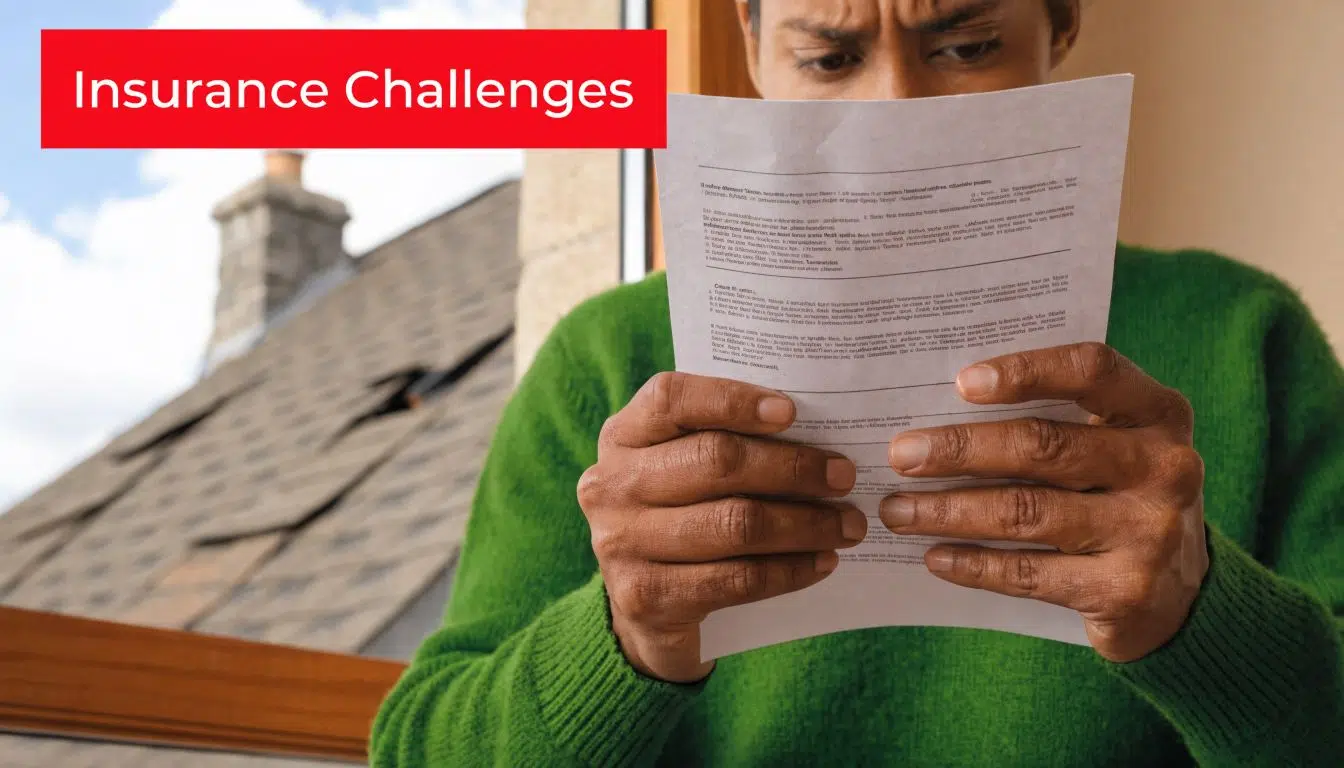
In the field, this comes up during renewals, home purchases, refinances, and condo association reviews. The roof may not be leaking. The owner may even have maintenance records. But once the roof passes a certain age, some carriers start treating age itself as a risk flag.
Physical life and financial life are not the same
Chicago contractors often see architectural shingles last 20 to 25 years, but some insurers reportedly start depreciating roof value or questioning coverage once the roof passes 15 years, which creates a real gap between physical lifespan and financial viability (Chicago roof lifespan versus insurance concerns).
That means “good” has two meanings:
- Physically good: The roof still protects the structure and hasn't reached failure.
- Administratively good: The roof still satisfies an insurer, lender, buyer, or condo board.
A homeowner can be right on the first point and still run into trouble on the second.
What can help counter the 15-year rule
If your roof is around this age, the best approach is documentation, not arguing.
Useful evidence often includes:
- A recent professional inspection report
- Clear photos of all slopes and critical details
- Notes on ventilation condition
- Records of repairs or maintenance
- Confirmation that leaks, sagging, or active failures were not found
If insurance is part of your concern, insurance coverage questions for a 15-year-old roof in Chicago gives a solid overview of the issue from a local standpoint.
A roof that's “still fine” in everyday use can still become a problem if an insurer sees age and no supporting documentation.
This is why waiting until a renewal letter arrives is a mistake. By then, your timeline is usually tighter and your options are worse.
Your Smart Next Steps
If your roof is 15 years old, don't jump straight to replacement and don't ignore it either. Treat it like a major home system at a checkpoint age.
Do these three things
Walk the property and do a safe visual check
Look for curling, cracking, missing shingles, granules in gutters, flashing issues, and any interior stains.Document what you see
Take photos of roof slopes from the ground, attic conditions, ceiling stains, chimney areas, and gutter debris. Good records help whether you repair, replace, sell, or deal with insurance.Get a professional inspection with written findings
Ask for condition details, not just a sales pitch. You want a report that addresses shingles, flashing, ventilation, and any signs of deck or moisture problems.
That's the smartest way to answer the underlying question behind “Is a 15 year old roof good in Chicago?” Sometimes the answer is yes, for now. Sometimes it's yes physically, but no for insurance purposes. Sometimes it's time.
What doesn't work is guessing. Roofs usually give warnings before they fail. The homeowners who save the most money are the ones who act while they still have choices, not after water gets inside.
If your Chicago roof is hitting the 15-year mark, Expert Super Seal Roofing & Tuckpointing can provide a professional inspection so you can make a decision based on documented condition, not guesswork. That gives you a clearer picture of remaining life, repair needs, and whether the roof is likely to raise concerns with insurance or future buyers.